The final words of William Francis Silvia Jr. were an apology wrapped in a denial that the state of Florida rejected with a lethal injection at 6:11 p. m.
on Tuesday. After nearly two decades on death row for the shotgun murder of his estranged wife, Patricia, and the attempted murder of her mother, the 61-year-old insisted to the witnesses behind the glass that the massacre was an accident. “I’m sorry all this happened.
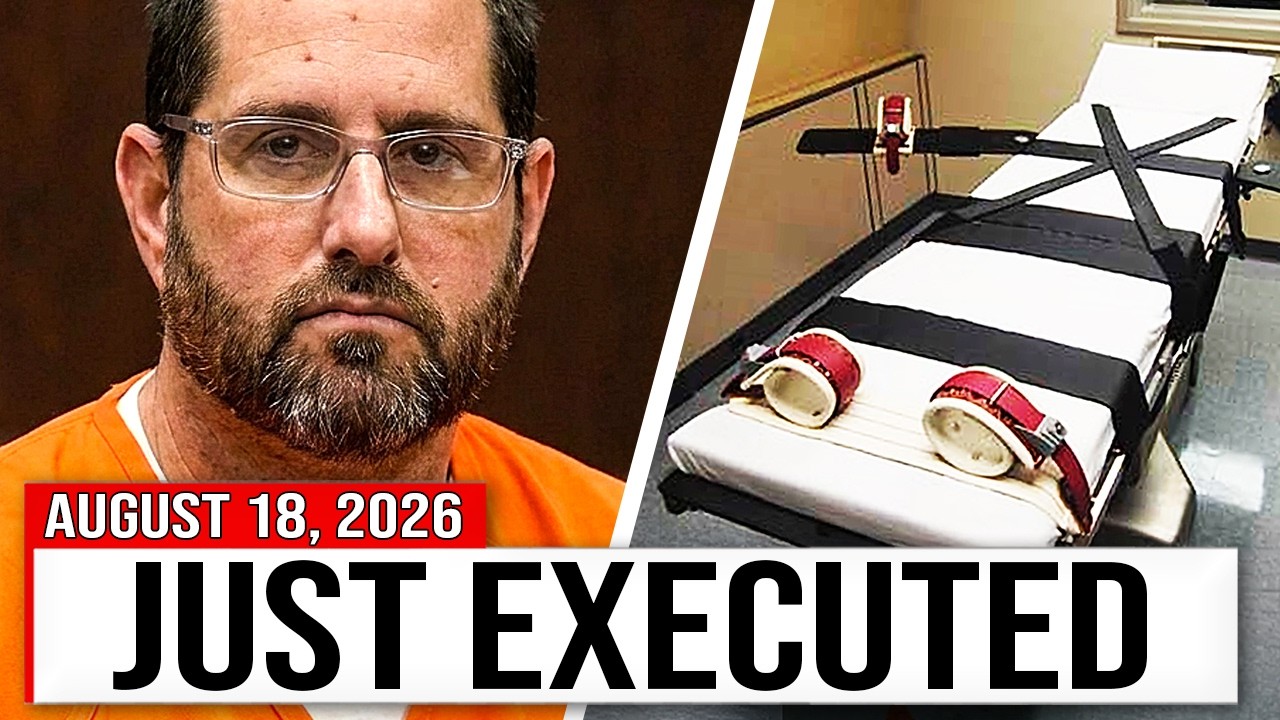 It was an accident. I never meant to hurt her,” he said, lying strapped to the gurney with a priest at his feet. The statement was the last echo of a defense that a jury and a series of appellate courts had dismantled years earlier, pointing instead to a chillingly methodical plan that began with a casual trip to a gun store and ended with seven rounds fired into a family cookout.
The execution, carried out at the Florida State Prison, marked the 13th death warrant signed by Governor Ron DeSantis in a single year, a record for the state. The curtain rose at 6:00 p. m.
, revealing Silvia already secured with an IV line in his arm. He remained mostly still, his eyes and mouth open, as the three-𝒹𝓇𝓊𝑔 protocol began to flow. A few minutes later, a warden shook him and shouted his name.
There was no response. The medical examiner pronounced him dead at 6:11 p. m.
, bringing a close to a case that haunted the Winter Park community for two decades. The brevity of his final statement stood in stark contrast to the 18 years of legal maneuvering that preceded it, a period during which Silvia had waived his appeals, then tried to reclaim them, and ultimately lost every bid for mercy.
To understand the weight of that final “accident” claim, one must return to the summer of 2006, when the marriage between Patricia and William Silvia fractured beyond repair. Patricia, a 39-year-old daycare worker who cared for her four children and her sister Robin, who had Down syndrome, had finally left her husband in July. She moved with her two youngest, Rachel and Ross, into her mother Betty’s house in Casselberry, seeking refuge from a man whose behavior had become increasingly erratic and menacing.
William could not accept the separation. He would appear at the house in the dead of night, banging on doors and windows, only to be turned away by the family each time. But the surface-level harassment masked a deeper, more sinister delusion that had taken root in his mind.
Silvia had become convinced that Patricia was engaged in an incestuous relationship with her two oldest sons. There was no evidence to support this horrific fantasy, and those accused were horrified by the accusation. It was this confrontation that pushed Patricia to leave for good.
The prosecution would later argue that this delusion was not a sign of madness but a weapon of control, a narrative Silvia constructed to justify his rage when his wife refused to reconcile. His own defense psychologist would eventually diagnose him with a delusional disorder, but even that expert conceded under oath that he possessed the mental capacity to plan the killing in a cold, calculated manner. The state’s psychiatrist went further, testifying that once Silvia was sober and in a cell, the paranoia vanished entirely.
The day of the murder, September 22, 2006, began with a final collapse of Silvia’s already frayed life. He was fired from his job that morning, adding to a situation where he was already homeless, sleeping in his truck or renting cheap motel rooms. But instead of spiraling into despair, he engaged in a series of actions that investigators would later describe as the blueprint of a premeditated execution.
At approximately 4:00 p. m. , he walked into Shoot Straight, a gun store, and calmly purchased a pump-action 12-gauge Mossberg shotgun with a short barrel.
Security footage from the store became the centerpiece of the prosecution’s case, showing Silvia taking his time, examining the weapons, chatting with the clerk, and paying without a hint of agitation.
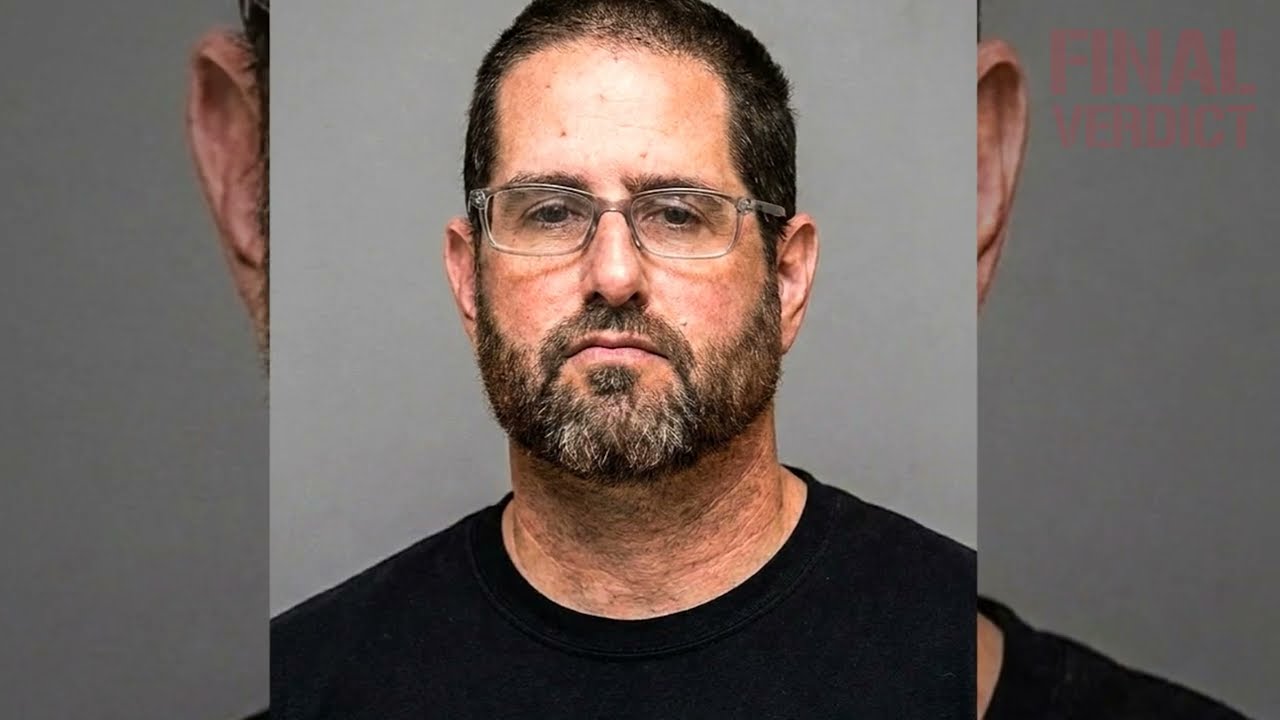 The judge would later note that Silvia exhibited no bizarre, agitated, frenzied, or panicked behavior during that purchase. He was calm, methodical, and deliberate. He then drove to a second store to buy four boxes of shells, a mix of birdshot and buckshot totaling 20 rounds.
The choice of ammunition was tactical; the short barrel and buckshot were designed to maximize damage at close range. After arming himself, he checked into a motel, bought a six-pack of beer, and waited. The loaded shotgun sat in his truck, and on the passenger seat beside it, he placed the divorce papers between him and Patricia.
He had hours to change his mind, hours to drive away, hours to let the beer dull his anger. He did none of those things.
At around 9:00 p. m. , the Silvia family was gathered in the carport of the Casselberry home for a cookout.
Ten people were present, including Patricia, her children, her mother Betty, her stepfather Patrick, Patrick’s brother Jerome, and Robin. It was an ordinary Friday night until a truck pulled up at the end of the street. William Silvia walked up to the edge of the carport, crossed his arms, and stood staring at the gathering.
His 15-year-old daughter Rachel asked him what he wanted. He replied that he needed to speak to her mother. Patricia came out, and they spoke briefly at the edge of the driveway.
As she turned to walk away, Rachel heard her father utter a chilling promise: “You will be sorry.”
The family had no reason to believe the threat was imminent. Silvia walked back to his truck, a distance of roughly 100 feet. No one chased him.
No one blocked his path. Betty later said she thought he had given up and left. But instead of getting into the driver’s seat, Silvia reached into the vehicle, lifted out the shotgun, and began walking back toward the house.
He started firing before he even reached the carport. The first shot went up into the air, a warning or perhaps a signal of intent. Jerome, hearing the muzzle flash, dove to the ground between two parked cars.
Inside the house, Betty heard what she thought were firecrackers. She had just passed Patricia in the kitchen, asking if she was coming back out to the grill. Patricia said she would be out in a minute.
 Those were the last words they ever exchanged.
Betty opened the door to see what was happening and was met with a flash of light. The next thing she remembered was waking up in a pool of her own blood. The shotgun blast had shattered her jaw, destroyed her left eye, and torn away the left side of her face.
She would lose her sense of smell and suffer permanent nerve damage in her arm. Doctors later removed three shotgun pellets from the remnants of her eye. A few feet away, Patricia was reaching into the refrigerator for a pitcher of iced tea when Silvia shot her in the head.
She collapsed on the kitchen floor, dying instantly in front of an open refrigerator, a minute after promising her mother she would be right back. Her 12-year-old son Ross was standing close enough to watch his mother fall.
The chaos that followed was a blur of smoke, blood, and screaming. Robin ran past the bodies into the house, screaming. Rachel was still in the carport when Silvia swung the gun toward her, leveling the barrel less than a foot from her face.
She survived only because someone shoved her hard from behind, sending her to the ground where she crawled inside before he could fire. Patrick, coming around from the back of the house, saw Patricia on the floor and his wife bleeding outside. He then looked up to see Silvia at the end of the carport, pumping the shotgun and aiming at his chest.
Patrick stepped over Patricia’s body, slammed the door shut, and the shot hit the wood instead of him. The door, later found riddled with buckshot and birdshot, was the only reason he lived.
Silvia fired seven times total, pumping a fresh shell into the chamber after every shot. One pellet punched clean through the kitchen wall and into a back bedroom. Then, as calmly as he had entered, he walked back to his truck, got in, and drove away.
He returned to his motel and bought another six-pack of beer. A deputy spotted his truck around 3:00 a. m.
Silvia slowed down, made eye contact, drifted across the median, and pulled into a lot where another car boxed him in. He got out laughing, glassy-eyed, and allowed himself to be handcuffed. On the ride to the sheriff’s office, he asked the officer if he was married.
When the officer said yes, Silvia explained himself with no emotion: “That’s the reason I’m in this situation. My wife spent all my money. I placed the checking account in her name.
 She started re-dating her ex-husband. That is the reason I shot her.”
The trial was a foregone conclusion in the eyes of the prosecution. The shells at the scene matched the gun found in his motel room. The divorce petition was on his front seat.
The security tape showed a man buying a weapon of war with the casual demeanor of a shopper buying groceries. His lawyers presented a tragic backstory—a brutal childhood, a mother killed by a drunk driver, a family history of addiction and suicide—and argued that he suffered from a delusional disorder. But the state’s psychiatrist testified that Silvia was a hostile, suspicious personality with high psychopathic traits who blamed everyone but himself.
The prosecution distilled the case to a single line: “This was the cold execution of a wife who would not reconcile and the attempted murder of a mother who tried to protect her daughter only to be shot in the face.”
The jury voted 11 to 1 for the death sentence. In the years that followed, Silvia engaged in a bizarre legal dance. He initially waived his right to appeal, seemingly accepting his fate.
But when the law shifted to offer other death row inmates a second chance at sentencing, he tried to grab the same lifeline. The Florida Supreme Court refused, ruling that he had voluntarily thrown away his chance and could not take it back. His sentence was reinstated in 2018.
A federal appeal died in 2024. Clemency was refused. In his final days, his lawyers fought to delay the execution over a shortage of the sedative used in the lethal injection protocol, arguing that he might feel pain.
The man who shot his wife in the head spent his last week worried about the gentleness of his own death. The courts were unmoved.
Governor DeSantis signed the death warrant in July 2026, and the execution was scheduled for August 18th. As the drugs began to flow, Silvia’s final claim of an accident rang hollow against the evidence of a man who bought a shotgun five hours before the murder, waited patiently, drove across town with divorce papers beside him, and fired seven times into a crowd of family members. The medical examiner’s testimony had been graphic: a large pellet entered the top of Patricia’s left ear, punched through her skull, and stopped in the front of her brain.
She died on her mother’s kitchen floor. William Silvia’s execution was not the end of a tragedy but the final chapter of a story defined by a cold, calculated plan that he refused to acknowledge until the very end. The state of Florida carried out the sentence, closing the case on a man who, even in his last breath, could not tell the truth about what he had done.