She watched him across the table and felt nothing but tired. Not angry, not sad, just drained. He was still talking, still full of that restless energy she had once found charming, and all she could think about was how much she wanted to go home and be alone. It had started with so much promise.
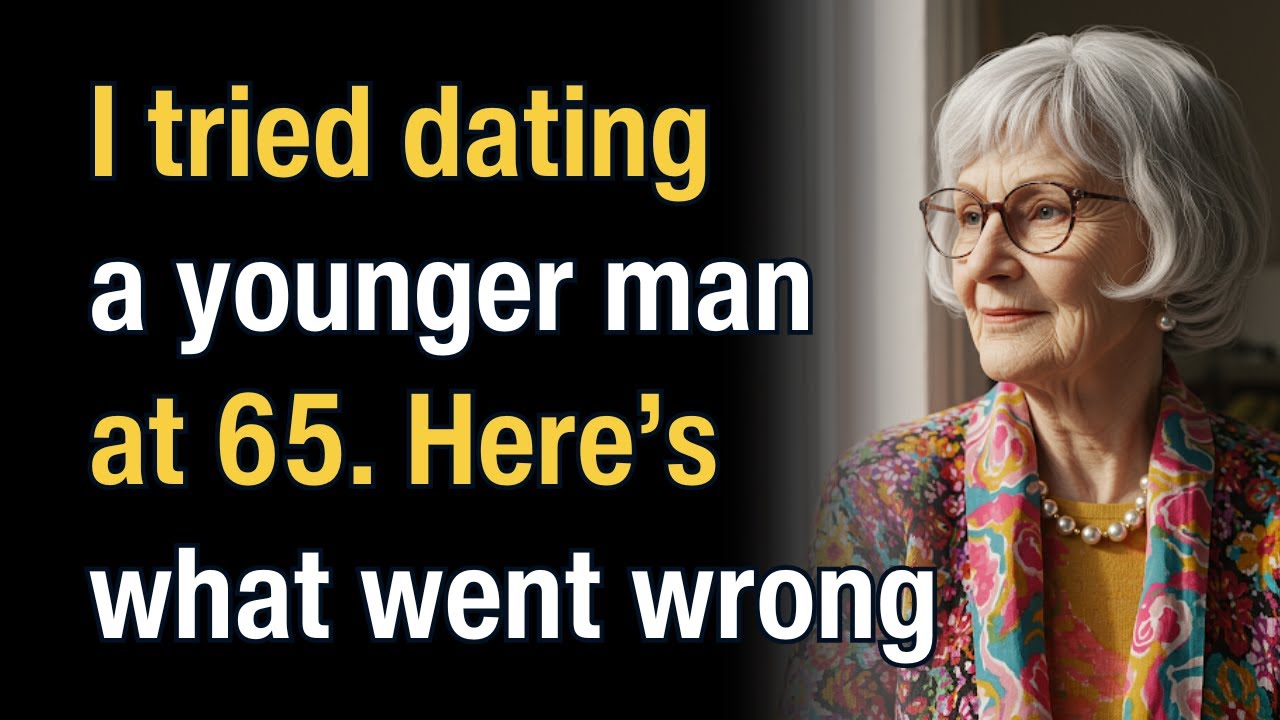
She had given dating another real chance in her sixties, told herself this could be something. But somewhere between the good intentions and the endless stream of texts, it had quietly stopped feeling right. Not because of one dramatic mistake. Because something deep down was off.
This is happening to more and more women over sixty. Some are divorced, some have lost a partner, some simply feel ready for something new. And often the someone new is a man in his late forties or fifties, charming, adventurous, full of life. At first it seems like a perfect match.
He keeps you laughing. He makes you feel seen. Maybe he reminds you of who you used to be thirty years ago. But then something shifts, and the relationship that started with a spark ends in confusion, exhaustion, or regret.
The first problem often has nothing to do with love. It has to do with life itself. By the time you reach your sixties, you usually know exactly what you want. Slow mornings with tea.
Gardening in the afternoon. Quiet evenings with a book or your grandkids. You have built a rhythm and you are protecting what you earned. But a man in his forties or fifties may still be in build mode.
He has a ten year plan. He is thinking about upgrading his car, launching a business, going back to school, planning backpacking trips across Europe. His life is still expanding while yours has finally found peace. When goals and pace no longer align, love starts to feel like work.
You start saying no just to avoid friction. Or worse, you bend yourself into someone else’s lifestyle just to keep the connection alive. That is not love. That is compromise stacked on top of compromise until all that is left is resentment.
Marilyn, a sixty seven year old woman, met a man ten years younger at a community theater group. He was kind, funny, endlessly energetic, and they clicked instantly. Within two months he wanted her to join him on spontaneous weekend trips, early morning workouts, and loud networking events with his colleagues. She said yes again and again until she realized she was not enjoying any of it.
Not because she disliked him, but because none of it was her life. She said something unforgettable. I did not break my back for forty years to retire into chaos. She was right.
You have earned this chapter. You should not have to squeeze it into someone else’s. The second truth is the one people whisper about but rarely discuss openly. Money.
Financial dynamics in a relationship are never just about dollars. They are about control, value, and unspoken expectations. Older women, especially those who have worked their whole lives, managed households, or weathered financial storms alone, tend to be extremely resourceful. Some live on a tight pension.
Others have a comfortable nest egg. Either way, your money is not play money. It represents safety, freedom, and future health care. Now enter a man in his forties or fifties.
Maybe he is successful. Maybe he is rebuilding after a divorce. Maybe he has child support payments or business debts. It is not always obvious at first.
You go out to dinner and he pays a few times, then suddenly you are covering the next three. He needs a little help with rent this month. He has not booked a vacation in years, and would not it be nice if you both got away? At first you tell yourself it is fine.
He makes you feel special. You are just being generous. But a few months in, your credit card balance is higher, your savings are lower, and you feel uncomfortable talking about it because love and money are now tangled, and untangling them feels messy. Donna, seventy one, started dating a fifty five year old man she met online.
At first he was attentive and charming. But he slowly began relying on her, using her car, staying at her house more often, promising to pay her back for groceries and never doing it. When she finally asked him to contribute more, he got offended and called her stingy. Her.
She said she felt like she was paying for company, and it cost more than she ever expected. No one should feel ashamed for wanting fairness. Generosity is beautiful, but so is setting boundaries. At this stage of life, financial health is part of overall well being.
You do not have the luxury of wasting time or money on people who do not respect both. If your daughter or your best friend told you her relationship was one-sided, you would tell her she deserves better. So do you. You are not selfish for protecting your peace.
You are not cold for asking questions early. You are not difficult for walking away when the numbers or the feelings do not add up. You are wise, and that wisdom is your compass. If love starts costing you your joy, your balance, or your sense of self, it is not love.
It is a trade, and it is not worth it. Some women say they feel like they are living in two different time zones. Not just in age, but in pace. They want to slow down.
He wants to speed up. Even in the same room, they are living different lives. This is the third reason these relationships wear out. The difference in energy levels and daily rhythms.
By your sixties and seventies, you know what makes you feel good. Slow walks in the park. Reading before bed. A classic movie on a quiet afternoon.
You enjoy a peaceful morning with your coffee, not rushing to squeeze in five tasks before noon. You escaped the chaos of raising kids and climbing ladders. You earned your calm. But middle aged men, especially those in their late forties or early fifties, often live fast.
They may still be balancing careers, chasing goals, filling every hour with plans. They wake up ready to conquer the day, fall asleep scrolling through work emails, and think a relaxing weekend involves hiking, dancing, or networking until midnight. Suddenly you are struggling to keep up. Or worse, apologizing for not being able to.
Carla, seventy, dated a fifty two year old chef named Mark. He had energy for days. He woke up before dawn to hit the gym, cooked all day in his restaurant, then still had stamina to go out with friends afterward. At first Carla loved the excitement.
She felt alive again. But two months in, she was exhausted. Her joints ached, her sleep suffered, her alone time vanished. She said she did not feel younger.
She felt drained. When energy levels do not align, the relationship becomes less about companionship and more about trying to keep up. And if you slow down because your body demands it, you start feeling like the one who is always disappointing. But you are not disappointing anyone by living at your own pace.
This is not about right or wrong. It is a mismatch of seasons. He is in one part of the journey and you are in another. When you find yourself saying no more than yes, when you feel pressure to match someone else’s speed, it is not your fault.
It just means the connection is not right for where you are in life. Another reason we struggle to move forward is that we have not made peace with what we are still carrying from the past. Emotional weight. As we grow older, we collect more than memories.
We collect scars, heartbreaks, losses, betrayals. Maybe you have been through a divorce or lost someone to illness. Maybe you spent decades taking care of others and never yourself. These experiences shape us and leave marks.
Now imagine bringing all of that into a new relationship while he brings his own. You are both carrying invisible suitcases packed with different things. You might carry grief from a spouse who passed. He might carry resentment from a marriage that ended badly.
You might flinch at raised voices because you spent years in a controlling relationship. He might shut down when things get serious because he is afraid of being hurt again. When those wounds go unspoken or unhealed, they do not sit quietly. They show up in arguments, in misunderstandings, in silent nights where no one says what they are really feeling.
Teresa, sixty eight, started dating again after losing her husband to cancer five years earlier. She met Eric, fifty, who had been through a difficult divorce. They connected quickly, shared stories of pain and healing, had late night talks about starting over. But when Eric began asking for constant reassurance, texts every hour, daily phone calls, Teresa felt smothered.
And when she mentioned her late husband fondly, Eric became withdrawn and distant. They were both still hurting. They just did not realize how much until they were already in too deep. Love does not erase pain.
If anything, it brings it to the surface. Before giving your heart to someone new, ask yourself if you are really ready. Are you healed enough to offer love without fear? Are you strong enough to hear someone else’s pain without being swallowed by it?
There is no shame in still healing. Healing never really ends. But relationships cannot thrive when both people are bleeding. Sometimes the most loving thing you can do is step away and give your heart the space it needs to breathe.
Relationships do not happen in a vacuum, especially at this stage of life. You have children, grandchildren, siblings who have known you for decades. They know your habits. They have opinions, sometimes loud ones, and they do not always take kindly to change.
Maybe you have experienced this. You start seeing someone new. He is younger. He seems nice.
Then your daughter pulls you aside and asks if you are sure he is not using you. Your son starts asking questions about your will. Your friends joke about you having a boy toy. At first it is easy to laugh off.
But over time it weighs on you. You begin to doubt yourself, torn between your family’s comfort and your own happiness. And it is not just your side. He may have kids too.
Teenagers who see you as a stranger, or an ex wife who stirs up drama behind the scenes. You are not just building a relationship with one man. You are entering a world of connections that can either support you or sabotage you. Linda, sixty nine, said her relationship ended not because she stopped loving the man, but because his adult children made it unbearable.
They questioned her motives, made comments about her age, refused to attend family gatherings if she was present. Eventually he chose peace with his kids over a future with her. It broke her heart, but she said something powerful. I refuse to beg for a seat at anyone’s table.
You should not have to fight for a place in someone’s life. If their circle cannot respect you or make room for you, maybe that is not your place to begin with. You have already spent decades proving yourself to others. You do not need to do it again.
Love should add to your peace, not force you to choose between your people and your partner. If a relationship causes friction with your children, your closest friends, or your sense of self, ask yourself if it is really worth the cost. As relationships deepen, another tension surfaces. It does not announce itself with arguments or drama, but with a slow, uncomfortable feeling that something essential is slipping away.
Many older women describe it as feeling crowded, even when they deeply care about the man they are with. This is the reason that ends more relationships than people like to admit. Loss of independence and personal space. By your sixties or seventies, independence is not just a preference.
It is part of who you are. You spent years learning to stand on your own, to enjoy your own company, to arrange your days the way you want. Your home, your routines, your quiet moments. These are not empty spaces.
They are carefully built sanctuaries. Now imagine inviting someone into that sanctuary. At first it feels nice. He stays over.
You cook together. There is laughter and warmth. But slowly things change. He leaves his belongings around your house.
He adjusts your schedule. He expects more time, more availability, more togetherness. Maybe he does not mean to take over, but intentions do not erase impact. Ruth, seventy three, lived alone for over a decade after her divorce and loved her life.
Morning walks, afternoon painting, evenings with classical music and a glass of wine. When she started dating a man in his early fifties, she enjoyed his company until he began staying over most nights. He rearranged her kitchen for convenience. He watched television loudly while she read.
He planned trips without asking how she felt about traveling so often. Ruth said she did not lose herself all at once. She lost herself an inch at a time. When you are younger, sharing space can feel like building something new.
When you are older, it can feel like giving something up. And if you finally reached a place where your life feels balanced and calm, even small disruptions feel heavy. This does not mean relationships are bad. It means they require a level of respect not everyone can offer, especially when there is an age gap.
A middle aged man may equate closeness with constant presence, while an older woman may define love as mutual respect for space. There is nothing wrong with wanting time alone. Nothing wrong with saying you need your mornings to yourself or you do not want to live together. There is nothing wrong with choosing solitude over a relationship that erases your sense of autonomy.
The final truth is the one few people talk about honestly. Social pressure and motivations that do not come from within. Society has a lot to say about aging, especially for women. It tells you that being alone means being lonely, that not having a partner means something is missing, that love must look a certain way or it does not count.
Friends ask questions. Family members worry. Movies glorify late life romance as the ultimate happy ending. Slowly the message sinks in.
You should be with someone. So sometimes, without realizing it, you start dating not because you want to, but because you feel like you are supposed to. Helen, sixty nine, said she was not lonely until people kept telling her she was. She had a full life, friends, hobbies, purpose.
But after repeated comments like do not you want someone to grow old with, she began to doubt herself. She started dating a man in his fifties who wanted marriage, shared finances, a future she was not sure she wanted. She stayed longer than she should have because she did not want to disappoint others. Eventually she ended it and said she felt lonelier trying to be someone she was not than she ever felt living alone.
That is the danger of social pressure. It convinces you to override your own instincts. If you are seeking companionship because it genuinely enriches your life, that is beautiful. But if you are dating because you are afraid of judgment or afraid of being alone, that fear will shape every decision you make.
Middle aged men may feel their own pressure, pressure to settle down, to secure a future, to start over in a way that looks successful from the outside. When two people come together driven by different fears instead of shared desires, the relationship may look fine but feel wrong. At this stage of life you have earned the right to ask one simple question. Do I want this, or am I doing this to meet someone else’s expectations?
There is no failure in choosing yourself. No weakness in choosing peace. No shame in deciding your life is already full. These reasons are not abstract ideas.
They are lived experiences. They are why so many relationships begin with hope and end in exhaustion. If any of this sounds familiar, you are not broken. You are not too cautious.
You are not too much for wanting clarity and peace. You are wise for listening to your inner voice. Relationships after sixty are not mandatory. They are optional.
And if you choose to pursue one, you deserve a relationship that honors your rhythm, respects your boundaries, and adds to your life instead of draining it. And if you choose solitude, true solitude, not isolation, that can be a powerful and fulfilling path. Solitude can be rich with purpose, creativity, connection, and joy. It can be freedom.
You do not need to prove anything anymore. You do not need to rush. You do not need to settle. Your time, your peace, and your happiness are precious.
Live on your own terms. Honor the life you built exactly as it is.