The Tennessee Department of Correction has officially opened the application window for journalists seeking to witness the scheduled execution of Christa Pike, a procedural move that signals the state’s operational machinery is now grinding toward a date certain: September 30, 2026, at 10:00 a. m. Central Time.
This is not a theoretical legal exercise anymore; this is the physical preparation for a lethal injection, and the state is moving forward with the selection of seven media witnesses and two alternates via a formal lottery to be held at Riverbend Maximum Security Institution in Nashville on September 9. The execution date has not changed, and with only 25 days remaining, two separate tracks—one legal, one operational—are accelerating toward the same irreversible moment.
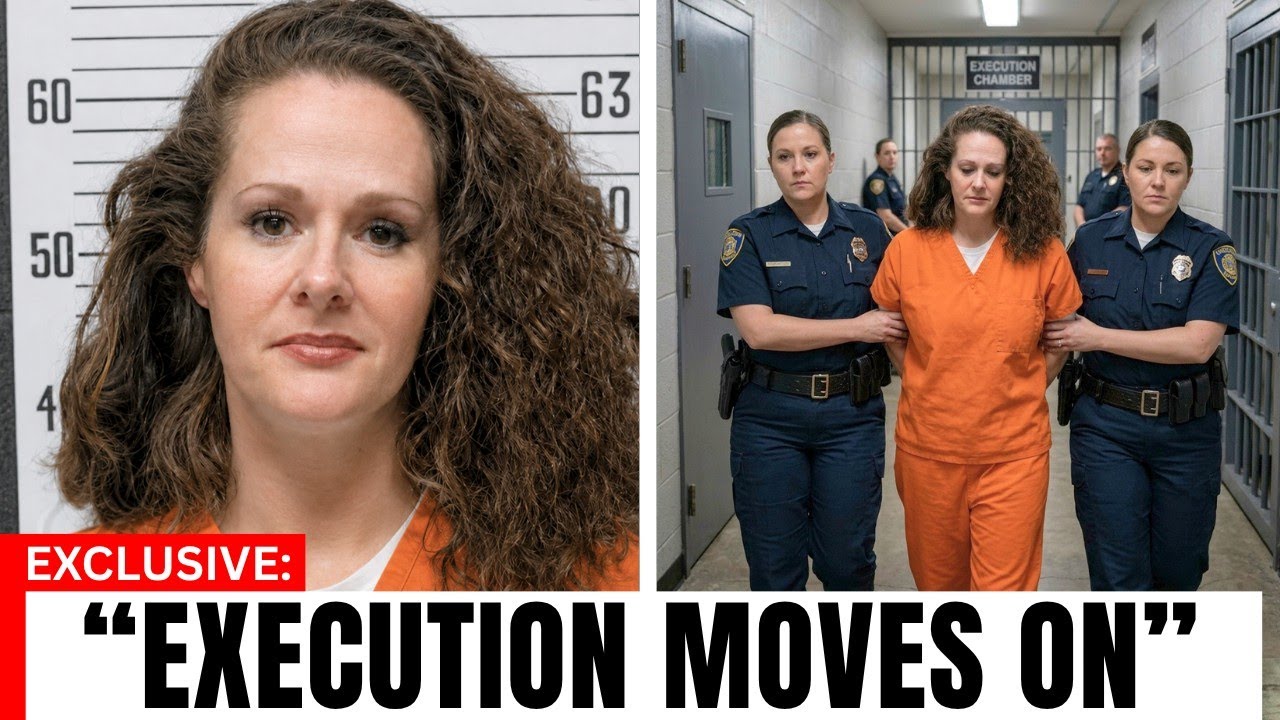 The announcement from the Tennessee Department of Correction came as a formal public statement, confirming that only established, recognized news organizations headquartered in Tennessee are eligible to apply. Each outlet is permitted exactly one application, and the deadline for submission was set for September 8. The following day, September 9, a public drawing will be conducted at Riverbend itself, the very facility where the execution is scheduled to take place.
This lottery is not a discretionary choice by the state; it is mandated by Tennessee Code Annotated 40-23-116, which requires a random selection process to ensure impartiality among the press corps. Seven journalists will be chosen as primary witnesses, and two will be designated as alternates, ready to step in immediately if any of the primary seven cannot attend on execution day.
What these seven witnesses may see inside that chamber is unlike anything Tennessee has executed this year, because Christa Pike is not a typical death row inmate. She suffers from a blood disorder, her veins are medically compromised, and the physician who has confirmed he will oversee her execution is the same doctor who presided over Tennessee’s last failed lethal injection attempt. These details are not rumor; they come directly from the doctor’s own testimony, and they form the crux of a legal battle that has nothing to do with Pike’s guilt—which no one disputes—but everything to do with whether the state can carry out this sentence without violating the Eighth Amendment’s prohibition on cruel and unusual punishment.
To understand the gravity of this moment, one must first understand who Christa Pike is and what she did. On January 12, 1995, in Knoxville, Tennessee, an 18-year-old Pike and her boyfriend lured a fellow student into the woods near the University of Tennessee agricultural campus. The victim was 19-year-old Colleen Slemmer, a fellow attendee of the Knoxville Job Corps center.
The motive was jealousy; Pike believed Slemmer had romantic feelings for her boyfriend. What happened in those woods was not a fight. Court records show that Pike slashed Slemmer’s neck with a box cutter, beat her with a meat cleaver, and crushed her skull with a piece of asphalt in an attack that lasted a full hour.
She carved a pentagram into Slemmer’s chest. The victim was identified using dental records. Pike then kept a piece of Slemmer’s skull and showed it to classmates.
She was convicted in 1996 and sentenced to death at age 20. Her boyfriend, Tadaryl Shipp, was 17 at the time; he received life in prison and is now eligible for parole. A third person testified against them and received probation.
Pike is the only one of the three facing execution, and she has been on death row for over 30 years.
But here is where the case takes a turn that even her harshest critics cannot ignore. The current legal challenge is not about whether she committed the crime; it is about whether Tennessee can execute her without violating constitutional protections. The Tennessee Supreme Court appointed Senior Judge W.
 Mark Ward as a special judicial officer, giving him a specific mandate: answer five questions and return with findings of fact. The court itself will make the final decision. Ward spent three days hearing testimony starting August 11, and two issues dominated the entire proceeding.
First, the medical issue: Pike suffers from a blood disorder called thrombocytosis. Her attorneys argued her veins are so damaged that placing standard IV lines is genuinely dangerous. If a conventional line fails during lethal injection, the procedure does not stop smoothly.
Her lawyers proposed alternatives; the state rejected every single one. Second, the psychological issue: Pike suffered childhood sexual 𝓪𝓫𝓾𝓼𝓮, multiple rapes, and parental abandonment. She has been diagnosed with PTSD and bipolar disorder.
A trauma specialist testified that physically restraining Pike and strapping her to a gurney by an all-male extraction team could re-trigger trauma in a way that is clinically distinct from ordinary fear. Her attorneys argued this is inherent cruelty given her documented history. The state agreed to no modifications whatsoever.
Ward submitted his findings on August 21. He adopted the testimony of state experts, excluded defense witnesses, and on every single claim Pike made, he found she failed to meet her burden of proof. He gave the green light for the execution to proceed.
Her legal team called the ruling deeply disappointing. Yet Ward’s ruling left a door ajar because one name kept surfacing throughout the entire hearing: a doctor who publicly confirmed he would be in that room on September 30, and whose admission about his qualifications is something the state tried to keep under wraps. His name is Dr.
Mark Fowler, and once you hear what happened the last time he was in that chamber, everything about this execution looks different.
Dr. Mark Fowler was the attending physician during the attempted execution of Tony Carruthers in May 2026. That execution never happened.
 A primary IV line was established, but the backup line required by Tennessee protocol took over an hour to place. Carruthers lay on the gurney in visible distress while the team searched his body for a suitable vein. When Fowler then attempted to insert a central catheter, that also failed.
The execution was called off. Carruthers’ family later filed a complaint with the Tennessee Department of Health, alleging the botched attempt caused him a stroke that resulted in severe pain and partial paralysis. The family also claimed Fowler injected Carruthers with lidocaine without first checking whether he was allergic to it.
In a prior deposition, Fowler stated he had not placed a central catheter in over a decade. Despite all of that, Dr. Mark Fowler publicly confirmed in August that he will serve as the execution physician for Christa Pike.
Pike’s attorneys filed an emergency motion to reopen the hearing specifically to challenge Fowler’s qualifications, but it was denied. The state’s logic was that a doctor’s statement of intent to participate does not guarantee he will actually be selected; Tennessee finalizes its execution team 30 days before the date. Her attorneys responded forcefully: the doctor has publicly identified himself as a paid participant in the execution to the Department of Correction.
Christa Pike should not have to wait until she is strapped to the gurney to find out whether the person performing the procedure is competent. The motion was denied. On August 21, both sides filed their objections to the findings with the Tennessee Supreme Court ahead of the August 28 deadline.
Then the court did something no one asked for: it issued what is called a sua sponte order, meaning the court acted entirely on its own initiative. No one requested it; the court moved independently. For now, the public record classifies that filing only as miscellaneous documents.
What the court addressed exactly has not been disclosed, but a court acting sua sponte in a death penalty case with weeks left before an execution date is not routine.
This detail is still developing. The court now has Ward’s full report, it has both sides’ objections, and it has whatever is inside that sua sponte order. The next ruling out of Nashville will be the most important decision in this entire case.
 It could uphold Ward’s findings and allow the September 30 date to stand. It could require further proceedings. It could order modifications to the protocol, and the governor still has independent authority to grant a reprieve.
That door is not closed yet. None of this has slowed Tennessee’s operational preparations by a single day. If the date goes forward on September 30, Christa Pike will be the first woman executed in Tennessee since 1819—over 200 years ago.
She will be the 19th woman executed in modern American history, and the only person executed in Tennessee for a crime committed at age 18, 19, or 20 in the modern death penalty era. She was sentenced at age 20. She has spent over 30 years on death row.
The woman who will enter that chamber is not the 18-year-old girl who committed that crime. That does not change what she did, but it is a dimension of this story that every serious observer must consider.
As it stands, two tracks are both accelerating toward the same date. On the operational track, witness selection is complete. The lottery happens on September 9.
After that, seven journalists will hold credentials and know exactly where they will stand on September 30. Transfers, staff assignments, protocols—all of that is in motion right now. On the legal track, the Tennessee Supreme Court holds the most important ruling in this case and has not yet issued it.
If the execution is carried out, those seven journalists will be the only independent eyes inside that room. They will hear what Christa Pike says, if she says anything. They will watch whether the same doctor who could not complete the last execution will be able to do what he failed to do in May.
And when they walk out, they will be the only people able to tell us the rest of what exactly happened in that chamber. 25 days, two tracks, and one hour. The Supreme Court ruling is the only thing that resets this clock.
We will bring you that update the moment it comes down. Subscribe and turn on alerts now, because when that decision drops, you will not want to learn about it too late. Leave a comment below: will the September 30 date stand, or will the Supreme Court intervene first?
We read every comment.