The rotors came first. One beat, then another, slicing through the pale May air above the rows of folding chairs. No uniform for me, no entourage, just a tailored black coat and the silence I wore like armor. My father stood up, then froze.
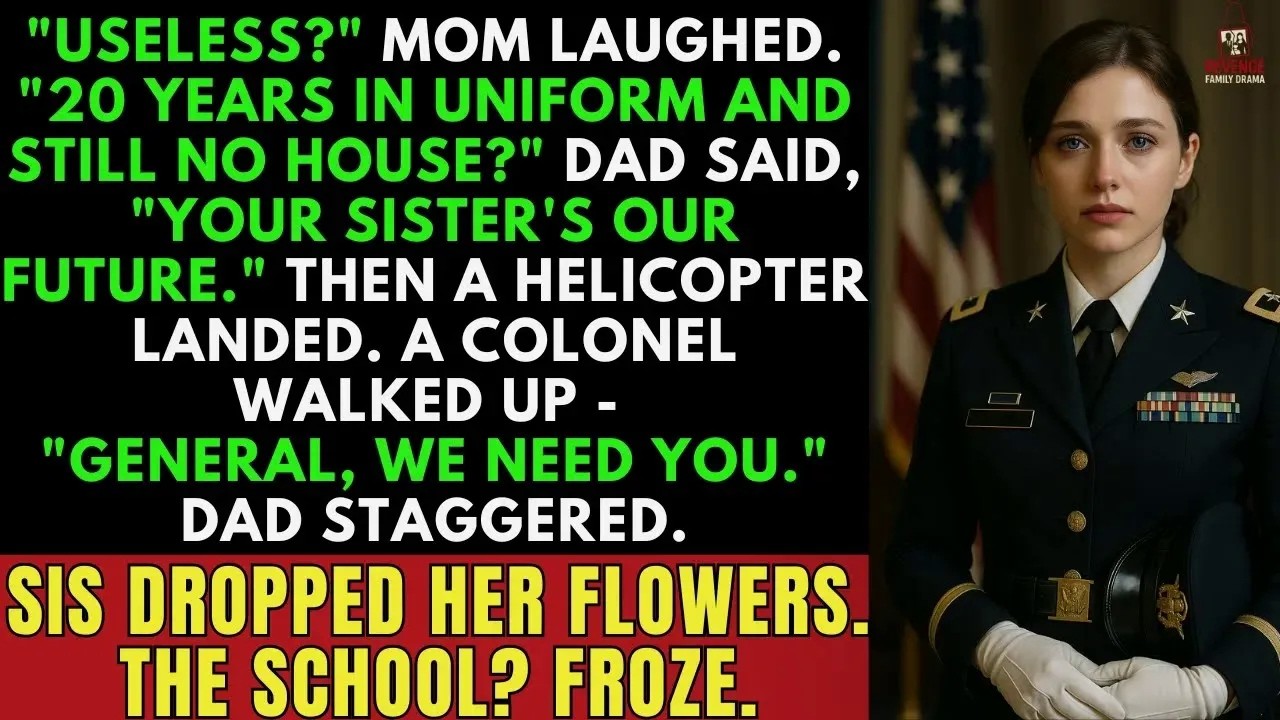
No one else looked twice. My name wasn’t printed anywhere, not even in the family acknowledgements. One by one, names were called. And then, just as my mother reached the microphone, the sound hit—a low vibration at first, subtle, almost felt before it was heard.
Then it wasn’t subtle anymore. Everything that followed was no longer theirs to control. No cameras, no applause, just command protocols and clipped radio traffic. “You didn’t sign off on any of this,” Reed said later, sliding a folder across the table.
I scanned one page, then another. Authorization logs, procurement trails, budget approvals—all with my digital credentials. All pristine. All forged.
Page after page, my name, my clearance code, my security stamp, but not my signature. Recipient: Meridian Access Holdings LLC. Authorization level Q. Quinn T.
M. Inside me, something cracked. “Then she’ll take mine,” I said. Reed looked at me for a long second.
“It’s a system, Thalia. You know how it works. ”
“Then they don’t know me at all. ”
Outside, the wind picked up, and I felt it for the first time—the weight of what I was about to do.
The anniversary gala was the kind of place you only book when you’re sure someone will take your picture. My mother saw me first. I wasn’t staying long. I pulled out a small black velvet box.
No logo, no flourish. Inside, a sterling bracelet, simple, elegant, except for the engraving on the underside. “Some names leave marks,” I said, “whether you acknowledge them or not. ”
Juliette’s eyes flicked between us.
I cut in, still watching my sister. “Because your name is on something. Something that doesn’t belong to you. ”
Most wouldn’t notice the flicker of panic.
But I’d been trained to. Later, I sat across from Juliette, the folder open between us. “I didn’t sign any of this. ”
“And the system knows that now.
No pressure inconsistencies, no pen drag. It was rendered, not written. This software was banned from all military procurement systems in 2016. ”
The screen displayed a single transmission dated March 2017, originating from a residential address in Annapolis.
My father’s address. He filed for power of attorney while you were deployed. “I never gave him that right. Not once.
”
“She may not have known, but her name’s listed as secondary beneficiary on two of the flagged accounts. If she testifies honestly, she’s a witness. If not, she let the sentence trail. ”
“If you do this, Thalia, your father’s name becomes a headline.
”
“Then let’s build the case. ”
The hearing room in the federal courthouse wasn’t designed for drama. My father looked polished, composed, the kind of man who always seemed one sentence ahead of everyone else. The magistrate called the session.
“This preliminary session will determine whether formal charges will be pursued regarding allegations of identity fraud, military impersonation, and federal embezzlement. Major General Quinn, your counsel may proceed. ”
The first exhibit was submitted. Digital metadata proving the signature on those contracts was generated using banned signature software, not handwritten or authorized.
His attorney intervened. Then she submitted the final page. I served abroad while this happened. I returned each time to silence.
My family never asked what I saw, only what I could give. And then they used my name. Because for the first time in years, I wasn’t here to protect anyone. It never made the headlines.
Alexis honored my request—no press conferences, no interviews, no morning shows dissecting trauma like entertainment. I didn’t speak about the investigation, not about what it cost, not about the hearings, the betrayal, or the accounts that bore my name but never my permission. I said only this: “I’m not the legacy of a man who used my silence for personal gain. I’m the one who endured, the one who returned without applause, without welcome, and stood still when no one was watching.
And today, I write my name back, letter by letter, onto the record they tried to erase. ”
For the first time, I didn’t feel invisible. I placed the medal beside a worn photo of my old unit from Operation Iron Echo—the ones who never got ceremonies, whose names had been left behind in supply reports and encrypted letters. I lit a single desk lamp.
No music. No voice. Just quiet. I opened a folder labeled simply “Quinn TM.
” Inside were two things: a copy of my original deployment oath and a signature I never gave but reclaimed. A week after the ceremony, Juliette showed up at my office. No assistant, no press. She stepped forward, placed an envelope gently on the desk, then stepped back like she’d crossed into unfamiliar terrain.
“It’s all there. Receipts, letters signed, withdrawal affidavits. ”
“I think I wanted to believe that because if I didn’t ask questions, I didn’t have to know how deep it went. ”
She turned to go, then hesitated at the door.
“How long have you known? ”
I waited a moment before answering. “Long enough to give you time to come clean. Short enough to still care what you did with that chance.
”
After the door clicked shut, I opened the envelope. Inside: notarized documents, reverse transfers, official resignations, and one handwritten note. I folded the note and placed it into the cedar box beside my distinguished service medal and a faded photo of my team in Echo Unit—the ones no one in my family ever bothered to ask about. No press.
No denials. Just process. My father’s name disappeared from plaques, boards, and alumni pages as if it had never been there to begin with. My ID still grants access to the archive wing.
I step inside, surrounded by years of operations, sealed boxes, forgotten names. And I’m still here.