The chair at the Thanksgiving table stayed empty for the third year in a row. No call. No text. Just silence from my grown daughter.
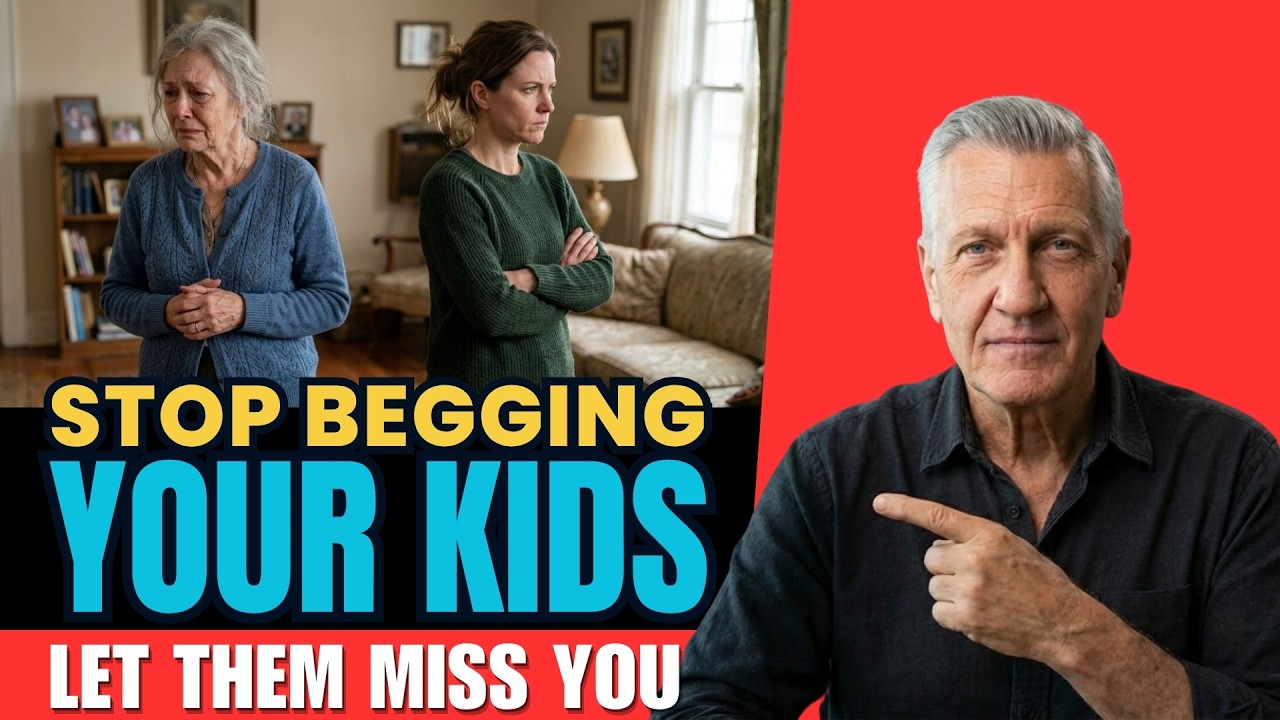
And I caught myself checking my phone all afternoon, waiting for something that never came. I have spent four decades as a family psychologist, and I have sat in rooms with parents just like me. Loving parents. Heartbroken parents.
Parents who keep reaching into the silence and getting nothing back. I have watched them make the same mistake I was making myself: chasing harder. The truth I had to face was uncomfortable. My daughter wasn’t silent because I hadn’t tried enough.
I had tried so much that I had taught her my effort was guaranteed. Every unanswered call, every unacknowledged birthday card, every voicemail I left anyway sent the same message: no matter how she treats me, I will always be here. The relationship costs her nothing. There is a psychological principle called natural consequences.
If a child touches a hot stove and someone else’s hand gets burned instead, that child never learns. They keep touching the stove, not out of cruelty, but because reality never got a chance to teach them. I had been putting my own hand over the burner for years. By cushioning my daughter from the result of her choices, I was protecting her from growth.
The hardest part was admitting another uncomfortable truth. I had not just been rejected. I had been overwhelming her. When a parent’s entire emotional world revolves around whether a child calls back, when every conversation circles back to the pain, the child starts to see you not as a person with a full life, but as a wound that demands their constant attention.
And many adult children will actively flee from that role. I had become background noise in my own daughter’s life because I was always there, always available, always at zero distance. I remember one client, a retired school teacher in her sixties. Her son had been cold and distant for nearly two years.
She called every Sunday. She sent care packages. She drove four hours to his son’s birthday party and stood in the backyard making small talk while he barely acknowledged her. On my advice, she stopped.
In the third week, he called her. Not out of punishment and not out of drama, but because for the first time in two years, he noticed the silence on his end, and it bothered him. You cannot be missed if you never leave. There is a difference between punitive silence, where a child uses silence as a weapon, and chosen distance, where they need space to grow into themselves.
I didn’t know which one I was dealing with. It didn’t matter. The answer for both was the same. I had to stop orbiting around her and start living.
Not performatively. Not to make a point. But because I had earned the right to a life that belonged entirely to me. I started investing in friendships I had neglected.
I returned to the painting hobby I had abandoned decades ago. I booked a trip I had always wanted to take. I tended to my health with intention. I did these things not to teach my daughter a lesson, but because I was a person of worth, and my life did not begin and end with her approval.
Something shifted. When she saw, through the occasional update, that I was genuinely living well, I stopped being the source of her guilt and became someone she might actually want to know. The most powerful message I could send was simple: I am okay without you, and the door is still open. Guilt is one of the most constructive emotions a human being can experience, if we let it do its work.
But every time I reached out, I was interrupting that work. I was offering my daughter a release valve, a distraction, a way to feel irritated at my persistence rather than responsible for her choices. When I stopped, the valve closed. The real guilt had nowhere to go but inward.
I am not talking about revenge. I am not talking about engineering suffering. I am talking about allowing reality to do what I never could. If my daughter had any love for me in her heart, that love would surface more honestly once I stopped making it easy to avoid.
Some of the deepest reconnections I have witnessed began not with a dramatic conversation, but with a child lying awake at three in the morning in the absence of a parent’s voice, finally hearing their own. I had to ask myself who had been carrying this relationship. Who remembered the dates? Who made the drive?
Who bought the gift and extended the olive branch? The answer was always me. Without meaning to, I had taught my daughter that love in our family flows one way. Healthy relationships are built on effort from both people.
What I had was not a relationship. It was a performance, and I was exhausted from performing. When I stopped chasing, I created something that had never been possible before: space for her to step into. She could not discover she was capable of being the one who shows up if I was always there before she had the chance.
Stopping was not coldness. It was the quiet assertion of a fundamental truth. This relationship deserves effort from both of us. I have given mine.
I will wait for yours. I also had to look honestly at the image I was projecting. I know this comes from love, but love without boundaries can look like desperation from the outside. And desperation does not inspire reconnection.
It inspires distance. Carl Jung wrote about individuation, the process of becoming fully yourself. He believed the deepest work of this happens in the second half of life. I am in that season now.
The most profound thing I can offer myself, and my daughter, is the image of a person who has done that work. A parent who is grounded, self-possessed, not waiting by the phone. Someone to be respected. Someone she might eventually want to come back to.
Dignity is the most attractive quality a parent can wear. And it costs nothing except the courage to stop begging. This brings me to the hardest truth of all. I am not twenty years old.
Neither are you. Time does not pause for unresolved relationships. Your child may still carry the youthful illusion that there is always more time, that the call can wait another month. But you understand the truth.
You feel it in a way they do not yet have the wisdom to feel. I have sat with adult children in their forties and fifties who wept in my office not over what had happened between them and their parent, but over what had not happened. The phone call they kept meaning to make. The visit they kept postponing.
The words I love you, I’m sorry, I missed you that never got said, because their parent was gone. I am not telling you to use your mortality as a manipulation. That would be wrong, and it would backfire. But I am asking you to make sure your child knows, clearly and calmly, where you stand.
Not in desperation. Not in anger. With the quiet authority of someone who knows the value of time. Say it once.
Mean it completely. Then return to your life. I call this practice the dignified pause. Three steps.
Simple, but not easy. Step one, stop. For the next thirty to sixty days, do not initiate contact. No texts.
No calls. No just thinking of you messages. No reaching out through siblings. This is not forever.
This is a defined, intentional pause. You are not abandoning your child. You are removing yourself from a dynamic that has stopped serving either of you. When fear comes up, remind yourself: this is not the end.
This is a reset. Step two, invest. During this same period, put that energy into three areas of your own life. Your body, move it, feed it, rest it.
Your connections, friends, neighbors, faith community. Your purpose, find or return to something that makes you feel useful and alive. A garden. A cause you believe in.
Something that reminds you your life has meaning entirely independent of this one painful relationship. Step three, signal once. Before you begin the pause, send one message. Keep it short.
Keep it dignified. Say everything that needs to be said and nothing more. Something like: I love you. I’m not going anywhere.
I’m living my life, and the door between us is open whenever you’re ready. I hope that’s soon. Then stop. Do not follow it up.
Do not explain it. Do not apologize for it. Let it sit. Let it land.
Trust that love, delivered without desperation, has a very long reach. I want to end with honesty and kindness. You did not fail your child by loving them. You did not fail by trying to hold on, by calling, by showing up even when it wasn’t wanted.
That instinct, I will not give up on my child, is one of the most human and beautiful things a parent can feel. But sometimes the most loving thing we can do is redirect that energy. Not away from our child, but toward ourselves. Toward our healing.
Toward the quiet, unshakable dignity that says: I am worth more than this silence. And so is this relationship. In forty years, I have never met an adult child who regretted reconnecting with a parent who was still there, still loving, still standing in their own light. But I have met many who ran out of time.
Don’t let that be your story. Stop chasing. Start living. Leave the door open.
And trust that real love, patient and dignified, has a way of finding its way home.