PLYMOUTH, Mass. — A Massachusetts judge declared a mistrial Friday in the murder case against Lindsay Clancy, the Duxbury mother accused of strangling her three young children to death in January 2023, after jurors announced they were hopelessly deadlocked following nearly 40 hours of deliberation over seven days.
The dramatic conclusion caps a week of intense legal maneuvering that rose to the highest level of the Massachusetts judiciary, with a lone juror’s alleged refusal to follow the law on reasonable doubt forcing the state’s highest court to intervene. The judge’s ruling now sets the stage for a second trial that legal experts say is almost certain to occur — but not anytime soon, with a realistic timeline stretching into 2027.
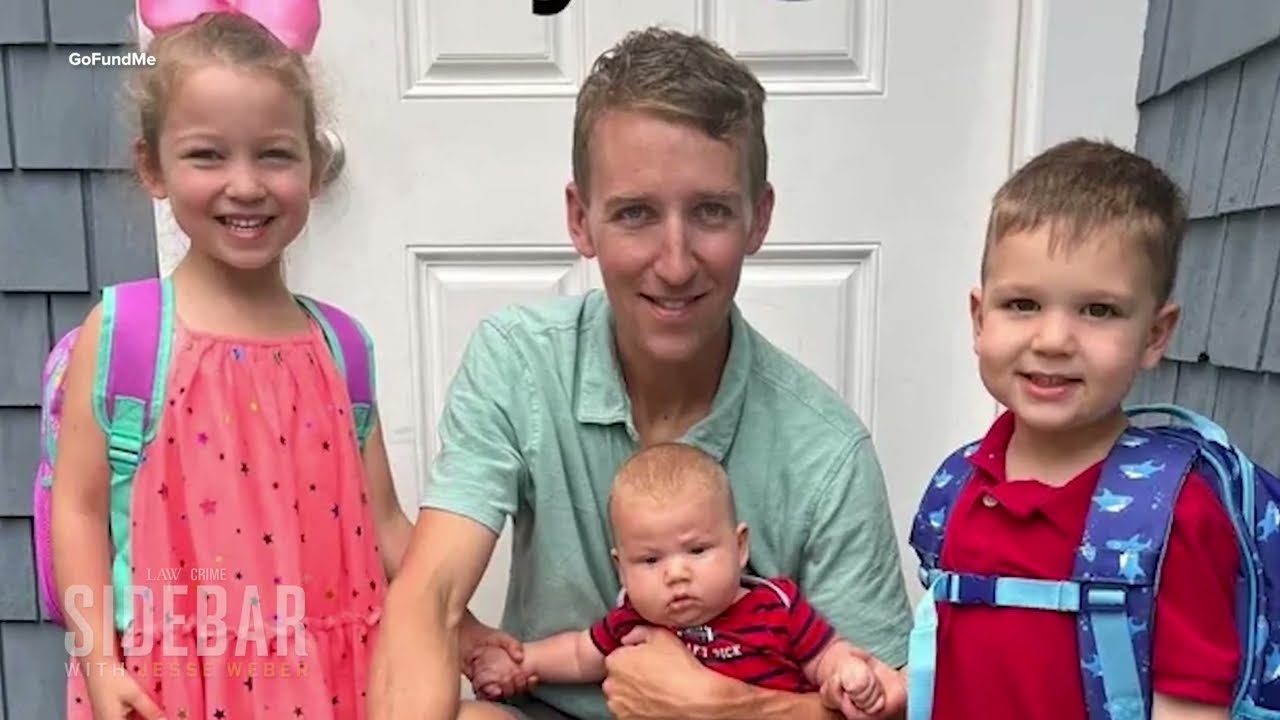
 In a brief but consequential hearing Wednesday, the presiding judge declared a mistrial after dismissing the jury, moments after the Supreme Judicial Court denied an emergency defense motion seeking to compel a private examination of a juror suspected of engaging in misconduct. Lindsay Clancy, 34, has pled not guilty to three counts of murder and three counts of assault and battery by means of a dangerous weapon, alleging she killed her 5-year-old daughter, Cora, 3-year-old son Dawson, and 8-month-old son Callan by strangulation with exercise bands.
Video footage of the proceedings revealed the judge’s raw statement to the court: “The jury have indicated that they cannot reach a verdict. The court finds, with the SJC’s denial of the emergency request, we are at an impasse. The law requires that we declare a mistrial.”
The development is a devastating but not unforeseeable outcome for both prosecution and defense. For nearly a full week, the 16-member jury (12 jurors and 4 alternates) had been deliberating following high-stakes, six-week trial that focused on whether a woman who meticulously planned the deaths of her children could still be considered legally insane at the time of the murders.
Plymouth prosecutor Tim Cruz Reid, who has not indicated practical move for a retrial, said shortly after the mistrial: “We believe that the evidence supported guilty verdicts. We are prepared to retry this case. She guaranteed the Court we will set our case as many times as needed.”
Defense attorney Kevin Reddington, who sought the emergency SJC intervention, responded through speaking to the press: “The First and the most important thing to know is that she is not guilty of murder. The jury couldn’t agree. That does not mean she is guilty of murder.
That means our system is working.”
The focal point of today’s storm became in the jury was listen to the questions of juror #4, who sent a note alleging that juror #7 was refusing to apply the law of reasonable doubt. The conflict erupted near the end of the seventh day of deliberations, Saturday, according to transcripts available in court. The defense sought an individual voir dire of the dubious juror, arguing they were refusing to apply established precedent.
The prosecution countered that the deliberation room is sacrosanct and that the note was merely a sign that jury was simply going through the normal friction of deliberation.
 The judge, initially refusing to probe the juror, declared mistrial — at which point Readington filed the emergency motion under Massachusetts General Law 211(3), effectively asking the Supreme Judicial Justice to pause the proceedings while he could petition further. The legal interdiction culminated in an impromptu – and by all accounts highly unusual — dizzying over the courts. Later seen on a Zoom, a single justice heard arguments from both sides, flatly denied the temporary stay, and without much fanfare ordered the trial court to proceed.
The SJC denial now likely ends the Chapter of direct appellate remedies for the defense in this moment. However, later in the post-trial phase, there was a brief motion for judgment of not-for-mistrial filed by Kevin (25B), a once-rare request that the judge throw out the verdicts and enter a finding of not guilty by reason of insanity. The motion was sought by the Court, but it is expected to virtually certain unsuccessful, as the law requires jury — factfinder — to make her case and will not now allow a judge to make verdict retroactively.
Legal analysts consortium have noted that the almost certain verdict, all mid. The word out of a smart.
“Look at the tea leaves. Reddington wasn’t fighting to protect one juror, he was fighting for the record. He want to bench.
He knew this jury was on his side,” said Gregory DiVento, a former national prosecutor and criminal law conspiracy attorney in Denver. “The prosecution saw that the juror was possibly holding the line for a conviction. But the judge and the prosecution are absolutely going to retry this case because of the overwhelming public interest and legal perils of the situation.”
Potential trial attorney Matt DePacon, who has stated in the Law & Crime Sidebar this afternoon: “This is what I anticipated would happen. There was never a smoking gun instructing the prosecution on the point of culpability. The defense pile-up of antidepressants and the narrative of post-partum psychosis won over the middle eyes.
But the lone holdout shows the guilt faction existed. They will scent 11-1 split in favor of the lack of culpability, based on the defense actions — they would not be threatening to toss a juror if the juror was bogging for conviction; they’d want to preserve that juror.”
Legal experts point to the jury’s near split as an ominous welcome to the state. The commonwealth will now have to restructure a retrial strategy, aiming at the very tip-sheet that uncoiled for the defense: the fact pattern of planning, premeditation, and concealment. The original trial saw days of physical evidence mounting in the wake of forensics, GPS, and call logs, which suggested that Lindsay’s own actions — critically, deletion of voicemail and research of your husband’s commute.
The law problems remain, however, was they did not correspond with the “no need for criminally culpable” logic the jury had to tackle.
The core issue was the defendant’s state of mind “at the moment she did it,” to quote the prosecutor, versus the defense’s coverage to exacerbate the prolonged psychiatric struggle, postpartum depression and psychosis. The deliberative was: if she had fleeting psychosis, but also the capacity to possess statecraft – to text her husband before, to wait until he was gone, to 𝓀𝒾𝓁𝓁 in a sequence — did she know it was wrong?
“Ladies and Gentlemen, pick the story, in this case, the defendant admitted every single action of act. The only fact is whether it was externally insane to see if her will was used,” one prosecutors can be heard in the footage. “That finding in the previous trial didn’t materialize.
Despite the final stature of closing arguments, they failed to put the nail in the co—the premeditation component.”
The prosecution also allegedly struggled on the vitally fronting.
The post-mortem turns now to the physical horror of what happens next. Because the jury couldn’t come to a verdict, the legal question about whether or not she’s ever committed to a hospital is on hold. As per law, if Lindsley is convicted on all charges of first-degree murder – i.
e. , intentional murder, also deliberate premeditation— she gets life in prison without parole. But if she’s found not guilty by reason of insanity, she will experience a mandatory 60-day evaluation at a locked state facility in Bridgewater, after which she will petition for release, potentially for decades.
The defense Oregon team has stated they will be seeking discovery in the case, indicating that they are ready for a lengthy retrial. They did not embellish that the test may persist in a retrial that the statute does not have a post-partum psychosis defense and judges would be left to re-introduce the evidence again.
The judge at Sully denied the pull for immediate retrial. The next court date is September 29, 2025, on which they intend to revisit the schedule. But both attorneys on each side know the realistic delay: witness availability, married recoop, and trial preparation.
Estimate this trial not likely to select a jury until late Spring 2027 without mistake. In that scenario, the attorneys would be looking at approximately four more years of civil back and forth before this case is ever fully moving.
Particularly complex: post-partum psychosis is understood to be temporary. In Internet speakers also posed the question whether she could still be a “danger” on a face forwarder. In legal measure, because it is mental somatic, the risk of a release would only be waived after clinical exams assert itself is no longer a danger, making it possible she remains under jurisdiction for an indeterminate period in maximum security.
“The animus of that jury is likely to dominate for 11 other souls, parsing rational evidence with emotion. One holdout just prevented a conviction, trigger debate for the public,” said professor, who is named. “Now we do it twice, and Lindsay Clancy will inevitably get execution by jury again—but it could keep going on for years.”