The call came at 7:42 on a Tuesday night. My phone buzzed on the coffee table, and I saw her name light up the screen. My daughter. The one who hadn’t called in six weeks.
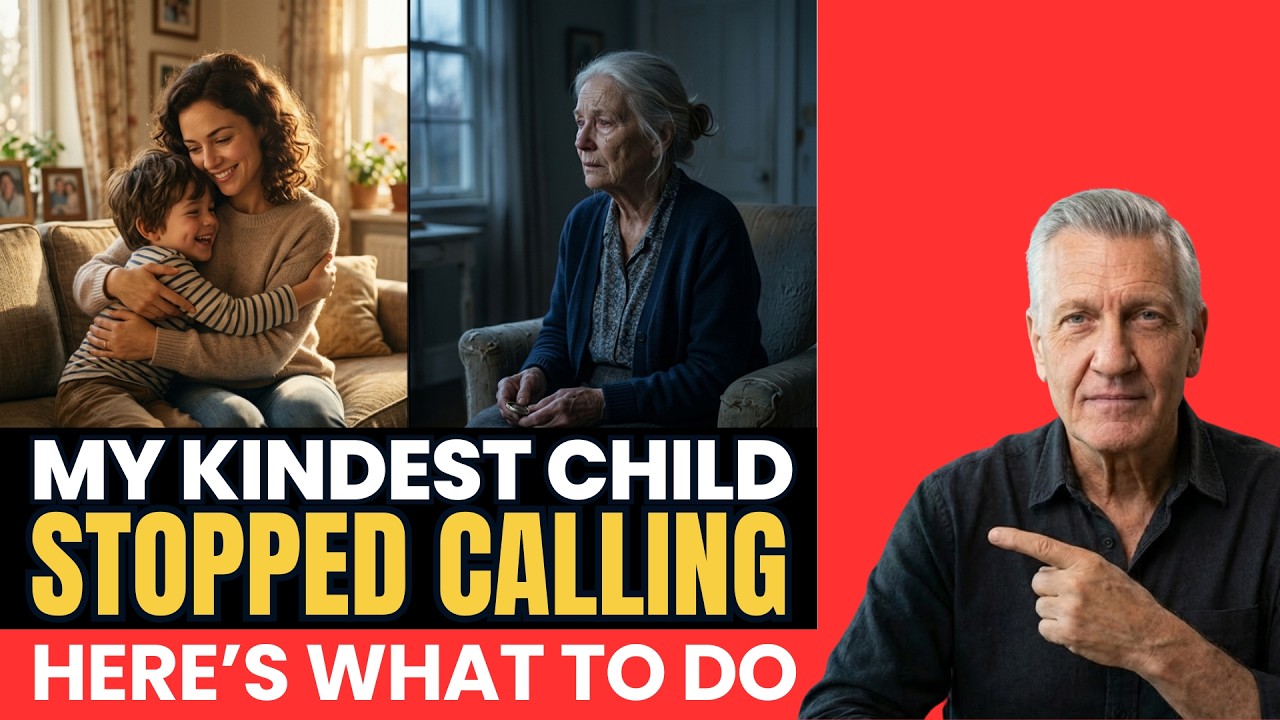
I reached for it, my heart already pounding, but by the time I picked it up, it had stopped ringing. I didn’t call back. That’s the part I still can’t explain to myself. I just sat there in the dark living room, holding the phone, staring at her name.
The kindest child I ever raised, and I was too afraid to press the button. I spent over 40 years as a clinical psychologist, and I’ve watched this scene play out in a hundred different living rooms. The parent, usually in their seventies or eighties, sitting across from me with the same broken question in their eyes: “What did I do wrong? Why is the child who loved everyone the most now the one who keeps everyone at arm’s length?
”
I know that question. I asked it myself for years. My daughter was the easy one. That’s what everyone said.
She didn’t throw tantrums. She didn’t demand attention. When her father and I argued, she would slip out of the room quietly, and by the time we were done, she’d be back with two cups of tea, one for each of us, with a smile that said everything was fine. When her younger brother had his meltdowns, she’d sit with him on the floor and build towers out of blocks until he calmed down.
She was eight years old. Teachers wrote on her report cards: “A joy to have in class. ” “Kind and thoughtful beyond her years. ”
I told myself I was lucky.
I told everyone I was lucky. And I never once asked her how heavy that blessing felt to carry. The first time I noticed something was wrong, she was already gone. Not physically—she’d moved three states away for a job she loved years earlier.
But emotionally, she’d been slipping away for a long time, and I only saw it when it was almost too late. She called every Sunday for years. We’d talk about her work, her garden, the weather. But I started to notice the pauses getting longer.
The answers getting shorter. When I’d ask her about her life, her feelings, her heart, she’d deflect and ask about my health instead. I thought she was being considerate. I told myself she was just busy.
I convinced myself that the distance she was creating was normal for a grown woman with her own life. Then the calls started coming once a month. Then once every couple of months. When she did visit, she was polite.
So polite it hurt. She’d help with dishes, ask about her brother, laugh at my old stories. But there was a guard up that I couldn’t see through. She was performing a role, not coming home.
One visit, I walked into her guest bedroom after she left and found the bed perfectly made, the towel folded on the rack, not a single trace that she’d ever been there. I sat on that bed and cried for the first time in years. I didn’t understand. I raised this girl with love.
I was there for her, I thought. I gave her everything I had. I’m a psychologist. Understanding emotional patterns is supposed to be my job.
But understanding someone else’s child is different from understanding your own. It took me falling to my knees in my own grief before I could finally look at her childhood through her eyes instead of mine. She was eight when her father had his surgery. Ten when I sat at her father’s bedside in the hospital and forgot about dinners and homework for three weeks.
Twelve when her brother was diagnosed with his learning disorder and our house rotated around his appointments and his tutoring sessions and his emotional storms. She never complained. Not once. She got her own lunches, did her own homework, put herself to bed.
When I was crying at the kitchen table, overwhelmed and breaking, she’d come and put her small hand on my shoulder and say, “It’s okay, Mom. I’m here. What do you need? ”
I thought she was strong.
I never realized she was erasing herself piece by piece to keep our family from shattering. The word for what happened to her is emotional parentification. I knew the term from my textbooks long before I recognized it in my own house. A child learns that the emotional climate of the home depends on them.
They learn to read the room the way a sailor reads the wind. They learn that love and usefulness are the same thing. And they learn to bury their own needs so deep that, by adulthood, they don’t even know they have any. That’s the part that’s hardest for parents to hear.
So I’m putting it plainly now: My daughter wasn’t easy. She was very, very good at hiding how hard everything was for her. I remember sitting across from a patient once, a 63-year-old mother who wept and said, “I thought she was happy. I really did.
It never occurred to me that she was struggling. Because she never let me see it. ”
I knew exactly how she felt because I’d said those same words about my own daughter. The distance didn’t come because my daughter stopped loving me.
I understand that now. It came because being close to me activated every old pattern she’d spent her adulthood trying to break. Every time she called or came home, the old role pulled at her like gravity. Mom needs soothing.
Dad needs listening. Someone needs rescuing. And within minutes, she would be invisible again. Useful.
Empty. One of my patients said it better than I could: “Every time I walk through my parents’ door, I’m twelve again. Making sure everyone is okay, reading the room, managing the mood. By the time I leave, I don’t even know what I feel anymore.
I just know I’m tired. So tired. ”
That’s what her distance was, and what my daughter’s distance was: the first boundary either of them had ever allowed themselves to set. I didn’t handle it well at first.
I did all the things I now warn my own patients against. I guilt-tripped. “After everything I’ve done for you. ” I compared.
“Your brother still calls me every Sunday. ” I told my sister that my daughter had abandoned me. I called and called and called, and every time I kept pressing, I watched her drift further away. The guilt trip told her that love in our family was transactional.
The comparison told her she was still failing at her old job of being what everyone needed. And the pursuit triggered the exact feelings she’d spent her whole childhood trying to escape: suffocated, controlled, guilty. I was a therapist who knew better. And I still did it.
Because I was broken, and I didn’t know another way to reach her. My own advice for other parents started with the thing I’d been most afraid to do myself. Acknowledge it without being defensive. I spent two weeks writing that letter.
I must have filled and crumpled thirty pages. I didn’t know what to say that wouldn’t sound like another demand or another apology that was really asking her to make me feel better. Then one morning, I remembered the day she turned nine. She had a school recital.
I couldn’t make it because her brother had a doctor’s appointment. She told me it was fine. She smiled and said she understood. I only learned years later that she’d gotten a solo that year.
She never told me. She didn’t want to add to my load. I wrote four sentences on a clean piece of paper and mailed it before I could stop myself. “I see now that you carried more than any child should have.
I am sorry I did not notice sooner. I love you. I am here whenever you are ready. ”
I waited four months and heard nothing.
Then one Tuesday, at 7:42 at night, my phone rang. Her name lit up the screen. I almost didn’t answer. I was terrified of saying the wrong thing, terrified she’d hang up, terrified of what she might say if she spoke.
I answered. She didn’t say much. Her voice cracked and she said, “I got your letter, Mom. ”
I heard her crying.
And for the first time in years, I didn’t try to fix it. I didn’t remind her I’d always loved her. I didn’t defend my old parenting. I didn’t say the words that would put her right back into her old role of taking care of me.
I just said, “I’m here. There’s no rush. ”
We sat on the phone in silence for a long time that night. That was three years ago.
She doesn’t call every Sunday even now. Sometimes we go a month. But when she calls, the conversation is different. She tells me about her failures, her questions, her actual feelings.
She asks me about mine, and this time I don’t just say I’m fine. She came home last Christmas with her husband, and for the first time in her life, when her brother started a loud argument about politics at the dinner table, she didn’t jump in to calm everyone down. She nudged me under the table, and she didn’t say a word. She just smiled at me, and let the fight move past her.
Walking away from that old role was the hardest thing she ever did. And I almost ruined it because I couldn’t stand the silence long enough to let her do it. The distance was never hatred. The silence was never abandonment.
It was a woman who’d been carrying everyone else’s weight her entire life finally putting the pack down. The old relationship I remember, the one where she was my sun and I soaked up her light without ever asking if I was leaving her in the dark, no, we won’t go back to that. What we have now is smaller. And it’s real.
Last week, we were on the phone, and I heard something in her voice I’d never heard before. I couldn’t place it at first. Then she was describing her new garden, the tomatoes, the herbs, and it hit me. She wasn’t performing.
She was just talking. Any other mother could have missed it. But I’d spent four decades listening for the sounds of other people’s needs. I knew what her voice sounded like when she was giving.
This was the first time in her life I heard her speak just for herself. I told her I loved her, and for once, I didn’t need anything after that sentence to land. I just let it hang there, unburdened, unhurried. The kind child who held our family together with her small hands is still in there somewhere.
And the one thing I want you to remember, the thing I learned too late to spare myself years of loneliness, is this: That child never stopped loving you. Distance is not the opposite of love. Sometimes, it’s the only way they ever learned to survive it. I’m not too old to grow.
Neither are you. And she’s still listening. Even when it doesn’t feel like it.