I’m 84 years old, and until a few months ago, I never imagined I would have to defend my right to live in my own home. I’ve lived in this house for 42 years. My husband Richard and I bought it when we were both still working—he was an engineer, I taught elementary school. Back then, it felt almost too big for us.
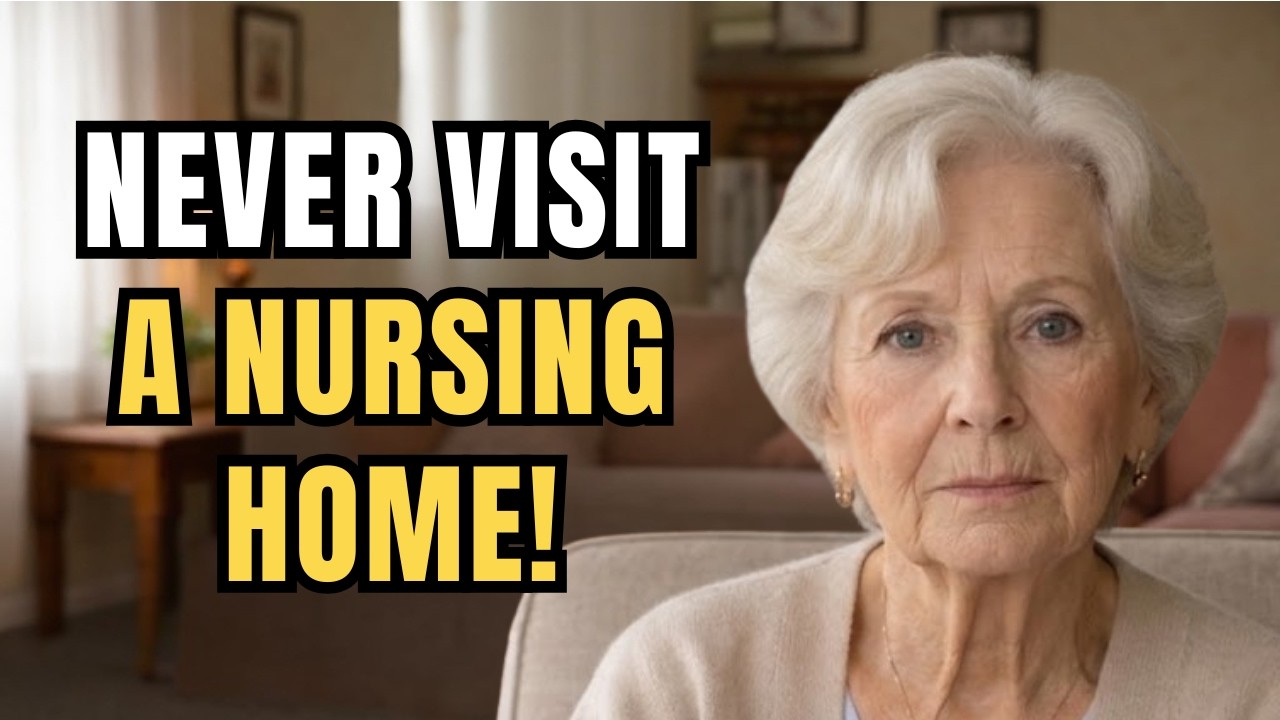
Three bedrooms, a quiet street, a small garden out back. We raised our two daughters here. I can still see them running down the hallway, their laughter bouncing off the walls. There are pencil marks on the kitchen wall where we measured their height every year.
I never painted over those. Those lines aren’t imperfections. They’re time itself, preserved. Richard passed away seven years ago.
It happened without warning. One morning, he simply didn’t wake up. After the funeral, after the paperwork, after the friends slowly returned to their own lives, the house changed. Not in appearance, but in feeling.
It became quieter in a way that felt almost physical. Still, I stayed. My days settled into a rhythm—morning tea by the window, a bit of reading, tending the plants, visits from neighbors. I spoke to my daughters often.
It wasn’t a lonely life. It was simply a different kind of full. But over time, my daughters began to see things differently. At first, their concern came in gentle questions: did I feel safe at night?
Did I worry about being alone? Had I considered making changes to the house? I understood their intentions. When roles begin to shift between parent and child, worry often leads the way.
I answered calmly, reassured them, and moved on. Then the conversations became more persistent. The idea of other living arrangements appeared more often, carefully phrased but increasingly direct. They had been researching places, they said.
Places designed for people my age. Places where help was always nearby. I remember one afternoon in particular. We were sitting at the dining table finishing a meal I had prepared.
The air felt normal, filled with small talk about work and grandchildren. But there was a pause that lingered a little too long. Eventually, the subject emerged. They explained that there were communities where I could have assistance if needed, where everything was organized, where I wouldn’t have to worry about emergencies.
The words were chosen carefully, wrapped in concern and practicality. But beneath them, I could hear the assumption forming—that I was becoming someone who needed to be managed. I listened quietly. I didn’t raise my voice or argue.
I simply said that I was comfortable where I was, that I had managed my life for decades, and that nothing had changed to make me feel incapable now. My response didn’t settle the matter. It only redirected it. After that day, brochures began arriving in the mail, filled with images of smiling residents and sunlit rooms that all looked nearly identical.
Phone calls included subtle references to friends of friends who had made similar moves and were supposedly thriving. Each conversation carried the same underlying message, repeated in different ways. Then came the afternoon that changed everything. I had been resting in the living room, not fully asleep but not entirely awake either.
The television murmured softly in the background. At some point, I became aware of voices in the kitchen. My daughters had come in without waking me, likely assuming I was asleep. I remained still, listening without meaning to.
Their conversation began with concern—the familiar worry about my safety, about time passing, about risks that couldn’t be ignored. But gradually, the tone shifted. The discussion turned toward the house itself. Its value.
The market. The possibility of delays and complications if something were to happen unexpectedly. The numbers they mentioned didn’t surprise me as much as the context in which they were used. The house was no longer being spoken about as a place filled with memories, but as an asset that needed to be managed carefully.
There was a practicality in their reasoning, a kind of efficiency that made sense on paper. But hearing it in that moment, from just beyond the doorway, it felt different. It felt as though I had been quietly repositioned from a person making choices to a situation needing resolution. I didn’t move until they had finished speaking.
When the house fell silent again, I stayed in my chair, staring at the ceiling, letting the weight of what I’d heard settle into something clear and undeniable. That evening, after they left, I walked through each room slowly—not out of habit, but with an intention I hadn’t felt before. My hand brushed along the kitchen counter Richard had installed himself, slightly uneven but strong. I paused by the wall with the height marks, tracing the faded lines.
I stood in the doorway of our bedroom, taking in the stillness that had once felt unbearable and now felt like something I understood. The next morning, I sat down at my computer with a notebook beside me. I looked up the estimated value of my home. The figures were higher than I expected.
I wrote them down carefully, not because I needed to remember them, but because I needed to see them clearly. Then I turned to the places my daughters had been describing. Assisted living communities. Retirement residences.
Care facilities. The websites were polished, filled with reassuring language about comfort and safety. But behind every promise, there were costs. I calculated everything slowly.
Monthly fees. Annual totals. Projections based on my savings and income. The math was straightforward, but the implications were not.
Even with careful planning, those resources wouldn’t last indefinitely. And once they were gone, the options became narrower, more dependent on systems I didn’t fully trust or understand. That realization led me to a different line of thinking altogether. This was no longer just about where I would live.
It was about who would decide. I began researching legal information. Property rights. Mental competence.
Power of attorney and how it functions. At first, the terminology felt dense, almost intimidating. But as I continued, patterns began to emerge. Concepts became clearer.
And with that clarity came a sense of direction. What mattered most was not just my current situation, but how it could be interpreted by others if left undefined. As long as everything remained informal, open to assumption, there was room for someone else to step in and shape the outcome. Not necessarily out of malice, but out of a belief that they were acting in my best interest.
That was not something I could afford to leave uncertain. By the end of that week, I had made a decision. Not about moving, and not about giving in or resisting. It was a decision about preparation.
About drawing a clear line between concern and control—and making sure that line was visible to everyone involved. Because if there is one thing I’ve learned over the course of 84 years, it’s this: decisions that are not clearly claimed have a way of being quietly taken. And I had no intention of letting that happen. By the following Monday, I had taken the first step.
I found the number of an estate planning attorney not too far from where I live. Her name was Linda Chen. I remember hesitating for a moment before making the call, not because I doubted what I needed to do, but because it felt like crossing a line into something more serious, more final. Still, I picked up the phone and scheduled an appointment.
Walking into her office a few days later, I felt surprisingly calm. The space was simple, organized, nothing intimidating about it. Linda herself had a steady presence, the kind that makes you feel like you don’t need to rush your words. She asked me to tell her what brought me in, and so I did.
I explained my situation: my daughters’ concerns, the conversation I had overheard, the questions building in my mind ever since. She listened without interrupting, not once. When I finished, she asked me a few straightforward questions—about my daily routines, how I managed my finances, what my days looked like. I answered each one without hesitation.
There was a small pause after that. Then she nodded, almost as if confirming something she had already suspected. She explained that as long as I was mentally competent—and there was no question that I was—I remained in full control of my decisions. My home.
My finances. My life. No one, not even my children, could force me to sell my house or move somewhere against my will. Not without clear legal grounds, and certainly not based on preference alone.
Hearing that didn’t shock me, but it grounded me. It turned something I had hoped was true into something I knew was true. But she didn’t stop there. She pointed out something just as important.
While I was in control now, the future still needed to be clearly structured. Documents needed to reflect my current wishes, not the circumstances of decades ago. My will, which I hadn’t updated in years, might no longer align with my assets or intentions. Without proper planning, even a simple situation could become complicated—especially when multiple people were involved.
That was when we began outlining what needed to be done. Over the next few weeks, I worked closely with her. We updated my will, making sure everything was clear and balanced. We created a revocable living trust, something I had never considered before but quickly understood the value of.
It would allow my assets to be managed smoothly without unnecessary delays. We also put in place a health care directive, specifying my preferences in case I was ever unable to communicate them myself. That part required more thought than I expected. It forced me to consider situations I would rather not imagine.
But in the end, it brought a sense of peace. Decisions that could have become burdens for others were now clearly defined. For financial matters, I assigned power of attorney. I chose carefully, not based on pressure or assumption, but on trust and temperament.
Everything was defined with intention. And then there was the house. I made one thing very clear. As long as I was alive, the house remained mine.
No sale. No transfer. No changes without my direct consent. After my time, it could be handled as part of the estate, divided fairly, without conflict.
But until then, it was not to be treated as something pending or negotiable. Everything was written, reviewed, and finalized. Signed, witnessed, documented. Not just understood, but secured.
When it was done, I noticed a change in myself. Not a dramatic one, but something steady and unmistakable. A sense of weight lifting, of uncertainty settling into something firm. I hadn’t just reacted to the situation.
I had defined it. The following Sunday, my daughters came over as they usually did. I prepared lunch—something simple but familiar. The kind of meal that doesn’t demand attention, leaving space for conversation.
We sat at the same table that had held decades of birthdays, arguments, laughter, and quiet evenings. For a while, everything felt ordinary. But I knew what needed to be said. At a natural pause, I placed my hands on the table and spoke calmly.
Not emotionally. Not defensively. Just clearly. I told them I understood their concerns.
I acknowledged that they were trying to look out for me, that their intentions came from a place of care. That part was important. It always is. Then I explained what I had done.
I told them I had met with an attorney, that my estate plan had been fully updated, and that all decisions regarding my home and my future were now clearly documented. I didn’t go into unnecessary detail, but I made the structure unmistakable. Most importantly, I told them that I would be staying in my home. Not temporarily.
Not conditionally. Simply as a decision. There was a silence after that. Not tense, but thoughtful.
The kind that follows something that cannot be easily redirected. My younger daughter looked down for a moment, her expression softening in a way that told me she understood more than she had before. My older daughter remained still, processing, perhaps reconsidering the situation from a different angle. There were no raised voices, no arguments.
Just a gradual shift. Over the next few weeks, I noticed the difference. The topic did not come up again in the same way. There were still questions, still moments of concern, but they were no longer framed as solutions waiting to be imposed.
They became conversations again—balanced and mutual. The house felt the same as it always had. The light in the afternoons. The quiet in the evenings.
The small routines that fill a day without needing to be noticed. But I felt different within it. Not because anything had been taken away, but because something had been reaffirmed. Independence is a quiet thing.
It doesn’t announce itself. It shows up in small choices, in daily rhythms, in the ability to decide without needing permission. And sometimes it isn’t challenged loudly. Sometimes it’s questioned gently, gradually, until one day you realize it needs to be stated out loud.
I am 84 years old. I have lived a full life. I have built a home, raised a family, experienced loss, and found my way through it. I understand that time changes things.
I understand that one day I may need help in ways I do not today. But that day is not decided by someone else’s timeline. It is decided by mine. If there is anything worth holding on to as the years pass, it is not just health or comfort, but the right to choose.
The right to say yes when you mean yes and no when you mean no. The right to remain where your life has unfolded for as long as it still feels like yours. So if you ever find yourself in a situation where decisions are being shaped around you without your voice fully included, take a step back. Look closely.
Ask questions. Put things in writing if you have to—not out of fear, but out of clarity. Because a home is not just a place you live. It is a place where your life has meaning.
And that is not something anyone else gets to redefine for you.