“Doctor, do my children even love me? ” Margaret asked me, her voice cracking. She was 72, a devoted mother of three grown children, and she was devastated. She called each of them every single day.
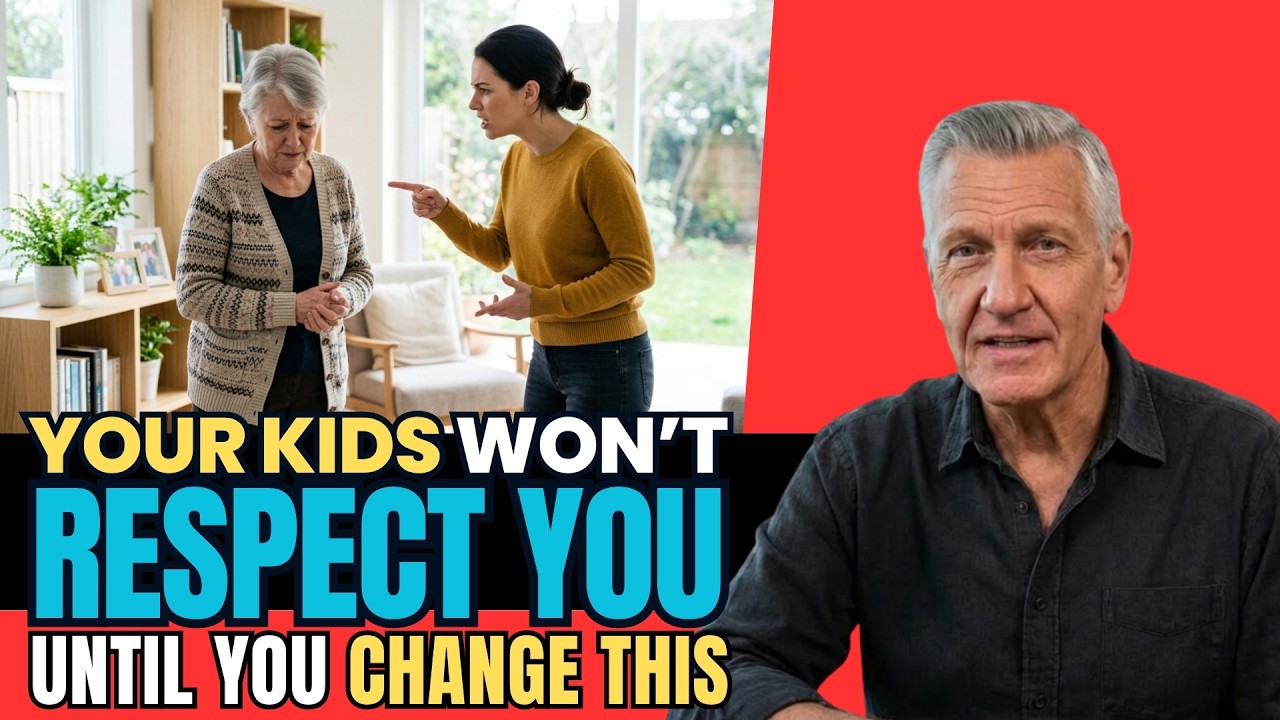
She checked in every morning, sent a text at lunch, and sometimes called again before bed. She never missed a day. And none of them ever called her first. Not once.
“Of course they love you, Margaret,” I told her. “But they don’t miss you. And there’s a very important difference. ”
I’ve been a family psychologist for over 40 years, and I’ve sat across from thousands of parents.
Good, loving, devoted parents. And the most common heartbreak I hear isn’t abuse or abandonment. It’s this: *I gave them everything, and now I feel invisible. *
Being taken for granted isn’t a reflection of how much you’ve given.
It’s a reflection of how you’ve trained people to treat you. And that’s good news, because if you can train it, you can untrain it. There’s a pattern I call the availability trap. When something or someone is always available, always accessible, always saying yes, the human brain stops registering it as valuable.
The brain is wired to pay attention to what’s scarce, not what’s constant. The air you breathe is essential, but you don’t think about it until someone takes it away. That’s what many of us have become to our children—the air. Always there, always giving, never demanding anything.
And because of that, they’ve stopped noticing. It’s not their fault, and it’s not yours. But once you understand the pattern, you can change it. Here are the six shifts that actually work.
First, stop being the one who always calls first. I asked Margaret to do something that terrified her: stop calling first. Not forever. Not as punishment.
Just to step back and wait. It took four days. Four days of silence that felt like an eternity to her. Then her youngest called.
“Mom, are you okay? I haven’t heard from you. ”
That phone call meant more to Margaret than the 4,000 calls she had made herself. Because for the first time, her child reached for her.
I’m not telling you to disappear from your children’s lives. I’m telling you to create enough space for them to feel what life is like without your voice in it. That’s not cruelty. That’s wisdom.
Second, build a life they want to be part of. Picture two parents on a Saturday afternoon. Parent A sits at home all day, watches television, waits for the phone to ring. When you visit, they tell you how lonely they’ve been, how long the days feel, how there’s nothing to do.
You leave feeling heavy, guilty, and a little relieved to go. Parent B just got back from a watercolor class. They’re telling you about a book club, a garden project with a neighbor, a trip they’re planning with friends. They’re laughing.
They’re busy. They’re alive. Which parent would you call more often? The answer is obvious.
Yet so many of us make our children our only source of meaning. When we retire, our social circles shrink, and suddenly our adult children carry the entire weight of our emotional world. That’s an unfair burden, even if we don’t mean it to be. Here’s the truth that might surprise you: your children don’t owe you their time.
But when your life is full and interesting, they will want to be in it. Not out of obligation, out of genuine desire. Take a class. Join a group.
Volunteer. Get curious about something new. Not as a performance for your children, but for yourself. When they see you thriving, something shifts.
They stop seeing you as someone to take care of and start seeing you as someone they’re proud to know. Third, set boundaries without guilt. I’ve worked with seniors who are financially supporting adult children well into their 40s and 50s. I’ve worked with grandparents who babysit five days a week with no break, no thanks, no acknowledgment.
I’ve worked with parents who’ve become the emotional dumping ground for every problem in their children’s lives, absorbing stress and anger while getting nothing in return. When I ask, “Why don’t you say no? ” the answer is always the same: “They’re my children. I can’t say no to my own children.
”
Yes, you can. And you must. Saying no teaches your adult children that you are a human being with limits, feelings, and needs of your own. Not a resource.
Not a service. A person. Something like: “I love spending time with the grandchildren, but I need at least two days a week for myself. ” Or: “I’m happy to help when I can, but I’m not able to be your financial safety net every month.
”
Will this be uncomfortable? Yes. Will they push back? Probably.
Change is always met with resistance. But when you hold your ground, respect grows. And where respect lives, the fear of losing you lives too. Because when someone realizes you have limits, they also realize you have value.
People protect what they value. Fourth, stop oversharing your loneliness. When you tell your children, “I’m so lonely” or “No one ever visits me,” you think you’re expressing a need. And you are.
But what they hear is a demand wrapped in guilt. And guilt-driven visits aren’t real connection. When someone shows up out of guilt, they’re not present. They’re counting the minutes.
Resentment builds, the visits get shorter, then less frequent, then they stop altogether. Instead, demonstrate your fullness. Instead of “I have nothing to do,” try “I’ve been learning how to grow tomatoes, and they’re actually turning out great. ” Instead of “No one calls me,” try “My friend Joan and I went to the funniest movie last weekend.
”
When your children see that your life is full, they feel less burdened and become genuinely curious about what you’re up to. Curiosity is a far better foundation for a relationship than guilt. Always. Fifth, be honest, even when it’s uncomfortable.
So many seniors have spent decades swallowing their feelings to keep the peace. Their child forgets their birthday, they say nothing. The grandchildren visit and don’t say thank you, they say nothing. They’re left out of family decisions, they say nothing.
But silence doesn’t keep the peace. It kills the relationship slowly from the inside. Every unspoken hurt becomes a brick in the wall between you and your child, until neither of you can see over it anymore. There’s a world of difference between aggression and honesty.
Aggression says, “You never care about me. You’re a terrible child. ” Honesty says, “It hurt me that you forgot my birthday. I know you’re busy, but it mattered to me.
” The first starts a war. The second opens a door. When you speak your truth without accusation, you give your children the chance to make it right. Most adult children don’t realize they’re hurting their parents.
They’re not cruel. They’re oblivious. And they can’t fix what they don’t know is broken. Vulnerability is not weakness.
It takes far more strength to say “that hurt me” than to swallow it and smile. And the parent who can be vulnerable is the parent who gets truly known. Being truly known is how you become impossible to take for granted. Sixth, become someone who can walk away.
The person your children will fear losing most is not the person who clings the tightest. It’s the person who could walk away and still be okay. Emotional independence doesn’t mean you don’t love your children. It means you don’t need them to survive.
Your happiness, your identity, your sense of purpose—none of these collapse if your child doesn’t call this week. Think of it as an emotional portfolio. A financial advisor tells you not to put all your money in one stock. I’m telling you not to put all your emotional wealth in one relationship.
Diversify. Invest in friendships, in your health, in hobbies that challenge you, in a purpose that gets you out of bed in the morning. Invest in the relationship you have with yourself, because that’s the one relationship that will be with you until the very end. When your children see that you are whole on your own—not desperate, not clinging—something profound happens.
They stop treating you like an obligation and start treating you like a choice. And a relationship built on choice is a relationship built on real love. I know some of this is hard to hear. You’ve spent decades giving, sacrificing, putting everyone else first.
That’s a lifetime of love. But love without boundaries becomes resentment. Generosity without limits becomes invisibility. Silence in the name of peace becomes loneliness.
These shifts aren’t about punishing your children. They’re about honoring yourself. Because you’re not just someone’s parent. You’re not just someone’s grandparent.
You’re a human being who has lived, loved, struggled, and survived things your children may never fully understand. You deserve to be seen. You deserve to be valued. And you deserve to be feared lost.
Not through games or manipulation, but through the quiet, undeniable power of a person who knows their own worth. This week, just pick one of these shifts—whichever one hit home the hardest—and start there. You don’t need to change everything overnight. One small shift is enough to set a new direction.
I’ll tell you what Margaret did. She started with the first one. She stopped calling first. It took four days before her son reached out, but when he did, the entire tone of their relationship changed.
He’s the one who calls now. He’s the one who asks about her life. And for the first time in years, she doesn’t feel invisible. You didn’t raise your children to lose you without feeling it.
Now it’s time to remind them what they have, before it’s too late.