The phone rings. You dial your son’s number, maybe your daughter’s. It rings once, twice, and then they pick up. You’re happy.
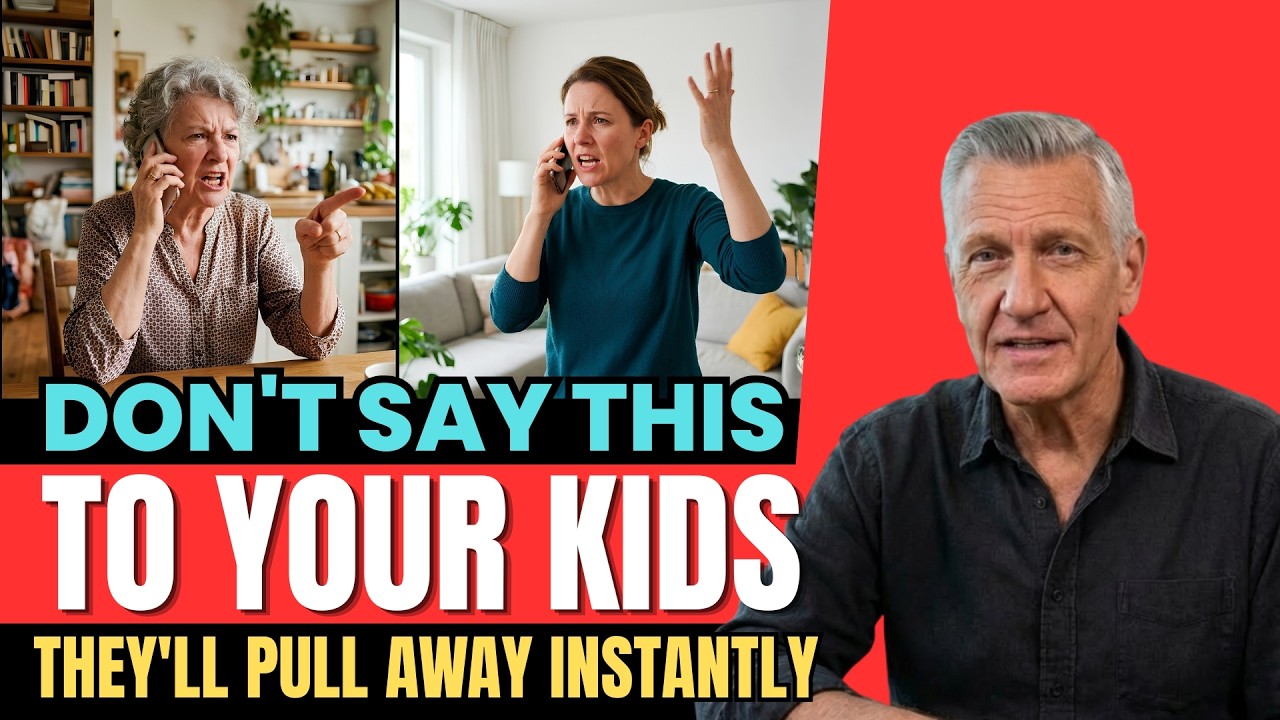
You’ve been waiting for this. You want to hear their voice, ask how things are going, maybe share something about your week. Four minutes later, the call is over. They said they had to go.
Something came up. They’ll call you later. And you’re left sitting there, holding the phone, thinking, “What just happened? ”
If that sounds familiar, stay with me.
In my 40 years as a clinical psychologist working with hundreds of families, listening to both parents and their grown children, I have heard this story more times than I can count. Here’s what I’ve learned. Most of the time, it’s not the length of the call that drives children away. It’s not how often you call.
It’s not even what you talk about halfway through. It’s the very first words out of your mouth. The opening phrase. Those first five to ten seconds.
That’s where the damage happens, and most parents have absolutely no idea they’re doing it. Let me walk you through seven phrases parents commonly say at the start of a phone call that cause adult children to emotionally disconnect—sometimes before the conversation has even really begun. And for each one, I’ll give you a simple, warm, natural replacement. This isn’t about being fake.
It’s about understanding how the people you love the most actually receive you, and making one small shift that can change everything. **The Psychology First**
Before we get to the phrases, you need to understand why they cause harm. Neuroscience tells us the human brain makes an emotional assessment of a conversation within the first 0. 2 seconds of hearing a familiar voice.
Faster than you can blink. That first impression sets the tone for everything that follows. Psychologists call this emotional tone setting. The opening of a conversation is like a key that unlocks a certain room in the mind.
If the key signals safety, warmth, and connection, the door opens wide. If it signals guilt, pressure, or emotional weight, that door starts to close—often without the other person even realizing it. Add to that something I call pattern lock. When adult children have spoken to their parents for years, they’ve built deeply ingrained expectations.
They know, sometimes unconsciously, what kind of call this will be based on the very first sentence. When those early patterns are negative—when they signal “Get ready to feel guilty” or “Brace yourself for a problem”—the brain goes into self-protective mode. The person is physically present, but emotionally, they’ve already half checked out. That’s not because they don’t love you.
They do. But love doesn’t override the nervous system. **Phrase One: “You Never Call Me. “**
This is one of the most common openers I hear, and one of the most damaging.
“You never call me. ” Or variations: “I haven’t heard from you in weeks. ” Or “I was starting to wonder if you were still alive,” said with a little laugh—but the message underneath is the same. I understand where this comes from.
When you haven’t heard from your child in a while, there’s a real ache. A longing. You miss them, and you want them to know it. But here’s the problem.
The moment those words come out, your adult child doesn’t hear longing. They hear accusation. Their brain immediately shifts into defense mode. They start calculating.
When did I last call? Was it that long? Am I a bad son? Am I a bad daughter?
And guilt is one of the most powerful conversation killers there is. Nobody wants to stay on a call that makes them feel like a failure. So what do you say instead? Try this: *”I was just thinking about you, and I wanted to hear your voice.
“*
That’s it. Simple. Warm. True.
Instead of making your child feel like they’ve done something wrong, it makes them feel wanted. There’s a world of difference between “you’ve been neglecting me” and “I thought of you and reached out. ” One closes the heart. The other opens it.
**Phrase Two: “I Don’t Want to Bother You, But… “**
This phrase feels humble. It even feels considerate. But I promise you, it has the opposite effect.
The moment your child hears the word “but,” their internal alarm goes off. Every adult alive knows that whatever comes after “but” is the real thing. “I don’t want to bother you” is just the preamble. What’s coming next?
A problem? A request? Something heavy? This is what psychologists call preemptive anxiety.
You’ve just warned your child that something emotionally significant is about to land on them—before they’ve even had a chance to settle into the call. And there’s something else happening underneath this phrase that most people don’t realize. When you say “I don’t want to bother you,” you’re actually placing a small emotional burden on your child. Now they have to reassure you.
They have to say, “Of course you’re not bothering me, Mom. ”
That reassurance, that emotional labor, starts the call on a draining note. What to say instead? Make it clean and respectful of their time.
*”Hey, I have a quick question. Do you have two minutes? “*
Ask. Pause.
Let them answer. This small act of genuine consideration does more for connection than any amount of self-deprecating softening ever could. **Phrase Three: Opening with Bad News**
This one is trickier because it doesn’t feel like a problematic opener. You’re just sharing.
You’re staying connected. What could be wrong with that? Here’s what’s wrong. When you open a call with bad news—a health scare, a neighbor’s tragedy, a community problem—you are training your child’s brain.
Over time, if the calls from Mom or Dad consistently begin with something worrying or sad, the brain builds an association. Call from parent equals incoming emotional weight. It becomes a pattern, and people naturally begin to brace themselves. Or worse, begin to avoid the source of that weight altogether.
Now, I’m not saying you can never share difficult news. Of course you can. Family members need to know when things are hard. But the opening of the call is precious real estate.
Use it wisely. What to do instead? Lead with something light, something genuine, something that invites them in. Start by asking about their life, their week, their kids—something they mentioned last time you talked.
Once there’s warmth in the conversation, once there’s genuine connection, then, if you need to, share the harder things. Context changes everything. The same news feels different when it comes wrapped in love rather than leading with alarm. **Phrase Four: “I Know You’re Busy, But…
“**
Parents use this phrase thousands of times, almost always with good intentions. You’re trying to acknowledge your child’s demanding life. You’re trying not to seem needy. But “I know you’re busy, but” creates a quiet paradox, and your child feels it even if they can’t name it.
When you say “I know you’re busy” and then continue talking anyway, you’re doing something contradictory. You’re acknowledging their time and then ignoring it in the same breath. It communicates that their schedule matters—but not quite enough for you to actually ask first. Over time, this creates low-level resentment.
Your child may not consciously recognize it, but something about those calls starts to feel like an imposition they have to manage. The fix is disarmingly simple, but it requires something from you. You have to be willing to hear no. Instead, say: *”Is this a good time to talk for a few minutes?
“*
Then stop talking. Wait. Actually listen to the answer. If they say, “Mom, I’m actually in the middle of something.
Can I call you tonight? “—let that be okay. Let it be easy. That moment of genuine respect will do more for your relationship than an hour-long call that felt like an obligation.
**Phrase Five: Sibling Comparison**
“Your brother called me every Sunday. ” “Your sister sends photos of the grandkids all the time. ” “Your cousin came to visit Grandma last month. ”
It might not even be framed as a comparison.
It might sound completely innocent. But your adult child hears every syllable. Here’s the psychological truth about sibling comparison. It never fully goes away.
The feelings forged in childhood—the competition for parental love and approval, the fear of being the less favored one—those feelings don’t disappear when children grow up. They go quiet. They go underground. But they are still there, and they can be reactivated in an instant.
When you bring up a sibling in the first moments of a call, especially in a way that implies that sibling is doing better, you don’t motivate your child to do more. You do the opposite. You make them feel inadequate, compared, ranked, and subtly dismissed. And nobody wants to stay on a call that makes them feel like they’re coming in second place in their own family.
The replacement is simple. When you call this child, this call is about this child. Keep it that way. Save news about siblings for when it comes up naturally—not as an opener, and certainly not as a measuring stick.
**Phrase Six: “I Saw on Facebook… “**
We’re living in a time when parents and grandparents are more connected to social media than ever before. That’s wonderful in many ways, but it has introduced a new kind of opening phrase that consistently causes friction. “I saw on Facebook that you went to that concert.
” “I noticed on Instagram that you were at the beach last weekend. ” “Your neighbor posted a photo of you. Looked like you had a party. ”
Here’s what your adult child hears when a call starts this way: *”I’m watching you.
“*
That’s it. Not maliciously. You’re not trying to surveil them. But the feeling on the receiving end is unmistakable.
My parent is monitoring my social media, and now they’re going to ask me about things I didn’t choose to share with them. Adult children—even loving, close adult children—have a deep psychological need for autonomy, for the sense that their life is their own, not something being reviewed and reported back on. When that boundary feels blurry, they pull back. They stop posting as openly.
They start screening calls. What to say instead? Let them share. Ask an open, curious question.
*”What’s been going on with you lately? “* Or, *”Tell me something good that happened this week. “*
Give them the gift of choosing what they want you to know. That choice, that sense of control over their own story, is something they will deeply appreciate—consciously or not.
**Phrase Seven: “When Are You Going To…? “**
This final phrase shows up in so many forms. “When are you going to give me grandchildren? ” “When are you going to come visit?
” “When are you going to call more often? ” “When are you going to settle down, get a better job, move closer? ”
These questions feel natural to ask because the feelings behind them are real. You do want grandchildren.
You do miss seeing them. You do wish they called more. These are legitimate human longings. But here’s what happens in the mind of your adult child when a call opens with “when are you going to.
” The call has just become an interrogation. A performance review. A report card on how well they are meeting your expectations—and implicitly, the suggestion that they are currently falling short. No adult, no matter how much they love their parent, wants to feel like a disappointment before the conversation has even warmed up.
So they rush through the call. They give short answers. They find a reason to hang up. The shift here requires real vulnerability from you.
Instead of asking when, share why it matters. Not “when are you coming to visit? ” But: *”I really miss you. Is there any chance we could find a time to see each other soon?
I’d love that so much. “*
The first is a demand in the shape of a question. The second is an invitation wrapped in genuine love. One puts your child on the defensive.
The other makes them want to say yes. **The Three-C Method**
Now that we’ve covered what not to say, let me give you a simple framework for opening a phone call that actually works. I call it the three-C method. It takes about ten seconds, and it changes everything.
**C number one: Connect. ** Start by referencing something specific about their life, not yours. Something they mentioned last time. Something you know is going on for them.
“Hey, how did that appointment go last week? ” Or “I was thinking about your garden. Is it coming in yet this year? ” This immediately signals: I was thinking about you—about you, specifically.
**C number two: Check. ** Ask if it’s a good time, and mean it. “Is now okay to chat for a bit? ” This is not weakness.
This is respect, and your child will feel it. **C number three: Curiosity. ** Open with genuine interest in their world, not a report on yours. Not a question that requires them to justify themselves.
Just honest, warm curiosity. “Tell me something good” or “What’s making you smile lately? ” These questions invite them in. They don’t corner them.
Here’s what a strong call opening sounds like when you put all three together:
*”Hi sweetheart. I was thinking about that job interview you mentioned. Is now a good time? I’d love to hear how it went.
“*
Twelve words. Warm. Focused on them. Permission seeking.
Curious. That’s the whole framework. The science behind why this works is straightforward. When your child’s brain registers that this call is going to be about connection—not correction, not guilt, not pressure—the emotional door swings open.
They settle in. They stop watching the clock. The conversation becomes something they want to be in, not something they’re enduring. **A Final Word**
I want to close with something I say to nearly every parent I work with, and I mean it from the bottom of my heart.
You are not a burden. You are their parent. You are someone who sacrificed, who showed up, who built the foundation they are standing on right now. The love between you is real, and it is deep.
Even when the calls feel short. Even when the distance feels wide. But love needs a language, and that language has to be one the other person can actually receive. The shifts I’ve talked about today aren’t about changing who you are.
They’re not about being less honest or hiding your feelings. They’re about learning to wrap your love in a way your children can open—instead of a way that makes them brace themselves before they answer. Most parents who say these phrases have no idea they’re doing it. It’s not malice.
It’s habit. It’s unexamined patterns built over decades. And here’s the beautiful truth. Patterns can change at any age, at any stage of a relationship.
I’ve seen families that hadn’t had a real conversation in years come back together—slowly, imperfectly, but genuinely—because one person decided to open the next call differently. That person can be you. Starting with the very next call you make. Here’s what I want to ask of you this week.
Pick one phrase from today’s list. Just one. And the next time you reach for the phone, try the replacement instead. That’s all.
One small shift. Because you deserve phone calls that end with “I love you, talk soon. ” Not silence and a clock ticking. Take care of yourself.
And go make that call.