The next time your adult child rolls their eyes at you, cuts you off mid-sentence, or speaks to you in a tone that makes you feel small, don’t sit there swallowing the sting. You don’t need to raise your voice to hold your ground. You just need the right words. After over four decades as a family psychologist, I’ve learned that silence feels like peace, but it’s actually permission.
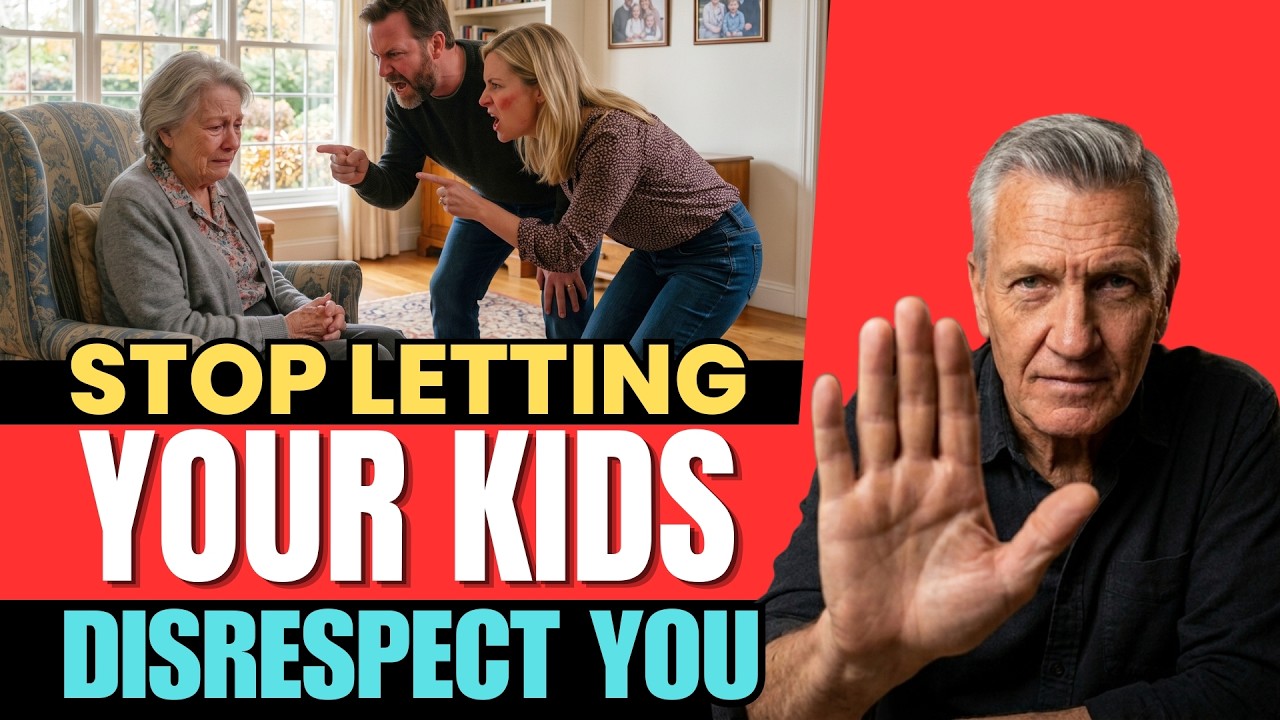
When you consistently absorb disrespect without addressing it, the behavior doesn’t stop. It escalates. The resentment builds quietly, and the warmth between you begins to cool. Suppressing that pain hurts your health too.
What works isn’t confrontation. It’s questions. A good question doesn’t attack. It reflects.
It asks the other person to look at themselves. Here are the seven that have changed the families I’ve worked with. Question one: “Would you speak to your boss the way you just spoke to me? ”
Most adult children who are disrespectful to their parents are perfectly polite with their employers.
They manage their tone. They choose their words. With you, the filter disappears, because you are safe. In the emotional economy of relationships, parents represent unconditional love, and somewhere in the unconscious mind, that translates to, “They’ll forgive me no matter what.
”
I counseled a woman named Margaret, a 67-year-old retired teacher. Her son, in his late 30s, had a habit of cutting her off and sighing loudly when she spoke. One afternoon, after he snapped at her over the phone, she calmly said, “Would you speak to your supervisor the way you just spoke to me? ”
Silence.
Then his voice changed. “No,” he said quietly. “No, I wouldn’t. ” That was the beginning of a real conversation.
Question two: “Do you realize what you just said, or did it just slip out? ”
Not all disrespect is deliberate. Much of it is habitual. They’ve developed a tone they’ve stopped noticing.
This question flags the behavior without making it a full-scale accusation. It allows them to say, “Oh, I’m sorry, that came out wrong,” without feeling like they’re confessing to a crime. I worked with a 72-year-old father whose daughter dismissed everything he said with, “Dad, that’s not how it works anymore. ” She didn’t even realize she was doing it.
When he asked her how often she said that, she looked genuinely surprised, then ashamed. The wake-up call is often the beginning of change. Question three: “Is this how you’d want your children to speak to you one day? ”
Every parent wants to be a good role model.
Children are watching constantly, absorbing tone, body language, and patterns of interaction. When your grandchild sees their parents speak condescendingly to you, they are learning that this is how adults treat their parents. I remember a couple in their late 60s whose daughter had been sharp-tongued during a holiday visit. When her mother quietly asked, “Sweetheart, is this how you’d want Emma to speak to you when she’s grown?
” the daughter went completely still. Her own little girl was sitting right there at the table. She didn’t say a word, but something shifted in her eyes. Question four: “What exactly have I done to deserve being spoken to like this?
”
This one requires courage. It’s direct, but not defensive. It’s a genuine request for clarity. Underneath disrespect, there is often frustration that hasn’t been articulated.
Either they name something real, and suddenly you have the foundation for an actual conversation, or they can’t name anything, and the realization is powerful. A retired firefighter, 70 years old, tough as nails, told me that when he asked his son this question, his son opened his mouth to respond and then just stopped. After a long pause, he said, “I don’t know, Dad. I’m sorry.
” It was the first real apology in years. Question five: “Do you understand that I won’t always be here? ”
Over 40 years of sitting with grieving families, the most common thing adult children say is, “I wish I had said I was sorry. ” Not about trips.
Not about calls. It’s about the way they treated their parents. This question brings that future moment into the present. Say it gently.
Say it without bitterness. Discomfort is not harm. Sometimes it’s the very thing that changes behavior when nothing else can. Question six: “Are you okay?
Because the person I raised wouldn’t speak to me like that. ”
This is my personal favorite. It sets a firm boundary while expressing love. It says, I know who you are, and this isn’t you.
Sometimes the adult child who lashes out isn’t acting out of malice. They’re overwhelmed, struggling, in pain, and that pain comes out sideways at the person they feel safest with. I had a client, a 65-year-old mother of three, whose middle son had become increasingly curt over six months. After a particularly cold phone call, she called him back and said, “Honey, are you okay?
Because the son I raised doesn’t talk to me that way. ” He broke down. His marriage was falling apart, and he had told no one. That call opened the door to the most honest conversation they’d had in years.
Question seven: “Can we start this conversation over with respect? ”
This question offers a fresh start without pretending nothing happened. It acknowledges that something went wrong, and it makes one clear, non-negotiable request: respect. Not agreement.
Not obedience. Just basic human dignity. You are saying, “I’m willing to keep talking, but not like that. Let’s try again.
” It’s very difficult to refuse that. In family therapy, we call this a repair moment. It’s not the absence of conflict, but the return to connection after it. That willingness to begin again is what love actually looks like in practice.
These seven questions are not weapons. They are mirrors. When you ask them calmly, without malice, you are holding up a reflection and asking your adult child to see themselves honestly. That treats them as a full adult capable of doing better.
Write these down. Say them out loud. Practice in the mirror, not to rehearse a fight, but to find your voice. When the moment comes, and it will come again, you won’t be caught off guard.
You are not too old to set boundaries. You are not too late. And you are absolutely not alone.