The trial of Dwayne “Keefe D” Davis, the only person ever criminally charged in connection with the 1996 murder of hip-hop icon Tupac Shakur, exploded into the public eye on its first day, with prosecutors laying out a devastating narrative of gang retaliation, cold-blooded planning, and a series of alleged confessions that spanned nearly three decades. The proceedings in a Las Vegas courtroom marked the beginning of a legal reckoning nearly 30 years in the making, as a jury of ten women and six men, including four alternates, was seated to decide the fate of the man accused of orchestrating the drive-by shooting that silenced one of music’s most influential voices. The atmosphere was electric, charged with the weight of history and the promise of long-delayed justice, as both sides delivered opening statements that painted radically different pictures of the evidence, the investigation, and the man at the center of the case.
The prosecution, led by attorney Binu Pal, did not mince words, immediately framing the killing not as a random act of violence but as a calculated act of gang vengeance, meticulously planned and executed within a span of just two and a half hours after a perceived slight against Davis’s nephew. The core of the state’s case, as outlined in the opening, rests almost entirely on the words of Davis himself, a series of recorded statements, a published memoir, and interviews with law enforcement where he allegedly detailed his role in the murder with chilling specificity. The defense, however, countered with a blistering attack on the credibility of those very statements, arguing that Davis was a notorious storyteller and that the entire case was built on a foundation of fiction, not fact, a house of cards that would collapse under the weight of a sloppy and incomplete police investigation.
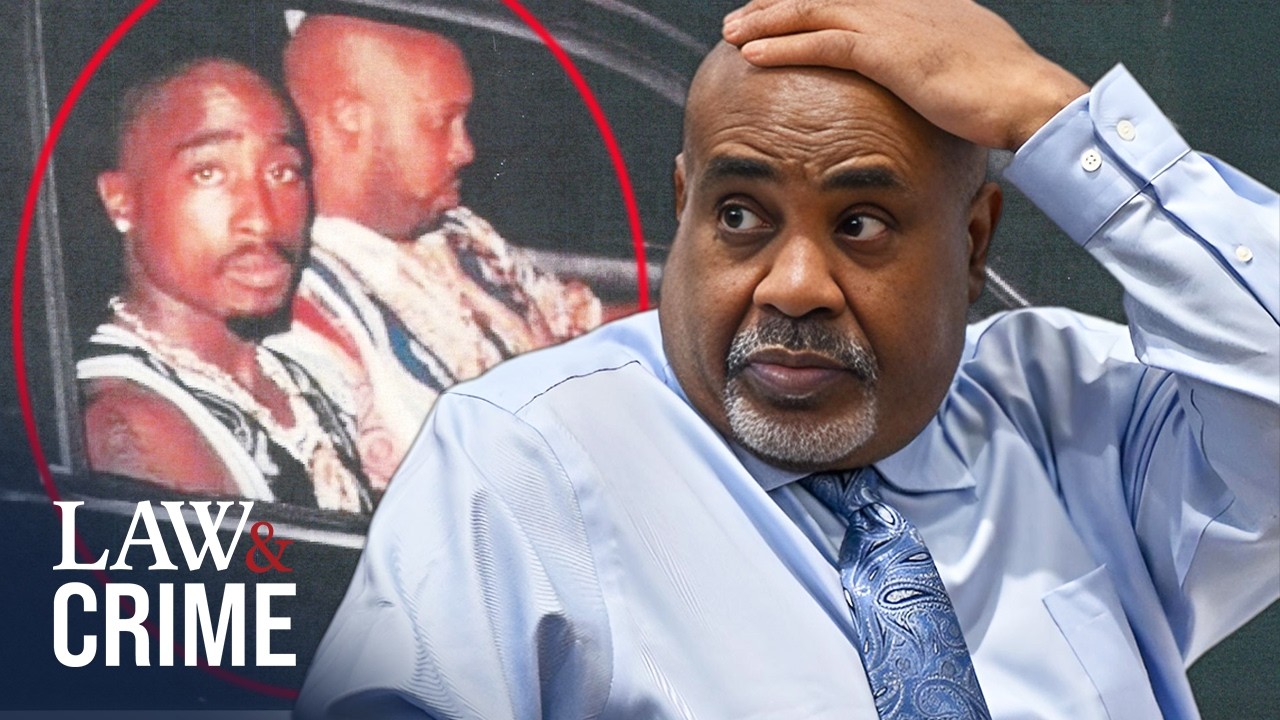 Prosecutor Pal began by setting the scene for the jury, transporting them back to September 7, 1996, a night that began with promise and ended in tragedy. Tupac Shakur was in Las Vegas to attend a Mike Tyson fight, a moment of celebration for the Death Row Records star. After the fight, Shakur, along with Suge Knight, Trayvon Lane, and others, encountered a man named Orlando Anderson in the MGM Grand hotel.
Anderson, the prosecution explained, was Davis’s nephew. A confrontation erupted, captured on surveillance video, where Shakur and his entourage brutally beat Anderson. This beating, the prosecution argued, was the spark that ignited a fuse of rage in Davis.
“During those two and a half hours, you will learn that the defendant was escalating and planning the retribution for the beating of his beloved nephew,” Pal told the jury, his voice steady and deliberate. The prosecutor made it clear that Davis was not the trigger man, but the architect of the murder. “Dwayne Davis did not pull the trigger, but what he did do was plan the retaliation for the beating of his nephew,” Pal stated.
“You will learn that Dwayne Davis got the gun. You will learn that he got into a white Cadillac. You will learn when the opportunity presented itself for retribution, Dwayne Davis made sure that the shooters were armed and ready to execute their edge.”
The prosecution’s narrative then wove a complex web of connections, linking Davis to the East Coast-West Coast rivalry that defined the era. Pal introduced the figure of “Zip Martin,” a man with ties to Sean “Diddy” Combs and Bad Boy Entertainment, who allegedly provided the murder weapon. Davis, the prosecution claimed, was acting as unofficial security for Combs during a visit to the West Coast, a role that escalated tensions between the Southside Compton Crips, a gang Davis was associated with, and Death Row Records.
The rivalry, Pal argued, boiled over in the summer of 1996, setting the stage for the fatal confrontation. The prosecution then pivoted to the core of their case: Davis’s own words. Pal detailed a secret 2008 interview Davis gave to a federal task force investigating the murder of The Notorious B.
I. G. , where Davis allegedly offered information on the Tupac case in exchange for leniency on a separate narcotics charge.
“He tells you he knows about Tupac’s killing,” Pal said, quoting Davis from the interview. The prosecutor played a portion of the audio for the jury, a moment of hushed tension in the courtroom as Davis’s voice filled the room, describing the events of that night.
In that recording, Davis allegedly detailed the final moments before the shooting. He described being in the front passenger seat of a white Cadillac, with Terrence “T.” Brown driving, DeAndre “Dre” Smith in the rear driver’s side, and Orlando “Baby Lane” Anderson in the rear passenger side.
They were searching for Shakur’s car, a BMW, when a girl shouted “Tupac,” giving away his position. Davis said they made a U-turn and pulled alongside the vehicle. “I thought it on this side,” Davis was heard saying, referring to the gun.
“So you hand the gun to the back seat. Yeah. What do you hear?
Dre.” The prosecution argued that this was a clear admission of guilt, that Davis procured the firearm, passed it to the back seat, and facilitated the shooting. “Dwayne Davis says that if he had been on their side, if Tupac and Suge were on his side of the vehicle, he would have shot them himself,” Pal recounted.
“But because they were on the other side, he handed it to DeAndre Smith. DeAndre Smith, according to Dwayne Davis, did not want to shoot at that time. So, Orlando Anderson shot into that spot.”
The prosecution further bolstered their case by citing a 2009 interview with Las Vegas Metropolitan Police Detective Dan Long, where Davis was more guarded but still admitted to being in Las Vegas, being angry about the beating of his nephew, being in the white Cadillac, and procuring the firearm. Then, in 2017, Davis went public, appearing in the BET documentary “Death Row Chronicles,” where he spoke openly about the killing. “I was probably the only people alive about the Tupac,” Davis said in the documentary, a clip shown to the jury.
 “People have been pursuing me for 20 years, magazines. I’ll go down here right now.” In 2019, Davis published his own book, “Compton Street Legend,” which the prosecution argued contained further admissions.
“He was mad about the beating of Orlando Anderson, his nephew. He was in Las Vegas. He got the gun.
He was in the white Cadillac and he handed the gun to the back,” Pal summarized. The prosecutor emphasized the visceral anger that Davis continued to display, even decades later. “They jumped on my nephew.
28 years later. That is the visceral anger that Dwayne Davis had for Tupac,” Pal said, his voice rising. “He took care of what he thought was the proper response.
And 28 years later, he still is angry about what Tupac did.”
The defense, led by attorney Michael “Sammy” Sampson, rose to meet the prosecution’s firepower with a strategy of total demolition. Sampson’s opening statement was a direct assault on the credibility of the state’s entire case, arguing that Davis’s statements were nothing more than the boasts of a man seeking fame and attention in a world where silence means survival. “At the end of the day, you have to ask yourself if what they’re saying is really truth or fiction,” Sampson declared, his voice dripping with skepticism.
“Fact or fiction? There are no facts to point to Keefe. Not one.”
The defense lawyer laid out three core themes: a complete lack of corroborating physical evidence, a deeply flawed and incomplete police investigation, and the fundamental unreliability of Davis’s own words. “There is no murder weapon,” Sampson stated flatly. “There is no DNA.
There are no fingerprints. There is no video of the shooting itself. The entire case is built on the words of a man who has been telling stories for 30 years.”
Sampson then launched into a detailed critique of the investigation, starting with the 2008 task force interview. He revealed that the FBI and LAPD had given Davis a gun to test, claiming it was the murder weapon, but when it was tested, it came back as a match to nothing. “LAPD reached out to him, called him up and said, ‘Hey, Detective Long, we have the gun and we’ve tested it and it matches back to what you’re looking for in terms of the weapon that killed Tupac Shakur,’” Sampson said, his voice dripping with incredulity.
“Detective Long goes to LAPD, gets the gun, transports it back, gets tested, and he comes out as not a match. LAPD tells him after, ‘We gave you a big gun to test you out.’” The defense attorney argued that this was a catastrophic failure of the investigation, a sign that law enforcement was more interested in closing the case than in finding the truth.
“What you will also learn is out of all those people in that room, not one person verifies what T. P. tells them,” Sampson continued, referring to Davis by his nickname.
“That the FBI, the gold standard of investigation in our country, did not go out and follow up on what was said.”
 Sampson pointed to the fact that one of the alleged co-conspirators, Terrence Brown, was still alive at the time of Davis’s 2008 statement, yet he was never interviewed by the task force. “They never interviewed that individual to verify that that information was true,” Sampson said. “Why not?
Because the FBI just fell asleep? That the LAPD just didn’t error? Keefe was never charged for any of what he said during that time period.
And it’s because they knew he was full of crap. Otherwise, he would have. Why wouldn’t they?”
The defense also targeted the work of retired Las Vegas police detective Clifford Mook, who took over the case in 2017. Sampson accused Mook of a 𝓈𝒽𝓸𝒸𝓀𝒾𝓃𝑔 lack of professionalism, claiming he never wrote a single report during his entire tenure on the case. “Mr.
Mook goes to the grand jury, and in the grand jury, it’s a secret proceeding,” Sampson said. “He just reads pages of the book into the record. He never documents in any of his efforts any verification of the book before he reads it into the record.
He walks up, gets on the stand, and reads the book as if it’s the gospel truth.”
The defense further attacked the credibility of the prosecution’s key witnesses, including Reggie Wright Jr. , a former security guard for Death Row Records, and Devont “Durk” Lee, a paid informant. Sampson also took aim at retired LAPD detective Greg Kading, accusing him of stealing the Tupac and Biggie case files for personal gain.
“These are not credible people,” Sampson argued. “They are felons, informants, and people with their own agendas. The state is trying to build a case on a foundation of sand.”
Sampson concluded his opening by returning to his central theme: that Davis’s statements were a fabrication, a story he told to gain notoriety and to protect himself from real gang retaliation. “What you’re going to hear from witnesses that will testify to this is that Keefe D was known to do this,” Sampson said. “Otherwise, it’s just that.
And at the end of all the time you spend together, what you’re going to find is that the state cannot prove to you beyond a reasonable doubt the claim that Keefe D had anything to do with a first-degree murder with use of a deadly weapon. There are no facts to that matter.”
The first day of testimony began with a witness who set a crucial foundation for the prosecution’s timeline. Gary Dale, a former officer with the Las Vegas Metropolitan Police Department, testified that he was working on a bike team the night of the murder. He claimed that earlier in the evening, before the shooting, he stopped a black BMW with no license plates that was occupied by Suge Knight and Tupac Shakur.
This stop, the prosecution argued, placed Shakur and Knight in the area and established a timeline for the events that followed. But it was Dale’s testimony about the aftermath of the shooting that was truly chilling. He described responding to a call about a vehicle in the median of the Las Vegas Strip, finding the same black BMW crashed and stopped.
Suge Knight was outside the vehicle, walking around and talking, while Tupac Shakur was being removed by emergency medical personnel. Dale said he tried to speak with Shakur, who was still conscious and talking. “I was trying to convince him to tell me the name of whoever his assailants were,” Dale testified.
 “And did he ever respond?” the prosecutor asked. “Yes, he responded,” Dale said, his voice quiet but clear.
“He said, ‘No, no, we’ll take care of it. We’ll take care of it.’”
The implication was immediate and powerful: Tupac Shakur, bleeding and dying, knew who had shot him and was invoking the code of the streets, a code of silence and retaliation. The prosecution seized on this moment, arguing that it demonstrated a continuation of the cycle of violence that began with the beating of Orlando Anderson. The second witness of the day was Ingrid Stokes, a woman who claimed she was on the Las Vegas Strip that night, driving in a convertible with friends.
She testified that they pulled up alongside Suge Knight’s car, and that one of her friends began talking to Knight. Stokes described a relaxed scene, with no tension or shouting. But then, she said, a white four-door car began circling them, trying to get in front of them.
“We almost hit the car when we were trying to drive off,” she testified. “There was a car in the turning lane, and it was a white four-door.” Stokes said they were scared and just wanted to get away.
Under cross-examination, the defense focused on a key detail: Stokes testified that Tupac was not hanging out the window or yelling to fans. “His torso was not sitting on top of the window yelling to his fans,” she said. “There were no fans around.
They were just driving in the car, listening to the music like we were.”
This testimony directly contradicted a key element of Davis’s own account, where he claimed that a girl shouted “Tupac” and that Shakur was leaning out the window. The defense used this discrepancy to argue that Davis was an unreliable narrator, that his story was full of holes and inconsistencies. “She seems to disagree with that account,” the defense attorney noted during a sidebar with the judge.
“Or her account is different. I think the defense is trying to mount the argument here that you can’t believe what Keefe D said, that he’s an unreliable narrator.” The day ended with a palpable sense of tension in the courtroom.
The prosecution had laid out a compelling, if circumstantial, narrative of revenge and confession, while the defense had launched a scorched-earth attack on the investigation and the credibility of the state’s central witness. The jury, a diverse group of ten women and six men, sat stone-faced, absorbing the dueling narratives. The trial of Dwayne “Keefe D” Davis is expected to last several weeks, with both sides promising to call a parade of witnesses, including former gang members, law enforcement officers, and experts in gang culture.
The prosecution is expected to rely heavily on the audio recordings and transcripts of Davis’s interviews, while the defense will likely call witnesses to attack the investigation and to testify about Davis’s reputation as a storyteller.
The stakes could not be higher. For the family of Tupac Shakur, who has been dead for nearly 30 years, this trial represents the last, best chance for a measure of justice. For the city of Las Vegas, it is a chance to close a dark chapter in its history.
For the world of hip-hop, it is a reckoning with a murder that has haunted the genre for decades. As the trial moves forward, the central question will remain: Are the words of Dwayne Keefe D Davis a confession or a fabrication? The answer, as the defense so pointedly argued, may lie not in what he said, but in what the investigation failed to find.
The absence of a murder weapon, the lack of DNA, the incomplete interviews, and the questionable motives of the witnesses all hang over the proceedings like a shadow. Yet the prosecution’s case, built on the sheer volume and consistency of Davis’s own statements, is a powerful force. The trial is far from over, but day one has already delivered a series of dramatic moments that will shape the narrative for the weeks to come.
The world is watching, and the search for the truth behind one of music’s greatest tragedies has finally, after nearly three decades, begun in earnest. The courtroom will be the stage for a battle of stories, a clash between the word of one man and the weight of an entire investigation. The jury will have to decide if the silence of the streets has finally been broken, or if it has simply been weaponized in a new and dangerous way.