A mother and grandmother meticulously plotted the poisoning and stabbing deaths of four children in upstate New York, intending to 𝓀𝒾𝓁𝓁 them before a court-ordered custody transfer to the father, who they accused of 𝓪𝓫𝓾𝓼𝓮 – claims he vehemently denies – according to newly released evidence from police and prosecutors.
The bodies of Sarah Meyers, 44, and her mother Amy Steedman, 64, were found alongside the remains of Meyers’ four children – Harper, 13, Hudson, 11, and 10-year-old twins Gavin and Graceland – inside Steedman’s apartment in Mechanicville, New York, on June 23. Investigators say the two women died by suicide after carrying out the murders, leaving behind handwritten notes and digital evidence that detailed a chilling, premeditated plan.
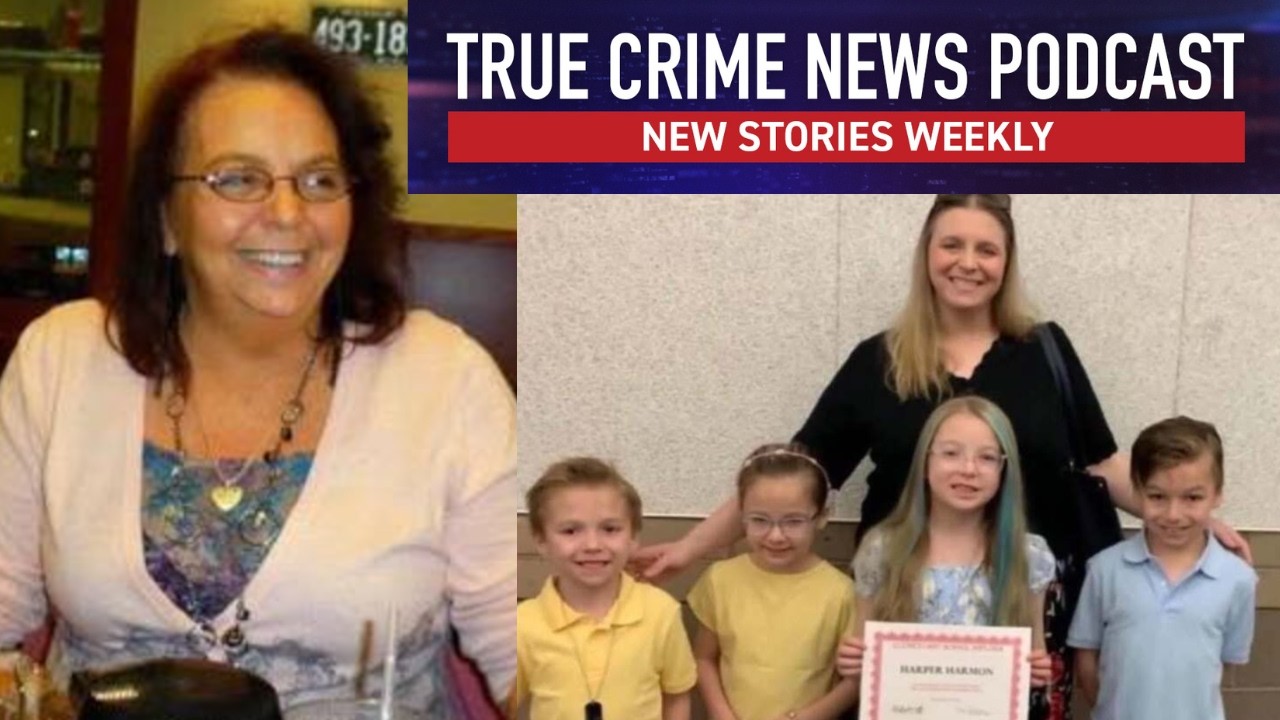 Police Chief William Rabbit revealed that text messages, internet searches, and diaries found at the scene show the mother and grandmother discussed which medications to use, how to ensure the poison was undetectable, and even the most fatal places to stab a person. “They had a timeline,” Rabbit said. “They needed to have the children dead by noon on June 10, before the father’s scheduled phone call at 6 p.
m.”
The case has stunned the small community of Mechanicville and drawn comparisons to the ongoing Lindsay Clancy trial, though legal experts say no criminal prosecution is possible here because the alleged perpetrators are dead. “There will never be full justice,” said Imran Ansari, a former prosecutor and legal analyst who discussed the case on the True Crime News podcast. “The system is left with an empty space – no trial, no verdict, no accountability in a court of law.”
The father, Brady Harmon, had not seen his children since 2019 because of a bitter custody battle that spanned Utah and New York. According to court records, Harmon and Meyers divorced in 2020, and an agreement gave him summer visitation. He claimed Meyers violated the agreement repeatedly, and he had filed a motion on June 2 alleging she was interfering with his communication with the children and that they were living in neglect.
Harmon was scheduled to fly from Utah to New York on July 1 to pick up the children for a two-month summer visit. But on June 10, he called and was told the children were “not feeling well.” That call, investigators believe, was made after the children had already been poisoned.
The bodies were not discovered for nearly two weeks, despite two welfare checks requested by Harmon on June 13 and June 17.
“The welfare checks were a knock on the door. No one answered. There was no odor, no sign of forced entry,” Chief Rabbit said.
“Under the law, officers cannot enter a home without a warrant or exigent circumstances. They did everything they could with the information they had at the time.”
The contents of the notes and messages paint a horrifying picture. In one handwritten letter, 64-year-old Amy Steedman took full responsibility for the killings, claiming she was “protecting the children from 𝓪𝓫𝓾𝓼𝓮.” She defended her daughter, saying Meyers “did everything she could.”
The letter, police say, mirrors the tone of the grandmother’s internet searches, which included queries for “insulin effects on non-diabetics” and “most fatal place to stab a person.”
 Text messages between the two women reveal a cold, calculated planning. One message from Meyers to Steedman reads: “It’s not working. We need another option.”
Police believe this referred to the children not dying quickly enough from the poison. Another message, attributed to 10-year-old Gracelyn, was sent to her mother pleading: “Why would you do that? You both won’t let me puke.”
Authorities say that message indicates the child was suffering from the poison and was being prevented from vomiting.
The medical examiner’s report confirmed that the children died from a combination of poisoning and stabbing. One child, Gavin, had defensive wounds, suggesting a struggle. “These kids suffered,” Chief Rabbit said.
“They were alive, they were aware, and they were in pain. The mother and grandmother did not make it quick.”
The father, Brady Harmon, has denied the 𝓪𝓫𝓾𝓼𝓮 allegations. “He is devastated,” said a family friend who spoke on condition of anonymity. “He fought for six years to see his kids.
He never hurt them. Now he has to bury them.”
Harmon has taken the children’s remains back to Utah, where he spread their ashes in a place he said was special to him and his late father. In a statement, he said: “I will never stop loving my children. I will never stop fighting for the truth.”
The investigation has also focused on the role of the family court system. The Utah court had scheduled a hearing for July 29 to determine whether Meyers had violated the custody agreement. Harmon’s attorney argued that the mother had been “weaponizing” the system by making unsubstantiated 𝓪𝓫𝓾𝓼𝓮 claims.
 “The court was finally going to enforce visitation,” Ansari said. “That was the trigger. She saw the writing on the wall and chose to destroy the children rather than let them go.”
Police recovered electronic files from Meyers’s computer and phone that contained photographs and documents allegedly showing injuries to herself and the children. But Chief Rabbit stated: “We have not been able to verify those claims. The father has not been charged, and we have no evidence to support the allegations.”
Legal experts say the case highlights the tragic limitations of the justice system. “When the alleged killers are also dead, there is no way to cross-examine, no way to prove or disprove the accusations,” said Ansari. “The father is left with a legacy of suspicion that he can never fully clear, even if he is innocent.”
The case has also raised questions about the effectiveness of welfare checks and the ability of courts to intervene in high-conflict custody disputes. “We need to look at how the system failed,” said Anna Garcia, host of True Crime News. “There were calls for wellness checks, there were court filings, but it was too late.
The children were already dead.”
The community of Mechanicville has held several vigils, with residents leaving flowers and stuffed animals near the apartment complex. “Those kids were invisible,” said neighbor Maria Torres. “They were homeschooled, we never saw them outside.
I wish we had known.”
The district attorney’s office has announced it will convene a task force to review the case and identify potential reforms. “We will look at how the courts, child protective services, and law enforcement handled this,” a spokesperson said. “But we cannot bring back four children.
That is the ultimate tragedy.”
 As the toxicology reports remain pending, the full scope of the children’s suffering may never be known. But the text messages and notes left behind by the mother and grandmother provide a chilling window into their minds. “They believed they were saving the children,” Ansari said.
“But you don’t 𝓀𝒾𝓁𝓁 to save. You don’t stab a child to protect them. That is not protection – it is murder, plain and simple.”
The father now faces a life of grief and unanswered questions. “He will never get justice in a courtroom,” Garcia said. “The only closure he has is the memory of his children and the hope that their deaths will lead to changes that prevent other families from suffering the same fate.”
The case has reignited a national conversation about parental alienation, the weaponization of 𝓪𝓫𝓾𝓼𝓮 allegations, and the mental health of mothers who commit filicide. “This is not about postpartum depression,” Ansari said. “This is about a deep-seated, malicious animosity that led to a planned, premeditated massacre of four innocent lives.
The grandmother was complicit. They were both evil.”
As the investigation continues, authorities urge anyone with information about the case to come forward. But with the two women dead, the only remaining voice is that of the father, who must now defend himself against posthumous accusations while mourning his children.
“I will not let their deaths be in vain,” Harmon said. “I will speak for my children. I will make sure the world knows what happened to them.”
The story of the Harmon children – Harper, Hudson, Gavin, and Graceland – is a haunting reminder of the darkest corners of the human heart. Their lives were cut short by the very people who were supposed to protect them, in a twisted act of “protection” that no court, no law, and no amount of grief can ever undo.