The execution of Jay Wesley Neill, the Oklahoma death row inmate convicted of the 1984 massacre at the First Bank of Chattanooga in Geronimo, was carried out Thursday evening at the Oklahoma State Penitentiary in McAlester. Neill, 37, was pronounced dead at 6:18 p. m.
after receiving a lethal injection, ending a legal battle that spanned nearly two decades and left a small town forever scarred by violence and a courtroom controversy over the role of sexual orientation in capital sentencing.
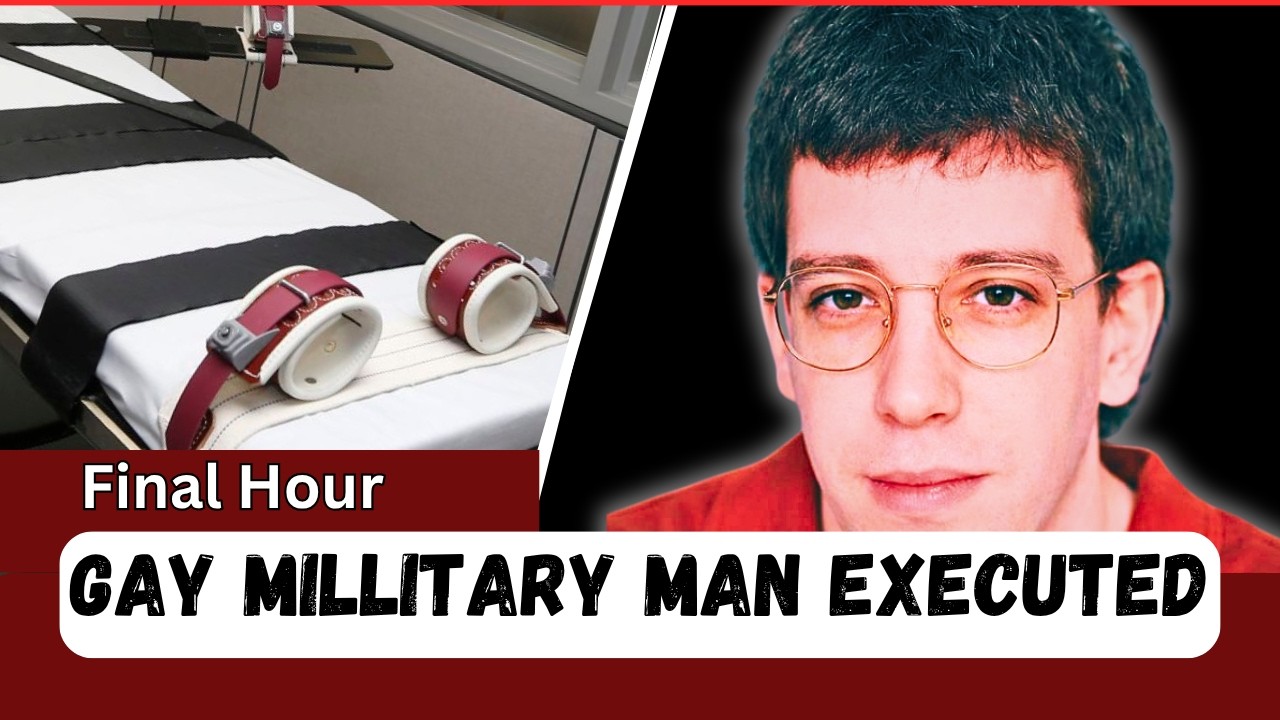 When the blinds to the execution chamber were raised at 6:14 p. m. , Neill strained to lift his head from the gurney.
His voice shook, his eyes wet. He looked directly into a camera broadcasting the moment to the families of his victims and spoke words that stunned the room. “I want everyone to know I’m really sorry for what I did to you,” he said.
“I’m not sorry for dying here today. I’m not sorry because I’m lying here. I’m sorry for the horrible, horrible thing I did.”
Then he paused and added a claim that reignited debate about the case: “I hope you find some comfort in that, to know Robert Johnson wasn’t in that bank. I know you think he was, but he wasn’t. Please forgive me.”
Three minutes later, the lethal drugs took effect, and Neill was gone.
The execution was the 54th in Oklahoma since the state resumed capital punishment in 1990. But the path to this moment was anything but straightforward. Neill’s case became a flashpoint for questions about prosecutorial misconduct, the influence of anti-gay bias in the courtroom, and whether the punishment fit the crime or the prejudice.
To understand why the state of Oklahoma had to 𝓀𝒾𝓁𝓁 this man, you have to go back to a broken home, a secret, and a small town that would never be the same. Jay Wesley Neill was born on April 9, 1965, in Oklahoma. His parents divorced when he was just two years old.
Instead of staying with either parent, the toddler was shipped off to live with his grandparents. His mother couldn’t handle the responsibility. His father didn’t want it.
The boy became a package passed between hands that weren’t sure they wanted to hold him. His grandparents did what they could, but the damage had already started. His biological father was physically abusive, and his stepfather picked up where his father left off.
Neill grew up under the fists of two different men who were supposed to protect him, learning the same lesson twice: that the people who are supposed to love you are the ones most capable of hurting you.
On top of the 𝓪𝓫𝓾𝓼𝓮, Neill had childhood medical problems that were largely ignored. No one intervened. No one pulled him out.
No one said this child needs help. He was simply left to absorb the pain, to swallow it, to carry it into whatever kind of man he was going to become. Yet if you ask the people who knew him growing up, they didn’t describe a troubled kid at all.
They described him as clean-cut, loving, well-behaved, and easygoing. He was funny and outgoing. The kind of person who lit up a room.
They called him compassionate, intelligent, devoted to his family despite everything that family had done to him. Nobody could see the cracks underneath. Nobody knew that behind that easy smile was a boy who had never once felt safe in his own skin.
And there was another secret Neill was carrying. One that in 1980s Oklahoma could ruin your life even faster than a criminal record. Jay Wesley Neill was gay.
In a state where the anti-sodomy law was still on the books, where homosexuality wasn’t just socially unacceptable but literally criminal, Neill knew from an early age that who he was attracted to was something he could never say out loud. Not to his abusive father. Not to his absent mother.
Not to the grandparents who raised him. Not to the friends who thought they knew him. He buried it deep and kept moving.
At 18 years old, Neill enlisted in the United States Army in 1983. For the first time in his life, he had structure, routine, discipline. The military gave him something no one else ever had: a reason to believe he could be somebody.
He thrived, described as focused, disciplined, and physically capable. One acquaintance later called him a self-styled fighting machine. But the army also forced him to confront the thing he’d been running from his entire life.
By the summer of 1984, he made the decision to disclose his sexuality. In 1984, the United States military operated under a strict policy that treated homosexuality as incompatible with service. There was no “don’t ask, don’t tell.”
If you were gay and the military found out, you were gone. And just like that, Jay Wesley Neill was discharged. Not for misconduct.
Not for failure. Not for breaking a single rule of combat or conduct. For being honest about who he was.
At 19 years old, Neill walked out of the military with no career, no savings, no family willing to catch him, and a label that in 1984 Oklahoma made him a target. That was the world he was living in when he met Robert Grady Johnson. It was February of 1984, a few months before Neill’s discharge, at a bar.
Johnson was 21, three years older, and already deep into the gay social scene in the Lawton area. The two hit it off immediately. There was a pull between them that friends later described as electric.
Johnson was outgoing, flamboyant, and unafraid of attention. He bounced between the gay bar scene and studying for the ministry. Neill was the opposite: quieter, more intense, physically imposing from his time in the service.
To Johnson, Neill was a dream. One friend from their circle later described it plainly: “They were the ideal couple that everybody wanted to be like.”
Their relationship moved fast. By the time Neill was discharged that summer, the two were inseparable. They moved in together, sharing a small apartment in Lawton, Oklahoma.
They opened a joint checking account at the First Bank of Chattanooga in the nearby town of Geronimo. They tried to build a normal life together, but normal costs money, and money was the one thing they didn’t have. Neill couldn’t hold a steady job.
The combination of his discharge, his lack of education, and the social stigma of being openly gay in southwestern Oklahoma made finding work almost impossible. The rent fell behind. A car loan went delinquent.
The phone got disconnected. The checking account became a revolving disaster, check after check bouncing back for insufficient funds. They were at that bank so often sorting out their money problems that the tellers knew them by name, and not in a good way.
Desperate to cut costs, they took on roommates. The debt kept climbing. The arguments between Neill and Johnson got louder, more frequent, more vicious.
What had started as a love story was becoming a pressure cooker. And while all of this was happening, Neill’s mother made a decision that cut deeper than any of his financial problems. She stopped coming to visit.
She stopped calling. She disappeared from his life entirely. Years later, when asked about it during the trial, Neill explained it simply: “She’d had two nervous breakdowns over what I’d become.
She could not stand to see me in that position because she did not feel like this was her little boy.” The woman who had given him away as a toddler now couldn’t bear to look at the man he’d turned into. Whatever fragile thread still connected Neill to his family, it snapped.
He was truly alone now, except for Johnson. And Johnson was slipping away, too.
In the middle of all this chaos, Neill started paying attention to something: the Geronimo Bank. He and Johnson had been in and out of that building dozens of times, and every time Neill noticed the same things. The bank was tiny, housed in a prefabricated building that looked more like a mobile home than a financial institution.
It usually had only two or three tellers on duty. There were no surveillance cameras, no security guards, no alarm system that anyone could see. The front door opened right into the lobby, and the back room was just a few steps away.
 Neill mentioned it to Johnson more than once how easy it would be, how nobody would see it coming, how they could take the money and start over somewhere new, somewhere far away from Oklahoma and all the pain it held.
At first, it might have sounded like the ramblings of a desperate man. But Neill wasn’t just dreaming. He was planning.
The week before December 14, 1984, the plan started moving. Neill and Johnson went shopping, not for groceries, not for Christmas gifts. They purchased two knives.
On December 12, Neill walked into a local pawn shop and tried to buy a revolver. The shopkeeper shook his head. Oklahoma law required buyers to be 21 years old.
Neill was only 19. So the next morning, December 13, Johnson walked into the same shop and purchased the . 32 caliber revolver in his name.
That same morning, Neill visited a travel agency and bought two plane tickets. The original destination was Nassau, Bahamas, but the flights leaving at 6:00 p. m.
the next day were routed through San Francisco. The escape hatch was set. All they needed was the money.
December 14, 1984, was a Friday. A cold, bleak, rainy Friday in southwestern Oklahoma. Geronimo had a population of about 960 people, the kind of town where everybody knew everybody, where doors stayed unlocked and children played in the street without fear.
The First Bank of Chattanooga sat near the center of town. It was the kind of place people visited on their lunch break, a quick stop between errands, a familiar corner of a familiar life. Nobody in Geronimo believed that anything truly terrible could happen there.
That belief died just after 1:00 in the afternoon.
At approximately 1:00 p. m. , Jay Wesley Neill walked into the bank.
He was carrying two knives and the . 32 caliber pistol. Inside, three women were working.
Kay Bruno, 42, the branch manager, was the kind of woman who ran a tight operation but always had time for small talk. Joyce Mullennix was 25 years old and six months pregnant. She was carrying a child who would never take a breath outside her body, a life that ended before it had a chance to begin.
And then there was Jerri Bowles, 19 years old, the same age as Neill. Jerri wasn’t even supposed to be working that day. She had been called in early to cover a shift for another employee who was sick.
Her mother later described her as caring and nurturing, the kind of girl who said yes when someone needed help. Her father, Calvin Bowles, had just dropped her off at the bank minutes before the robbery. He walked across the street to the little cafe to wait for her, ordered something to drink, and sat down.
He had no idea that he had just said goodbye to his daughter for the last time.
Neill moved quickly. He pulled the gun and herded all three women away from the teller windows and into the small back room of the bank. He ordered them to lie face down on the floor.
The room was cramped, barely large enough for all of them. The women lay flat, their faces pressed against the cold tile, trembling, waiting for instructions. Maybe they expected him to take the money and leave.
Maybe they thought if they stayed quiet, stayed still, he would let them go. He didn’t. Instead of reaching for the cash drawers, Jay Wesley Neill pulled out a knife.
What happened in the next several minutes would be described by investigators as one of the most savage acts of violence in Oklahoma history.
He stabbed Kay Bruno 34 times. He cut her throat so deeply that her head was nearly severed from her body. He stabbed Jerri Bowles 14 times and slashed her throat wide open.
He stabbed Joyce Mullennix, six months pregnant, 27 times and attempted to decapitate her as well. In total, the three women suffered 75 stab wounds. The back room of that tiny prefabricated bank turned into something out of a nightmare.
Blood pooled across the tile floor. The air smelled of iron and fear. The only sounds were the wet, rhythmic strikes of a blade and the fading breaths of three women who had done nothing wrong except show up to work that morning.
But the killing wasn’t over. While Neill was still in the back room, customers began walking through the front door of the bank. The first was Belen Robles, just 15 years old, who had come to deposit a check.
She found the teller windows empty and looked down the hallway. She saw the back of a man bending over something on the floor. She stepped outside and told her husband, Ruben, who was 20, that she thought the bank was being robbed.
He didn’t believe her. He walked back inside with Belen, carrying their 14-month-old daughter, Marie, on his hip. Right behind them came Ralph Zeller, a 33-year-old farmer who had stopped by the bank on a routine errand.
They were barely through the door when Neill appeared in front of them with the pistol raised. He told them to go to the back room if they wanted to live. One by one, he forced them to lie face down on the floor beside the bodies of the three women.
The floor was already slick with blood. The smell was unbearable. The customers lay there, faces pressed into the wet tile, and then Neill started shooting.
He fired into their heads one by one. Ralph Zeller was killed instantly, a bullet through his skull. Belen and Ruben Robles were both shot in the head, but somehow, against all odds, survived.
Marilyn Roach, another customer who had entered the bank, also took a bullet to the head and survived. And then Neill turned the gun on the baby. 14-month-old Marie Robles, still in the back room, still crying, still alive.
Neill pointed the . 32 caliber revolver at the infant and pulled the trigger. The hammer clicked against an empty chamber.
He pulled the trigger again. Click. Again.
Click. The gun was empty. Every bullet was spent.
The baby lived, not because Neill showed mercy, but because the gun ran out of ammunition before he ran out of cruelty.
At approximately 1:25 p. m. , a woman named Pam Matthews walked into the bank.
She found the lobby empty and silent. Money wrappers were scattered on the floor. The only sound she could hear was the faint, muffled cry of a baby coming from somewhere in the back.
 She followed the sound down the hallway and stepped into the back room. What she saw in that moment would stay with her for the rest of her life. Bodies on the floor.
Blood everywhere. The walls, the tiles, the ceiling. She stumbled backward, turned, and ran screaming across the street to the cafe.
Calvin Bowles was still sitting there. He heard her screaming that the bank had been robbed. He was one of the first people to rush back inside.
And there, on the floor of that small back room, he found his 19-year-old daughter, Jerri. The girl he had dropped off barely 30 minutes earlier. The girl who wasn’t even supposed to be working that day.
Neill grabbed what cash he could carry and fled. He and Johnson drove to the Lawton Municipal Airport, arriving around 2:30 in the afternoon. They boarded a flight to San Francisco.
And what they did with the approximately $17,000 stolen from the bank tells you everything about how far gone they were. They checked into hotels. They hired limousines.
They bought expensive jewelry and designer clothing. They bought cocaine. They lived like two men on vacation, not two men who had left four people dead on the floor of a small-town bank.
According to Neill’s own attorney, the original plan was to spend every last dollar and then 𝓀𝒾𝓁𝓁 themselves when the money ran out. But the FBI moved faster than the money did.
Back in Geronimo, investigators were already closing in. The getaway car had been found at the Lawton Airport. Neill and Johnson had booked their travel arrangements at an agency inside the terminal using their real names.
Marked bills from the bank were being traced across San Francisco, popping up at hotels, jewelry stores, and clothing shops. As one investigator later put it, “These guys didn’t have the brains to carry out a bank robbery. They left a trail of evidence everywhere they went.”
On December 17, just three days after the massacre, FBI agents arrested Neill and Johnson in their San Francisco hotel room. They found $3,700 in marked bills on Neill and in the room.
The news of the arrest hit Geronimo like a second earthquake. But it was the details that followed that turned the community’s grief into something uglier. The suspects were in a relationship, two gay men.
In 1984 rural Oklahoma, where churches were full every Sunday and everyone knew their neighbors’ business, that revelation didn’t just shock people, it enraged them. The case was no longer only about a bank robbery and four murders. It became about sexuality, about identity, about everything small-town America feared and refused to understand.
Friends in the gay community who had known the couple were heartbroken. They described Neill and Johnson as the ideal couple, the pair everyone wanted to be like. But in Geronimo, the love story was rewritten into something monstrous.
Some students who had gone to school with Neill remembered him wearing shawls and stockings and going to school in drag. Others remembered him being harassed for it. None of that context mattered anymore.
The town wanted blood.
The grief was overwhelming. More than 1,700 people attended Jerri Bowles’ funeral, which had to be held in the Geronimo High School gymnasium because no church in town was big enough to hold the crowd. In a town of 960 people, nearly twice the population showed up to say goodbye to a 19-year-old girl who had simply gone to work that Friday morning.
Jerri’s mother, Janie Bowles, told reporters she was dedicating the rest of her life to making sure criminals like Jay Neill paid the ultimate price. Her husband, Calvin, the man who had been sitting in the cafe while his daughter was being murdered across the street, said, “We’re going to put a stop to this right here.”
Neill and Johnson were tried together in May of 1985 in Comanche County. Security was heavy. Spectators had to pass through metal detectors.
The courtroom was packed. Both men were convicted on all counts: four counts of first-degree murder, three counts of shooting with intent to 𝓀𝒾𝓁𝓁, and one count of attempted shooting with intent to 𝓀𝒾𝓁𝓁. Both were sentenced to death.
But the convictions didn’t hold. On appeal, the Oklahoma Court of Criminal Appeals threw out the verdicts. The two men had been improperly tried together.
Their defenses were mutually antagonistic. Neill said Johnson wasn’t in the bank. Johnson said Neill acted alone.
Each blamed the other, and the court ruled that trying them side by side denied both a fair trial. Separate retrials were ordered.
In Neill’s 1992 retrial, he made an extraordinary decision. He didn’t fight the charges. He took the stand and admitted to everything.
He described what happened inside that bank. He expressed remorse. He wept.
He looked at the victims’ families and said, “I’ve yet to come up with something that I know will make it easier for any of you. I am sorry. It’s eating me, and I believe that’s been part of my punishment.
I just wish there was something I could say to make it better, but there’s not.” He even offered the jury a deal: “Give me life without parole, and I will never file a single appeal.” It was a gamble for mercy, a bet that honesty might save his life.
But the prosecution wasn’t interested in mercy.
During the sentencing phase, the prosecutor delivered a closing argument that would become the most controversial moment of the entire case. He stood before the jury and acknowledged that Neill’s defense had tried to humanize him, to present his troubled relationship with Johnson as a mitigating factor, to argue that emotional turmoil had contributed to his breakdown. And then the prosecutor dismantled all of it with a single calculated move.
He told the jury to put aside the person sitting in front of them and focus instead on what kind of man he really was. And then he said it: “He is a homosexual. The person you’re sitting in judgment on, disregard Jay Neill.
You’re deciding life or death on a person that’s a self-avowed homosexual.”
The words landed like a grenade in that Comanche County courtroom. This wasn’t a passing reference. This wasn’t context.
This was a prosecutor standing in front of 12 citizens in rural 1980s Oklahoma and telling them that the defendant’s sexuality was the thing that defined him. That his homosexuality was the lens through which they should view his crimes, his character, and his right to live. In a state where sodomy was still illegal, in a county where being gay was treated like a disease, those words carried a weight that no legal instruction could counteract.
And the jury listened. According to Robert Grady Johnson, one juror made a statement that would echo through the appeals for decades. The juror allegedly said, “We should die simply for being gay.”
Whether that statement was made in deliberations, in the hallway, or in casual conversation after the verdict, it captured the atmosphere that surrounded the trial. The prejudice wasn’t hidden, it was ambient. It was in the air, in the pews, in the parking lot of the courthouse, and it followed Jay Wesley Neill all the way to the death chamber.
The jury sentenced Jay Wesley Neill to death for a second time. Johnson, in his separate retrial, was convicted under the felony murder rule and sentenced to life in prison without parole. Not death, life.
 The disparity was staggering. The man who actually committed the murders, who stabbed three women 75 times, who shot customers in the head, who tried to 𝓀𝒾𝓁𝓁 a baby, he got the needle. The man who may not have even been inside the bank that day got to live.
On death row at the Oklahoma State Penitentiary in McAlester, Neill underwent a transformation that no one fully trusted. He converted to Christianity first, delivering many sermons and quoting scripture to anyone who would listen. His fellow inmates were skeptical.
They whispered that his faith was a performance, a calculated play for sympathy. Later, he abandoned Christianity and converted to Buddhism. He became a model prisoner, quiet, polite, withdrawn.
He read constantly. He wrote letters he rarely sent. He lived on the same unit as Ron Williamson, the man who would later be exonerated and become the subject of John Grisham’s book “The Innocent Man.”
Neill lived diagonally across from Williamson and wrote letters to Williamson’s sister, Renee, explaining Ron’s erratic mental health episodes and deteriorating behavior. It was an odd act of compassion from a man convicted of one of the most brutal crimes in the state’s history.
In his final letter before his execution, Neill wrote about his spiritual journey and the person he believed he had become. The letter ended with words that read more like a confession of regret than a plea for mercy: “Above all, I enjoy the sharing of love and positive thoughts. I’m as unjudgmental as I know how to be.
I believe every person has an individual right to live their lives free of harm and prejudice. I just wish I knew more about life when I was a confused 19-year-old, the age I was when I committed this crime.”
In March of 1986, while still awaiting his first retrial, Neill appeared on Pat Robertson’s religious television program, The 700 Club. On camera, he confessed to the murders and begged the public for forgiveness. He also wrote letters and made phone calls to several of his surviving victims, apologizing for what he had done.
Pam Matthews, the woman who had been the first to discover the bodies in the bank, later testified at his retrial that she had communicated with Neill and forgiven him. But the victims’ families never forgave, and they never forgot.
On the night of his execution, Janie Bowles stood outside the Oklahoma State Penitentiary and told reporters, “It’s about damn time. They die so easily, and it’s not fair.” Charlene Blevins, a relative of one of the victims, was even more direct: “He died the way he lived, as a liar.”
Danny Zeller, whose brother Ralph was shot and killed in the bank that day, said, “This is not about the death sentence. It’s about the heinous crimes Jay Wesley Neill committed. He tore the community apart.”
Neill’s appeals dragged through the courts for years. His attorneys argued prosecutorial misconduct, pointing directly to the prosecutor’s use of Neill’s homosexuality during the sentencing phase. The case climbed all the way to the United States Court of Appeals for the 10th Circuit.
The panel was deeply divided. The majority acknowledged that the prosecutor’s comments were improper, but ruled that they did not constitute reversible constitutional error, given the overwhelming evidence of Neill’s guilt and the brutality of the crimes. But Judge Carlos Lucero wrote a dissent that would be quoted in law journals for years.
He called the prosecutor’s statements “blatant homophobic hate-mongering” and wrote that such tactics “have no place in the courtrooms of a civilized society.” He argued that when a prosecutor directs a jury to make its life-or-death decision based on anti-homosexual bias, it crosses a constitutional line that no amount of evidence can erase.
A separate legal article published by the American University Law Review was even more blunt. Its title said everything: “Guilty and Gay: A Recipe for Execution in American Courtrooms, Sexual Orientation as a Tool for Prosecutorial Misconduct in Death Penalty Cases.” J.
Wesley Neill’s trial was the centerpiece of that paper.
The Supreme Court denied Neill’s final appeal on October 7, 2002. His execution was set for December 12, exactly 18 years and two days after the massacre at the Geronimo Bank. For his last meal, Neill requested a double cheeseburger, fries, peach or cherry cobbler, a pint of vanilla ice cream, and a large bottle of cran-grape juice.
It was the kind of meal a teenager would order, simple, familiar, unremarkable. The meal of a man who had spent more than half of his life behind bars and had never really grown up.
At 6:14 p. m. on December 12, 2002, the blinds to the execution chamber were raised.
Neill lay strapped to the gurney, his body thin, his face aged well beyond his 37 years. He craned his neck upward, straining against the restraints to look into the camera that was broadcasting the execution to the families of his victims in a separate viewing room. His voice cracked.
He said he was dizzy. Then he spoke. “I want everyone to know I’m really sorry for what I did to you.
I’m not sorry for dying here today. I’m not sorry because I’m lying here. I’m sorry for the horrible, horrible thing I did.
I hope you find some comfort in that, to know Robert Johnson wasn’t in that bank. I know you think he was, but he wasn’t. Please forgive me.”
As the lethal drugs entered his veins, Neill began to pray. His lips moved silently, forming words no one else could hear. His breathing slowed, his body stilled.
And at 6:18 p. m. , four minutes after the injection began, J.
Wesley Neill was pronounced dead.
Outside the prison walls, the night was divided in two. Death penalty opponents knelt in the grass and prayed for Neill, for his victims, and for the families on both sides. A few yards away, supporters of the sentence stood holding signs with photographs and names of the people he had murdered.
Two groups, one night, an impossible divide.
But this story doesn’t end with the needle. It ends with questions that have no clean answers. Robert Grady Johnson is still alive.
He has been in prison since December of 1984, more than 40 years. He is now in his 60s, serving four consecutive life sentences without the possibility of parole. The FBI’s own lead investigator concluded that Neill entered the bank and committed the robbery and murders apparently alone.
On the execution gurney, with nothing left to gain and nothing left to lose, Neill used his final words to insist that Johnson was not in the bank. Yet, Johnson remains behind bars, convicted under the felony murder rule for a crime that even the man who committed it said Johnson was not present for.
And then there’s the other question, the one that a federal judge called a stain on the proceedings. Did J. Wesley Neill receive a fair trial?
When a prosecutor stood before a jury in rural Oklahoma and told them to see the defendant not as a man, but as a homosexual, when a juror allegedly said they both deserved to die simply for being gay, when the very identity that got Neill expelled from the military became the identity the state used to help send him to the death chamber, can anyone say with certainty that the outcome would have been the same if J. Wesley Neill had been straight?
J. Wesley Neill murdered four people. He stabbed three women 75 times.
He shot customers in the head. He tried to 𝓀𝒾𝓁𝓁 a baby. Nothing about his childhood, his sexuality, or the prejudice he faced erases the horror of what he did inside that bank.
But the question this case leaves behind isn’t whether his crimes deserved punishment. It’s whether the punishment he received was driven by evidence or by hate. It’s whether a verdict born in a courtroom poisoned by bigotry can still be called justice.
That’s a question this article cannot answer. But it’s one that the state of Oklahoma, the families of four murdered people, and the American legal system have never been able to put to rest.