The autopsy report for missing Los Alamos National Laboratory employee Melissa Casillas has been released, and it reveals a gunshot wound to the head, a bullet that passed through her skull, and a firearm found near her remains, yet the medical examiner has officially ruled her manner of death as undetermined, leaving investigators, her family, and the public with far more questions than answers.
The 54-year-old administrative assistant vanished in June 2025 after dropping her husband off at the highly sensitive national security lab in New Mexico, and for nearly a year, her fate remained a mystery until a hiker discovered her skeletonized remains in a remote, desolate area of the Carson National Forest on May 28, 2026.
 Now, the official autopsy report, obtained and analyzed by Law and Crime’s Sidebar program, has ignited a firestorm of controversy, as the medical examiner could not determine whether the death was a homicide, suicide, or accident, despite the presence of a gunshot wound and a firearm registered to her husband.
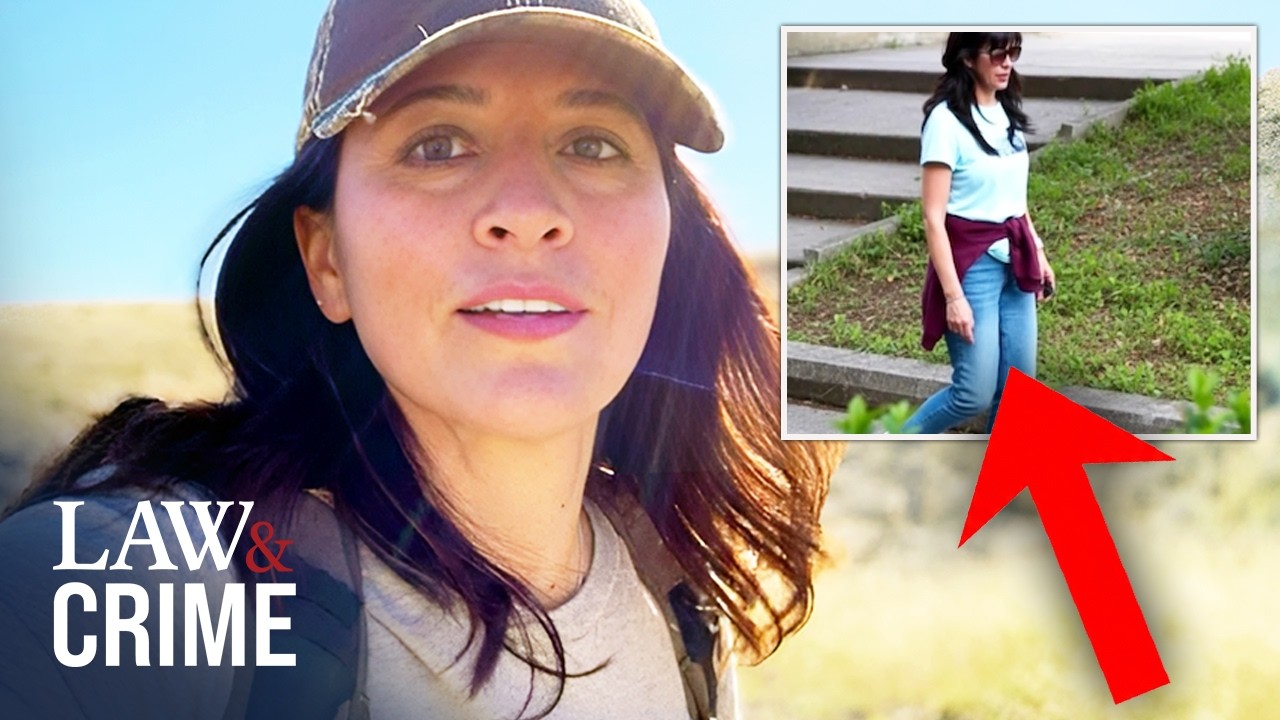
Melissa Casillas was last seen alive on June 26, 2025, captured on security video walking eastbound on State Road 518, wearing the same clothing she had on when she left home that morning, after reportedly returning to her house to retrieve a forgotten badge and then leaving again without her purse, identification, or cell phones.
Two of her phones had been factory reset, wiped clean of all data, a detail that her family says is completely out of character and has only deepened their suspicion that she did not take her own life.
Her remains were found in a rocky outcrop in the McGaffy Ridge area, with the left tibia, fibula, shoe, and sock approximately 20 feet away, and a handgun lying nearby, but the advanced decomposition of the body prevented definitive testing for gunshot residue or other critical forensic evidence.
The autopsy report describes projectile trauma to the cranium, with the bullet entering the cranial base from the right side, damaging the left anterior side of C1 and the left side of the foramen magnum, then passing through the left petrous portion and exiting through the squamus portion of the temporal bone.
Former FBI special agent Daniel Bruner, a crisis management expert and former SWAT tactical operations team leader, analyzed the trajectory for Sidebar and stated that the angle of the wound is not typical for a self-inflicted gunshot wound, leaning instead toward homicide.
Bruner explained that someone committing suicide would most likely place the gun under the chin, in the mouth, or to the forehead, but this unusual right-to-left, inferior-to-superior, and slightly posterior-to-anterior path raises serious doubts about self-harm.
The medical examiner’s report explicitly states that due to the state of the body’s advanced decomposition and the paucity of information available at the time of writing regarding the circumstances of death, the manner is certified as undetermined.
This ruling has infuriated Melissa’s family, who have steadfastly maintained that she would never willingly leave behind her daughter, and they have released a statement declaring that those who knew and loved her do not believe she took her own life.
 The family hired their own private search team, which returned to the remote scene after law enforcement had already cleared it, and they discovered additional evidence that authorities apparently missed, including shredded paper with handwriting that Melissa’s sister recognized, hair, clothing with possible blood, and even additional bone fragments.
The autopsy report confirms that on June 24, 2026, the medical examiner received an infant body bag containing the shafts of the left radius and ulna, shafts of two metacarpals, and a few small bone fragments, all recovered by the private detective weeks after the initial recovery.
On July 2, 2026, even more remains were turned over, including cervical vertebrae two to five and much of the left foot, raising serious questions about the thoroughness of the initial crime scene investigation by New Mexico State Police.
Bruner expressed deep concern over the missed evidence, calling it incredibly disturbing that a family had to find significant physical and biological evidence at what could be a murder scene after law enforcement had already released it.
He compared the situation to his own experience in evidence recovery, emphasizing that a proper search would involve setting a perimeter, scouring the area with a fine-tooth comb, and ensuring nothing is left behind, especially bones and blood-stained clothing.
The handgun found near Melissa’s remains was reportedly registered to her husband, Marcus Casillas, who also worked at Los Alamos National Laboratory, but he has not been named as a suspect, and investigators have not released any information about his whereabouts or actions on the day she disappeared.
Toxicology testing on what appeared to be brain tissue returned a preliminary screening positive for the possible presence of marijuana, but this result was never confirmed with more specific testing, and the effects of decomposition on the sample remain unclear.
Melissa’s disappearance and death have drawn national attention, not only because of the sensitive nature of her workplace at one of the world’s most secure national security labs, but also because of the baffling circumstances surrounding her final hours.
According to New Mexico State Police, her husband told investigators that she dropped him off at the lab that morning and said she was going to another location within the lab to complete a work task, but she never arrived there.
Instead, she returned home after realizing she had forgotten her badge, and her daughter saw her at around 7:45 a.m. that day, but later, when family members went to the house, they found her purse, identification, and cell phones still there.
A family acquaintance spotted Melissa walking eastbound on State Road 518 that same afternoon, captured on security video from a local business, and that was the last confirmed sighting of her alive.
For nearly a year, law enforcement, volunteers, and the family searched for her, but no trace was found until the hiker stumbled upon her remains in the Carson National Forest, an area that is extremely remote and not easily accessible.
Bruner noted that the location of the body, positioned in a way that provided a view of the surrounding mountains, and the fact that she was an experienced hiker and hunter, does not rule out foul play, but the lack of clear answers opens the door to conspiracy theories.
He emphasized that the failure of the initial evidence response team to collect all relevant materials, including shredded paper and additional bones, undermines trust in the entire investigation and puts pressure on law enforcement to treat this as a potential homicide.
The family’s attorney has stated that the shredded paper found by their private investigator contained handwriting that Melissa’s sister recognized, suggesting that Melissa may have left behind some kind of message or documentation that was overlooked.
Bruner pointed out that the condition of the body, with missing left hand and left foot, is most likely due to animal predation, but the presence of the firearm and the unusual bullet trajectory cannot be ignored.
 He called on New Mexico State Police to formally announce that they are continuing the investigation as a possible homicide, given the totality of the evidence, including the wiped cell phones, the suspicious timing of her disappearance, and the undetermined manner of death.
The case has drawn comparisons to other missing scientists from the Los Alamos area, though no direct links have been established, and the lack of transparency from authorities has only fueled speculation.
Melissa Casillas was a wife, mother, and administrative assistant at one of the most sensitive national security laboratories in the United States, and her death has left a void that her family says can only be filled by the truth.
The autopsy report, while providing some details about the cause of death, has done little to answer the fundamental question of what happened to her on that June day in 2025.
As the investigation continues, the family is demanding that law enforcement take the new evidence seriously and that the private detective’s findings be fully integrated into the official case file.
Bruner concluded that without a definitive manner of death, the burden remains on investigators to pursue every lead, and the public should not accept the undetermined ruling as a final answer.
The release of the autopsy report marks a new chapter in this tragic story, but it is far from the end, as the chilling twist of an undetermined death leaves the door open for further inquiry and, possibly, justice.
Melissa’s family has vowed to continue their own search for answers, and they are urging anyone with information to come forward, no matter how small or insignificant it may seem.
The case remains active, and New Mexico State Police have not issued any statements regarding the missed evidence or the status of the investigation since the autopsy report was made public.
For now, the mystery of Melissa Casillas’s death deepens, and the world waits for the next revelation in a case that has already defied easy explanation.