In a case that has been described by a veteran judge as the most cold, calculated, and premeditated murder he had ever seen in more than three decades on the bench, the state of Florida is once again preparing to execute Michael Shane Bargo Jr. , the man convicted of orchestrating the brutal slaying of 15-year-old Seath Tyler Jackson in April 2011. The execution, which has been scheduled after years of legal battles, marks the culmination of a saga that has horrified the nation and left a community grappling with the depths of human cruelty.
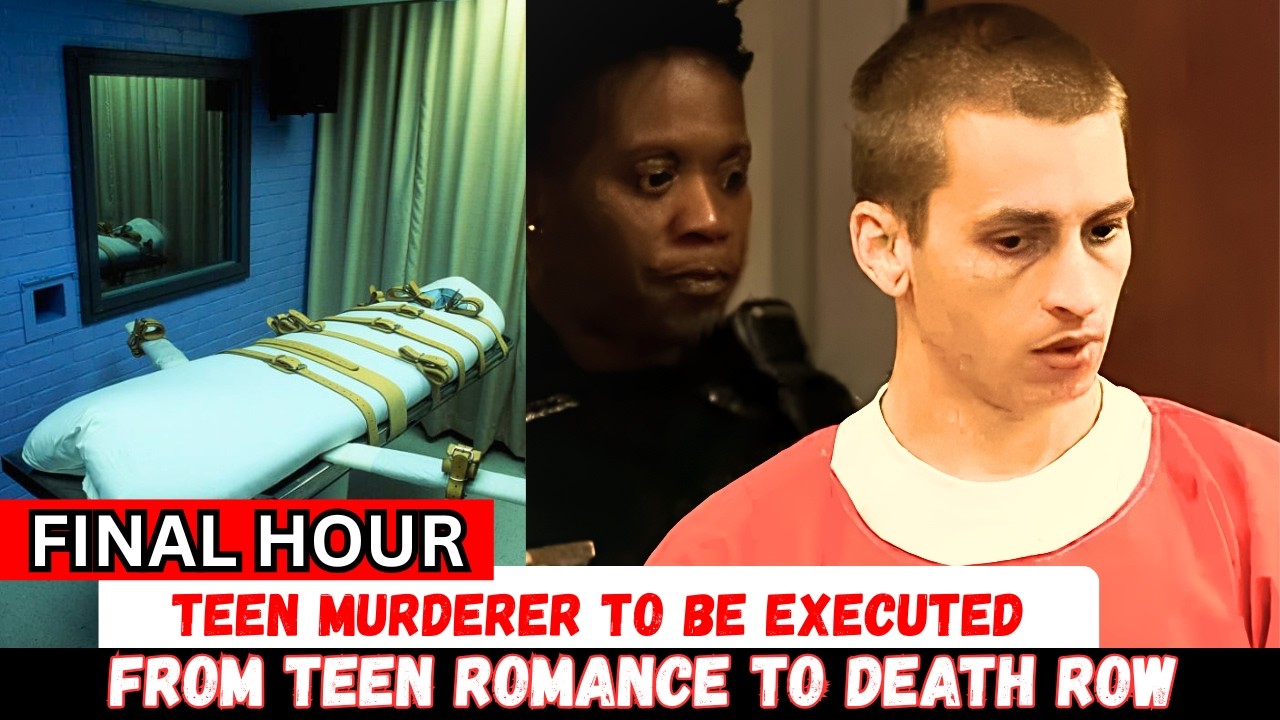 Bargo, now 34 years old, remains the youngest person ever sent to Florida’s death row, and his case has become a chilling testament to the intersection of a fractured childhood, calculated violence, and a justice system that has twice determined he deserves to die for his crimes.
The murder of Seath Jackson was not a crime of passion or a sudden eruption of violence. It was a meticulously planned execution, conceived over weeks and carried out with a chilling precision that has left investigators and prosecutors alike struggling to comprehend how a human being could arrive at such a place.
Bargo, who was 18 at the time, had spent weeks openly discussing his intent to 𝓀𝒾𝓁𝓁 the teenager, whom he believed had been abusive toward his ex-girlfriend, Amber Wright. That belief, which was later proven false by Seath’s closest friends, became the framework for Bargo’s rage, transforming petty jealousy into a crusade of righteous vengeance. He announced his plans repeatedly in a house full of people, and no one stopped him.
He fired a gun in Seath’s direction days before the murder, and no one called the police. He laid out the logistics of the killing the night before it happened, and a man named James Havens, who heard every word, walked away and went to sleep.
The events of April 17, 2011, unfolded with a grim inevitability that seems almost scripted in hindsight.
Amber Wright, acting on Bargo’s direct orders, texted Seath that evening, telling him she wanted to rekindle their relationship. The messages were carefully calibrated, designed to reach the 15-year-old where he was most vulnerable. Seath, who had been training in mixed martial arts and dreaming of competing one day, was loyal to the people he loved.
He believed her. He ignored the warnings of a friend who read the exchange and told him it was a trap. He texted his mother, Sonya, saying he was staying with friends, but he did not say where.
He walked to a street corner in Summerfield, Florida, where Amber and her friend Charlie Ely were waiting. They led him back to Ely’s mobile home on Southeast 53rd Avenue, and when he walked through the door, the attack began.
Kyle Hooper, Amber’s older brother and once Seath’s friend, was waiting with a piece of lumber.
Justin Soto, a 20-year-old with a juvenile record that included aggravated battery, held a wooden axe handle. They swung at Seath’s head from close range, but the teenager did not go down. Months of training had built a physical resilience that allowed him to fight through the blows.
He moved toward the door, got it open, and made it outside. But Michael Bargo was waiting. He stepped out with a .
22 caliber Heritage revolver and opened fire. Seath was still moving when Soto tackled him from behind, driving him to the ground. A neighbor, Steven Montana, heard the commotion and saw males chasing and striking a person in the yard.
He watched as the group picked the victim up from the ground and carried him back inside. The door closed.
Inside the bathroom, Bargo sent everyone else out.
He wanted to be alone with Seath. He had said for weeks that he wanted the boy to know who was killing him before he died, and he made sure of it. He stood over Seath in the bathtub and fired more rounds into him.
Kyle Hooper, standing in the house, could hear Bargo’s voice through the wall, raised and sustained. He walked to the door and told Bargo to stop. Bargo looked at him and continued.
He fired the last shot into Seath’s face. Seath Tyler Jackson was 15 years old.
What came next defies easy description.
Bargo and Soto moved the body into a sleeping bag, but it did not fit. Bargo broke Seath’s kneecaps to make it fit. He did this as a logistical step, the way one solves a physical problem.
The sleeping bag was carried to the backyard, where a fire pit had been prepared. The fire was lit. Kyle Hooper was assigned to stay with it through the night.
Inside, Amber Wright, Charlie Ely, and the others went through the house with bleach, pouring it on the bathroom floor, applying it to surfaces in the living room, moving from room to room trying to erase what had happened. The smell settled into the walls. Bargo and Amber Wright went inside and went to sleep.
Hooper stood in the backyard alone in the dark, watching the fire from the evening hours until approximately 2:30 in the morning of April 18. He did not leave his post. The fire burned until it had done what fires do when given enough time and heat.
In the middle of that night, Bargo picked up his phone and called James Havens. Havens was asleep. The phone rang.
Bargo’s voice came through with three words: “The deed is done.” Havens understood exactly what that meant. He had been in that room the previous evening.
He had heard the planning. He had driven away and told himself it was not real. Now the man who had been planning it was on the phone in the dark of early morning telling him it had been real from the beginning.
Havens hung up. He did not call anyone. He went back to sleep.
In the morning, Havens loaded his truck with cinder blocks and cables and drove to Southeast 53rd Avenue. Seath’s remains had been shoveled from the fire pit into three 5-gallon paint cans. The lids were sealed.
The cans were loaded into the bed of Havens’ truck alongside the cinder blocks. Bargo directed him to a remote, water-filled rock quarry in Ocala that he knew about from swimming there with a former girlfriend. It was somewhere so off the map that almost no one had reason to drive down the track that led to it.
They stood at the edge of the water. The cinder blocks and cables were attached to the cans to ensure they would not float. One by one, the cans went in.
They sank. Bargo stood at the edge and watched until they were gone. Then they drove back toward Summerfield.
That same day, with Seath’s remains at the bottom of a quarry less than 24 hours after the killing, Bargo sat down in the home of a woman named Kristen Williams in Ocala and told her exactly what he had done. He described the shots. He described the bathtub.
He described the fire pit. He described the paint cans. He described the quarry and the cinder blocks and how the cans went under.
He did not deliver this as a confession. He delivered it as a story. He described it, according to everyone who heard it, the way a person describes something they are proud of.
He then traveled to Stark, Florida, where he told the story again to Kristen’s brother, to her father’s girlfriend, to a neighbor. In total, he described the killing of Seath Tyler Jackson to at least five people across two cities the day after it happened. He gave them specific details.
Eight shots with a . 22 revolver. The kneecaps.
The sleeping bag. The fire. The paint cans.
The quarry. He was not a man in flight from what he had done. He was a man who had done something and wanted an audience for it.
He was arrested at the Williams home in Stark on April 19, 2011. He had not moved on. He was not hiding.
He was there when the officers arrived, and he was taken into custody without incident. Back in Summerfield, the case was already unraveling from multiple directions. Kyle Hooper had watched a television news segment about a missing teenager named Seath Jackson on the afternoon of April 18 and then went to his mother.
He told Tracy Wright everything. Tracy Wright did not hold the information. On April 19, she walked into the Marion County Sheriff’s Office with her son.
Meanwhile, Sonya Jackson had reported Seath missing after his best friend, William Sammelot, called her to say he had not been able to reach Seath since Sunday evening. When William could not reach him, Sonya knew. She and Scott Jackson filed a missing person report.
She kept pushing even when investigators initially treated it as a teenager who might have chosen not to come home. She knew her son. She knew his last text to her had not been his voice.
She did not stop.
Search warrants were executed on the property at Southeast 53rd Avenue. The bleach cleanup had not been thorough enough.
Forensic testing revealed blood in multiple locations throughout the house. DNA matched the defendants and confirmed the presence of someone consistent with Seath Tyler Jackson. Human tissue and bone fragments were recovered from the fire pit.
A dive team went into the rock quarry in Ocala. They found one paint can floating near the surface. Two more below, weighted down with cinder blocks, exactly as described.
All three were recovered. All three contained what was left of Seath Tyler Jackson. The .
22 caliber Heritage revolver was recovered at the property. Ballistics would connect a projectile recovered from the remains directly to that weapon.
On April 20, 2011, six people were arrested.
The cases moved through the courts separately over the following years. Charlie Ely was convicted by a jury in September 2011. The video of her own police interview, in which she acknowledged walking Seath to the house knowing Bargo planned to 𝓀𝒾𝓁𝓁 him, was persuasive.
So were the 108 text messages she sent in the three hours immediately after Seath’s death. She was sentenced to life in prison without parole. At Ely’s sentencing, Sonya Jackson addressed her directly and did not look at her once.
She said, “You could have been a hero and saved many lives.” Justin Soto pleaded guilty in May 2012 and was sentenced to life without parole. Amber Wright and Kyle Hooper were tried together before two separate juries in June 2012.
Both were convicted of first-degree murder. Because both had been under 18 at the time of the offense, they could not face the death penalty. They were each sentenced to life in prison without parole.
At their sentencing, Sonya Jackson stood and told Wright, “Even after all the harsh words that you two exchanged, you knew that Seath had a kind heart, that he still loved you. You used his love to take his life.”
Then it was Bargo’s turn.
His trial began on August 12, 2013. The prosecution laid out the full sequence. Witnesses who had been inside Ely’s home testified.
Witnesses who had heard Bargo’s own account of what he had done in Ocala and in Stark testified. Investigators testified about what the forensic evidence showed. James Havens took the stand.
He told the jury he had been in that house the evening before the killing and overheard the planning. He said he left because he did not want to be in the room for it. He then described receiving Bargo’s middle-of-the-night phone call.
The prosecutor asked what he had done when Bargo said “the deed is done.” Havens confirmed his answer. He hung up the phone and went back to sleep.
The prosecutor asked again, just to make sure the jury had heard it clearly. The answer did not change.
Bargo took the witness stand in his own defense.
He told the jury he had gotten into a fight with Hooper and Soto earlier that day and had left the house around 9 p. m. to walk to a former girlfriend’s home.
He said he had come back to find out from Hooper what had happened. He said he had not reported it to police because he was afraid. He said, “Have them come after me, beat me up and throw me in the fire for having told on them.”
 The jury took eight days of testimony and found Michael Shane Bargo Jr. guilty of first-degree murder with a firearm on August 20, 2013.
During the penalty phase, the defense presented the full weight of Bargo’s history.
His childhood. The divorce. The instability.
The documented diagnoses. Bipolar disorder. Schizoaffective disorder.
Frontal lobe brain damage. Seizure disorder. His defense expert, a clinical psychologist and neuropsychologist named Dr.
Hyman Eisenstein, told the jury that Bargo was a deeply complex individual whose decision-making had been fundamentally compromised. He said the potential of what Michael Bargo could have been, given his strength and his personality, and what he is, is a tragedy. The state’s forensic expert countered that Bargo had demonstrated organization, planning, and deliberate control throughout the events of April 17 and the days that followed.
He was not in a dissociative episode. He was not in the grip of a psychotic break. He was in control.
The jury recommended death by a vote of 10 to 2.
On December 13, 2013, Circuit Judge David Eddy sat with Bargo before him. He had been on the bench for 32 years.
He had presided over capital cases before. He described the murder of Seath Tyler Jackson as the most cold, calculated, and premeditated case he had ever seen in 32 years of judicial service. He read the sentence.
Michael Shane Bargo Jr. was sentenced to death. He was 21 years old.
He became the youngest person on Florida’s death row at that moment, joining 403 other inmates already there. As he was led from the courtroom, his father called out from the gallery, “I love you, son.” Sonya Jackson had already walked out.
She did not stay to hear the sentence read aloud. She had sat through enough. She had already said what she needed to say.
The legal proceedings did not end there. In 2017, the Florida Supreme Court affirmed Bargo’s conviction but vacated his death sentence on constitutional grounds, ordering a new penalty phase because the original jury’s recommendation had not been unanimous. A second jury heard the case in April 2019.
Four days of testimony. The same evidence. The same mitigation.
The same history. This time, the jury returned a unanimous recommendation. All 12 jurors voted for death.
He was resentenced on September 12, 2019. Before the sentence was imposed, Bargo addressed the court. He called the proceeding a big circus.
He said he had not received a fair trial. He said he had evidence of innocence the court had refused to consider. The judge imposed the sentence the jury had unanimously recommended.
In a jailhouse interview conducted after his original sentencing, Bargo told a reporter, “I’m not crazy. I’m not a psycho. I’m not a bad person.”
On June 24, 2021, the Florida Supreme Court upheld his death sentence by a vote of 6 to 1. Michael Shane Bargo Jr. is now 34 years old.
He is at Union Correctional Institution in Raiford, Florida, where he has been since December 2013. He remains the youngest person ever sent to death row in the state of Florida. His post-conviction proceedings are ongoing.
The process is slow and methodical, and it will take years to complete. He paces in his cell constantly. According to mental health evaluations conducted after his incarceration, he lives with persistent anxiety.
The conditions documented throughout his childhood, the frontal lobe damage, the bipolar disorder, the schizoaffective disorder, followed him through the prison gates.
Seath Tyler Jackson would have been 30 years old this year. He was born on February 3, 1996, in Ocala, Florida.
He grew up in the Belleview area of Marion County with his parents, Scott and Sonya, and his two older brothers. The house he grew up in was a stable one. His father took him four-wheeling on weekends out on flat, open Florida land with no particular destination and no particular purpose other than being together.
His mother texted him to check in. She knew his friends. She paid attention.
Seath was the kind of person people described the same way regardless of how well they knew him. Funny. Not performing funny.
Not trying too hard funny. Naturally, effortlessly funny in the way that some people just are. You did not have to know Seath Jackson well to come away from a conversation with him feeling lighter.
He loved animals with a simplicity that said something about his character. No 𝒹𝓇𝒶𝓂𝒶 attached to it. No posturing.
He just cared about them. He was loyal in the way that actually means something. When he called someone a friend, he showed up for them.
His closest friend was a young man named William Sammelot, and the two of them had built the kind of friendship that only comes from sustained presence over time. Sammelot knew Seath’s moods, his habits, everyone in his life. At Belleview High School, where Seath was a sophomore in the fall of 2010, he had run into something that lean, tall teenagers often run into in school environments.
He was 6 feet tall and weighed around 135 pounds. Other students had read that build as a vulnerability. They were wrong, but they tried anyway.
Seath had been bullied. His response was not to retreat and not to become someone who treated others the way he had been treated. He found a mixed martial arts gym.
He showed up consistently. He trained with the seriousness that people bring to things they genuinely care about. He talked about competing one day, not as a casual fantasy, but as an actual goal he returned to in conversation again and again.
He wanted to be good at it.
This was Seath Tyler Jackson in the fall of 2010. 15 years old.
Training. Dreaming. Making people laugh.
Loyal to the people he chose. In December of that year, he started dating a girl named Amber Wright. Amber was the same age as Seath, also a student at Belleview High School.
Her older brother, Kyle Hooper, was already one of Seath’s friends. The arrangement felt natural. Kyle as friend.
Amber as girlfriend. Seath moving comfortably between both. The relationship lasted from December 2010 through March 2011.
During those months, it was real. They were together at school. They appeared in each other’s social media posts.
They were genuinely invested in each other. Then something shifted. By early March 2011, Seath began to sense that Amber’s attention had moved somewhere else.
She had been spending time around a man named Michael Bargo, who was 18 years old, three years older than both of them, and who was living at the home of a woman named Charlie Ely on Southeast 53rd Avenue in Summerfield. Seath asked questions. The answers confirmed what he already suspected.
Amber had been with Bargo while she and Seath were still together. The relationship ended. The ending was not clean or quiet.
Seath processed the breakup on Facebook, where his posts were visible to everyone connected to him. Early in March, they still carried the tone of someone who was hurt but holding on to hope. By the end of March, the hurt had hardened.
He accused Amber publicly of 𝒸𝒽𝑒𝒶𝓉𝒾𝓃𝑔 on him with Bargo. He wrote it where anyone could read it. Michael Bargo read it.
Now we need to talk about Michael Bargo. Because understanding what happened next requires understanding the specific kind of person who was now paying attention to a 15-year-old’s Facebook posts. Michael Shane Bargo Jr.
was born on April 29, 1992, in Florida. From the time he was small enough to fit in a car seat, his home life was defined by instability. His parents, Michael Bargo Sr.
and Tracy O’Brien, fought constantly. The household was not simply loud. It was unpredictable in the particular way that children find most damaging.
Not knowing what version of the day they were walking into. Not knowing how an evening would end. When Bargo Sr.
, in a rage directed at Tracy, punched out the car window beside his young son’s car seat, it was that kind of household.
His parents formally divorced in 2006 when Michael Jr. was 14.
The separation did not resolve the conflict. It reorganized it. Michael Jr.
chose sides immediately and permanently. He blamed his mother. He made that clear in how he spoke to her and behaved around her.
His father actively encouraged the hostility. At one point, directing the boy to write offensive words about his mother in sidewalk chalk outside their home. The message being communicated was that his mother was the enemy and his father was the one who understood him.
At school, Michael Jr. struggled. Disruptive behavior.
Poor academic performance. He was diagnosed with ADD and ADHD. As years passed, more conditions were identified.
Bipolar disorder. Schizoaffective disorder. Anxiety.
Depression. A complex partial seizure disorder. Oppositional defiant disorder.
Frontal lobe abnormalities. The picture that emerged from those evaluations was of a young person whose brain was not functioning without difficulty and whose home environment was providing nothing to compensate.
He ran away repeatedly.
On one occasion, he climbed a tree in the front yard and refused to come down for hours, waiting for his father to arrive before he would move. His attachment to his father was total and unquestioning. His resentment of his mother grew in proportion.
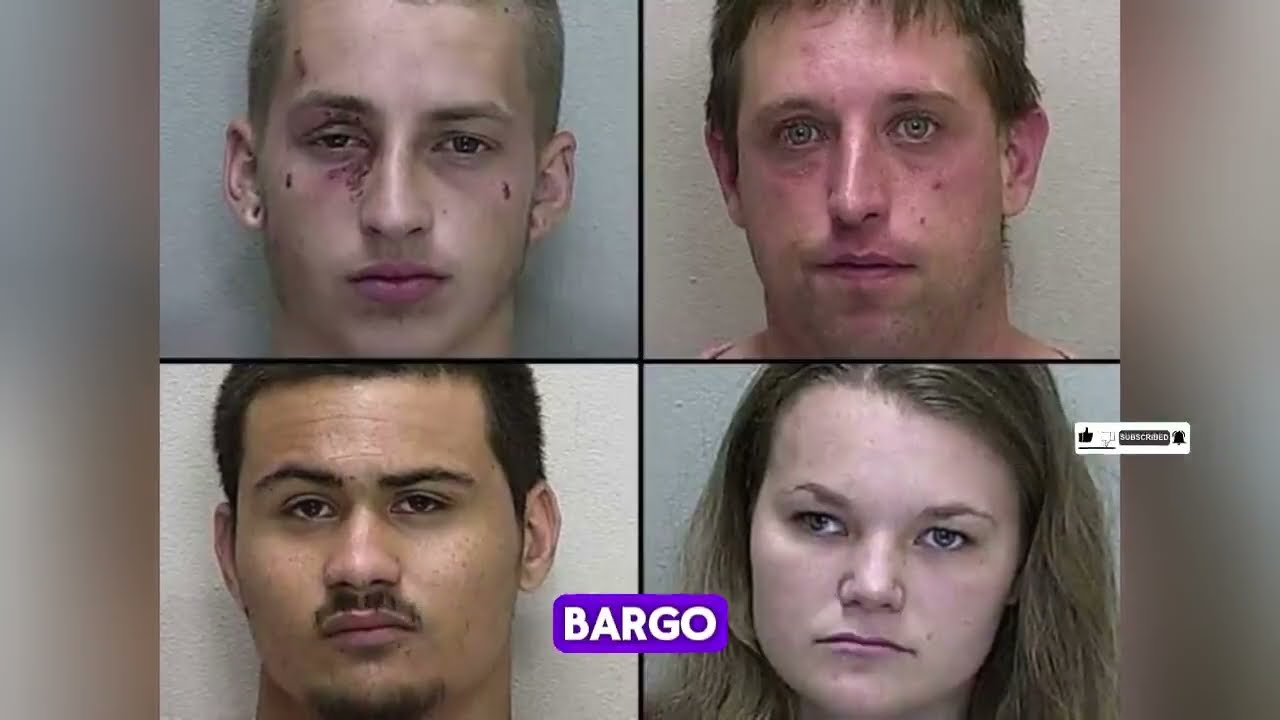 By 16, he had gotten his wish to live with his father. It did not improve his trajectory. In the summer of 2010, he was arrested twice on burglary charges in Florida.
He was adjudicated guilty of burglary of a dwelling and grand theft. He did not consider himself a convicted person in any meaningful sense, a distinction he would try to make years later in a courtroom until the record was placed directly in front of him. By early 2011, Michael Shane Bargo Jr.
was 18 years old and had ended up at Charlie Ely’s mobile home on Southeast 53rd Avenue in Summerfield. Charlie Ely was 18, lived alone, and had left the door open to a group of young people with nowhere better to be. Also at that property was Justin Soto, 20 years old, who had a juvenile record that included aggravated battery and possession of a weapon on school grounds.
And Kyle Hooper, 16 years old, Amber Wright’s older brother.
Bargo had Amber Wright’s initials tattooed on his left thigh. He had literally written his attachment to her into his skin.
Amber had a corresponding tattoo. When Seath Jackson’s Facebook posts accused Amber of 𝒸𝒽𝑒𝒶𝓉𝒾𝓃𝑔, Bargo entered the conversation directly. And here is where the mechanics of what happened matter.
Bargo formed a specific belief about Seath Jackson. He decided, without evidence, without any first-hand knowledge, based solely on what he chose to accept from what Amber told him or implied, that Seath had been physically abusive toward Amber during their relationship. William Sammelot, who was with Seath throughout that relationship and who knew him better than almost anyone, later stated clearly that this was not true.
There was no 𝓪𝓫𝓾𝓼𝓮. But Bargo was not looking for accuracy. He was looking for a framework.
He found one. And that framework transformed his anger from something petty and personal, jealousy over a girl, into something he could tell himself was righteous. He was not just angry at Seath Jackson.
In his own internal logic, he had a reason.
He stopped keeping that logic to himself. For weeks in March and into April of 2011, Michael Bargo talked about Seath Jackson in that house.
Daily. Repeatedly. He described what he believed Seath had done.
He said out loud what he thought should happen to Seath. These were not one-time outbursts. They became the texture of daily life in that mobile home.
The group heard it so many times that it stopped registering as something unusual. It became background. It became normal.
Bargo escalated beyond words. He walked to the Jackson family home and stood on their property and told Seath loudly, calmly, with no lowered voice, that he had a bullet with Seath’s name on it. Sonya Jackson was standing right there.
She heard every word. She did not forget. Seath, for his part, was not backing down.
He was 15, trained in martial arts, and had built a physical confidence over months of work. He challenged Bargo to fight him directly on multiple occasions. He called him out plainly.
Face-to-face, the two of them settle it physically. Bargo refused every time. He heard the challenges, noted them, and stored them.
He was not going to engage on Seath’s terms.
The confrontations kept escalating. At some point, Bargo pulled his .
22 caliber Heritage revolver out inside Ely’s mobile home and pointed it at another resident during a dispute. Two people decided they were done and moved out. Everyone still in the house knew it had happened.
They stayed. Later, when Seath and William Sammelot approached the property together, Bargo fired the revolver in their direction from the property. Not to hit them, according to Bargo’s own later account, but to scare them off a little bit.
He said it with the flat affect of someone describing a minor inconvenience they resolved. The gun had now been used as a weapon of intimidation twice. Nobody left.
Nobody called anyone. By the evening of April 16, 2011, the night before Seath Jackson died, a man named James Havens arrived at Ely’s home. Havens was 37, more than a decade older than everyone else there, connected to the group through a past relationship with Tracy Wright, the mother of Amber and Kyle.
He sat down and he listened to the conversation that was happening. And on this particular evening, the conversation was no longer abstract hatred. It had moved into logistics.
The group was talking through how to get Seath to the house. They were mapping out the sequence of what would happen when he arrived. Havens told himself it was not real.
He had heard dark talk before and seen it come to nothing. He stood up, said something by way of leaving, and walked out to his vehicle. He drove away from Southeast 53rd Avenue.
He did not call anyone. He went home and went to sleep.
The morning of April 17, 2011, arrived without any visible marker of what was coming.
It was a Sunday. The group moved through the early hours the way they moved through all of their days, no structure, no schedules. Bargo was there.
Hooper was there. Soto was there. Ely was there.
Amber Wright was there. That afternoon, Bargo stopped expressing and started directing. He stated plainly that he wanted Seath dead.
Then he laid out what needed to happen. He turned to Kyle Hooper first. He said he needed to 𝓀𝒾𝓁𝓁 Jackson.
Hooper had his own reasons entirely separate from Bargo’s. His friendship with Seath had collapsed after the breakup. And he had separately discovered that Seath had been intimate with a girl he had feelings for.
He had sent text messages to that girl stating directly that he wanted Seath dead. When Bargo looked at him on the afternoon of April 17, Hooper agreed immediately. Bargo turned to Justin Soto.
Soto agreed without hesitation. Then Bargo told Amber what she needed to do. She needed to contact Seath.
She needed to make him believe she wanted them back together. She needed to bring him to the house. Amber Wright knew exactly what she was agreeing to.
She had been in that house for weeks. She had heard every conversation. She had watched Bargo fire that gun.
She knew what was waiting for Seath if she made the call. She picked up her phone.
The text messages between Amber Wright and Seath Jackson began at 8:12 in the evening on April 17, 2011.
She opened simply, “Hey, can you talk?” And Seath responded. From there, she built it carefully.
She told him their relationship was not finished. She told him she wanted to work things out. She said her friend Charlie would be there because she needed support for an emotional conversation.
She asked him to keep it between them. And then she sent the line that was designed to reach him where he was most vulnerable. She wrote that she would never do anything to hurt him, that she only wanted them back together.
A young woman named Brittany Jones was with Seath when those messages were coming through. She read the exchange. She did not trust it.
The timing was wrong. The language was too perfectly calibrated. She told Seath plainly she would not fall for something like that.
She said it as a warning and she meant it. Seath heard her. He had already decided.
He sent his mother a text telling her he was staying with friends. He did not say where. He kept it vague in the way a teenager keeps something vague when he does not want it examined.
Earlier that evening, Sonya Jackson had texted asking if he needed a ride home. His response had been words he had never used toward her before, words that stopped her cold when she read them. She decided he was in a bad mood.
She decided he was going through something. She thought he was headed to William Sammelot’s house. She let it go and told herself it was one of those nights.
It was not one of those nights.
Amber Wright and Charlie Ely left the house before Seath arrived. They walked to a street corner nearby, a deliberate meeting point designed to make the encounter look casual.
They stood and waited. When Seath arrived, Amber was there. The girl he had dated for three months.
The girl whose messages had just told him she still wanted him. She walked back toward the house beside him with Ely on his other side. At the door, Charlie Ely turned the handle and opened it.
She stepped aside. Seath walked through. Kyle Hooper and Justin Soto were waiting in the living room.
Hooper had a piece of lumber. Soto had a wooden axe handle. They did not pause when Seath entered.
They did not speak to him. They moved directly toward him and the attack began without any transition between the moment before and the moment of it. Both of them swung at Seath’s head hard from close range.
He did not go down. Months of mixed martial arts training had built Seath Tyler Jackson toward exactly this kind of moment. Even absorbing those blows, even with the blood and the shock of it, he stayed on his feet.
His body responded the way a trained body responds. He did not freeze. He moved toward the door with everything he had.
He fought through the attack. He got the door open. He made it outside.
Michael Bargo was waiting. He stepped out with a . 22 caliber Heritage revolver in his hand and opened fire.
Seath was still moving. Justin Soto came out behind Bargo and tackled him from behind, driving Seath to the ground with his full weight. Across the street, two houses down, a neighbor named Steven Montana was outside.
He heard the commotion. He looked toward Ely’s property. He saw males in the yard chasing and striking a person.
He watched the group pick the person up from the ground and carry him back inside. The door closed.
Inside the bathroom, Bargo sent everyone else out.
He wanted to be alone with Seath in that room. He had said for weeks in that house to multiple people repeatedly that he wanted Seath to know who was killing him before he died. He wanted that specifically.
He made sure of it. He stood over Seath in that bathtub. He fired more rounds into him.
 He was still talking. Kyle Hooper, standing in the house, could hear it through the wall, Bargo’s voice raised and sustained, filling the bathroom. Hooper walked to the door and told Bargo to stop.
He said it directly. He meant it. Bargo looked at him and continued.
He fired the last shot into Seath’s face. Seath Tyler Jackson was 15 years old. What came next is no language that makes it easier to say, so it will be said plainly.
Bargo and Soto moved Seath’s body out of the bathtub and into a sleeping bag. To make the body fit, Bargo broke Seath’s kneecaps. He did this as a logistical step.
Practically, the way one solves a physical problem. The sleeping bag was closed and carried into the backyard where the fire pit was. The fire was lit.
Kyle Hooper was assigned to stay with it through the night. Inside, Amber Wright, Charlie Ely, and the others went through the house with bleach. They poured it on the bathroom floor, applied it to the surfaces in the living room, moved from room to room trying to erase what had happened in those rooms.
The smell settled into the walls. Bargo and Amber Wright went inside. They went to sleep.
Hooper stood in the backyard alone in the dark watching the fire from the evening hours until approximately 2:30 in the morning of April 18. He did not leave his post. The fire burned until it had done what fires do when given enough time and heat.
In the middle of that night, Bargo picked up his phone and called James Havens. Havens was asleep. The phone rang.
Bargo’s voice came through with three words, “The deed is done.” Havens understood exactly what that meant. He had been in that room the previous evening.
He had heard the planning. He had driven away and told himself it was not real. Now the man who had been planning it was on the phone in the dark of early morning telling him it had been real from the beginning.
Havens hung up. He did not call anyone. He went back to sleep.
In the morning, he loaded his truck with cinder blocks and cables and drove to Southeast 53rd Avenue. Seath’s remains had been shoveled from the fire pit into three 5-gallon paint cans. The lids were sealed.
The cans were loaded into the bed of Havens’ truck alongside the cinder blocks. Bargo directed him to the quarry, a remote, water-filled rock pit in Ocala that Bargo knew about from swimming there with a former girlfriend. Somewhere so off the map that almost no one had reason to drive down the track that led to it.
They stood at the edge of the water. The cinder blocks and cables were attached to the cans to ensure they would not float. One by one, the cans went in.
They sank. Bargo stood at the edge and watched until they were gone. Then they drove back towards Summerfield.
That same day, with Seath’s remains at the bottom of a quarry less than 24 hours after the killing. Bargo sat down in the home of a woman named Kristen Williams in Ocala and told her exactly what he had done. He described the shots.
He described the bathtub. He described the fire pit. He described the paint cans.
He described the quarry and the cinder blocks and how the cans went under. He did not deliver this as a confession. He delivered it as a story.
He described it, according to everyone who heard it, the way a person describes something they are proud of. He then traveled to Stark, Florida, where he told the story again to Kristen’s brother, to her father’s girlfriend, to a neighbor. In total, he described the killing of Seath Tyler Jackson to at least five people across two cities the day after it happened.
He gave them specific details. Eight shots with a . 22 revolver, the kneecaps, the sleeping bag, the fire, the paint cans.
The quarry. He was not a man in flight from what he had done. He was a man who had done something and wanted an audience for it.
He was arrested at the Williams home in Stark on April 19th, 2011 He had not moved on. He was not hiding. He was there when the officers arrived and he was taken into custody without incident.
Back in Summerfield, the case was already unraveling from multiple directions. Kyle Hooper had watched a television news segment about a missing teenager named Seath Jackson on the afternoon of April 18th and then went to his mother. He told Tracy Wright everything.
Tracy Wright did not hold the information. On April 19th, she walked into the Marion County Sheriff’s Office with her son. Meanwhile, Sonya Jackson had reported Seath missing after William Sammelot called her to say he had not been able Seath since Sunday evening.
When William could not reach him, Sonya knew. She and Scott Jackson filed a missing person report. She kept pushing even when investigators initially treated it as a teenager who might have chosen not to come home.
She knew her son. She knew his last text to her had not been his voice. She did not stop.
Search warrants were executed on the property at Southeast 53rd Avenue. The bleach cleanup had not been thorough enough. Forensic testing revealed blood in multiple locations throughout the house.
DNA matched the defendants and confirmed the presence of someone consistent with Seath Tyler Jackson. Human tissue and bone fragments were recovered from the fire pit. A dive team went into the rock quarry in Ocala.
They found one paint can floating near the surface. Two more below weighted down with cinder blocks exactly as described. All three were recovered.
All three contained what was left of Seath Tyler Jackson. The . 22 caliber Heritage revolver was recovered at the property.
Ballistics would connect a projectile recovered from the remains directly to that weapon. On April 20th, 2011, six people were arrested. The cases moved through the courts separately over the following years.
Charley Ely was convicted by a jury in September 2011. The video of her own police interview in which she acknowledged walking Seath to the house knowing Bargo planned to 𝓀𝒾𝓁𝓁 him was persuasive. So were the 108 text messages she sent in the 3 hours immediately after Seath’s death.
She was sentenced to life in prison without parole. At Ely’s sentencing, Sonya Jackson addressed her directly and did not look at her once. She said, “You could have been a hero and saved many lives.”
Justin Soto pleaded guilty in May 2012 and was sentenced to life without parole. Amber Wright and Kyle Hooper were tried together before two separate juries in June 2012. Both were convicted of first-degree murder.
Because both had been under 18 at the time of the offense, they could not face the death penalty. They were each sentenced to life in prison without parole. At their sentencing, Sonya Jackson stood and told Wright, “Even after all the harsh words that you two exchanged, you knew that Seath had a kind heart, that he still loved you.
You used his love to take his life.” Then it was Bargo’s turn. His trial began on August 12th, 2013.
The prosecution laid out the full sequence. Witnesses who had been inside Ely’s home testified. Witnesses who had heard Bargo’s own account of what he had done in Ocala, in Stark, testified.
Investigators testified about what the forensic evidence showed. James Havens took the stand. He told the jury he had been in that house the evening before the killing and overheard the planning.
He said he left because he did not want to be in the room for it. He then described receiving Bargo’s middle of the night phone call. The prosecutor asked what he had done when Bargo said the deed is done.
Havens confirmed his answer. He hung up the phone and went back to sleep. The prosecutor asked again just to make sure the jury had heard it clearly.
The answer did not change. Bargo took the witness stand in his own defense. He told the jury he had gotten into a fight with Hooper and Soto earlier that day and had left the house around 9:00 p.
m. to walk to a former girlfriend’s home. He said he had come back to find out from Hooper what had happened.
He said he had not reported it to police because he was afraid. He said, “Have them come after me, beat me up and throw me in the fire for having told on them.” The jury took eight days of testimony and found Michael Shane Bargo Jr.
guilty of first-degree murder with a firearm on August 20th, 2013. During the penalty phase, the defense presented the full weight of Bargo’s history, his childhood, the divorce, the instability, the documented diagnoses, bipolar disorder, schizoaffective disorder, frontal lobe brain damage, seizure disorder. His defense expert, a clinical psychologist and neuropsychologist named Dr.
Hyman Eisenstein, told the jury that Bargo was a deeply complex individual whose decision-making had been fundamentally compromised. He said the potential of what Michael Bargo could have been, given his strength and his personality, and what is is a tragedy. The state’s forensic expert countered that Bargo had demonstrated organization, planning, and deliberate control throughout the events of April 17th and the days that followed.
He was not in a dissociative episode. He was not in the grip of a psychotic break. He was in control.
The jury recommended death by a vote of 10 to 2. On December 13th, 2013, Circuit Judge David Eddy sat with Bargo before him. He had been on the bench for 32 years.
He had presided over capital cases before. He described the murder of Seath Tyler Jackson as the most cold, calculated, and premeditated case he had ever seen in 32 years of judicial service. He read the sentence.
Michael Shane Bargo, Jr. was sentenced to death. He was 21 years old.
He became the youngest person on Florida’s death row at that moment, joining 403 other inmates already there. As he was led from the courtroom, his father called out from the gallery, “I love you, son.” Sonya Jackson had already walked out.
She did not stay to hear the sentence read aloud. She had sat through enough. She had already said what she needed to say.
The legal proceedings did not end there. In 2017, the Florida Supreme Court affirmed Bargo’s conviction, but vacated his death sentence on constitutional grounds, ordering a new penalty phase because the original jury’s recommendation had not been unanimous. A second jury heard the case in April 2019.
Four days of testimony, the same evidence, the same mitigation, the same history. This time, the jury returned a unanimous recommendation. All 12 jurors, death.
He was resentenced on September 12th, 2019. Before the sentence was imposed, Bargo addressed the court. He called the proceeding a big circus.
He said he had not received a fair trial. He said he had evidence of innocence the court had refused to consider. The judge imposed the sentence the jury had unanimously recommended.
In a jailhouse interview conducted after his original sentencing, Bargo told a reporter, “I’m not crazy. I’m not a psycho. I’m not a bad person.”
On June 24th, 2021, the Florida Supreme Court upheld his death sentence by a vote of 6 to 1. Michael Shane Bargo Jr. is 34 years old.
He is at Union Correctional Institution in Raiford, Florida, where he has been since December 2013. He remains the youngest person ever sent to death row in the state of Florida. His post-conviction proceedings are ongoing.
The process is slow and methodical, and it will take years to complete. He paces in his cell constantly. According to mental health evaluations conducted after his incarceration, he lives with persistent anxiety, the conditions documented throughout his childhood, the frontal lobe damage, the bipolar disorder.
The schizoaffective disorder followed him through the prison gates. Seath Tyler Jackson would have been 30 years old this year. Now here is the question this case leaves behind, and it is one that does not resolve cleanly, which is why it belongs to you and not to me.
Michael Bargo grew up in documented chaos, brain damage confirmed by experts, a father who taught him his mother was the enemy, diagnoses that went untreated and compounded each other for years. A jury of 12 people heard all of that mitigation in full twice and voted for death both times. A judge with 32 years on the bench called this the most cold and calculated case he had ever seen.
So, here is what I want you to leave in the comments. Does a childhood like Bargo’s explain what he did to Seath Jackson? Or is there a point at which no explanation reaches?
Because there is a 15-year-old boy in three paint cans at the bottom of a quarry whose mother had to sit in a courtroom and watch the system decide what his life was worth. And she did it for nearly a decade without stopping. Where does explanation end and accountability begin?
Tell me what you think. And if this case affected you, share it. There are more stories like this one that deserve to be told in full.
Subscribe to True Crime Matter and make sure you are here when the next one drops.