The witness room at Florida State Prison was cold on the evening of February 12th, not the cold of a faulty thermostat, but the cold of nineteen years of accumulated grief and waiting finally pressing against the glass. Don Rice, seventy years old, sat beside his son Ted, watching through that glass as the man who abducted, raped, and murdered nine-year-old Jimmy Ryce lay strapped to a gurney, calm and silent. At 8:17 p.
m. , Juan Carlos Chavez was pronounced dead, and the room exhaled.
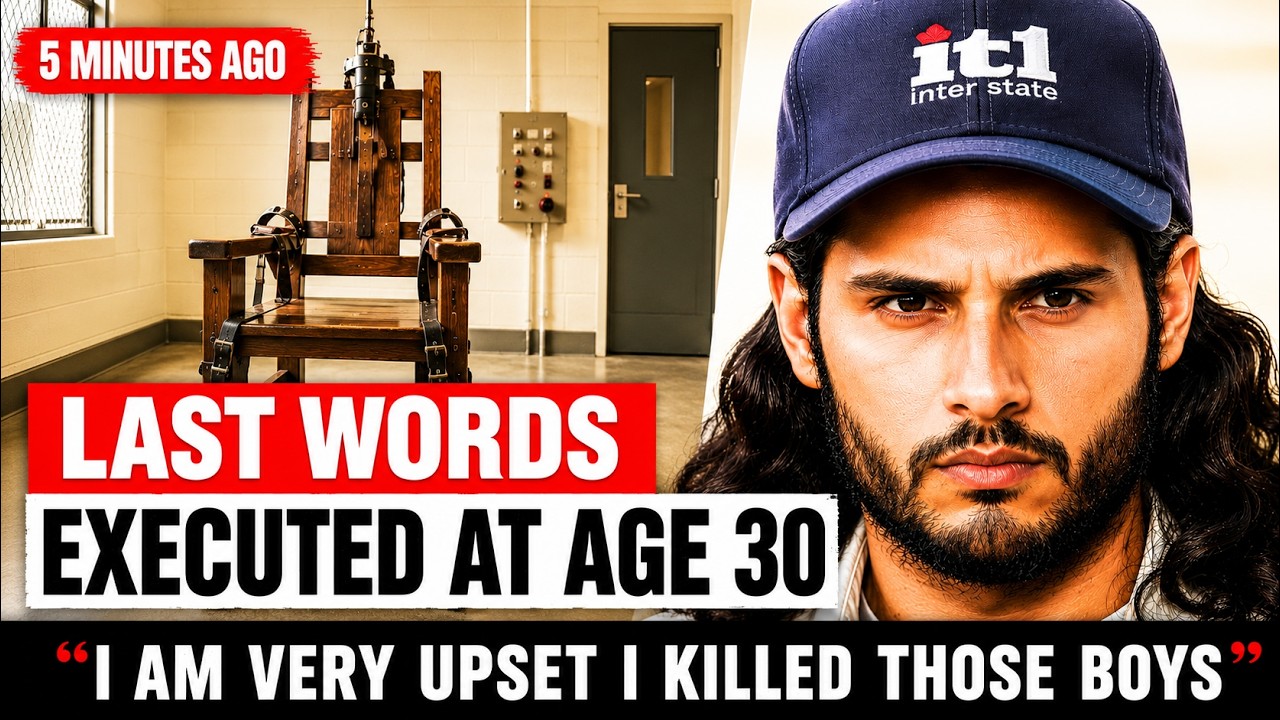
The execution was the final punctuation mark on a sentence that began on an ordinary Tuesday afternoon in September 1995, on a rural road in South Miami-Dade County, when a boy stepped off a school bus and began walking the short distance home. He almost made it. The space between almost and never became the foundation for a legislative legacy that changed how America handles sexually violent predators, and it shattered a family into pieces that they rebuilt into something extraordinary.
Juan Carlos Chavez arrived in South Florida in 1991 on a raft from Cuba, a mid-twenties man with no criminal record and no flags on file. He found work as a handyman and ranch hand for the Shinehouse family in the Redlands, a working-class agricultural belt that was still recovering from Hurricane Andrew. They gave him a trailer on the property, keys to a Ford pickup, and their trust.
He was unremarkable, quiet, and utterly invisible in plain sight.
The Redlands is not a suburb. It is a wide rural stretch of South Florida that smells of earth and citrus, where avocado groves run for acres and dirt roads disappear into trees. Neighbors do not bump into each other at the mailbox here; the lots are wide and the distances between houses are real.
It was the kind of place where parents felt safe sending their children to walk home from the bus stop, and in the early 1990s, that feeling was widespread.
September 11th, 1995 was a Tuesday. The school bus pulled away from the stop at approximately 3:07 in the afternoon, leaving ten children behind. One of them was Samuel James Rice, known to everyone who loved him as Jimmy.
He was nine years old, bright and full of energy, and his home was less than one block from where he was standing. Dinner was probably being planned. A completely ordinary Tuesday evening was waiting for him.
He started walking, and he did not make it home.
Chavez worked across two properties connected to the Shinehouse family. The first was the main residence where his own trailer was parked. The second was a separate horse and avocado grove ranch owned by a man named David Santana, where Chavez tended horses and where a second trailer sat set back from the road, largely out of sight.
He knew both properties intimately, knew when they were empty, knew the school bus schedule, and knew which paths had no witnesses.
That afternoon, Chavez did something he had never done before. Edward Shinehouse, who worked night shifts and usually slept in the afternoon, was woken up by Chavez, who told him he was going to the horse farm. It was the only time Edward could ever remember Chavez announcing his whereabouts.
Then Chavez got in the truck and drove toward the road where the school bus would shortly be stopping. At 3:15 p. m.
, Jimmy stepped off the bus into thick Florida heat.
Jimmy was carrying a book bag filled with notebooks and textbooks, all with his name written in a child’s handwriting. The road was quiet. The white Ford pickup was already stopped ahead of him.
Chavez got out with a . 38 caliber Taurus revolver and pointed it at a nine-year-old boy alone on a dirt road where no one could hear anything. Jimmy got into the truck.
Chavez drove him to the horse farm on the Santana property, to the trailer he knew would be empty.
What happened inside that trailer over the next three and a half hours is documented in the forensic record. Court records describe Jimmy as frightened and crying. Chavez sexually assaulted the child.
Crime scene technicians later collected a sofa cushion, a section of wooden floor just inside the front door, and lubricant on a shelf. After three and a half hours, Chavez made a decision that would haunt the case forever. He put Jimmy back in the truck and started driving toward the area where he had first taken him.
In his own confession, Chavez stated that he intended to release Jimmy that afternoon. He was driving back toward the boy’s home, where his mother was waiting, when he saw them through the windshield. Police.
Officers in the area, active, looking for Jimmy Ryce. The presence of law enforcement, the very people conducting the search, made Chavez turn the truck around. A matter of yards.
A matter of timing. A matter of which road those officers turned down in that exact minute. That proximity cost a nine-year-old boy his life.
Back at the trailer, time was compressing. Chavez knew law enforcement was active in the area. Then, through the walls of the trailer, came the rhythmic thumping pulse of helicopter blades overhead.
A search helicopter was sweeping the Redlands, passing directly over the horse farm where Jimmy was being held. Jimmy heard it, and in that moment, that nine-year-old boy made a decision that stands as one of the most extraordinary acts in the case file. He ran for the door.
He threw himself toward the exit, toward the sound overhead, toward any chance at being found. Chavez fired the revolver. The bullet entered Jimmy’s chest at the right sixth rib, traveled upward through the lung, passed through the heart, and exited from the upper left chest.
Jimmy collapsed near the door of the trailer. According to the medical examiner’s findings, he died shortly after. A nine-year-old boy running for his life, stopped by a single bullet from a gun a grown man had stolen from the woman who trusted him.
What Chavez did next was cold, deliberate, and methodical. He did not flee. He did not fall apart.
 He got to work. He placed Jimmy’s body in a barrel, then changed his mind and removed it. He dismembered the body and packaged the remains into three large plastic planters, sealing them with cement.
He did this two days after the murder, on the same property where he would continue to work. Then he walked back out into the daylight of the Redlands and went about his life.
The planters sat outside. Susan Shinehouse noticed them sometime in October and asked Chavez about them. He told her he had placed them there to keep horses from wandering into the area.
She accepted this. There was no reason not to. For the next three months, those planters sat in the Florida sun while Don and Claudine Rice appeared on national television, begging anyone who knew anything to come forward.
The answer to every question the Rice family was desperately asking sat sealed in concrete in plain view.
Don and Claudine Rice did not stop. They could not stop. They appeared on national broadcasts.
They hired private investigators. They pushed law enforcement without pause. Volunteers searched canal banks and roadsides and empty fields across South Dade County.
The search became one of the largest and most resource-intensive missing child investigations in Florida’s history. And through every press conference, every tearful appeal, every flyer stapled to every telephone pole, those planters sat quietly on the Santana Ranch property just miles away.
There is a particular cruelty in that. The crime itself is monstrous, but the deliberate, calculated decision to let a family suffer through three months of not knowing is its own form of evil. Don and Claudine Rice deserved the truth from day one.
They did not get it for three months. The cover-up was methodical, and it worked until a woman’s nagging feeling finally cracked it open.
Susan Shinehouse had been suspicious for weeks. Several items had gone missing from her home around the time of Jimmy’s disappearance, including a handgun she had purchased in April 1989, and some jewelry. She suspected Chavez, but she had no evidence.
Then, on December 5th, 1995, while Chavez was away from the property, Shinehouse called a locksmith. Her son Edward was with her. Together, they entered Chavez’s trailer.
The handgun was sitting in plain view on the counter opposite the door.
She kept looking. In the closet area, she found a book bag, partially open. She reached in and looked at the papers and notebooks inside.
The handwriting was a child’s, small and careful, the kind of school day handwriting every parent recognizes. There, on the notebooks and textbooks, written over and over in the way that every child writes their name on their school things, was the name Jimmy Ryce. Susan Shinehouse contacted the FBI that day.
The next day, December 6th, law enforcement located Chavez. He was brought in for questioning, advised of his rights, and then began what is, in every legal sense, one of the most remarkable interrogations in Florida criminal history. It lasted fifty-five hours.
Chavez did not immediately break. He tested different stories, each one slightly different from the last. He told investigators that Jimmy had been killed in an accident at the horse farm, that he had seen the boy playing with horses before.
He did not use the word murder.
At around 3:30 p. m. on December 7th, after more than fourteen hours in custody, something shifted.
The detective was outside the interrogation room when Chavez knocked on the door from inside. When the detective entered, Chavez was sobbing. He said he would tell them what happened to the body, but only under one condition.
He wanted a guarantee of the death penalty. Not life in prison. The death penalty.
He asked for it himself, sobbing, in an interrogation room in Miami-Dade County. The detective told him he could not make that promise.
Then Chavez started talking. He confessed to everything. The abduction at gunpoint.
The assault. The shooting. The dismemberment.
The planters. And then, in what must have been the most devastating moment of Don and Claudine Rice’s lives, he led investigators to the ranch property on Santana’s land and stood in front of those concrete-filled planters. Jimmy Ryce was brought home.
Not the way his parents prayed for, not walking through the front door with his book bag, but home after three months of the worst kind of waiting there is.
The forensic case was iron. A print examiner lifted Chavez’s left thumb print from the inside cover of one of Jimmy’s notebooks, with sixteen points of identification. His right middle fingerprint was found on a textbook, with nine points of identification.
Neither print matched Susan Shinehouse or Edward Shinehouse. The . 38 caliber Taurus revolver was confirmed through firearms examination as the weapon that fired the fatal shot.
The spent casings found in the trailer matched the gun. The bullet’s trajectory was documented in full.
There was one more detail. Officers searching Chavez’s trailer found a poster on the wall. A missing child poster of Jimmy Rice.
Chavez had kept a missing child poster of the boy whose remains were cemented in planters fifty meters away. He had looked at that poster and gone to bed each night, gotten up each morning, and gone to work each day while that family was on national television begging for their child. That poster was processed as evidence.
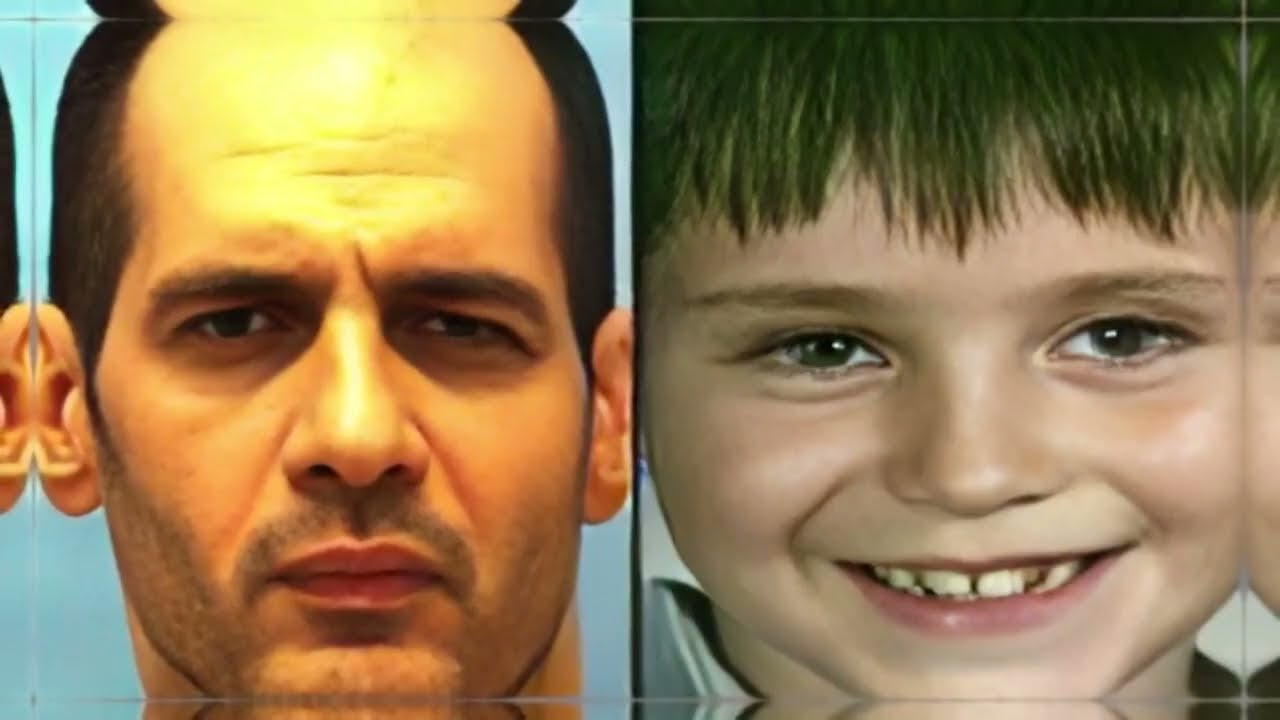
The trial of Juan Carlos Chavez was held in the fall of 1998. It was not a mystery. The confession was on record, having survived multiple suppression challenges.
The fingerprints were on record. The firearms evidence was on record. The medical examiner’s findings were on record.
There was no version of events in which Chavez did not bear full responsibility for what happened to Jimmy Ryce. The jury did not deliberate long on that question. He was convicted of first-degree murder, sexual battery on a child under the age of twelve, and armed kidnapping.
The jury recommended death. The judge agreed. And then the legal system did what the legal system does, and nineteen years began to pass.
Chavez filed a direct appeal to the Florida Supreme Court on December 28th, 1998, arguing that police lacked probable cause for his arrest, that his confession should have been suppressed, that his right to counsel was violated during the fifty-five-hour interrogation, and that the change of venue affected his trial. The court affirmed both the conviction and the death sentence on November 21st, 2002.
What followed was a relentless legal marathon. Chavez petitioned the US Supreme Court in April 2003, and was denied in June 2003. In July 2004, he filed a motion for post-conviction relief claiming ineffective assistance of counsel.
Denied in March 2007. He appealed. Denied in June 2009.
He filed a petition for habeas corpus, denied the same day. He petitioned the US Supreme Court again, denied in November 2009. He filed in US District Court, dismissed in July 2010.
He filed yet another motion in April 2012, denied, and appealed, with the final denial coming on October 11th, 2013.
Nineteen years. Don and Claudine Rice waited through all of it. Every motion, every appeal, every filing, every delay.
They watched the man who took their son from them continue to breathe, continue to argue, continue to exist in the world while Jimmy did not. Claudine Rice died in 2009. She did not make it to February 12th, 2014.
She did not get to sit in that cold room at Florida State Prison and watch what Don and Ted watched through that glass. She spent her last years on Earth building something, and she died five years before it ended.
February 12th, 2014, was the day of reckoning. The execution was originally scheduled for 6:00 p. m.
, but it was delayed. Chavez’s legal team filed a final round of appeals challenging Florida’s lethal injection protocol, claiming the method was unconstitutional and arguing he did not receive due process during clemency proceedings. The Florida Supreme Court refused to stay the execution that morning.
A last-chance appeal to the US Supreme Court was denied. The injection began at 8:02 p. m.
Chavez moved his feet for roughly two minutes. Then he stopped.
At 8:17 p. m. , he was pronounced dead.
He was forty-six years old. He submitted a written final statement laced with religious language, wishing unfailing love upon himself, upon those administering the injection, and even upon those who, in his words, desired his death. He asked God to bless them all.
His last meal was a ribeye steak, french fries, strawberry ice cream, Goya mango juice, hot sauce, and a mix of bananas, mangoes, and papaya. His only visitor that day was his spiritual advisor. His demeanor throughout the day was described as calm.
Don Rice stood outside the prison afterward and spoke to reporters. He was seventy years old, his son Ted beside him. He said that nineteen years ago, Juan Carlos Chavez was faced with a choice.
He had kidnapped his son, sexually assaulted him, and now it was time to decide whether to let him live or take his life. Then Don Rice said something he had clearly rehearsed, or perhaps thought about every single day for nineteen years. “Don’t 𝓀𝒾𝓁𝓁 the child.
Because if you do, people will not forget. They will not forgive. We will hunt you down, and we will put you to death.”
Jimmy would have been twenty-eight years old.
The legal legacy of this case is one of the most significant, and one of the most debated, things to come out of any true crime story in modern American history. While the search for Jimmy was still ongoing in late 1995, Don and Claudine Rice began making calls. They became fixtures in the Florida legislature.
They lobbied. They pushed. They built a case, not in a courtroom, but in the halls of government, for a law that would prevent dangerous sexual predators from simply walking out of prison and returning to society at the end of their sentence.
In May 1998, while Chavez’s own trial was underway, the Florida legislature passed the Jimmy Ryce Involuntary Civil Commitment for Sexually Violent Predators Treatment and Care Act. It passed unanimously. Governor Lawton Chiles signed it into law on May 19th, 1998, and it became effective January 1st, 1999.
The law requires a multi-disciplinary team, including licensed psychiatrists and psychologists, to review each 𝒔𝒆𝒙 offender’s case beginning 180 days before their scheduled release, assessing the risk that they will re-offend.
If the team determines that the individual is a sexually violent predator, someone convicted of a sexually violent offense who suffers from a mental abnormality or personality disorder making them likely to re-offend, the state attorney can file a petition for civil commitment. The matter goes before a judge, and if probable cause is established, a jury must find by clear and convincing evidence that the individual qualifies. Those committed are sent to the Florida Civil Commitment Center, a 720-bed secure facility in Arcadia, Florida, designed exclusively for this population.

The numbers are staggering. As of April 2023, more than 88,100 offenders have been referred to the program for screening and assessment. Of those, the multidisciplinary team has recommended 2,044 for commitment.
The facility currently houses over 500 individuals. Since the program began, 394 offenders have been released following a court finding that they no longer posed a danger to public safety. The Rice family also created the Jimmy Ryce Center for victims of predatory abduction, a non-profit that provided hundreds of trained bloodhound canines to law enforcement agencies across the country free of charge.
Don Rice was direct about why they did it. In his own words, they owed something to all the people who came out and searched for Jimmy. They refused to wallow.
They chose to build. But the Jimmy Ryce Act has critics, serious ones. The facility in Arcadia has faced sustained criticism for providing residents with fewer than five hours of treatment per week.
There have been incidents of murder on site. There have been riots requiring hundreds of officers to respond. Defense attorneys argue that the act, in practice, amounts to indefinite detention.
The treatment program has been described by public defenders who work exclusively on Jimmy Ryce cases as a one-size-fits-all approach that fails to distinguish between the meaningfully different psychology of different types of 𝒔𝒆𝒙 offenders. A 2004 civil rights lawsuit filed by residents of the commitment center challenged the lack of adequate treatment and mental health care. The case was certified as a class action.
Significant changes were implemented over the next five years, and the suit was dismissed by joint agreement in 2009, the same year Claudine Rice died.
Here is the most painful irony of all. The Jimmy Ryce Act would not have stopped Juan Carlos Chavez. He had no prior criminal record in the United States.
No prior convictions. No history of 𝒔𝒆𝒙 offenses on file. The law operates on people who have already offended, already been convicted, already served time.
It cannot reach someone who has never been caught before. Don and Claudine Rice built a law in their son’s name that could not have saved him. They built it anyway, because they understood that the next child might be protected by it.
The next family might not have to spend three months not knowing. And for parents who had already lost everything, the next family was enough. That is the kind of people they were.
The case teaches hard lessons that remain vital. Danger rarely looks dangerous. Juan Carlos Chavez was employed, trusted, unremarkable.
He had a key to the property. He drove a familiar truck. The people who are most likely to harm a child are not the strangers lurking at the edges of the frame.
They are the people who have already been given access to the neighborhood and the routine.
Proximity to home is not the same as safety. Jimmy’s bus stop was less than a block from his front door. His parents knew the route.
The route had never been a problem. Ordinary is not a guarantee. And then there is the thing that stands above all else.
What Jimmy did inside that trailer when he heard the helicopter overhead. He ran. A nine-year-old boy in the most terrifying circumstances any person can imagine heard a sound that meant help might be close, and he ran toward it.
He fought. He did not freeze. He moved.
While Chavez had the gun and Jimmy did not survive, that instinct, that choice to fight, to make noise, to move, is something that should be taught to every child, every year. Not to frighten them, but because it matters. Because it almost worked.
Because Jimmy Ryce threw himself at that door, and it is the bravest thing in this entire case. Talk to children about noise, about drawing attention, about running toward people, toward sound, toward anything that might mean safety. Frame it as power, not fear.
Because Jimmy did the right thing, even at the end.
Don and Claudine Rice made a choice when the worst thing that can happen to parents happened to them. They did not disappear into grief, though God knows they would have been entitled to. They turned outward.
They lobbied. They built a center. They donated bloodhounds.
They passed a law. They refused to let Jimmy’s story be only about what was done to him. They insisted that his story also be about what it changed.
Claudine died in 2009 before she could see Chavez’s execution, but the law she helped build has kept more than 500 dangerous offenders away from potential victims.
The bloodhounds her foundation donated have helped find missing children across the country. That is her legacy. That is Jimmy’s legacy.
Jimmy Ryce deserved to be twenty-eight years old. He deserved to grow up, to make bad decisions and good ones, to fall in love and fall out of it, to become whoever he was going to become. He deserved a completely ordinary life full of completely ordinary Tuesdays.
The least we can do, the absolute least, is make sure his story reaches as many people as possible, and make sure what his family built does not get forgotten.
Make sure that when we feel ourselves getting comfortable telling ourselves that our neighborhood is safe enough, our route is short enough, our child is close enough to home, we remember a quiet road in the Redlands in September 1995. We remember a nine-year-old boy who stepped off a school bus and started walking, and the world changed. We remember the father who watched his son’s killer die nineteen years later and told reporters not to 𝓀𝒾𝓁𝓁 the child, because people will not forget.
His name was Jimmy Ryce. Remember it.