The sun rises over the Mountain View Unit in Gatesville, Texas, just as it has for decades. But for the women inside, each dawn carries a weight that most Americans will never comprehend. It is not the fear of death that defines their existence, it is the grinding, relentless machinery of waiting.
Linda Carty has been waiting for more than twenty years. She was sentenced to death in 2002 for the murder of her neighbor, Joanna Rodriguez, a crime she maintains she did not commit. Every morning, her routine is the same.
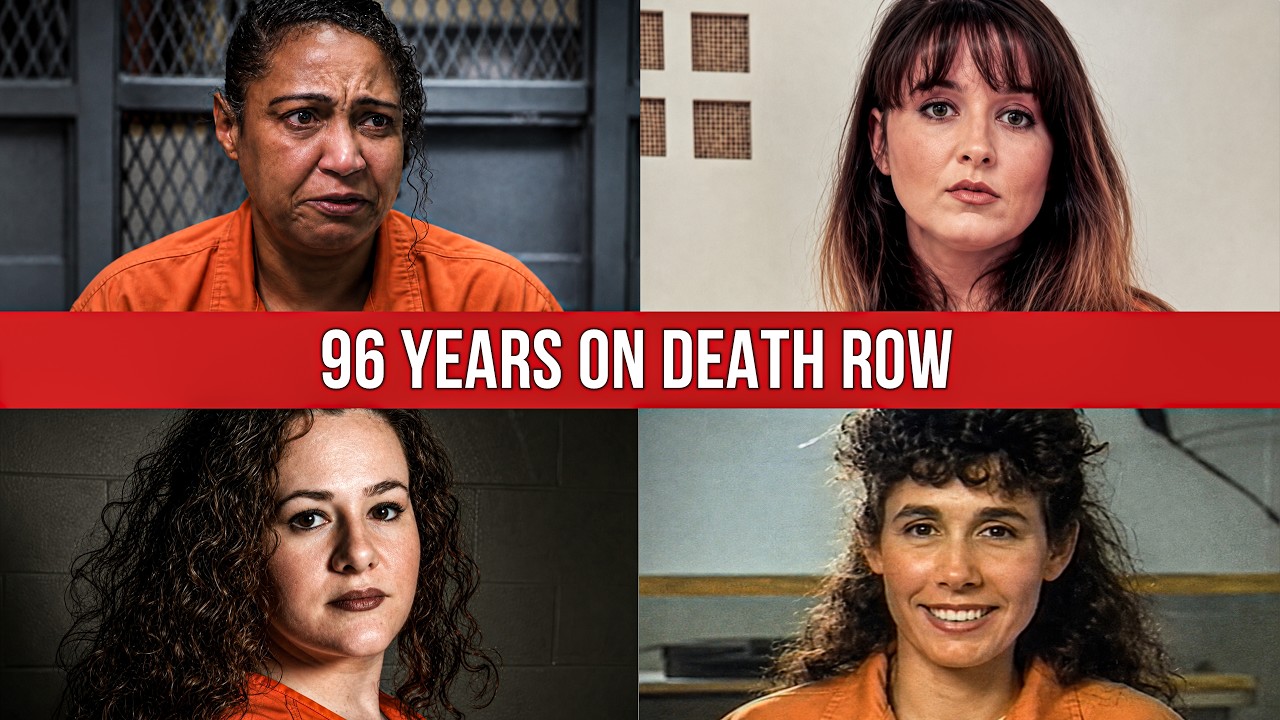 The first count comes at three in the morning. She is awakened, forced to give a verbal response. An hour later, breakfast is served at four.
Then, she goes to work. The schedule never changes. Living through it, she says, does.
“We’re housed in a building that caters to the worst of the worst,” Carty says, her voice steady but heavy. “You were basically cut off from your family, from the outside world, and from everything that you considered normal.” The monotony is a form of torture, but it is the emotional rollercoaster of hope and despair that truly breaks a person.
“There are moments, you know, it’s up and down,” she explains. “It depends on the status of your appeal. You could be quite euphoric at times and then all of a sudden you could be in that valley.”
The valley is a dark place. It is the moment when a court denies a motion, when a lawyer delivers bad news, when the calendar moves closer to a date that might never come. For Carty, the hardest part is not the prison walls.
It is the people she cannot be with. She has a daughter she loves deeply. She has two grandsons.
She has only met one of them. The state prohibits visits with children because of the nature of her crime, a rule that cuts her off from the only family she has left.
“So for me to try to commit suicide or to give up or anything, I feel as though I would fail my child,” she says, her voice cracking. “I don’t get to see them other than pictures and talking to them on the phone every 90 days.” The isolation is profound.
On death row, you do not live only with your own sentence. You live with the sentences of those around you. You watch them leave.
You watch them walk toward the execution chamber. You listen to the radio, hoping for a reprieve that never comes.
“It was the coldest, saddest, scariest, loneliest feeling ever, knowing that the moment they leave the building where we’re housed, that you’ll never see them again,” Carty recalls. “You happen to listen on the radio and because you’re hoping to hear that she was given a reprieve and then you hear she was killed at such and such a time and you go, wow. And then you sit in your bed and you just cry and you cry because then the sense of loss and despair comes over you.”
Carty has watched women she considered sisters walk to their deaths. She still remembers the look on one woman’s face. The last words that woman said to her were simple: “Don’t stop fighting.”
For Carty, giving up has never been an option. She fights because she believes she is innocent. She fights because she refuses to let the system define her.
“I try my best,” she says. “I’m sorry to ask the Lord not to let me be bitter and not to become hateful and not to distrust the system. But if I’m innocent, then you treat me as innocent.”
She has spent decades inside the Mountain View Unit. The walls have become her world. The routine has become her life.
But she has not lost her sense of self. “I’m not scared of dying,” she says flatly. “I just don’t want to die because I’m going to be a pawn for somebody else.
Or I fell between the cracks. I don’t want to die like that.” She wants the outside world to pay attention.
She wants people to see her, not as a number, not as an inmate, but as a human being. “You need to do more,” she pleads. “I still matter.”
Just a few cells away from Carty is another woman whose case once made headlines across America. Darlie Routier was sentenced to death in 1997 for the murder of her two young sons in Rowlett, Texas. The case was a media sensation, fueled by accusations of maternal betrayal and a bloody crime scene.
Routier has always maintained her innocence. Nearly thirty years later, she is still waiting.
Life on death row for Routier begins long before sunrise. She wakes around four thirty in the morning. She does her devotions.
She prepares for work. She tends to the prison garden. It is a small patch of earth where she can nurture something, a rare act of creation in a place defined by destruction.
“It’s wonderful to see the things that you plant grow,” she says softly. “To nurture something.”
But Routier remembers the terror of her first day on death row. She walked through the gates petrified, convinced she was entering a den of monsters. “I’m thinking death row, I’m petrified thinking, okay, I’m coming in this place with these people that have done committed these crazy heinous acts.
How am I going to defend myself?” she recalls. Then something unexpected happened.
Every woman in the unit came up and hugged her. She was blown away. It was not the welcome she expected.
Before she arrived, Routier thought she knew what the women on death row would be like. She imagined hardened criminals, devoid of humanity. Then she got to know them.
“It’s horrible because you get to know these women,” she says. “You see the other sides of them. Their families, their everything did not fit what I thought in my head of somebody being on death row.”
One woman in particular left the deepest impression on her. Her name was Karla Faye Tucker.
Tucker was just amazing, Routier says. She took Routier under her wing. She encouraged her.
She showed her how to survive. Tucker had been on death row for years. She understood the weight of the sentence.
 She understood the loneliness. She understood the fear. And she taught Routier how to live with it.
Inside the prison, life moves at a different pace. Routier has learned to take it one day at a time. She cannot think about years down the road.
She cannot dwell on the possibility of execution. “Because no one on death row can completely forget why they’re there,” she says. “I never forget this is one of the states that have the most executions.
The reality is there is a very real possibility that I could be executed.”
Some moments are impossible to experience through letters or prison visits. When Routier’s son Drake was diagnosed with cancer, she could not be there for him. She could not hold his hand.
She could not sit by his hospital bed. She could only wait for updates, hoping and praying that he would survive. “That was a very hard time because I couldn’t be there for him like a mom should be there,” she says, her voice trembling.
“And seeing him go through the treatment, it’s horrible.”
Drake is healthy now, cancer-free. But the distance between mother and son remains. Routier measures her life in moments she will never get back.
She prays for exoneration. She hopes that one day the forensic evidence will prove her innocence. “I can tell you that I’m very hopeful,” she says.
“I’m very positive with the investigation and testing that’s happening right now that I will be exonerated.”
Today, Routier remains inside the Mountain View Unit. Her days are filled with prayer, work, and the garden. Time is measured one day at a time.
Years on death row have changed many things. Fear is no longer what defines her. “I’m less frightened,” she says.
“I’m at peace with myself. I didn’t do this. If they choose to 𝓀𝒾𝓁𝓁 me, they’ll have to answer to that.
That’s my innocent blood that will be on their hands.”
Earlier, Routier mentioned one woman who helped her through her first days on death row. Her name was Karla Faye Tucker. On June 13, 1983, Tucker took part in the murders of Jerry Dean and Deborah Thornton during a robbery in Houston, Texas.
She was convicted of capital murder and sentenced to death. When she arrived on death row, she was a different person. Fourteen years later, she was someone else entirely.
“You’re not the same person you were when you came in here,” Tucker said in an interview years later. “No. Not even near the same person.”
She described a transformation that took place over time. For about eight years, she said, it was like a humongous feast of joy. Then God put her in a situation where she had to grow up into tribulations.
“This is going to sound really weird, but grow up into tribulations,” she said. “Does that sound kind of like taking me from my comfort zone and putting me in a lion’s den and telling me it’s time to go deeper?”
As the years passed, Tucker talked less about herself. Instead, she talked about the women living beside her. She wanted visitors to see them the way she did.
“You don’t see inmates,” she said. “You see people. That makes a big difference in a life.
That makes a big difference in someone’s life like mine is who is in here.” She believed that when people walked through the fences of the prison, they brought something precious with them. They brought the ability to see humanity.
Years on death row create relationships few people outside prison ever see. The women share birthdays, appeals, losses, and hope. Over time, many become each other’s family.
“I mean, you are my family,” Tucker said to the women around her. “You guys are my family. We’ve been through a lot and you’ve loved me and you’ve carried me through a lot and you’ve accepted me.
And it goes so much deeper than just saying you’re my friend and my family. I don’t know how to put words on it. It is so much deeper.
We are knit together in a special way. There’s a bond there that’s so special.”
The years continued to pass. Tucker’s appeals came to an end. An execution date was set for February 3, 1998.
She faced it with a calm that astonished even her supporters. “Actually, I’ve never wrestled with God about February 3rd,” she said. “I’ve always put that in God’s hands.
And have a great peace about it.” She wanted those who would be left behind to have peace too. “And to know, I mean, even through the prayers, when we pray and we believe God is going to do it.
If when he chooses to do it his way, and if that way is to call me home, we have to accept that. And we have to have peace with that.”
 As February 3rd approached, Tucker’s case reached far beyond Texas. Religious leaders, politicians, journalists, supporters, and opponents of the death penalty all weighed in. The whole country was watching.
Reporters kept asking the same question: What does she fear most? “I have no fear of that and I don’t worry about myself,” she said. “But I certainly am concerned for those who are going to be left behind.
For my family and friends, my husband. I’m going to be thankful for all of the love. Probably wishing there was a way I could give everybody a hug.”
She was 38 years old. She had spent 14 years on death row. On February 3, 1998, she became the first woman executed in Texas since 1863.
Karla Faye Tucker’s execution became one of the most closely followed death penalty cases in modern American history. But her story is the exception. Most women sentenced to death never reach that day.
One of them is Christa Pike. Pike was 18 years old when she took part in the killing of fellow Job Corps student Colleen Slemmer near Knoxville, Tennessee. In 1996, a jury convicted her of first-degree murder and sentenced her to death.
At 20, she became the youngest woman on death row in the United States.
When this interview was filmed, Pike had been on death row only a short time. She believed she would never be executed. “I think when I saw it on TV, they called it Sparky,” she said, referring to the electric chair.
“I don’t really think about that because I don’t think I’m ever going to see it. Personally.” She said hope was all she had left.
“I still have a lot of hope and I know that I don’t deserve to be where I’m at. And I know that somewhere along the line somebody’s going to see that and everything’s going to change for me. And I’m not being arrogant, I’m just being hopeful.
That’s all I have left is hope.”
Pike believed that hope would help her survive prison. She believed that one day her death sentence would be overturned. She found solace in religion, something she had never had before.
“When I was on the street, I really just didn’t have religion, period, one way or the other,” she said. “I was just going around looking into everything. Now, I do believe in God.
I know he’s up there and I know he’s the only one that’s going to pull me through this. Because I can’t help myself. Nobody else can help me now and I know he can.
I pray every night, read my Bible and I know that’s the only thing that’s really going to help me.”
She believed she still had time. “It don’t matter to me because me and God both know where my heart is,” she said. “I have hope that I’m going to get the death penalty taken off me, but I don’t know as I would say going as far as I’ll be out of here one day or I mean that I’m just going to have to wait and cross that bridge when I come to it.”
Pike had spent nearly three years on death row. She knew every part of its daily routine. For the first time, she showed the tiny prison cell where she spent almost every day.
“I’m 22 years old and this is it for me,” she said. “There’s just so much more that I wanted to do with my life than me sitting in a room by myself 23 hours a day. I should be out going to school or working and having fun with my friends.”
She pointed to a picture of her mother and stepfather. She showed a photo of her cat, Tiger, and her dog, Ed. “These are the only kind of stuffed animals we can have because we can’t have the ones that are stuffed with things in them.
They think we might hide something in there.”
Her daily routine was monotonous. Breakfast came at about six thirty. She got up when it was time to go outside and exercise.
She came back in and went to the shower. Then she was in her cell for the rest of the day until the next morning. “That’s pretty much it,” she said.
Nearly a decade passed. By the time of the next interview, Pike had spent almost 12 years on Tennessee’s death row. Her perspective had shifted dramatically.
“I think I deserve to be in here for the rest of my life,” she said. “I do. I know I do.
I know I don’t deserve to be out walking around with everybody else in normal society. I did something horrible that is unacceptable and I realize that, but I don’t deserve to die for the actions of three individuals when I’m only one person.”
She said it was not only the sentence that changed a person. It was spending years almost entirely alone. “I live in one room 23 hours a day,” she explained.
“And for going on almost 12 years, that’s a long time. I’m only out of my room 1 hour a day and that’s just in another cage, like a dog cage, a kennel. So, I’m either in a box or in a kennel and you know, that’s pretty much it.”
In 2001, Pike was convicted of attempting to murder another prisoner. Soon afterward, she asked to end her appeals and volunteered for execution. “I was just ready, willing and able to do anything I had to do to not have to live like this anymore,” she said.
“I got tired.” Years on death row had changed even her memories. “I don’t even remember what it feels like to be free,” she said.
“I’m done. I’ve lived in here longer than I’ve ever lived in any one place in my life. I don’t remember what it feels like to not have somebody chain me up when I walk out a door or tell me when I can use the bathroom or eat a meal.”
 Looking back, Pike said she still thought about the life that was lost and the people affected by it. “I took somebody’s life,” she said. “Took somebody’s child away.
And some you know, somebody’s friend, somebody’s sister. Hurt so many people with this. And even though it’s not me and I can’t take full responsibility for this anymore and I won’t because if I’m going to die in here, I’m going to die for my truth, not for my lie.
You know, accept me for who I am, good, bad, and ugly. But I’m not going to die for a lie anymore. I’ll die for my truth.”
Christa Pike remains the only woman on Tennessee’s death row. Her execution is scheduled for September 30, 2026, unless further court action changes that schedule. If it goes forward, she will become the first woman executed in Tennessee in more than two centuries.
The women of death row live in a world of extreme isolation and profound uncertainty. They wake up each morning not knowing if this will be the day their appeals are denied, if this will be the year their sentence is carried out. They form families among themselves, bonds that transcend the concrete and steel that surround them.
They find faith, or lose it. They fight, or they give up. But they all share one thing: the waiting.
For Linda Carty, the waiting continues. She remains on Texas death row, her appeals still pending. She is not the only woman who has spent decades inside the Mountain View Unit.
Just a few cells away, Darlie Routier continues to maintain her innocence, tending her garden, praying for exoneration. And in Tennessee, Christa Pike waits for a date that may or may not come.
The death penalty is a subject of fierce debate in America. Supporters argue that it provides justice for victims and deters crime. Opponents argue that it is cruel, unusual, and applied disproportionately to the poor and minorities.
But for the women who live under its shadow, the debate is not abstract. It is a daily reality. It is the sound of keys jangling in the lock.
It is the taste of cold breakfast at four in the morning. It is the sight of a friend being led away, never to return.
Karla Faye Tucker’s execution in 1998 was a watershed moment. It forced the nation to confront the question of whether a person can change so fundamentally that they no longer deserve to die. Tucker had become a devout Christian.
She had counseled other inmates. She had expressed genuine remorse for her crimes. Yet the state of Texas still put her to death.
Her final words were a message of love and forgiveness. She told the family of her victims that she hoped they could find peace.
But Tucker’s story is the exception. Most women on death row will never be executed. Their sentences will be overturned, commuted, or they will die of natural causes before the state can 𝓀𝒾𝓁𝓁 them.
They will spend decades in prison, growing old behind bars, watching the world change outside while their own lives remain frozen in time.
For Linda Carty, the fight goes on. She has spent more than twenty years in a tiny cell. She has watched friends die.
She has endured the pain of being separated from her children and grandchildren. But she has not given up. “I try my best,” she says.
“I’m sorry to ask the Lord not to let me be bitter and not to become hateful and not to distrust the system. But if I’m innocent, then you treat me as innocent.”
She believes that one day the truth will come out. She believes that the system that condemned her will eventually correct itself. Until then, she will continue to wake up at three in the morning, give her verbal response, eat her breakfast at four, and go to work.
She will continue to live in a building that caters to the worst of the worst. She will continue to be cut off from her family, from the outside world, from everything she once considered normal.
“I’m not scared of dying,” she says. “I just don’t want to die because I’m going to be a pawn for somebody else. Or I fell between the cracks.
I don’t want to die like that.” She wants the world to pay attention. She wants people to see her, not as a number, not as an inmate, but as a human being.
“You need to do more,” she pleads. “I still matter.”
The sun sets over the Mountain View Unit. The lights dim. The count begins again.
Another day has passed. Another day of waiting. For Linda Carty, for Darlie Routier, for Christa Pike, and for the dozens of other women on death rows across America, the waiting continues.
It is a waiting that has no end in sight. It is a waiting that defines their lives. It is a waiting that, for some, will end only with their last breath.
And as the world outside goes about its business, as politicians debate and journalists write and activists march, the women of death row remain. They pray. They work.
They tend their gardens. They write letters. They wait.
They wait for a reprieve that may never come. They wait for a justice that may never be served. They wait for a miracle.
And in the silence of their cells, they hold onto hope. Because hope, as Christa Pike said, is all they have left.