The sharp crack of a judge’s gavel on September 26th, 2023, sealed the fate of Taylor Schabusiness, but the true weight of her punishment was only beginning to manifest. In a hushed Brown County courtroom, Judge Thomas Walsh delivered a sentence of life in prison without the possibility of parole, condemning the 25-year-old to die behind bars for the horrific murder of Shad Thyrion. Yet, as Schabusiness was led away to the state’s only maximum-security prison for women, a more complex and brutal reality emerged—one that legal experts argue may constitute a punishment more psychologically severe than a death sentence.
While the public often views life without parole as a more merciful alternative to capital punishment, the day-to-day existence at Taycheedah Correctional Institution in Fond du Lac, Wisconsin, paints a starkly different picture. For Schabusiness, who arrived at the facility in late 2023, the sentence did not merely restrict her freedom; it locked her into a perpetual cycle of sensory deprivation, rigid timing, and institutional control that will define every waking moment for the next five decades. This is the reality of a “living death” that has become increasingly controversial within the American justice system.
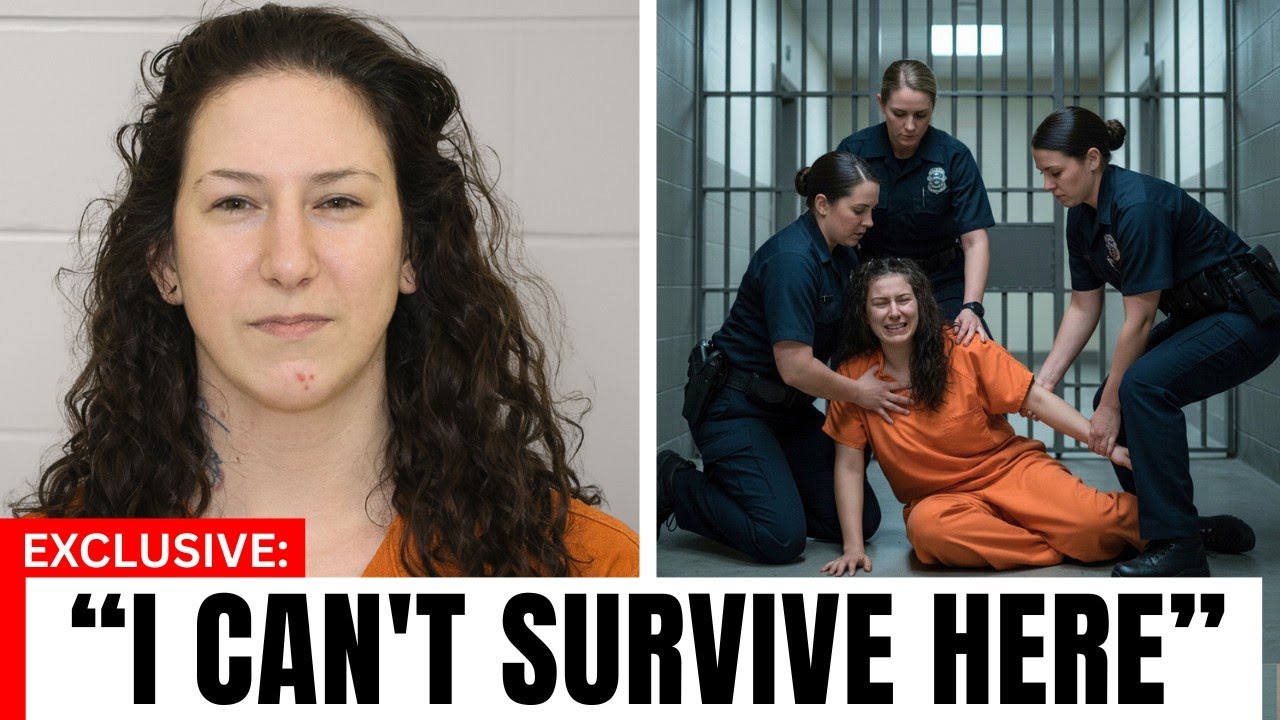
The conditions at Taycheedah are designed for maximum control, and the routine is unforgiving. Inmates are subjected to a formal standing count six times daily, including invasive checks at midnight and 3:00 a. m.
, ensuring that sleep is perpetually fragmented. Meals are consumed in exactly fifteen minutes, served at the institutional times of 6:15 a. m.
, 11:00 a. m. , and 4:00 p.
m. Movement between locations is strictly timed—inmates have precisely seven minutes to traverse the facility, check in, and check out with staff. This regimented existence, devoid of autonomy, creates a psychological pressure cooker that is difficult for those on the outside to comprehend.
The brutality of her confinement extends beyond the mundane schedule to the physical environment. The facility is encircled by a 12-foot-high perimeter fence topped with razor-sharp security wire, monitored by electronic detection systems and armed patrols. Showers are limited to 15 minutes during designated dayroom periods, and daily cell maintenance is mandatory.
For Schabusiness, who is just 27 years old, this means a potential half-century of 15-minute meals, timed showers, and 3:00 a. m. wake-up counts—a monotonous and psychologically grinding existence that offers no hope for reprieve.
This environment has already begun to fracture Schabusiness’s mental state, leading to a violent incident that raises profound legal questions. In July 2024, just months after her arrival, Schabusiness required medical attention for a staple lodged in her arm. According to official reports, when a nurse attempted to remove the staple, Schabusiness became agitated and violent.

It took multiple correctional officers to subdue her, and the altercation resulted in a sergeant sustaining injuries that prevented her from returning to work. The incident led to a felony charge of battery by a prisoner, exposing the inherent contradiction of punishing someone who has already received the maximum sentence society can offer.
The courtroom proceedings for this new charge revealed the deep challenges of managing an inmate with nothing to lose. In April 2025, seven deputies were required to escort Schabusiness into a Fond du Lac County courtroom—a security presence that signaled the extreme precautions necessary. As attorneys entered their appearances, Schabusiness stood up, became verbally disruptive, and moved toward her own attorney, Curtis Jula.
She was subsequently removed, and the hearing continued via video conference, where she appeared physically restrained to a chair. The judge ruled she had waived her right to be physically present due to her conduct, marking another chapter in a pattern of disruptive behavior that has followed her through the legal system.
This behavior underscores a critical philosophical crisis regarding life without parole. When a person has been stripped of all hope and agency, traditional deterrents cease to function. In October 2025, Schabusiness accepted a plea agreement, reducing the felony battery charge to misdemeanor disorderly conduct.
On December 2nd, 2025, she was sentenced to 90 days in jail—a sentence to be served consecutive to her life term. Yet, as legal analysts note, a 90-day sentence carries zero practical impact for a woman who will never see the outside world again, rendering the punishment purely symbolic and highlighting the limitations of the justice system to address misconduct behind bars.
The psychological impact of permanent incarceration is a subject of growing academic and legal scrutiny. Legal scholars have described life without parole as an “often overlooked severe sentence,” and the data is staggering: over 100,000 people are currently serving this sentence in America, representing 1 in 10 incarcerated individuals. Unlike capital punishment cases, which typically attract high-profile legal teams, intensive appellate review, and advocacy organizations, those serving life sentences often face their decades-long confinement with limited resources and minimal public attention.

Research documents that this loss of hope leads to severe depression, anxiety, physical health declines, and an increased susceptibility to chronic illness.
Ironically, the conditions at Taycheedah have a documented history that bolsters these concerns. In 2005, the facility faced a tragic incident involving 18-year-old Angela Enoch, leading to a legal settlement with her family. In 2010, civil rights organizations initiated legal action regarding substandard medical and mental health care, resulting in mandated reforms.
While the institution achieved compliance by 2016, compliance with baseline legal standards does not equate to optimal, humane treatment. As recently as March 2025, two incarcerated women died following hospital stays, and the facility restricted activities due to a surge in respiratory illnesses, contributing to the 14 deaths recorded in Wisconsin adult institutions this year.
For Schabusiness, the trajectory is clear. She will likely die within those walls, having spent her entire adult life in a state of suspended animation. During her December sentencing for the battery charge, video evidence of the incident was shown in court for the first time.
When given the opportunity to speak, Schabusiness offered an apology laced with inappropriate language, stating she did not intend for the situation to escalate. Her defense attorney revealed that she continues to struggle with substance use issues even within the facility, highlighting the failure of the system to provide adequate rehabilitation for those serving permanent sentences.
This case forces a confrontation with a difficult question: Is life without parole actually more cruel than the death penalty? Those who support the sentence argue that it provides accountability and protects the public without the moral complications of state-sanctioned execution. However, critics point out that individuals on death row receive heightened due process, substantial legal support, and often spend years—sometimes decades—with their cases under intense scrutiny before any execution occurs.

A significant percentage of death sentences are overturned on appeal. In contrast, prisoners serving life without parole have few avenues for review, and their sentences are rarely overturned.
The permanence of the sentence foregoes any rehabilitative objective, effectively acknowledging that society has given up on the individual. Justice Anthony Kennedy once noted that the conditions of confinement have not received sufficient public examination, emphasizing that such significant outcomes should not result from society’s lack of awareness. For Taylor Schabusiness, the punishment is not just the loss of liberty; it is the systematic denial of human connection and purpose, exerted through a coercive daily routine designed to strip away identity.
As the nation moves forward into 2026, the Schabusiness case serves as a raw, unflinching example of what permanent incarceration means in practice. She will wake up tomorrow at Taycheedah, participating in the 6:05 a. m.
count, eating a rushed meal, and moving within the strict time limits imposed by the institution. The additional 90-day sentence she received is functionally meaningless to her future, but it highlights a systemic inability to address misconduct among those already serving life terms.
The debate is not about minimizing the severity of Schabusiness’s original crimes, which were described by the judge as serious violations of community standards and human dignity. The debate is about whether society has fully examined the reality of the sentences it hands down. Are we making policy decisions based on a thorough understanding of the psychological and physical toll of permanent incarceration, or are we simply choosing a politically expedient alternative without questioning its long-term implications?
For the over 100,000 people living in this limbo, and for Taylor Schabusiness specifically, the answer to that question determines whether justice serves humanity or merely inflicts a slower, more insidious form of death. She will remain in that facility, facing the 3:00 a. m.
counts and the 15-minute meals, indefinitely. That is the reality of life without parole, and it demands serious public examination.