The final 24 hours of Glenn Edward Rogers’ life began not with 𝒹𝓇𝒶𝓂𝒶 but with the cold machinery of the state—a death warrant signed a month earlier by Florida Governor Ron DeSantis, a U.S. Supreme Court refusal that arrived just before the clock started, and then the ritual of Death Watch inside Florida State Prison.
Rogers, 62, was moved into the cell beside the execution chamber. Lights stayed on. Guards watched him without a break.
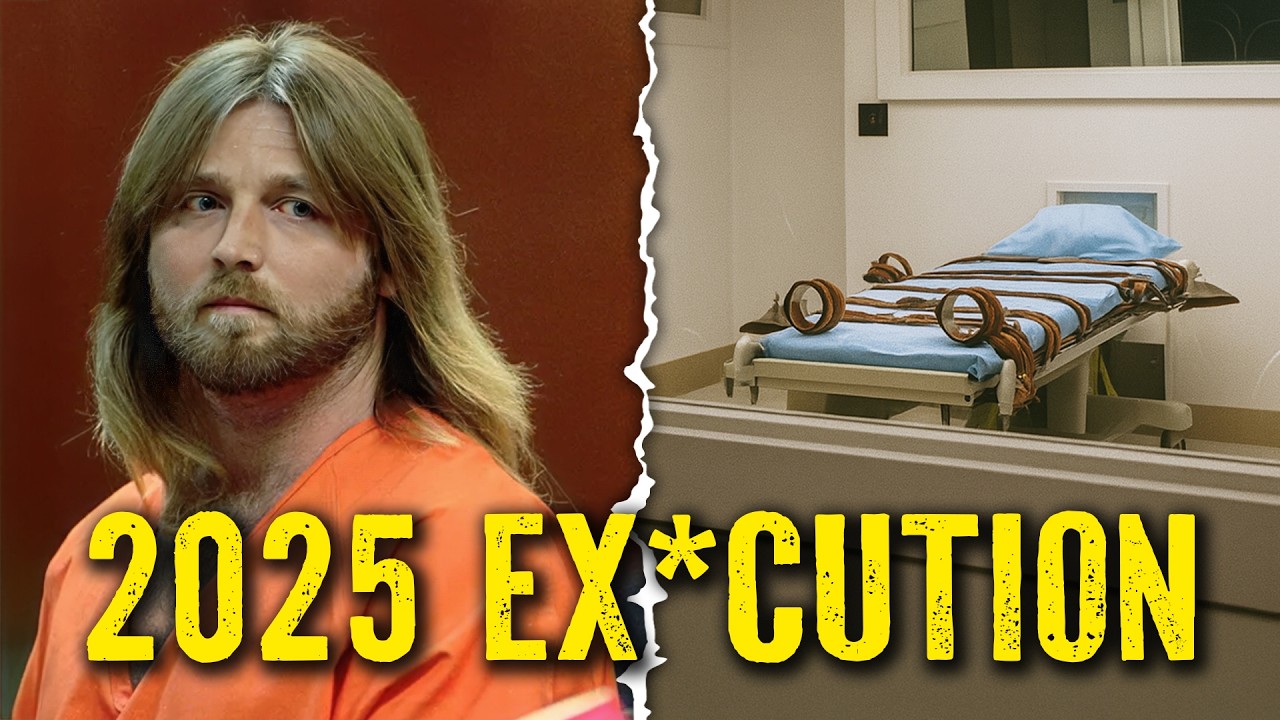
He went to bed early, according to prison logs, and at some point his brother Clay, who had traveled from Kentucky, said a final goodbye under supervision. Every word was monitored.
His last meal arrived ahead of schedule: pepperoni pizza, a chocolate cake, a soda. Rogers had been awake since 3:45 a. m.
He ate everything. He said little. He did exactly what he was told.
Prison officials later described him as fully compliant, polite, no disturbances. The charm that once earned him the nickname “Casanova Killer” never fully left him.
The man who would die by lethal injection at 6:16 p. m. on that Tuesday was born in Hamilton, Ohio in 1962.
He married young and had two sons, Clinton and Jonathan. The marriage collapsed under the weight of his violence—his hands drove his wife away, and the children too. He turned reckless, living off girlfriends, drinking heavily, holding short jobs with a short temper.
People who knew him described a man who loved the party life, slept all day, came out at night. He was easy to like, a smooth talker with a practiced smile, especially toward vulnerable women. But the switch was always there: beatings, threats, arson, in and out of prison.
His murder spree began with a retired electrician found bound and hidden inside the Rogers family cabin in Ohio. Then California: a mother of three strangled, her body burned inside her truck. Mississippi: a single mother of two lifeless in her bathtub.
Florida: another woman in another bathtub, this time in a cheap motel in Tampa. There he got sloppy. He used his real name on the motel register left his fingerprints everywhere.
The FBI put his face on the Ten Most Wanted list. Days later he was found exactly where they expected—behind the wheel of his last victim’s stolen car. A chase ended when a patrol car rammed him into a ditch, every second captured by a local news crew.
At first he boasted, claiming nearly 70 murders. Then he walked it back, said he was joking. The evidence spoke louder.
Florida convicted him for the murder of Tina Marie Cribs. Death row. California followed with another death sentence for Sandra Gallagher.

On that final afternoon, Rogers received a last visit from his wife, a woman he married behind bars. They talked for hours in the visitation room. Then his lawyers came in for one final goodbye.
Over the previous days they had filed appeal after appeal—state, federal—all denied. After 28 years their fight was over.
He spent the afternoon writing letters. What they contained was never disclosed. Some later wondered if they touched on the most infamous rumor tied to his name: claims he himself made alleging involvement in the O.
J. Simpson case, pointing the finger at Simpson. A documentary had briefly reignited public interest, but investigators dismissed it outright.
No evidence, no credible link. Whatever Rogers wrote, he kept to himself.
At 3:30 p. m. state officials stepped before cameras.
FDOC spokesman Ted Verman confirmed the basics: awake since 3:45 a. m. , last meal eaten, visits completed.
Rogers was calm and compliant. No delay was coming. The victims’ families would be watching.
As the hour closed in, reactions rippled across the state. In Clearwater, a small crowd gathered on a street corner—two dozen clergy, activists, death penalty opponents. Signs raised, heads bowed.
They argued Rogers’ life, shaped by 𝓪𝓫𝓾𝓼𝓮 and violence, was never fully weighed. “Justice did not require killing him,” one advocate said. “Society should be protected from him, but the state doesn’t need to 𝓀𝒾𝓁𝓁 him.”
Others questioned whether the execution achieved justice or simply continued a cycle of violence. “It’s easy to label those on death row as monsters and focus only on the gruesome details of their crimes,” another voice added. “Much harder to ask what creates them.”

Across the state, Catholic churches held prayer vigils. Bishops called for mercy for Rogers, for the victims, for their families. But in Tallahassee the tone hardened.
Governor Ron DeSantis spoke to reporters, calling Rogers’ crimes overwhelmingly sadistic, “the worst of the worst.” He said the death penalty is absolutely appropriate. Anything less, he argued, would soften the meaning of crime.
Back at Florida State Prison in Raiford, Rogers was ready. Dressed in clean clothes, he was escorted from his holding cell toward the execution chamber. At that moment witnesses began filing in: 22 in total, including reporters, prison officials, and the victim’s family.
Among them were members of Tina Cribs’ family—her mother, her children—accompanied by State Attorney Susie Lopez, the lead prosecutor from the jurisdiction where Rogers’ crime was tried.
The curtains opened. The chamber fell quiet. The warden read the death warrant aloud.
The cross-country killer was asked if he had last words. He did.
He began by speaking to his family—his wife, his brothers, his sons, his grandchildren, his friends. He told them he loved them, thanked them for standing by him. Then he turned to the victims’ families.
“I know there are a lot of questions you need answers to,” he said. “I promise you in the near future those questions will be answered. I hope it brings you closure.”
And then the tone shifted. Rogers raised his voice. “President Trump, keep making America great.
I’m ready to go.”
Those were the last words he ever spoke.

The warden gave the signal. The chemicals began to flow. Within minutes the effects showed.
Rogers’ chest rose sharply, heaving, fluttering—a reflex as the sedative took hold. His breathing slowed. His body began shutting down.
No cry, no final sound. His mouth hung slightly open. A few heavy breaths, then stillness.
Rogers lay motionless on the gurney. The chemicals had taken hold, his breathing gone shallow, then gone. A prison official leaned in, shook his shoulders, called his name.
“Rogers. Rogers.” No response.
His eyes stayed closed. No movement, no struggle, no sound. The chamber stayed silent.
Time passed. Minutes later the doctor stepped forward, checked for life, found none. At 6:16 p.
m. , Glenn Edward Rogers, age 62, was pronounced dead. From first injection to final breath, 16 minutes.
Executed exactly as planned.
The state of Florida had carried out its sixth execution of the year. For the families of Tina Cribs and others, a chapter closed. For the small crowd in Clearwater, a protest ended.
For the investigators who had tracked a serial killer across four states, the case was finally over. But the questions Rogers hinted at in his final words—those questions, whatever they were, died with him.