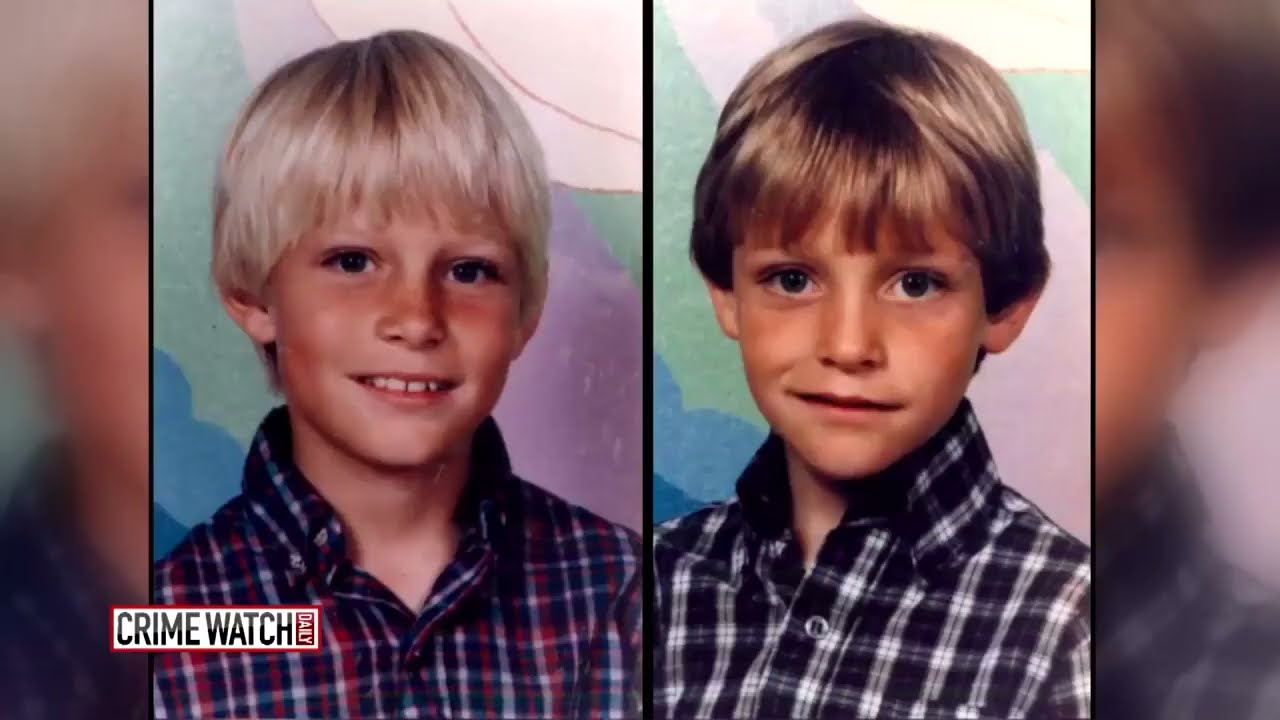
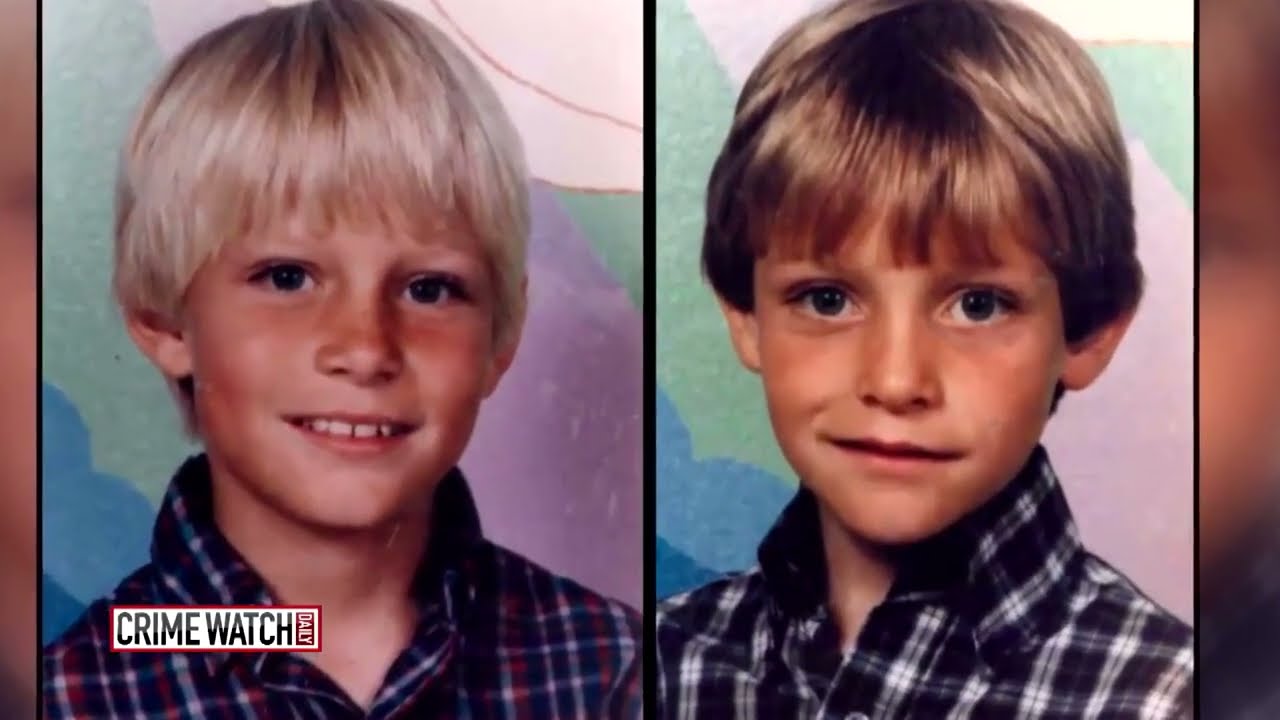
The charred remains of a backyard shed in Hewitt, Texas, held a secret that would take three decades to fully unravel. Two beautiful young boys, 9-year-old Joby and 8-year-old Jason, burned alive inside that storage building on Angel Fire Drive, a tragedy that initially looked like a horrific accident. But as days turned into months, a darker truth began to emerge from the ashes, one that would expose a web of deceit, greed, and a monstrous betrayal by the man they called father.
The boys were inseparable, best friends who loved their time together. Jason was full of energy, a personality that could light up any room, while Joby was more serious, always protective of his younger brother. They rarely fought, and Joby consistently stood up for Jason, forming a bond that seemed unbreakable.
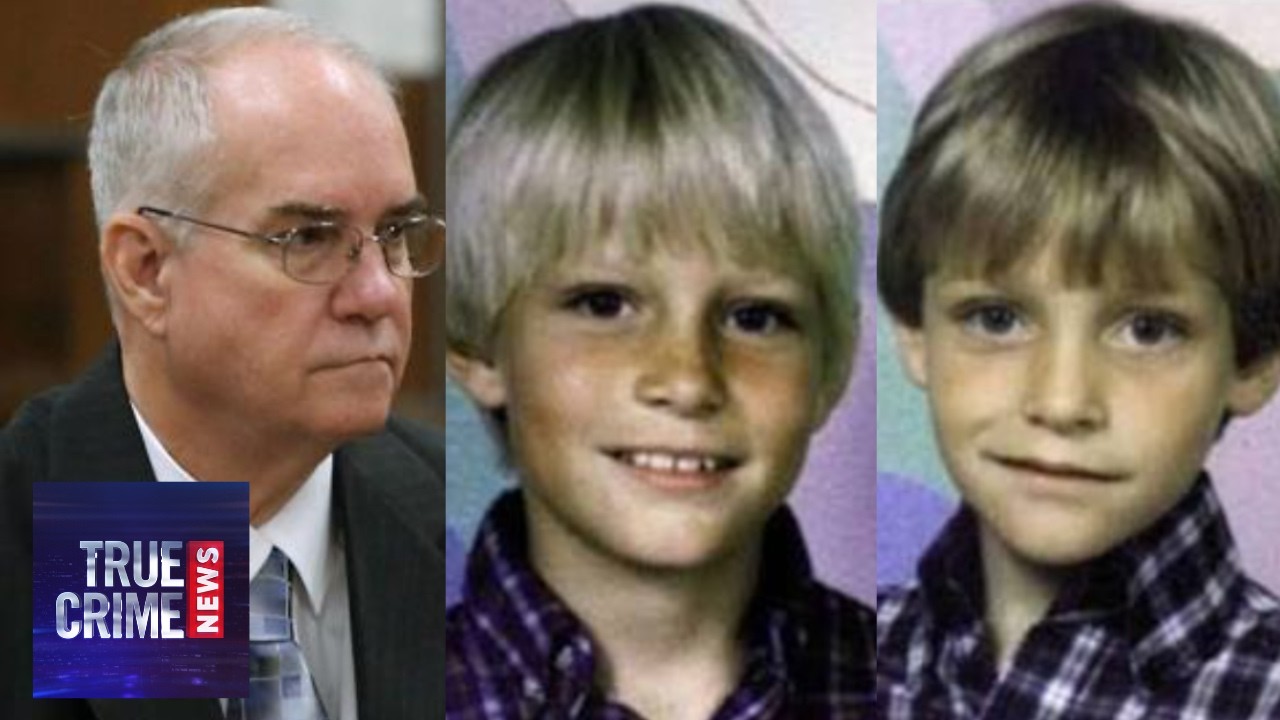 Their mother, Claire Bradburn, a single teacher working hard to make ends meet, believed life was finally good after she met Ed Graf Jr. , a pillar of the community who worked at a local bank and treated her like a princess.
Ed Graf seemed like the perfect partner, and a year after they met, they married. Claire became pregnant quickly, and Ed adopted Joby and Jason, presenting the image of a perfect, blended American family. But the facade began to crack when Claire discovered Ed had been embezzling money from the bank for 12 years and was fired for it.
With a new baby on the way, the family dynamics fractured, and Ed’s attention shifted away from the two boys he had adopted.
After the birth of their son, Edward III, Graf took out $50,000 life insurance policies on all three boys, with an accidental death clause that would double the payout. Claire noticed a disturbing change in her sons’ behavior whenever Ed was around. They seemed scared of him, and she began to feel frightened herself.
When she considered leaving, Ed threatened her, saying she would never take his son away, a warning that chilled her to the bone.
On that hot Tuesday in August, Claire went to work as usual, sharing a wonderful strong hug with her boys before leaving. Later that day, the principal came to her classroom and told her she needed to go home because there was a fire in the storage building behind the house. As she approached her street, she saw chaos: emergency vehicles, neighbors in tears, and a knot of dread forming in her stomach.
When Claire reached the front door, she was told the unimaginable: Joby and Jason were trapped inside the shed. Ed Graf delivered the news, saying simply, “They’re gone.” Claire asked where they had gone, and he replied, “Joby and Jason are dead.”
 His reaction seemed oddly detached, lacking the raw grief a parent should feel. He explained he was inside changing the baby’s diaper and didn’t hear people beating on the front door to warn him.
That same night, volunteer firefighters loaded the charred remains of the shed and took them to the local dump, a move that would later prove critical. The fire was initially ruled accidental, but Claire’s motherly intuition screamed otherwise. She knew Ed was somehow responsible, a suspicion that drove her to seek help from the McLennan County District Attorney, Vic Feazell, who agreed to investigate.
The investigation revealed a long list of troubling details that convinced Feazell that Ed Graf was a murderer. The case moved forward, and ten months after the fire, Ed was arrested and indicted for the capital murders of his two stepsons. At trial, the prosecution argued that Graf knocked the boys unconscious, carried them to the shed, and set it on fire, using accelerant to ensure the blaze was deadly.
Fire science experts testified that the shed door was closed, two separate fires were set, and the boys were found lying on their backs in relaxed positions, indicating they were unconscious and never attempted to escape. The evidence seemed overwhelming, but there were also circumstantial clues that painted a damning picture of Graf’s planning and callousness.
Days before the fire, Ed had refilled prescriptions and bought cereal, but he refused to let the boys wear new school clothes, insisting the tags remain on. After the fire, he returned the clothes for a refund. He had also taken out the life insurance policies, which prosecutors argued were the motive for the murders, as the policies became effective just days before the fire.
Ed maintained his innocence throughout, claiming the boys accidentally set the fire and that the insurance was a college savings plan. His defense presented character witnesses who believed in him, describing him as a winning personality. But to Claire, he was a sociopath, staring her down during her testimony in an attempt to intimidate her.
 After three weeks of testimony and just four hours of deliberation, the jury returned a verdict of guilty. Ed Graf was convicted of capital murder and sentenced to life in prison, narrowly avoiding the death penalty. For Claire, it was a moment of relief and peace, believing justice had been served for her precious boys.
But the story was far from over. Twenty-two years later, the Innocence Project partnered with the Texas State Fire Marshals’ office to review arson convictions based on now-discredited fire science. Ed Graf’s case was one of those flagged for review, and the Texas Court of Criminal Appeals ruled that the scientific testimony used to convict him was false.
Graf was granted a new trial, a devastating blow to Claire, who felt the wounds of her loss torn open again. The fire science that had been central to the original conviction was deemed junk science, and the case was reduced to purely circumstantial evidence. The prosecution, led by District Attorney Abel Reyna, prepared to try Graf for murder without the arson evidence.
Fire investigator Thomas Sing testified that the shed’s removal the night of the fire made it impossible to determine if the door was open or closed, or even where the fire started. He ruled the cause undetermined, casting doubt on the entire foundation of the original case. Graf’s defense stuck to the story that the boys accidentally started the fire.
After two weeks of testimony, the jury became deadlocked 10 to 2. As the verdict was about to be handed to the bailiff, Graf changed his plea to guilty, admitting for the first time that he killed Joby and Jason. He was sentenced to two 60-year prison terms, but the plea deal included a 𝓈𝒽𝓸𝒸𝓀𝒾𝓃𝑔 provision: credit for the 25 years he had already served.
Under a little-known Texas mandatory release law, felons who committed violent offenses between 1977 and 1987 could be released after serving at least a third of their sentence, factoring in good time credits. Because Graf had already served 25 years, he was immediately eligible for release. Just two weeks after confessing, he walked out of prison a free man.
 The mandatory release law was enacted to alleviate prison overcrowding, but its application here meant a double murderer of young children was set free. There was nothing prosecutors could do to prevent it. Some questioned whether Graf knew the plea deal would lead to his release, and if it was a strategic move, it was brutally effective.
Claire Bradburn was left shattered once again. The man who had burned her sons alive and stolen their futures was now living among society, a free man with no requirement to show remorse or explain his actions. She lives every day with guilt for having brought Ed into her sons’ lives, for trusting him to be their father.
When tracked down by Crime Watch Daily cameras in Kerrville, Texas, Graf refused to answer questions, telling the reporter to get out of his face. He showed no remorse, no explanation for the horror he inflicted on two innocent children who called him Dad. Claire can only hold onto the faith that his true judgment will come one day from a higher power.
The case of Ed Graf exposes a deep flaw in the justice system, where advances in forensic science can overturn convictions, and obscure laws can free confessed murderers. For Claire, the pain is eternal. She carries her boys in her heart every day, visiting their graves but knowing they are always with her.
Words cannot express how much she misses them. The legal system has failed her. The man who burned her sons alive walked free.
And now, in a small Texas town, a community must grapple with the reality that a killer lives among them, unpunished, unrepentant, and free. The story of Joby and Jason is a cautionary tale of justice denied, a reminder that even the most heinous crimes can be undone by legal technicalities and flawed science. The boys are gone, but their memory demands answers that may never come.
The system that was supposed to protect them has betrayed them. And Claire Bradburn, their mother, must live with the unbearable weight of what she lost and what was taken from her forever.