Florida executed its oldest death row inmate, Dennis Sochor, on July 14, 2026, after nearly 37 years of appeals, bringing a final, controversial end to a case that haunted the Fort Lauderdale community for more than four decades. Sochor, a 74-year-old U. S.
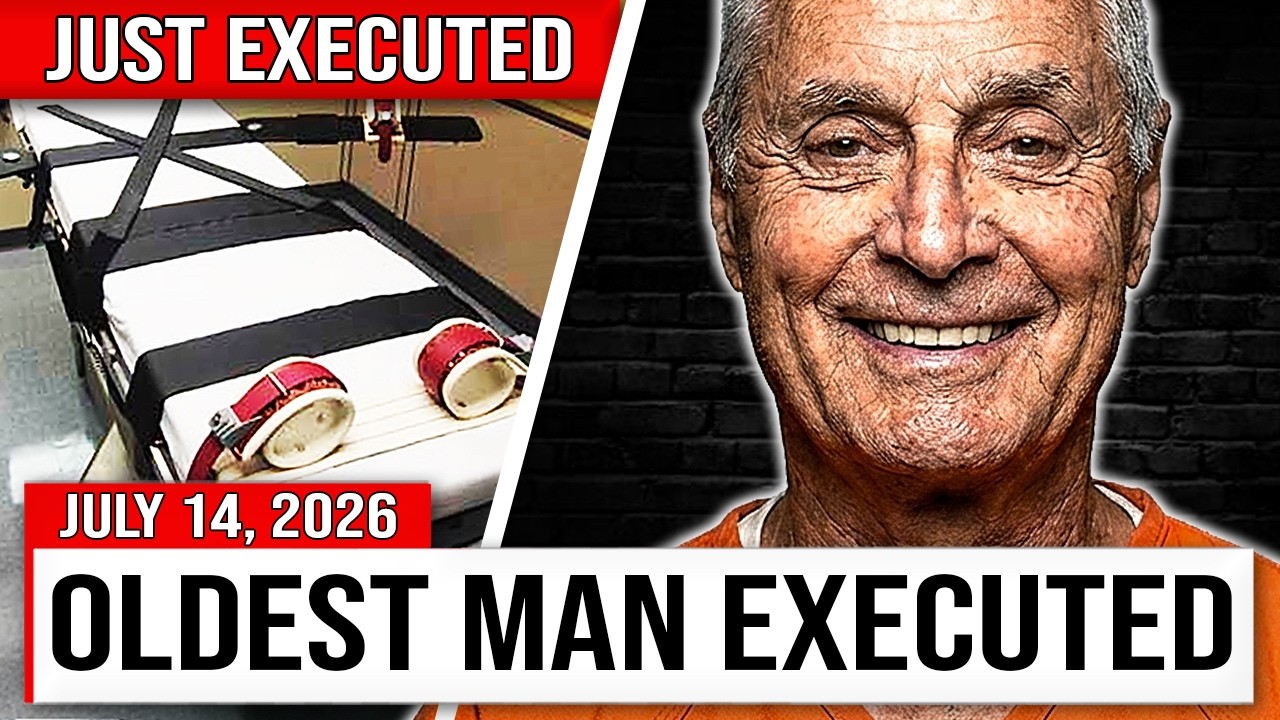
Military veteran, was put to death by lethal injection at 6:16 p. m. for the 1981 murder of 18-year-old Patty Gifford, a crime he confessed to three separate times on tape but whose victim’s body was never recovered.
The execution came despite last-minute arguments from Sochor’s attorneys that the lethal injection could cause a sensation like drowning, and that their client would prefer a firing squad. The Florida Supreme Court dismissed the claim as meritless. Sochor declined a final meal and spent his last hours with a spiritual advisor and one visitor, according to prison officials.
In his final statement, Sochor apologized repeatedly to the Gifford family, saying he was deeply sorry for his actions. He thanked his own loved ones and commended his spirit to Jesus Christ. The drugs began flowing at 6:03 p.
m. , and after about a minute of heavy breathing and a few seconds of sputtering, he was still. The warden shook his shoulders and called his name, but there was no response.
He was pronounced dead at 6:16 p. m.
Sochor was the 10th person executed in Florida in 2026.
His execution reopens a wound for the family of Patty Gifford, who have never been able to bury their daughter. Her remains were never found, despite a three-month search by her brother Bobby, who walked through fields and ditches hoping to find her. “It’s bad enough what he did to her,” said Patty’s sister Marilyn, “but he’s had all this time to repent, to think about what he did.
So, why not give her back?”
The case began on New Year’s Eve 1981. Patty Gifford, a fit, healthy aerobics instructor who had moved to Florida from Massachusetts just three months earlier, went to a bar called the Banana Boat with her friend Delta Harvill.
There, Sochor, then 29, noticed her. Witnesses said he could not take his eyes off her, stood too close, tried to buy her drinks, and lavished her with compliments. She brushed him off.

Around 2 a. m. , Delta felt sick—she later believed she had been drugged—and Patty helped her to the car to sleep it off.
When Patty returned from settling her tab, Delta was in no condition to drive. Dennis Sochor and his brother Gary offered to take Patty for breakfast. She agreed, getting into their truck.
They never took her for food.
What happened next was detailed by Sochor himself in three separate taped confessions. He said that once they were alone, he asked Patty for 𝒔𝒆𝒙.
She said no, as she had all night. Sochor grabbed her by the hair. She fought back, screamed, scratched his face.
He became angry and choked her until she stopped fighting, until she stopped moving, until she stopped breathing. “He knew, in his own words, that he had probably just killed her,” the transcript states. He left her body off a dirt road and drove home.
His brother Gary witnessed part of the attack. Gary testified that after the truck pulled over, he heard screaming. He ran around and found Dennis on top of Patty, pinning her hands.
He picked up a rock and threw it at his brother, yelling for him to stop. Dennis’s eyes had rolled back in his head, Gary said, “like he was possessed by the devil.” Dennis told him to get back in the truck, and Gary did out of fear.
The next morning, he found a woman’s shoe, a sweater, and keys in the truck. He hid the keys, but Dennis demanded them back.

Gary did not call police.
It was Delta who raised the alarm after waking up alone in her car around 5:30 a. m. Investigators found a photograph from the party with Sochor lurking in the background.
That image became the single most important piece of evidence. When it aired on local news, Sochor panicked—not out of guilt, but because he feared being caught for “another crime.” He fled to Tampa, abandoned the truck, took a bus to New Orleans, and eventually ended up in Atlanta.
For four and a half years, Sochor was a free man. Police finally caught up in May 1986 in DeKalb County, Georgia, on a drunk driving stop. Brought back to Florida, he confessed again, and then a third time while being driven to the Banana Boat.
But he could not remember where he left Patty’s body.
The trial revealed even darker details. Sochor’s roommate in Atlanta, Paul Jones, testified that Sochor casually told him about choking someone and dumping the body near a drainage pipe, and that if he had to, he would do it again—that the murder did not bother him at all.
Sochor called women “more or less a sexual tool, nothing more.” In the Broward County Jail, an inmate named Michael Hickey testified that Sochor asked how to discredit a witness, then added, “Yeah, in case you’re wondering, I killed a [expletive].”
The jury also heard about two violent attacks before the murder.
In 1979 in Michigan, Sochor choked a woman unconscious, then took her home and assaulted her. When a detective asked how it felt, Sochor said, “All I can relate it to was like an airplane jump. No feeling, no emotion.
At that point, I wasn’t existing.” In 1980 in Fort Lauderdale, he ambushed a 19-year-old woman in a parking lot, choked her, threatened to stab her, and assaulted her repeatedly—becoming violent because he was angry he had not climaxed. That was the crime he was on probation for when he sat next to Patty at the Banana Boat.

His ex-wife testified that he assaulted her at least 30 times in a single year, and that his eyes would glaze over and he’d get wild if he didn’t get 𝒔𝒆𝒙. The state medical examiner said choking is a slow and painful way to die. In mitigation, his family described a childhood of brutal 𝓪𝓫𝓾𝓼𝓮 by his father, a boxer who beat him relentlessly.
But the jury recommended death by a vote of 10 to 2.
Decades of appeals followed. Sochor claimed bad lawyers, hidden evidence, brain damage, and even argued there was no proof Patty was dead because her body was never found.
Every motion was denied. During his 37 years on death row, a woman from Norway became his pen pal and wrote a book about him, quoting him as saying, “I am sure many people think that we deserve to die, but I am still a sensitive person who cares about those who suffer in the world.” His spiritual advisor said Sochor wanted people to know he would help locate the body if he could, but was too drunk to remember.
Patty’s sister Marilyn had a simple response: “So why not give her back?” There is no answer. Dennis Sochor is dead, but Patty Gifford has not come home.
The execution is done, and for the Gifford family, justice remains incomplete. The state of Florida has closed another chapter. The debate over the death penalty—and its timing—continues.