For years, you have walked past your sleeping dog without a second thought, assuming that curled-up ball of fur was simply resting comfortably. But what if the way your dog falls asleep is actually broadcasting a secret message about their deepest feelings of trust, safety, and even how they truly perceive you? A growing body of behavioral research reveals that the sleeping positions of domestic dogs are far from random—they are one of the most honest forms of communication your pet will ever use, and most owners have been missing these nightly signals their entire lives.
The revelations are striking: your dog’s choice to curl into a tight circle, stretch out on their side, roll onto their back with legs in the air, or press their body against yours each tells a distinct story about their emotional state and the bond they share with you. Experts now warn that misreading these positions could mean overlooking critical signs of anxiety, trust, or even the subtle ways your dog uses sleep to stay vigilant.
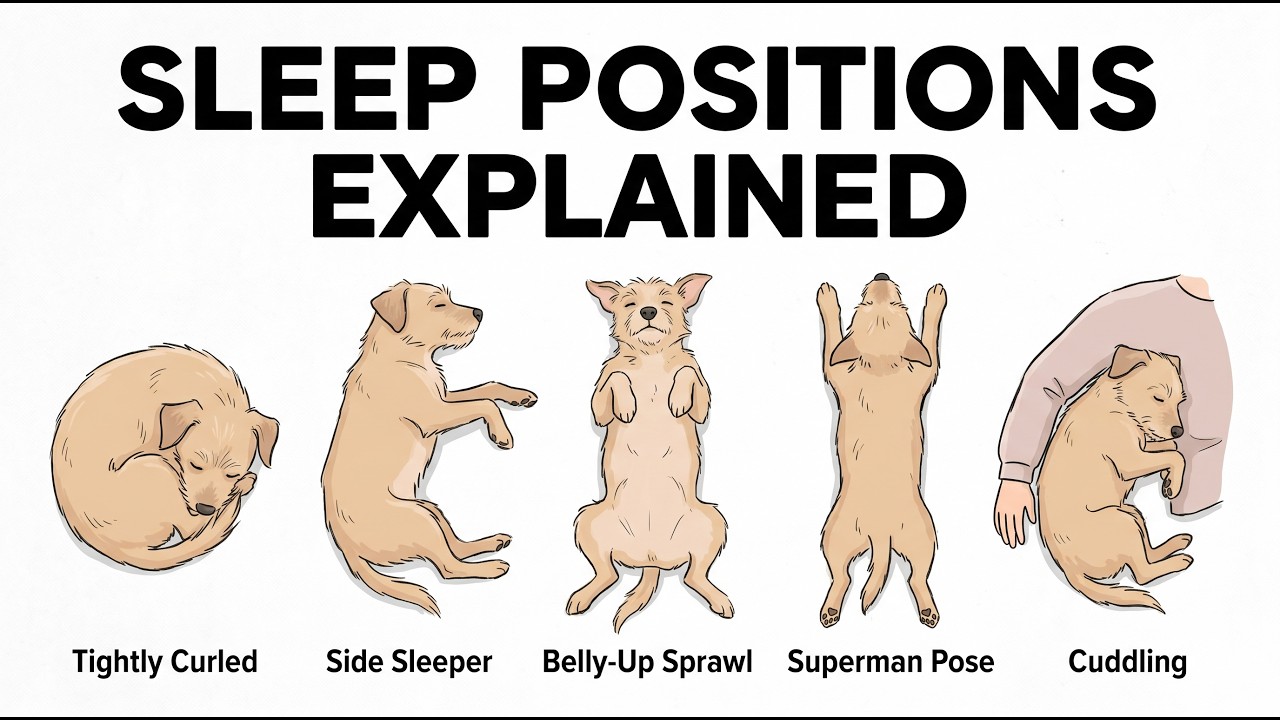 The curl position, where a dog tucks its nose toward its tail and pulls legs in close, looks cozy, but it is older than domestication, a primal survival instinct from wild ancestors who curled up to protect the vulnerable belly from predators. A dog who chooses this position in a new home or near a door is settling but not fully open; trust is present but not yet at its deepest setting.
The side sleeper, where a dog lies flat on its side with legs stretched out, is one of the clearest indicators of comfort. Research published in Physiology and Behavior shows that dogs reach REM sleep most readily when their bodies are fully relaxed in this position. When a dog sleeps on its side near you, they are entering the most vulnerable stage of sleep and choosing to do so in your presence—a profound statement of trust.
Then there is the sprawl, or belly-up position, where a dog lies on their back with legs in the air, exposing the most vulnerable part of their body. This is the single deepest expression of biological trust a dog can show, switching off every survival instinct to protect the belly. It is also one of the rarest because not every dog feels safe enough to reach it.
 If your dog sleeps this way, you have made their world feel completely and entirely safe.
The Superman position, with the dog flat on its belly, legs stretched out back and front like mid-flight, is favored by puppies and high-energy dogs. It allows them to drop into sleep quickly while remaining ready to spring into action. This is the position of a dog who wants to rest but is not yet committed to deep sleep, often seen on warm afternoons or during play breaks.
 But the most misunderstood position is the cuddler—the dog who falls asleep pressed against your body. Most owners assume it is about warmth or clinginess, but it is something far deeper. In canine social behavior, physical contact during sleep is an ancient bonding ritual that regulates the nervous system of both individuals.
A study from Linköping University found that bonded dogs and humans who sleep in contact show synchronized heart rate variability and lower cortisol levels. Your dog is not being needy; they are making a choice. Out of every safe corner in your home, they chose the surface of you.
 That is your dog saying, in the only language they have, that the safest place in the world is the one closest to your body.
Every night, while you sleep, your dog is telling you exactly how they feel. The curl, the side stretch, the belly-up, the Superman, the cuddler—none of these are performed or trained. They are honest, raw signals from an animal that has been sending you messages for years without you ever knowing they were being sent.
The next time you walk past your sleeping dog, stop. Look at the position. Because they have been talking to you all along.
This is breaking news in the world of canine behavior, and it changes everything we thought we knew about our four-legged companions. Owners are urged to pay attention tonight. The truth is in the position.