A groundbreaking video from canine behavior experts is exposing a silent crisis in the relationship between millions of dog owners and their pets, revealing that most well-meaning owners are unknowingly sabotaging the bond they treasure most.
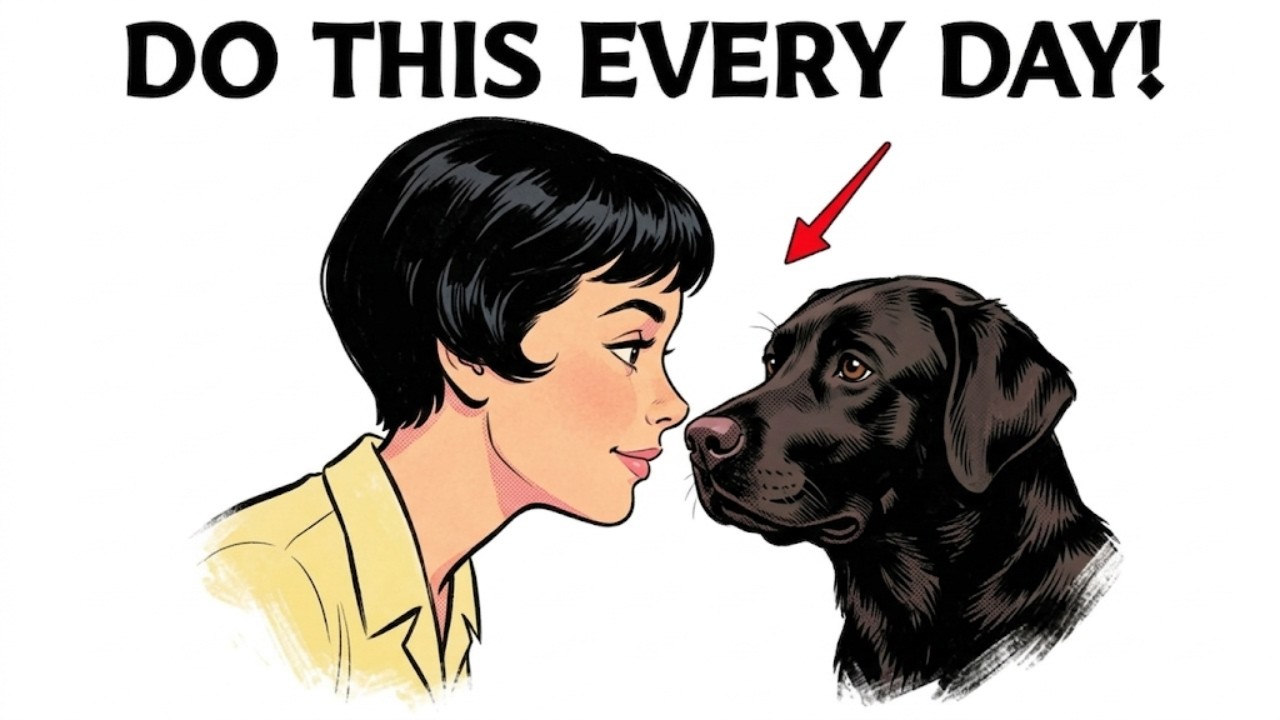 The video, released by the K9 Mind channel, details six specific acts of love that dogs desperately need from their humans for life. According to the creator, the gap between what dogs actually need and what they receive is destroying the emotional connection dogs are trying to build.
“The moment you understand what your dog has been trying to tell you every single day, you will never look at your dog the same way again,” the video warns. Experts say this is not a metaphor but a biological truth rooted in 15,000 years of co-evolution.
The first act centers on the first five minutes of the morning.
New research from the journal Applied Animal Behavior Science shows that dogs who receive consistent morning social interaction have measurably lower baseline cortisol levels throughout the day.
“Wake up, find their eyes, and say their name with warmth,” the video urges. Owners who reach for their phone before acknowledging their dog are sending a signal that the dog is not a priority.
That signal lands deep in the dog’s nervous system.
The second act focuses on allowing dogs to sniff for as long as they need. A landmark study in Applied Animal Cognition found that dogs allowed extended sniffing sessions showed significantly higher levels of optimism in behavioral tests compared to those who walked the same distance but were not allowed to sniff freely.
“Your neighborhood is a novel your dog has been trying to finish for years,” the video explains. “Every time you pull them away, you are slamming the book shut mid-sentence.” A dog’s nose contains up to 300 million olfactory receptors, making sniffing a form of reading.
The third act involves learning the difference between a calm voice and a loud one. A 2022 study from Budapest used brain imaging to show that dogs process the emotional tone of their owner’s voice in the same hemisphere used for emotional communication.
When owners used a warm, slightly higher-pitched tone, dogs showed immediate physiological signs of relaxation, including reduced heart rate and muscle tension.
Flat, distracted tones kept the nervous system alert. The dog’s brain has a dedicated system for reading how humans speak.
The fourth act calls for playing with dogs as if the game actually has stakes.
A study in the Journal of Veterinary Behavior found that dogs with insufficient interactive play stimulation showed significantly elevated rates of separation anxiety, aggression, and compulsive behavior.
“These are not bad dogs. They are unfulfilled dogs,” the video states.
Real play requires full presence, unpredictable movement, and letting the dog win sometimes. That sequence of build, chase, catch, and release is not recreation but a ritual confirming a dog’s identity.
The fifth act demands giving a dog a space that is completely theirs.
A study in the journal Animals found that dogs with a dedicated, owner-respected retreat space showed significantly lower indicators of chronic stress. The key is that the space must be respected.
Every time an owner calls the dog off the bed mid-rest or reaches down to pet them when they lie down, the dog learns there is no place where they are truly safe to rest.
That accumulated stress expresses itself as behavior problems, not bad behavior, but unmet needs.
The sixth act is the one that changes everything. It involves staying completely still when a dog chooses to rest against you.
 The video explains that sleep is the most vulnerable state an animal can enter, and when a dog chooses to fall asleep touching you, it is a profound declaration.
“Out of every place in the world, you are the safest place I know,” the dog is communicating. Every time an owner sacrifices comfort and stays still, they honor that declaration.
The video calls this the moment trust becomes physical, the total of every deposit made.
Behavioral experts are now urging all dog owners to immediately implement these six acts. The combined effect, they say, creates a bond far deeper than what most owners currently experience.
The science is clear and the stakes could not be higher.
“Think back to every point we covered. The consistent morning greeting that told them they matter.
The unhurried walks where their nose led the way. The warmth in your voice that reached directly into their nervous system,” the video concludes.
“The play sessions that honored their instincts.
The retreat space that gave them permission to truly rest. Every single one of those things was a deposit into an account your dog keeps track of. And when they press their body against yours and close their eyes, that is the moment the account comes full circle.”
Animal cognition researchers are calling this one of the most practical and urgently needed breakdowns of canine emotional needs ever presented to the public. They note that the advice is backed by multiple peer-reviewed studies published over the past decade.
The video emphasizes that even one change can reshape an entire dog’s emotional reality for the rest of its life.
Owners who start with the morning greeting will see measurable changes in their dog’s stress levels within days, according to the research cited.
“The first 5 minutes of your morning are shaping your dog’s entire emotional reality for the rest of the day. Not their food, not their walk, not their toys.
Those first 5 minutes,” the video insists. This single insight has shocked many viewers into immediate action.
Dog owners across the country are now sharing their experiences online, reporting dramatic improvements in their pets’ behavior and overall demeanor after implementing just the first two acts.
The video has already garnered millions of views since its release.
But experts caution that the sixth act is the most challenging and also the most transformative. “Your arm goes numb, your show is impossible to watch, you cannot reach anything useful, and you do not move.
That is the moment everything you built arrives all at once.”
The K9 Mind channel, which produced the video, is known for its science-driven approach to dog behavior. The creator notes that most owners believe they are doing everything right, but the evidence shows otherwise.
The gap is real and it is silently destroying bonds.
“A dog who believes they matter is a completely different animal than a dog who is not sure,” the video states. That difference becomes visible by the time a dog reaches the sixth act.
 The trust that builds is the currency every other point is built on.
The video also warns against treating these acts as a checklist. Instead, they must become daily habits integrated into the rhythm of life with a dog.
Consistency is more important than intensity. Small, repeated deposits build the account far more effectively than occasional grand gestures.
Researchers agree.
A dog’s nervous system learns through repetition. A morning greeting that happens every day creates a baseline of security. A walk that allows sniffing every day expands the dog’s cognitive horizons.
A gentle voice every day calms the anxious brain.
“No supplement, no calming spray, no anxiety wrap can do what your voice does when it carries real warmth,” the video asserts. The data is unequivocal.
Dogs have evolved to read human vocal tone, and they rely on it as a primary regulatory tool throughout their lives.
For owners who struggle with time constraints, the video offers a simple solution. Twenty minutes of genuine sniffing does more for a dog’s mental health than an hour of pure physical exercise.
Quality matters far more than quantity when it comes to fulfilling a dog’s instinctual needs.
Similarly, a play session of just five minutes where the owner is fully present and engaged can meet a dog’s need for ritual confirmation of their identity. The game must be unpredictable and allow the dog to win, shake the toy, and feel the satisfaction of the catch.
“When you are the one on the other end of that game, fully present, making it real, your dog doesn’t just see playtime. They see you as the one who understands what they are made of. That is a different level of bond than any amount of passive affection can create.”
The video’s impact has been immediate. Social media is flooded with testimonials from owners who say they had no idea they were inadvertently damaging their relationship with their dogs. Many are now implementing the six acts and reporting profound transformations.
“I always thought I was a great dog owner,” one commenter wrote. “But after watching this, I realized I had been ignoring my dog’s deepest needs every single day. The morning greeting alone has changed everything.
My dog is calmer, happier, and looks at me differently.”
Animal behaviorists are now urging shelters and rescue organizations to share this information with adopters. The video provides a framework for building a bond that prevents the common behavior problems that lead to rehoming or surrender.
“A dog who cannot genuinely rest cannot genuinely recover. A dog who cannot recover accumulates stress, and accumulated stress expresses itself in ways that look from the outside like behavior problems, but are actually cries for a need that has never been met,” the video explains.
The sixth act, staying still when a dog rests against you, is described as the ultimate proof of trust.
 It is the moment all the other acts come together. It is when a dog’s entire being communicates that you are the safest place in the world.
“When an animal sleeps, their defenses are down, their awareness shuts off, their ability to detect and respond to threats disappears.
In the wild, a dog would not sleep pressed against another creature unless something deep in their biology had decided beyond all doubt that this creature would not harm them while they were helpless.”
That decision, the video argues, is made over time through countless small acts of love. The morning greeting, the unhurried walk, the warm voice, the meaningful play, the respected retreat, and the stillness during rest.
Each one is a deposit in an emotional bank account.
“When they press their body against yours and close their eyes, that is the moment the account comes full circle. That is your dog showing you the total.
That is trust made physical. You will never be able to look at that moment the same way again, and you shouldn’t.”
Experts say this perspective has the potential to revolutionize how millions of people interact with their dogs.
The video is not just a list of tips but a comprehensive redefinition of what it means to truly love a dog. It challenges owners to see their pets as emotional beings with complex needs.
The K9 Mind channel promises to continue releasing content that helps owners understand the animals that share their homes.
“They deserve to be understood. And so do you,” the video concludes, addressing the owners who often feel lost or frustrated with their dogs.
As this breaking news spreads, veterinarians and trainers are already incorporating the six acts into their recommendations.
The science is solid, the results are visible, and the message is simple: your dog has been trying to tell you something. Now you finally know what it is.
For millions of dogs living in homes where their needs have been unintentionally neglected, this video offers a path forward.
Owners are being called to action today. The bond can be repaired. The trust can be rebuilt.
It starts with the first five minutes of tomorrow morning.
“If this video changed the way you see your dog, share it with someone who loves their dog and deserves to know this,” the channel urges. The six acts of love are not complicated.
They cost no money. They require only attention, patience, and a willingness to see the world through a dog’s eyes.
That willingness, experts say, is the greatest gift an owner can give.
And it is the only thing a dog has ever truly needed. The era of thinking a full bowl and a walk around the block is enough is over. The science is here.
The love is waiting. The change starts now.