If you’ve ever been measured by a paycheck instead of the life you quietly built, this story will stay with you long after the last line.
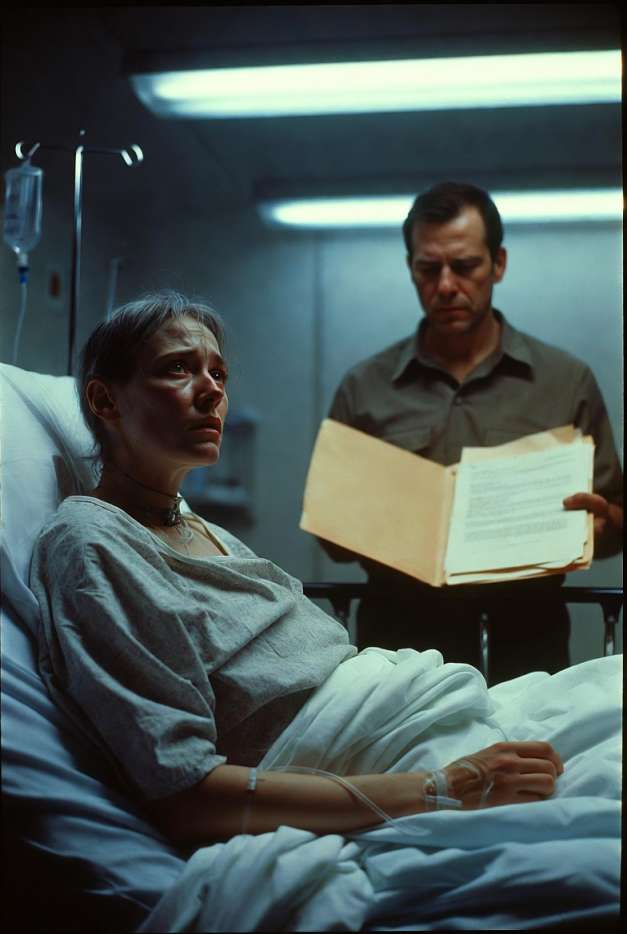
The first face I saw when the anesthesia cracked open wasn’t my husband’s. It was the sharp black signature of his attorney, already dried at the bottom of a thick stack of papers resting on the rolling tray beside my bed.
My name is Major Claire Donovan. Thirty-four years old. Eleven years in the United States Army. I woke up at Walter Reed with metal rods newly bolted along my lower spine and the smell of disinfectant so strong it felt like it was living inside my lungs. The monitor beside me beeped in a calm, indifferent rhythm. My mouth was desert-dry from the breathing tube. Every shallow breath pulled at the surgical sites like someone was dragging a hot wire under my skin.
I blinked against the fluorescent lights and waited for Marcus. Six years of marriage had taught me that when things went wrong, he showed up. He always had. A coffee. A stupid joke. His hand looking for mine.
He walked in carrying a manila folder.
No flowers. No coffee. Just the folder tucked under his arm the same way he carried contracts to close on houses. He didn’t sit. He didn’t touch the side of the bed. He stood at the foot of it while the light caught the side of his face and said, in the exact same tone he used when telling clients about closing costs, “I filed for divorce.”
The words landed flat. My throat was still raw; even if I’d wanted to answer, nothing would have come out. I stared at him—the man I’d married in a small chapel outside Fort Benning while my father cried quietly in the front pew—and felt something colder than the hospital air settle behind my ribs. Not shock. Recognition. The quiet click of a door that had been drifting shut for a long time finally locking.
He opened the folder himself and began listing the terms like a checklist. The house in Alexandria. The Denali. The furniture we’d chosen together on a Saturday afternoon when we still believed we were building something. “You’ll be fine,” he said, almost gently. “You only clear about seven thousand a month. You’ll never catch up financially. Just sign.”
I looked down at the IV taped to the back of my hand. I thought about every late-night drive home from training so I could sit through his mother’s birthday dinners. Every time I’d stayed quiet when his deals fell through so he wouldn’t feel smaller. None of that existed in the room anymore. Only the folder and a pen.
I didn’t tell him about the trust. I didn’t tell him about the patents. I didn’t tell him that the number on my military LES was the smallest fraction of what I was worth. Something deeper than pride—maybe the particular clarity that comes when the drugs strip everything away except the truth—decided I no longer owed him the explanation.
I signed with my good hand.
He took the papers, thanked me like I’d done him a favor, and walked out without looking back.
Three days later, while I was still in a hospital gown learning how to walk the corridor without falling, Marcus married Lauren Brooks in a small vineyard ceremony forty minutes outside the city. Someone texted me a photograph I never asked for. He was smiling the wide, easy smile I hadn’t seen aimed at me in over a year. Lauren wore ivory and laughed at something just outside the frame.
I looked at the picture for a long time. Then I turned my phone face-down on the tray and closed my eyes. Somewhere underneath the ache in my back and the quiet sting of being so easily discarded, something else was already moving. Marcus had taken everything he could see. He had no idea what he had actually walked away from.
He was about to find out.
To understand why Marcus never saw any of it coming, you have to understand the marriage we actually lived in—the quiet architecture underneath the one we showed other people.
We met at a backyard cookout in Virginia Beach when I was still a captain and he was still hungry in the good way, building his real-estate business one open house at a time. He had the kind of charm that made strangers trust him in under five minutes. I liked that about him. I didn’t yet know that the same charm would later become the tool he used to avoid ever really looking at me.
From the beginning I kept my finances quiet. That wasn’t about hiding anything from him specifically. It was how I was raised. My father believed money should be seen rarely and discussed even less. When my uncle Frank died four years into the marriage, he left me a minority stake in a small defense-technology firm he’d helped found in a Huntsville garage decades earlier. Along with it came two patents we held jointly—systems related to predictive logistics and AI routing that the Army itself had eventually licensed for testing. I didn’t understand the full value at first. I only knew Frank had trusted me with it, and I wasn’t going to be careless.
I found a wealth manager through an old service buddy, set up a trust, and let the money grow in the background of a life that looked exactly like every other military family’s. Modest three-bedroom house. Denali with too many miles. Grocery coupons clipped more out of habit than necessity. I never wore anything that would have given it away. Part of that was Army culture. You don’t flash wealth around people living on a staff sergeant’s pay. But if I’m honest now, it was also a test I never admitted I was running. I wanted to know if Marcus loved the woman standing in front of him or the version of success he assumed I represented.
He failed it slowly, in small ways, long before the divorce papers ever appeared.
There was a dinner in our third year when I tried to tell him the truth—not to boast, just to be honest the way partners should be. I started to explain that my income wasn’t only the number on the LES, that there were accounts and holdings that belonged to both of us in spirit even if the paperwork kept them separate. He cut me off mid-sentence, waving his fork like he was brushing away a fly. “I know how military pay works, Claire. You don’t have to explain your paycheck to me.”
I sat there with my mouth still open around the beginning of a sentence he never let me finish. Something in me closed—not dramatically, not with tears. Just the quiet settling of a door click by click until one day you realize it’s been locked for years and you can’t remember exactly when it happened.
After that I stopped trying. I told myself a marriage wasn’t a balance sheet. Underneath that generous reasoning lived something less comfortable: I had a husband who had already decided who I was, and he wasn’t interested in updating the file.
By year five the distance was no longer subtle. The phone angled just out of view at dinner. Client meetings that ran later and later. A new cologne that didn’t smell like anything he owned. I’ve spent over a decade reading people under pressure for a living. I knew. I found out her name eventually—Lauren Brooks, a client he’d sold a lake house to the year before. By the time I had confirmation I was six weeks out from a training exercise that would put me on an operating table, and I was too depleted to fight for something that had already ended on his side.
When my attorney, an old family friend named Diane Whitfield, reviewed the divorce filing, she read it twice, then looked at me over her glasses with an expression somewhere between disbelief and quiet amusement. “He listed the house and the vehicle as marital assets and asked for nothing else. Claire… does he know what’s actually in your name?”
I shook my head. “He’s never asked.”
Diane set the papers down and smiled the way people smile when they already know how a story is going to end. “Well,” she said, “he’s about to discover something interesting.”
I let him walk away certain he had won, because in his mind winning meant keeping the things he could see. The house with the underwater mortgage. The Denali with the intermittent check-engine light. The furniture half of which I’d refinished myself on weekends between deployments. He kept the props. He never once asked about the architecture underneath.
I didn’t fight for a larger share. I didn’t need to. And when Diane offered to make sure the settlement language revealed my full net worth, I said no. Let him find out from the world, not from me. I wanted my worth to be something he simply met in his own time—the way he should have met it years earlier if he’d ever cared enough to look.
I signed the papers, closed that chapter as quietly as I’d lived it, and went back to physical therapy. I assumed our paths would drift apart the way most divorced couples do. I had no idea how quickly all of that would change.
Four days after the settlement was finalized, an envelope with a federal seal arrived at Marcus’s new address. It wasn’t from me. It wasn’t from Diane. It was the first thread in a fabric that was about to come completely undone.
Marcus told me the story months later in a conversation neither of us expected to have. Piecing it together with the paperwork that eventually crossed my desk, this is how that morning unfolded.
The envelope sat on the kitchen counter for almost an hour. Lauren noticed it first. She was the type who opened every piece of mail before her second cup of coffee, a habit left over from a childhood where money had always been tight. She turned it over, saw the government seal, and called out, only half paying attention. “Something official came for you.”
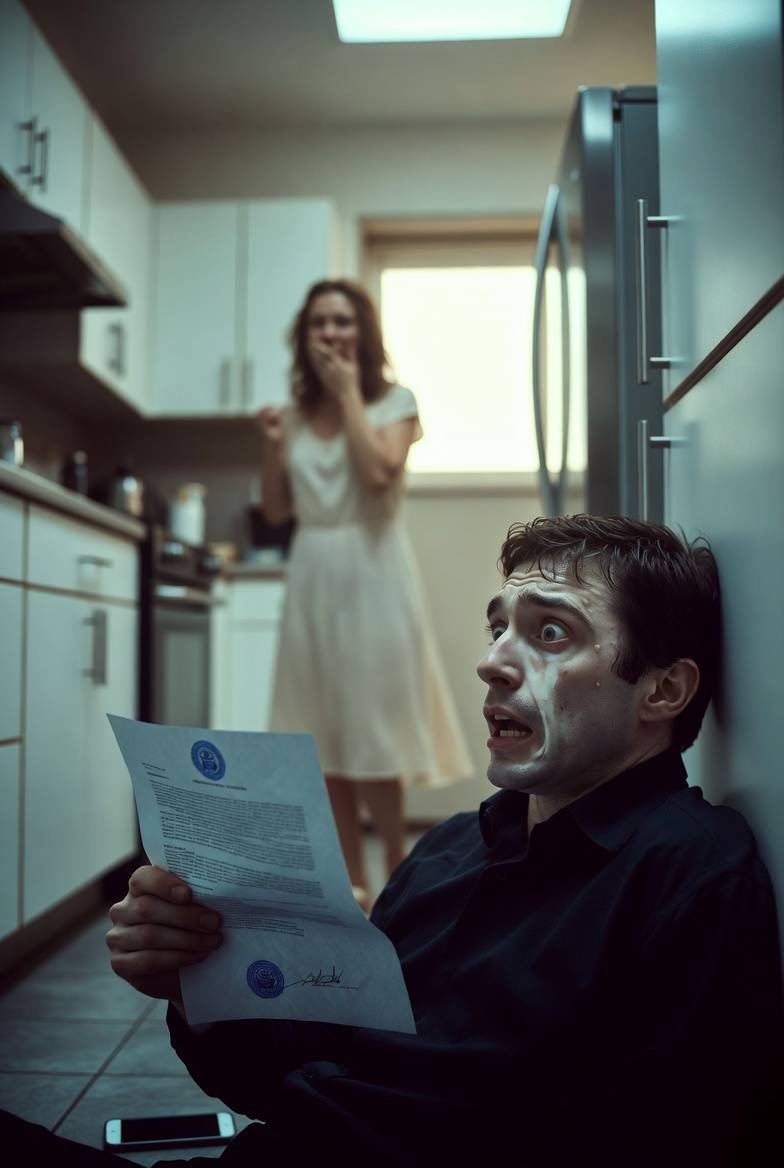
He opened it standing at the counter in his undershirt, coffee going cold beside him. It was a formal notice from a federal contracting oversight office. A defense-technology firm was undergoing a routine ownership and compliance review ahead of a new contract award. His name had surfaced because his former spouse held a documented equity stake in the company, and his own recent loan applications and personal financial disclosures—filed during the last two years of our marriage—had listed household assets in ways that no longer reconciled with the public filings now coming to light.
He read it twice without understanding a single sentence beyond the words “your former spouse holds equity.”
The phone rang before he’d even set the letter down. His bank. The one holding the loan on a rental property he’d used to expand his portfolio two years earlier—a loan he’d personally guaranteed using financial statements that had included my income as part of our household’s combined resources. The loan officer’s voice was careful. There had been a discrepancy flagged in an audit. Given the recent divorce and the sudden absence of the income used to qualify for the original terms, they needed updated documentation. Soon.
He hung up feeling the first real spike of panic he’d felt in years.
Then the second call: his divorce attorney, informing him that a routine title search on the house—standard now that he was refinancing it into his name alone—had turned up references to trust holdings and intellectual-property assignments connected to Claire Donovan that hadn’t been part of the divorce disclosures. The attorney asked, delicately, whether Marcus had been fully aware of his ex-wife’s financial position at the time of settlement.
By the third call—this one from the IRS regarding an inconsistency in a joint filing from two years prior that had claimed deductions based on income levels public records now suggested were significantly understated—Marcus was sitting on the kitchen floor with his back against the cabinets. Lauren stood in the doorway watching the color drain from his face. “What is going on?” she kept asking. He didn’t answer. He was too busy connecting facts that had been sitting in plain sight for years. Facts he’d simply never bothered to look at because he’d already decided, long before any of this, exactly what kind of woman he’d married.
There was a real-estate deal, too—the mixed-use development outside Richmond that would have been the biggest commission of his career. His investment partner, Carl Denning, called that same afternoon to pull out. Carl didn’t accuse him of anything outright. He simply said that certain representations Marcus had made about his personal financial standing during their early conversations didn’t seem to hold up, and that he thought it best they part ways before any documents were signed.
Marcus told me later that this was the moment it truly landed. Not the bank. Not the IRS. Not even the careful question from his own lawyer. It was Carl’s voice, flat and final, telling him that his credibility—the thing he’d spent fifteen years building in an industry that runs entirely on trust and reputation—had just quietly evaporated because of assumptions he’d made about a woman he never bothered to actually know.
Lauren’s panic surfaced almost immediately. She had married him believing, in her own words later, that he was about to be a millionaire once the divorce settlement cleared and his career kept climbing the way he’d always promised. She sat across from him at the kitchen table that evening, voice climbing, and asked the question that in hindsight should have been asked years earlier by someone else entirely. “I thought she was broke. You told me she made nothing. You told me the house and the truck were the whole picture.”
Marcus didn’t answer. He opened his laptop instead, hands shaking, and typed my name into a search bar for what he later admitted was the first time in six years of marriage.
What came back stopped him cold. A patent filing with my name listed as co-inventor alongside my late uncle. A brief mention in a defense-industry trade publication about a small firm’s board additions following a contract win. A short bio on an alumni page from a fellowship program describing systems work that had nothing to do with the woman he thought he’d been married to. None of it was dramatic. None of it was flashy. It was just quietly, undeniably real—years of my actual life laid out in black and white, available the entire time to anyone who’d cared enough to look.
He sat there staring at the screen until the words blurred, feeling something crack open in his chest that had nothing to do with money and everything to do with the sudden, sickening understanding of how little he had actually known the person he’d shared a bed with for six years.
He called me four times that night. I watched the screen light up each time from across my kitchen and let every call go to voicemail. I didn’t feel triumphant. I felt the strange hollow calm of watching a house of cards finally catch the wind it had been standing against for years.
Vanessa—Lauren—unraveled first and fastest. She had married a version of Marcus that existed mostly in his own telling of himself. When that version started coming apart, she didn’t handle it with grace. She started asking questions in front of other people. Word traveled fast in the tight little social circle they shared. Old friends who had once toasted his second marriage began finding reasons to be busy when he called. It wasn’t dramatic. It was just the slow social erosion that happens when people realize they’ve been sold a version of someone that didn’t exist.
Financially, things moved even faster. The refinance on the house fell through. Without it he couldn’t cover the balloon payment structure we’d originally set up under very different assumptions. He tried to sell instead, but the market had shifted; after months of almost no interest he listed it nearly forty thousand under what we’d paid. The Denali needed six thousand in transmission work he no longer had easy access to fund. Legal fees from the loan disputes stacked up. Credit-card balances from a wedding that had been considerably more expensive than either of them could actually afford kept growing.
Carl Denning’s withdrawal had a ripple effect. Two other potential deals quietly stalled. Marcus kept showing up to open houses with the same easy smile, but something in the confidence had shifted, and clients can sense that kind of thing even when they can’t name it.
Lauren’s frustration curdled into something sharper. I heard through mutual acquaintances that she’d started saying things in front of people that weren’t meant to be repeated but were anyway. “You ruined my life,” she reportedly told him at a dinner party that ended early and awkwardly. I don’t know if those were the exact words. I only know the story reached me from three separate sources within the same week.
I took no pleasure in any of it. There’s a particular sadness in watching a life you were once part of collapse from the outside, even when the person at the center caused his own downfall. Some nights I felt something closer to grief than satisfaction—grief for the marriage that could have been if he’d ever once been curious enough to really know me.
But I didn’t call him. I let him sit inside the consequences of a life he’d built on assumptions, because that was the only education left that might actually reach him.
While all of that unfolded, my own life moved forward in a quieter rhythm. I finished physical therapy a full month ahead of schedule. I returned to my unit on modified duty. I sat in on a defense-technology conference in Huntsville as a board observer for my uncle’s old company, listening to engineers half my age talk about systems I’d helped shape years earlier, and felt something settle in my chest that had nothing to do with Marcus at all: the quiet certainty that my life—the actual substance of it—had never needed his belief in it to be real.
Then, on a Tuesday evening almost five months after the divorce papers first landed in my hospital room, my phone buzzed with a voicemail notification. Marcus’s name sat above a recording four minutes and twelve seconds long.
I stared at it for a long moment before I finally pressed play.
His voice on the recording didn’t sound like the man who’d stood at the foot of my hospital bed with a folder under his arm. It sounded smaller. Tired in a way I hadn’t heard even in our worst years.
“Claire,” he started, then a long pause. “I don’t even know what to say that doesn’t sound like an excuse. I know I don’t deserve you calling me back. I just… I need you to know I know now. I know what I did. I know what I threw away. And I’m not talking about the house.”
He kept going, voice catching in places, admitting things in fragments—that he’d been ashamed to call his own father about the loan situation, that Lauren had moved in with her sister two weeks earlier, that he’d started seeing a therapist for the first time in his life because he genuinely didn’t understand how he’d become a person who could stand in a hospital room and hand his wife divorce papers instead of asking if she was in pain. He said my name three more times, each quieter than the last, like he was testing whether it still meant anything for him to say it.
I listened to the whole message twice. Then I called Diane—not for legal advice this time, just to talk it through with the one person who’d watched the entire story unfold from the beginning. She listened, then asked the only question that mattered.
“Do you want to see him?”
I sat with that question for three days. Not because I was afraid of him. There was nothing left in me that feared Marcus Hale. I took the time because I wanted to be sure that if I agreed to meet him, it would be for the right reason—not to gloat, not to let him see what he’d lost laid out like a trophy. I agreed because I realized I still had one thing left to say, and I owed it to myself to say it out loud rather than let it sit unspoken forever.
We met on a Thursday afternoon at a small coffee shop in Old Town—neutral ground, the kind of place neither of us had any history with. He was already there when I arrived. He’d lost weight, not in the deliberate way he used to talk about at dinner parties, but in the tired, sleepless way that comes from stress eating a person from the inside. He stood when he saw me. For a second neither of us said anything.
“Thank you for coming,” he said finally, voice rougher than I remembered.
I sat down, ordered nothing, and let him talk first. He cried eventually—somewhere in the middle of it. Not the performative kind. Something quieter, more involuntary, like it surprised even him. He told me he was sorry. That he understood now how badly he’d failed to see me. That he’d let a number on a pay stub become the entire measure of my worth because it was easier than actually asking who I was underneath the uniform. He said Lauren had used him almost as much as he’d used his own assumptions about me. Once the money didn’t materialize the way she expected, she’d made it very clear what she’d actually married him for. He said it without much bitterness—mostly just exhaustion, like a man recounting a fever dream he was finally waking from.
I let him finish. When the silence between us had stretched long enough that the barista had refilled the neighbors’ coffee twice, I finally spoke. I kept my voice even, without a trace of triumph.
“I didn’t lose a marriage because I made less money, Marcus. I lost one because you never cared enough to actually know me.”
He flinched at that more than he had at anything the banks or the lawyers or Carl Denning had told him. I think some part of him had hoped this conversation would end with some kind of financial reconciliation, some acknowledgment on my part of what he’d lost in dollar terms. I made sure that was never on the table. I hadn’t come to talk about money. I’d never once needed him to know exactly what I was worth in numbers. What I needed him to understand—what I think he finally did understand in that small coffee shop—was that the real loss had nothing to do with a stake in a defense company or a set of patents. It was the years he’d spent standing next to a woman he never bothered to truly meet.
I reached into my bag and set a plain envelope on the table between us. Inside were copies of the original divorce papers—the same ones he’d handed me in that hospital room—along with a short handwritten note I’d drafted the night before. The kind of note that doesn’t ask for anything back. I wasn’t giving him closure out of forgiveness exactly. I was giving it to myself, closing a door I’d been holding half-open in some quiet corner of my mind since the moment he walked in with that folder under his arm.
“I hope you figure out who you actually want to be,” I told him, standing up before either of us could turn the moment into something bigger than it needed to be. “I mean that.”
I didn’t wait for his response. I walked out into the ordinary brightness of a Thursday afternoon and didn’t look back. I already knew he was watching. It didn’t matter anymore.
Nearly a year passed before Marcus crossed my path again. By then I almost didn’t recognize the woman the formal invitation was addressed to: Major Claire Donovan, recipient of a commendation for contributions to next-generation logistics systems that had grown directly out of the patents my uncle Frank had left me. Work I’d spent the better part of a decade quietly building alongside my actual career—the one nobody ever needed to see the dollar signs behind to understand.
I almost didn’t go. Ceremonies like that had never been my language. But my old physical therapist, who’d become something like a friend over those eleven weeks of recovery, talked me into it. “You don’t owe anyone humility forever, Claire,” she said. “Let people see what you built.”
So I went. Simple navy dress. My mother’s small gold earrings. I stood in a hotel ballroom in Arlington surrounded by generals, engineers, defense contractors, and colleagues who had known me only through the quiet, steady version of myself I’d always presented. My commanding officer gave a short speech about the systems I’d helped develop—how they’d already saved real money and real time in three active deployments. My old teammates sat near the front cheering louder than the room’s dignity probably called for, and I laughed genuinely for what felt like the first time in longer than I wanted to admit.
I wasn’t hiding anymore. Not my success, not the years of work behind it, not the quiet architecture of a life I’d built entirely on my own terms. But I also wasn’t performing it for anyone. I accepted the commendation the way I’d lived most of my career—steadily, without needing the room’s validation to know it mattered.
Near the end of the evening, as servers cleared dessert plates and the string quartet shifted into something slower, I saw him. Marcus was standing near the edge of the room—not as a guest. I learned later he’d come with a cousin who worked event logistics for the hotel, helping oversee the catering staff for the night. He looked different. Thinner still, but steadier somehow, like a man who’d stopped running from something and had finally turned to face it. He wore a simple black suit. When our eyes met across the room there was no performance in his expression at all. No charm. No real-estate smile. Just something quiet and a little sad, and underneath that something that looked almost like peace.
He started toward me. For a moment my chest tightened with the old familiar bracing. Then it passed. He didn’t come to make a scene. I could see that in the careful way he approached, hands in his pockets, shoulders a little lower than I remembered.
“You look happy,” he said when he finally reached me. It wasn’t a line. It was just an observation offered plainly.
“I am,” I said, and I meant it completely.
He nodded, glanced briefly at the commendation still pinned near my collar, and opened his mouth like he wanted to say more. Maybe another apology. Maybe some explanation for why he was standing in a hotel ballroom in a caterer’s black suit instead of the life he’d once been so certain he was building. But I didn’t need to hear it. Some quiet clarity in his own face told me he understood that too.
“Take care of yourself, Marcus,” I said. And I meant that completely as well—not as a dismissal, not as a parting shot, but as something closer to genuine hope for a man I’d once loved, even if that love hadn’t been enough to survive what he’d chosen to believe about me.
Then I turned and walked back toward my table, back toward the people who had actually shown up for me across eleven years of deployments and recoveries and quiet, unglamorous work. I didn’t look back to see whether he was still standing there watching me go. I already knew the answer. And for the first time in a long time, it didn’t hold any weight over me at all.
Driving home that night with the windows cracked to let in the cool spring air, I thought about everything that had happened since that morning in the hospital room—the folder, the signature, the quiet unraveling that followed, the coffee-shop conversation that closed the last real door between us. And I realized the truest thing I’d learned through all of it wasn’t about money or vindication or even forgiveness.
It was this: Marcus had spent six years believing my worth began and ended with a number on a pay stub. But the biggest thing he ever lost wasn’t my income. It was never really about the house or the car or the life he assumed he’d won by walking away first.
It was the woman who had loved him quietly, patiently, and completely—long before he ever thought to ask what she was really worth.
And the final truth, the one that settled over me like clean air as I pulled into my own driveway that night, was simpler still.
I had never needed him to see it.
I had only needed to stop waiting for him to look.
If this story stayed with you, tell me in the comments which moment hit hardest—and where you’re reading from tonight. Stories like Claire’s remind us that real strength often looks quiet, that dignity can be its own kind of victory, and that the people who truly know our worth are the ones who never needed a number to see it.
We share stories like this every single day. If you don’t want to miss the next one, go ahead and follow. Let’s keep walking through these stories together—one honest moment at a time.