The universe has just revealed a secret that has been hiding in plain sight for centuries. Astronomers have identified not just one or two, but at least 16 distinct types of black holes, ranging from microscopic entities that could be created in a laboratory to stupendously large beasts that defy the imagination. The revelation comes from a comprehensive analysis of data from the European Space Agency’s Gaia mission, which first detected a mysterious invisible object dragging a star in the constellation Ophiuchus.
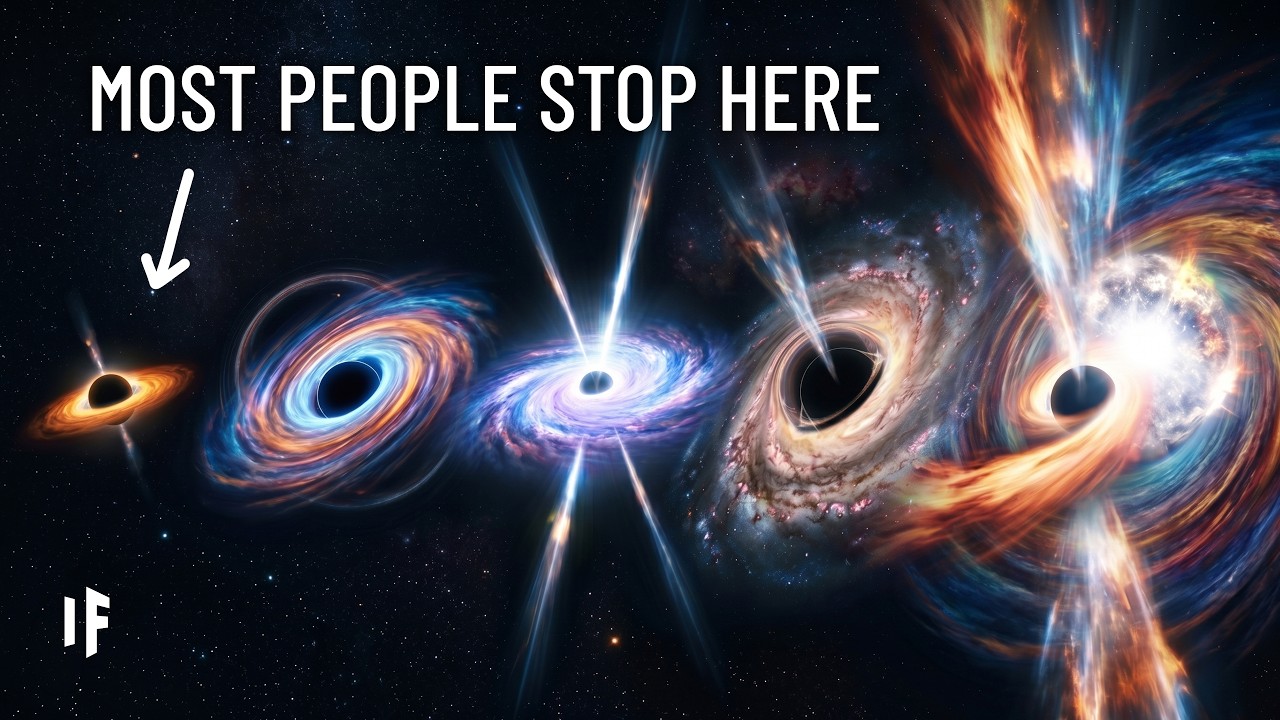 That object, named Gaia BH1, is the closest known stellar-mass black hole to Earth, located just over 1,500 light-years away. But it is only the beginning.
This discovery has shattered the long-held assumption that black holes come only in two basic flavors.
Scientists now believe that hundreds of millions of stellar-mass black holes exist in our galaxy alone, and the universe may host quintillions of them. Yet Gaia BH1 is peculiar because it is dormant—it is not devouring its companion star. The only reason we know it exists is the gravitational tug on its stellar partner.
One researcher described the system as akin to replacing our Sun with a black hole and moving Earth to where the Sun now sits. Such dormant black holes may be far more common than previously thought.
The history of black hole theory dates back to 1783, when Reverend John Michell, a Yorkshire preacher and scientist, lay awake at night pondering what would happen if a star became so massive that its escape velocity exceeded the speed of light.
He calculated that a star about 500 times the size of the Sun would become completely invisible—a dark star. His idea was met with moderate interest and then forgotten for nearly 200 years. It took the genius of Albert Einstein’s general relativity and the work of physicists like Karl Schwarzschild to prove that such objects could exist.
Schwarzschild, in 1916, calculated the distance from a black hole’s singularity to its event horizon using only pencil and paper—before television was even invented.
Today, we understand that a black hole is defined by a few key components. At the absolute center lies a singularity, a point of near-infinite density where the laws of physics break down.
Surrounding it is the event horizon, the boundary where gravity is so strong that nothing, not even light, can escape. Beyond that lies an event horizon shadow, a dark zone twice as large as the black hole itself, where space-time is so distorted that light is redirected through gravitational lensing. Most black holes also have an accretion disk—a flat ring of hot gas and matter that orbits at incredible speeds, heating to millions of degrees and emitting X-rays.
Some black holes shoot out relativistic jets, massive geysers of radiation and particles that can stretch hundreds of thousands of light-years. If such a jet pointed toward Earth, it would spell instant extinction for all life.
But the most mind-bending aspect of black holes is that there appears to be almost no limit to how small or how large they can be.
The smallest are micro black holes, which could theoretically be created right here on Earth using particle accelerators like the Large Hadron Collider. When the LHC fired up in 2010, critics feared it might produce a black hole that would destroy the planet. In reality, any micro black hole created would weigh less than a gram and vanish in less than a trillionth of a second due to Hawking radiation.
 Named after Stephen Hawking, this process describes how black holes slowly leak mass and particles over time, eventually evaporating entirely. Micro black holes are so short-lived that the biggest challenge is proving they ever existed at all.
Next come primordial black holes, which are as old as the universe itself.
The theory suggests that within the first second after the Big Bang, extremely dense regions of the newborn universe collapsed directly into black holes. They could be as small as a staple or as massive as 100,000 suns. The smallest of these would have evaporated over the past 14 billion years, but larger ones could still be drifting through space.
Some scientists speculate that a primordial black hole the size of a grapefruit might be lurking in the outer reaches of our solar system, causing the strange orbits of several trans-Neptunian objects. This idea has gained traction as a potential explanation for the hypothetical Planet Nine.
The most familiar type is the stellar-mass black hole, like Gaia BH1 or the famous Cygnus X-1.
These form when massive stars—five to twenty times the mass of our Sun—run out of fuel and collapse in spectacular supernova explosions. They contain about five to twenty solar masses compressed into a region just a few dozen kilometers across. For Gaia BH1, the event horizon is only 56 kilometers in diameter—you could drive across it in half an hour, though that would be a very bad idea.
For decades, astronomers thought that stellar-mass black holes were the only kind, but then came intermediate-mass black holes. In 2024, scientists at the Max Planck Institute detected a black hole in the Omega Centauri cluster with a mass about 8,000 times that of the Sun. This is far too large to have formed from a single star, suggesting it grew by consuming other black holes and stars.
Above intermediate-mass black holes lie the supermassive behemoths at the centers of most galaxies. These have masses ranging from millions to billions of times that of the Sun. The supermassive black hole at the heart of our Milky Way, Sagittarius A, has a mass of about 4 million Suns and is located 26,000 light-years from Earth.
It was only in 2022 that scientists managed to photograph it, using the Event Horizon Telescope—a planet-sized array of radio observatories synchronized with atomic clocks. That image showed a bright ring of light surrounding a perfect circle of darkness: the black hole’s shadow. The first direct image of a black hole, taken in 2019, was of M87, a supermassive black hole 55 million light-years away with a mass of 6 billion Suns.
These images confirmed predictions made over a century ago.
 But even supermassive black holes are not the largest. Astronomers have discovered ultramassive black holes, defined as those exceeding 10 billion solar masses.
Among them is Ton 618, a quasar-hosted black hole with a mass of 66 billion Suns. Even larger is Phoenix A, a black hole at the center of the Phoenix galaxy cluster that may surpass 100 billion solar masses. Such objects are so large that they may warrant a new classification: stupendously large black holes.
Beyond this size, black holes begin to approach the theoretical upper limit of how big they can get before their own gravity tears them apart.
And then there are the truly weird theoretical black holes. The Schwarzschild black hole is a non-spinning, uncharged type that is largely hypothetical because all known black holes spin.
The Reissner-Nordström black hole has an electrical charge but does not spin. The Kerr black hole spins but has no charge, which describes most stellar-mass black holes. The Kerr-Newman black hole combines both spin and charge.
String theory suggests the existence of fuzzball black holes, which are giant balls of vibrating strings that look like a black hole from the outside but have no singularity. The Ashtekar black hole is an eternally collapsing object that might reverse into expansion, potentially creating a new universe. There is also the gravastar, which appears black but is actually a series of shells packed with dark energy, resembling a cosmic onion.
One of the most tantalizing theoretical objects is the white hole, the exact opposite of a black hole. Instead of sucking in matter, a white hole would constantly spew out energy and matter. This idea, while breaking many laws of thermodynamics, has captured the imagination of physicists.
Another exotic concept is the firewall black hole, which has a high-energy shell of particles just beyond the event horizon, creating a ring of fire that would incinerate anything falling in. But perhaps the most extraordinary theoretical black hole is the super-extremal black hole. If a black hole spins fast enough and acquires enough electrical charge, its event horizon could disappear entirely, exposing the naked singularity—the infinitely dense point where physics breaks down.
For scientists, this would be a dream come true, offering a direct view into the heart of a black hole. Unfortunately, super-extremal black holes are almost certainly impossible in nature, but if they exist, researchers are already planning ways to image them.
The discovery of so many black hole varieties has profound implications.
 It means that the universe is far more exotic than previously imagined. The methods used to find these objects are evolving rapidly. The Gaia mission, which tracks the precise positions of billions of stars, has become a black hole hunter, spotting invisible gravitational influences.
The Event Horizon Telescope continues to refine its imaging techniques. And new instruments like the James Webb Space Telescope and the Laser Interferometer Space Antenna (LISA) are expected to detect gravitational waves from merging black holes, opening another window into their nature. Meanwhile, artificial intelligence is accelerating the analysis of vast datasets.
AI models now help researchers simulate black hole mergers, study Hawking radiation, and even predict where to look for primordial black holes.
The public has long been fascinated by black holes, from science fiction films to popular astrophysics. But this new catalog of black hole types reveals a reality stranger than fiction.
Each type may hold keys to understanding gravity, quantum mechanics, and the very fabric of space-time. The question of what happens beyond the event horizon remains one of the greatest mysteries in science. The detection of a naked singularity would revolutionize physics, potentially providing clues to a theory of everything.
Until then, astronomers will continue to scan the skies, using every tool at their disposal, from radio telescopes to particle colliders, to find and study these cosmic enigmas.
The story of black holes is far from over. In fact, it is just beginning.
With hundreds of millions of stellar-mass black holes in our galaxy alone, and the possibility of even more exotic types lurking in the darkness, the next decade promises to be a golden age of black hole astronomy. Every new discovery forces us to rewrite the textbooks. And as one scientist put it, “We are about to get spaghettified by every flavor of black hole.”
The universe has always been stranger than we can imagine, and black holes are its most extreme expression. For now, we can only watch, wait, and wonder—what will we find next?