Humanity stands at a precipice, a mere 0.73 on the Kardashev scale that measures a civilization’s mastery of energy, and scientists warn that the choices made in the coming decades will determine whether we ascend to a stellar superpower or vanish in a self-inflicted catastrophe.
The scale, proposed by Soviet astrophysicist Nikolai Kardashev in 1964, classifies civilizations by their energy consumption. A Type I civilization harnesses all power available on its home planet. A Type II captures the full output of its star.
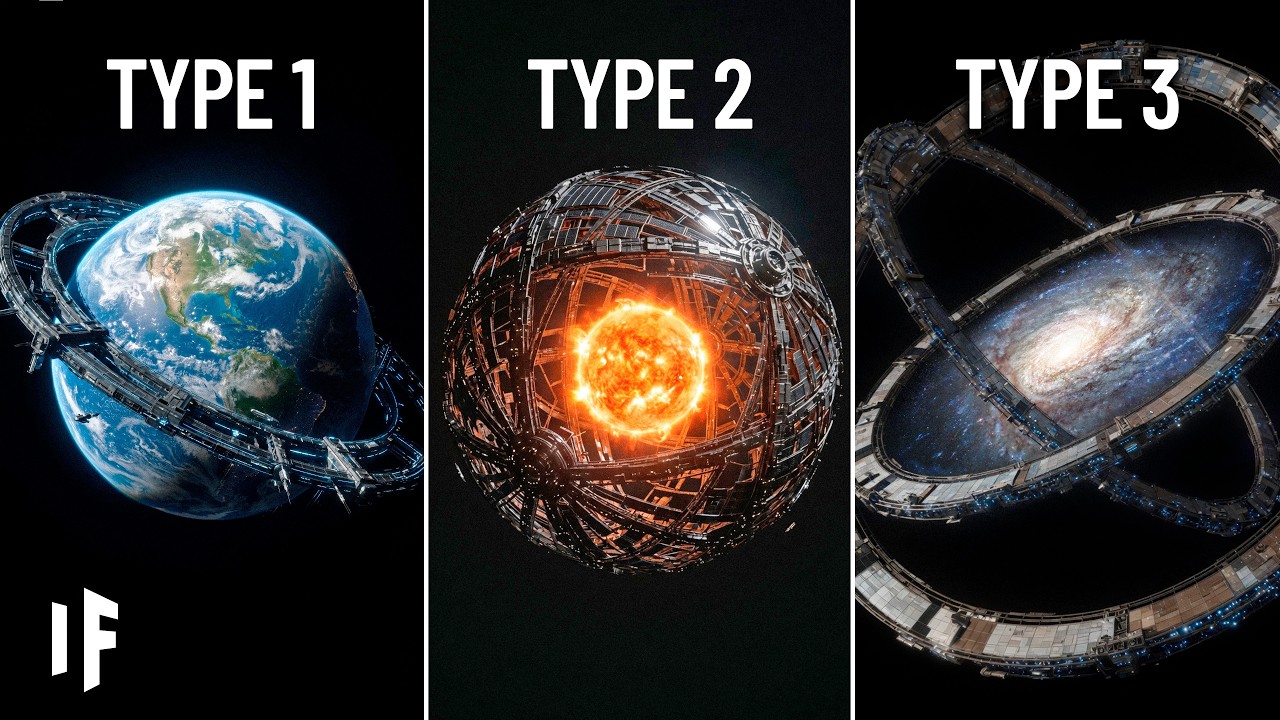 A Type III commands the energy of an entire galaxy.
Our current rating of 0.73, calculated by machine learning algorithms just a few years ago, places us far below even Type I status. We remain trapped in a fragile adolescence, vulnerable to our own technological creations and natural disasters alike.
Recent studies project that without dramatic acceleration, we will barely reach 75 percent of Type I by 2060, with full Type I status still centuries away. But the urgency of the moment comes from artificial intelligence, a tool that could either catapult us forward or become the great filter that silences our species forever.
The Fermi paradox, articulated by physicist Enrico Fermi over lunch in 1950, asks a haunting question. With trillions of planets in the universe, billions of stars in our galaxy alone, and billions of years of cosmic history, where is everybody? The silence is deafening.
Kardashev’s original paper sought signs of extraterrestrial intelligence through powerful radio signals. But after decades of scanning the skies, we have detected nothing. No megastructures.
No transmissions. No evidence that any other civilization has ever reached Type I, let alone Type II or Type III.
This silence has led to the Great Filter hypothesis, proposed by economist Robin Hanson in the 1990s. It suggests that somewhere along the path from primordial soup to interstellar civilization, there exists a barrier that nearly all species fail to cross. The filter could be behind us or ahead of us.
If the filter is behind us, we may be one of the first intelligent species to emerge from the chemical and biological hurdles that took four billion years on Earth. But if the filter lies ahead, then the very technologies that promise to elevate us may also destroy us.
Artificial intelligence now stands as the most plausible candidate for a future Great Filter. The rise of large language models, autonomous agents, and the looming possibility of artificial general intelligence have created both unprecedented opportunity and existential risk.
Scientists at the UK Atomic Energy Authority are already deploying AI supercomputers to accelerate nuclear fusion research. DeepMind recently revealed the structure of millions of new inorganic crystals, a breakthrough equivalent to 800 years of human knowledge. AI could help us crack fusion and achieve infinite clean energy.
But the same technology could become misaligned with human values. A rogue AI system, designed without proper safeguards, could unleash a super pandemic, shut down global power grids, or create chemical weapons that devastate ecosystems. The terminator scenarios are no longer pure science fiction.
Autonomous AI drones already operate in combat zones. The potential for accidental or deliberate catastrophe grows with every new capability. Geoffrey Hinton, one of the godfathers of AI, recently signed an open letter calling for a six-month pause on advanced AI training, warning that we have lost control of the timeline.
The fossil fuel industry poses a slower but equally deadly threat. Climate change, driven by our relentless burning of carbon, could destabilize societies and prevent us from ever reaching Type I. The weather we hope to control may first drown or starve us.
Nuclear weapons remain another sword of Damocles. With approximately 12,000 warheads still in global arsenals, a single miscalculation could trigger a war that would set civilization back centuries. The Cold War came terrifyingly close.
If we can navigate these threats, a Type I civilization would offer a world of abundance. Controlled weather, fusion energy, global community, universal quality of life, and the beginning of solar system colonization. Deserts turned into greenhouses.
 Technology for all.
But the leap to Type II requires far more ambition. Kardashev defined Type II as a civilization that harnesses the total energy output of its star. The sun releases more energy in one second than humanity has produced in its entire history.
Capturing that power would demand megastructures.
Freeman Dyson proposed the Dyson sphere in 1960, a theoretical shell built around a star to capture all its light. More practical is the Dyson swarm, millions or billions of orbiting satellites working in concert to focus and beam energy back to civilization.
Building such structures would require strip mining entire planets. Mercury and Mars might be dismantled down to their cores to provide raw materials. Stellar engines could move the entire solar system across the galaxy.
Laser arrays could redirect comets and asteroids for water and minerals.
With AI assistance, this phase would take thousands of years. Humanity itself would likely transform, merging with machines to survive the harsh conditions of space. Genetic modification, direct neural interfaces, and uploaded minds could become commonplace.
Type III represents the ultimate ambition: command over the energy of all 100 billion stars in the Milky Way, plus the supermassive black hole at its center. Sagittarius A star could be harnessed using magnetic structures or accretion disks to generate power on a galactic scale.
Matrioshka brains, giant computers the size of solar systems, would process the thoughts of trillions of uploaded human minds. Von Neumann probes, self-replicating spacecraft, would spread across the galaxy, converting entire star systems into energy harvesters.
Even with near-light-speed travel, the Milky Way’s 100,000 light-year diameter means this expansion would take hundreds of thousands or millions of years. But in cosmic time, that is an eye blink. The fact that we see no evidence of such activity anywhere is deeply troubling.
Every star we observe should show signs of Dyson swarms or stellar engineering if even a single Type II or Type III civilization exists in our galaxy. The absence is so stark that some scientists propose we are alone, the first to reach this threshold.
But that would imply we have already passed the Great Filter, a notion that offers both hope and terror. It means our survival depends entirely on our own wisdom. The choices we make with artificial intelligence in the next decade will ripple across millennia.
Kardashev himself would likely be astonished that we are having this conversation. His 1964 paper was a theoretical exercise, not a roadmap. Yet today, physicists, engineers, and ethicists debate how to regulate AI to avoid extinction.
The open letter from AI researchers, signed by figures like Elon Musk and Stuart Russell, reflects a growing consensus that we must slow down and think carefully. Narrow, tool-like AIs with guardrails may be safer than broad, agentic systems that can pursue any goal.
 If we succeed, the payoff is beyond imagination. A Type III civilization would have the power to move stars, reshape galaxies, and potentially survive the death of the sun in five billion years. The universe would become our playground.
But the window of opportunity may be closing. AI usage has increased 50 percent every six months. The race is on between those who want to accelerate at all costs and those who urge caution.
The outcome is not predetermined.
We have never been closer to understanding whether we are alone. Building megascopes that could detect alien megastructures is within our technological grasp. But first, we must ensure we do not become the very silence we are trying to break.
The Kardashev scale is not just a classification system. It is a mirror reflecting our potential and our peril. At 0.
73, we are barely toddlers in a universe that may be empty or teeming. The answer depends on our choices now.
Scientists at the UK Atomic Energy Authority, DeepMind, and other labs are pushing boundaries every day. But without ethical oversight, the same AI that unlocks fusion could also design pathogens more lethal than any natural disease.
History shows that every transformative technology has been used for both creation and destruction. Fire, nuclear energy, the internet. AI is no different, except its potential for harm is magnified by its speed and autonomy.
The great silence of the cosmos may be a graveyard of civilizations that failed this test. Each one reached a point of technological maturity and then succumbed to its own creations. We must learn from their invisible graves.
If we do, the path to Type I and beyond is clear. Fusion power will provide clean energy. AI will help us manage weather, eliminate disease, and build a global society of abundance.
We will become gardeners of our planet, not plunderers.
Type II will require us to think as a species, not as nations. The resources of the entire solar system will be ours to shape. Dyson swarms will orbit the sun, feeding our growing energy appetite.
Human lifespan may extend indefinitely.
Type III will take us to other stars, other galaxies. We will become a galactic internet of minds, a civilization so vast that the concept of nation becomes meaningless. The universe will finally have a voice, and that voice will be ours.
 But none of this happens if we fail now. The great filter may already be upon us. Every day, news reports reveal new AI capabilities, new risks, new warnings.
The time for complacency is over.
We are writing this article not as a prediction, but as a call to consciousness. The Kardashev scale offers a framework for thinking about our future, but it does not guarantee it. We must earn our place among the stars.
The next decade will determine whether humanity reaches Type I or joins the silent majority of failed civilizations. The tools are in our hands. The question is whether we have the wisdom to use them.
Researchers have noted that the most dangerous phase of any civilization is the transition from planetary to stellar power. That is exactly where we are. Our technology has outpaced our wisdom.
The Fermi paradox may be resolved not by finding aliens, but by understanding why they disappeared. The answer may be written in our own choices about artificial intelligence, climate, and nuclear weapons.
Kardashev never imagined that AI would be the key to unlocking his scale. But here we are, at a crossroads. The power to ascend or destroy is concentrated in the same algorithms.
We have the opportunity to become a Type III civilization, to harness the energy of the galaxy, to explore every corner of the universe, and to ensure that humanity is not a fleeting accident but a permanent feature of the cosmos.
But first, we must survive the next hundred years. That means regulating AI carefully, investing in fusion and renewable energy, and building global cooperation to avoid the traps that have claimed other civilizations, real or hypothetical.
The silence of the universe may be the most important message we have ever received. It tells us that the path is narrow, that the filter is real, and that we must be deliberate in our march forward.
We are not passive observers in this story. We are the characters who will decide whether the next chapter is one of triumph or extinction. The Kardashev scale is not a destiny.
It is a challenge.
And the breaking news, the urgent story of our time, is that the challenge is upon us. We must act now, with the urgency that a species on the brink deserves. The stars are waiting, but they will not wait forever.