The bond between humans and dogs has long been celebrated, but new scientific discoveries are reshaping everything we thought we knew about how dogs perceive their owners. Cognitive scientists have uncovered startling evidence that your dog does not see you as a fellow human or even as a pack leader. Instead, they see you as something far more primal and essential: a lifeline wired into their biology over 15,000 years of evolution.
The research, led by experts at Duke University and Emory University, reveals that dogs have developed a unique set of social behaviors exclusively for interacting with humans. This phenomenon, known as the human-canine bond, is unlike any other interspecies relationship in the animal kingdom. It challenges the common assumption that dogs view their owners as just another member of the pack.
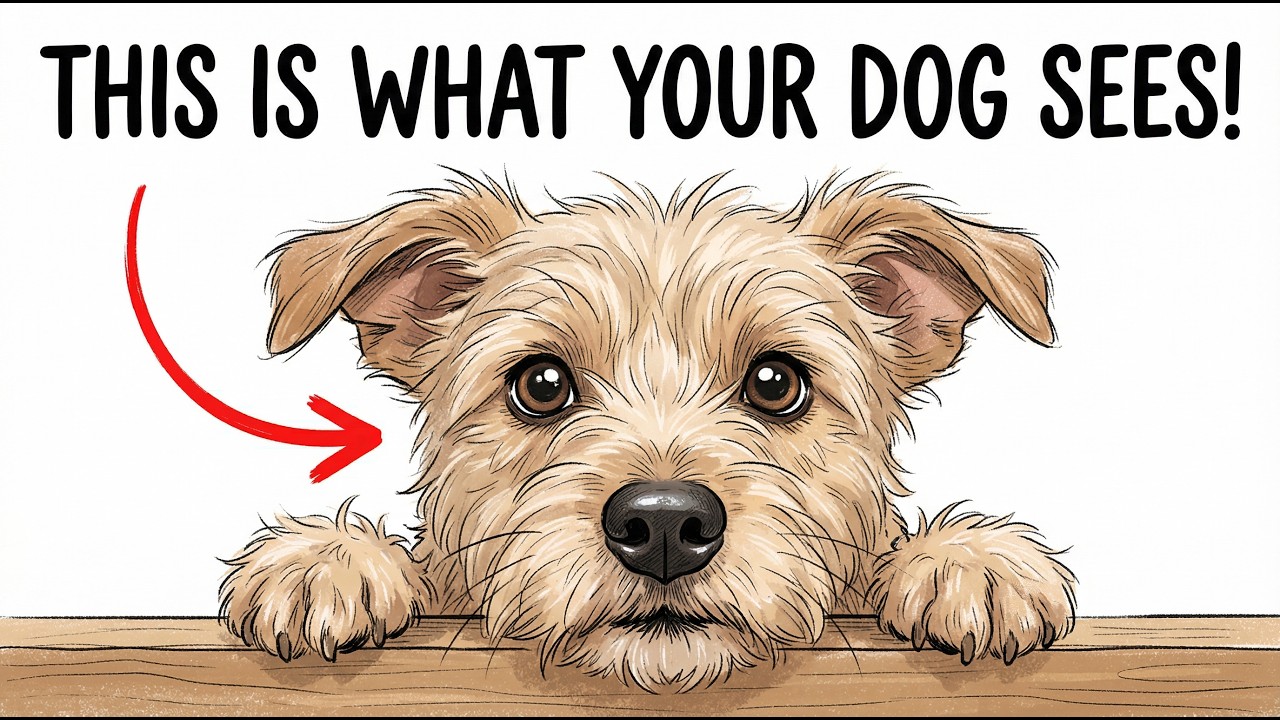 Dr. Brian Hare, a leading cognitive scientist at Duke, has spent his career studying dog cognition. His work shows that dogs have evolved an extraordinary ability to read human social cues, a skill that even our closest primate relatives cannot match.
When you point at something, your dog follows your finger. A chimpanzee does not. A wolf raised by humans does not either.
This ability is not learned; it is hardwired across thousands of generations. Dogs evolved to understand human intention in a way that is almost unsettling. They did not just learn to live alongside us.
They evolved to understand us. And that understanding shapes every interaction you have with your dog every single day.
The implications are profound. When your dog looks at you, they are not seeing a fellow dog or even a best friend in the human sense. They are seeing a being they have been programmed to trust, attach to, and rely on for survival.
This is not sentimentality; it is documented biology.
One of the most remarkable findings involves what happens when you leave your dog alone. For years, behaviors like pacing, whining, and staring at the door were dismissed as separation anxiety. But researchers began asking a different question: What is actually happening inside a dog during those hours alone?
They found that stress hormones spike within minutes of the owner’s departure. Heart rates rise. The dog’s body enters a state of low-level alert.
However, when researchers played recordings of the owner’s voice to dogs left alone, their stress levels dropped almost immediately. Not at the sound of any human voice, but specifically at the sound of their owner’s voice.
Your scent does the same thing. A study from Emory University used brain scans to show that when dogs were 𝓮𝔁𝓹𝓸𝓼𝓮𝓭 to different scents, only one triggered activation in the reward center of the brain, the part associated with love, pleasure, and positive anticipation. That scent was yours, not food, not another dog.
Your dog is not simply waiting for you to come home. They are holding on to you in every way their biology allows until you walk back through that door. This is a biological loop of attachment that scientists are only beginning to fully understand.
But the revelations go even deeper. Dogs can read your face better than most humans. When you look at another person, your eyes naturally drift to the left side of their face first.
This is called left gaze bias, and it happens automatically because the right side of the human brain, which processes emotion, controls the left side of the face.
Dogs do the exact same thing, but only with humans. When researchers showed dogs images of human faces, dog faces, and objects, the dogs consistently showed a left gaze bias only for human faces. They evolved a specifically human-directed way of reading emotion.
That is why your dog often knows you are upset before you have said a word. They are reading micro-expressions in your face with a precision that took thousands of years to develop. Dogs can even distinguish between happy and angry human faces in photographs of people they have never met.
 They know what a human frown means without any training.
So the next time your dog pads over to you quietly and rests their head in your lap when you are having a hard day, understand that they did not guess. They read it in your face, processed it in a brain shaped by 15,000 years of paying attention to yours, and made a conscious decision to come to you.
Another groundbreaking discovery involves the direction your dog wags their tail. Most people assume a wagging tail simply means a happy dog, but scientists have found that it is far more nuanced. It is not just whether a dog wags, but which direction they wag.
When a dog sees something that triggers a positive emotional response, their owner returning home, a familiar friend, something they love, the wag skews to the right. More movement on the right side of the tail. When a dog feels uncertain, anxious, or is facing a stranger that puts them on alert, the wag skews to the left.
Other dogs can read this signal. Researchers in Italy found that when dogs were shown videos of other dogs wagging right, they stayed calm and relaxed. When shown dogs wagging left, their own heart rates increased.
Their bodies responded to the signal automatically.
Your dog has a tail vocabulary that they did not learn. They were born with it, and they are using it every single day. The height of the wag carries meaning too.
A tail held high and wagging fast signals confidence and excitement. A tail low and moving slowly can signal submission or appeasement.
Your dog is not just wagging at you. They are talking to you. And they have been doing it every single day, waiting for you to listen.
The final discovery ties all of this together, and it is perhaps the most astonishing of all.
In 2015, a study published in the journal Science made headlines around the world. Researchers found that when dogs and their owners simply gazed into each other’s eyes, both the dog and the human showed a significant rise in oxytocin, the bonding hormone. This is the same chemical that surges between a mother and her newborn child in the first moments after birth.
Let that sink in. Your dog looks at you, and their brain releases the same chemistry that humans use to bond with their babies. And when you look back at them, yours does too.
This is not sentiment. This is not pet owners projecting emotions onto animals. This is a documented biological loop, a feedback cycle of bonding that your dog triggers simply by looking at you.
Dogs evolved specifically to read human faces, follow human cues, and respond to human emotion in ways no other animal can. That evolution was building toward a creature that does not just live alongside you. It is a creature that is neurochemically wired to you.
 Your dog does not tolerate your presence. They do not simply accept you as part of their environment. You are the reason their brain releases its most powerful bonding chemical.
You are the scent their reward center lights up for. You are the face their eyes have evolved specifically to read.
Your dog does not see a human when they look at you. They do not see an owner. They see the one presence their entire biology was built to find.
They see you. And to them, that is everything.
This revelation is already changing the way scientists think about interspecies relationships. It may also transform how millions of dog owners understand their pets. The bond is not about dominance or submission.
It is about connection at the deepest biological level.
The implications for animal welfare and training are enormous. Understanding that dogs are wired to view humans as a lifeline, not a pack leader, could shift approaches to separation anxiety and behavioral issues. It suggests that punishment-based training may be not only ineffective but harmful to a bond that is fundamentally rooted in trust and oxytocin.
Moreover, this research underscores the unique place dogs hold in human evolution. While other domesticated animals like cats or horses have adapted to human environments, dogs have done something unprecedented. They have evolved brain structures and hormonal responses specifically to bond with humans.
This is not anthropomorphism. It is hard science. The same neural mechanisms that allow human mothers to bond with their infants are at play when a dog and a person share a gaze.
The dog’s tail wag, the way they read your face, the way they wait for you, it all points to a creature that has become, in a very real sense, a part of your biological family.
As one researcher put it, dogs may have hitched their evolutionary wagon to ours. In doing so, they have become the only non-human animal to share a hormonal bonding system with humans. That is not just remarkable.
It is unprecedented.
Think about your dog the next time they greet you at the door. They are not just happy to see you. They have been holding on to you neurochemically the entire time you were gone.
Their brain has been preparing for your return. When you walk in, you are not just entering a room. You are completing a biological circuit.
 This is why dogs are often described as man’s best friend, but the science suggests that phrase is inadequate. A friend is an equal. Your dog does not see you as an equal.
They see you as the center of their entire world, the source of their most powerful bonding chemical, the face they were born to read.
Your dog does not see you as human. They see you as something far more profound. They see you as the reason their life has meaning.
And that, perhaps, is the most humbling discovery of all.
As the video transcript that sparked this investigation concludes, your dog does not tolerate your presence. They do not simply accept you as part of their environment. You are the reason their brain releases its most powerful bonding chemical.
You are the scent their reward center lights up for. You are the face their eyes have evolved specifically to read.
Your dog does not see a human when they look at you. They do not see an owner. They see the one presence their entire biology was built to find.
They see you.
And to them, that is everything.
This story is still developing. More studies are expected to explore the exact neural pathways involved in this bond. Researchers are also investigating whether similar bonds exist with other domesticated animals, though early evidence suggests the canine-human connection is unique.
For now, the message is clear. The relationship between dogs and humans is not a matter of simple companionship. It is a biological partnership forged over thousands of years, written into the very DNA of both species.
And every time you look into your dog’s eyes, that history is being written again.
This is a breaking news update from the science desk. We will continue to monitor new developments in canine cognition and report as more information becomes available. In the meantime, consider this: the next time your dog looks at you, they are not just seeing a person.
They are seeing the fulfillment of an evolutionary promise made 15,000 years ago.
And that changes everything.