A remote corner of Kenya, the Tugen Hills, has yielded a fossil find that is rewriting the story of human origins, pushing back the dawn of bipedalism by nearly two million years and challenging long-held theories about when and where our ancestors first stood upright.
British, French, and Kenyan scientists announced today the discovery of a creature they call the “Millennium Man,” a six-million-year-old hominid that may be the earliest known direct ancestor of modern humans. The announcement, made at a press conference in February 2001, has sent shockwaves through the paleoanthropology community.
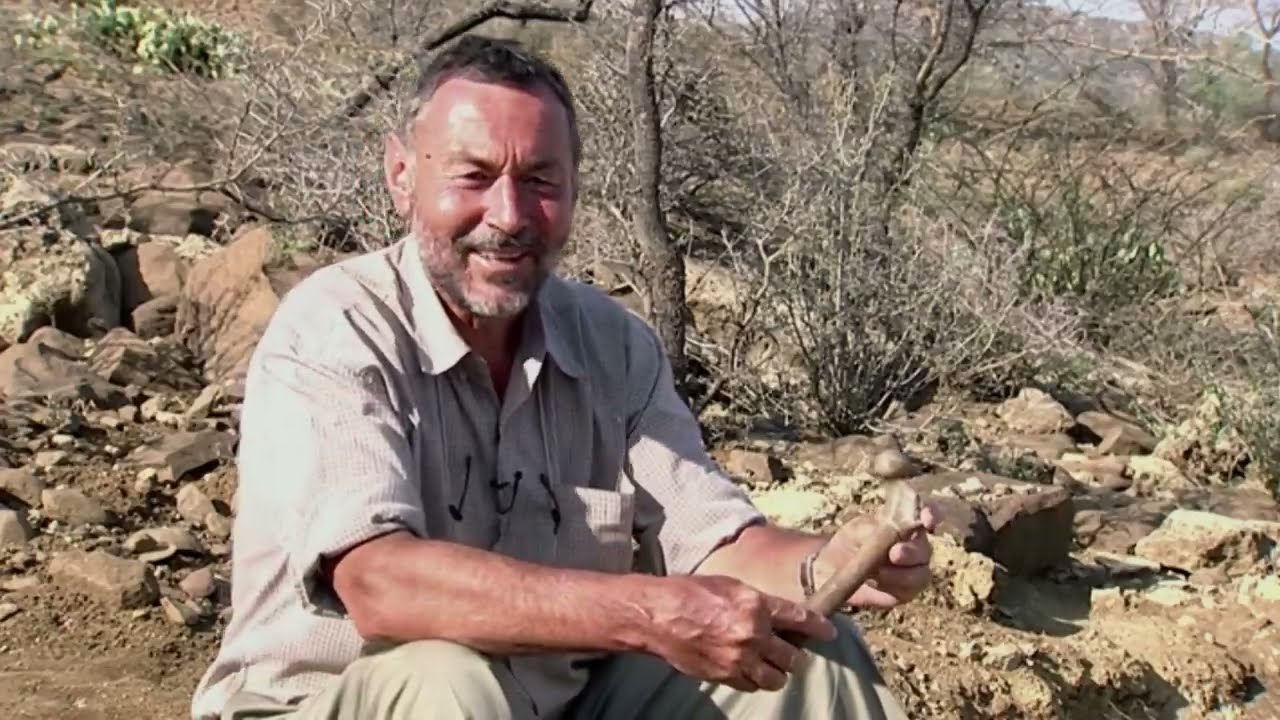
 “It was an instantaneous fantasy,” said Martin Pickford, a British-born geologist and paleontologist with the French National Museum of Natural History. “It was really the few seconds that followed. We knew this is it.
This is going to change things. This could be the oldest human ancestor ever discovered.”
The fossilized remains, consisting of 13 fragments from at least five individuals, were unearthed in October 2000. The team, led by Pickford and Brigitte Senut, a specialist in fossil morphology, had been working in the Lucania Formation, an ancient lake basin formed by massive lava flows. The site, known as the Cradle of Humanity, has long been a treasure trove for early hominid research.
The key find was made by local fossil hunter Kiptalam Cheboi, who spotted teeth that looked strangely human while walking along a stream bed. “When I saw that, my whole body was filled with excitement,” Cheboi recalled. “If I had jumped for joy, I would have hit the sky.”
Pickford and Senut rushed from another dig in Uganda and soon recovered a femur, or thighbone, and an upper arm bone, or humerus. The bones, encrusted with freshwater algae, were clearly from the same site and appeared to be far older than any comparable hominid fossils ever found.
Dating the fossils proved crucial. The strata where they were found lie between two dated lava flows: a lower trachyte layer at 6. 2 million years and an upper basalt layer at 5.
65 million years. Japanese geophysicists from the University of Chaumont used magnetic polarity analysis to confirm the age: between 5. 8 and 6.
 1 million years.
This makes the creature, scientifically named Orrorin tugenensis, nearly twice as old as the famous Lucy skeleton, an Australopithecus afarensis that lived 3.2 million years ago. “We’re seeing the opening chapters of human origins here,” Pickford said.
The name Orrorin comes from the Tugen word for “original man,” and the species name tugenensis refers to the region. Local elders suggested the name, which Senut noted is apt. “Orrorin in French is dawn, and that was fairly appropriate,” she said.
But the most dramatic claim is that Orrorin walked on two legs. Bipedalism is the defining trait of the human lineage, separating us from other primates. The team found evidence in the femur: a groove on the neck of the thighbone where a muscle attaches, indicating an upright gait.
CT scans at a hospital in Toulouse, France, revealed thicker bone on the underside of the femoral neck, a hallmark of weight-bearing stress in bipeds.
“This is something apart from the ape,” said Brian Richmond, an expert in bipedalism at the University of Illinois. “Walking, running, standing was a major part of the repertoire of this creature. It shows in the bones.”
 The discovery challenges the traditional view that bipedalism evolved only after our ancestors moved from forests to open savannas. The fossil animals found alongside Orrorin—colobus monkeys, impalas, hippos, and freshwater snails—indicate a wooded, well-watered environment. Orrorin’s curved finger bones suggest it was an adept climber, likely sleeping and foraging in trees.
“We may have found the animal that set us on the path to humanity,” Pickford said. “It’s the only way we’re going to piece together our ancestry and understand where we came from. And this may be the ape that learned to walk.”
The teeth provide further clues. Orrorin’s back teeth are small, with thick enamel, similar to modern humans, while the front teeth retain ape-like features. This suggests an omnivorous diet of nuts, seeds, fruits, and insects, possibly including meat.
The researchers also found evidence of predation: tooth marks on some bones, likely from large cats. This indicates Orrorin faced constant danger, perhaps leading to group living in multi-male, multi-female units.
The implications are enormous. If Orrorin is indeed a direct ancestor, then bipedalism emerged in a forested setting, not on the open plains, and is far older than previously believed. The classic image of a hunched ape gradually straightening up must be thrown out, Pickford argued.
“You’re seeing a picture which nobody ever saw before,” he said. “Previously, the oldest known hominid was about 4. 2 million years.
 Now we’re at 6 million. It makes looking for a needle in a haystack easy. But when it pays off, it has extraordinary consequences.”
Not everyone is convinced. Some scientists caution that the fragments are too few to be certain of its place in the human family tree. The lack of a knee joint, which would provide definitive bipedal evidence, is a gap.
But the team remains confident.
Senut described the moment of finding the humerus: “It was lunchtime, we were going back to the camp, and sticking out of this area was a little piece of bone. It took me about a week to stick all the pieces together.”
The discovery has reignited debate about human evolution, but for now, Orrorin tugenensis stands as the oldest known candidate for our earliest ancestor. “Say hello to your grandparent,” Pickford joked.
The team continues to search the Tugen Hills for more remains. “We’re only at the beginning,” Senut said. “There is so much more to find.”
This find, made in the year 2000 and announced in 2001, has already been dubbed the Millennium Man. Its real name, Orrorin tugenensis, will now be taught in classrooms around the world. The roots of the human race, once shrouded in mystery, are slowly being uncovered.
The story of our origins just got much older—and much more complex. And the quest to understand how an ape learned to walk has taken a giant leap forward.