A groundbreaking investigation claims to have uncovered scientific and archaeological proof that the biblical plagues and the Exodus of the Israelites from Egypt actually occurred, challenging centuries of scholarly skepticism. The findings, detailed in a new documentary produced by James Cameron, present a comprehensive case using geology, archaeology, and historical texts.
For decades, mainstream academics have dismissed the Exodus story as a myth, citing a lack of direct evidence. But Emmy-winning investigative journalist Simcha Jacobovici argues that proof has been hiding in plain sight, misdated by scholars, or simply overlooked. He points to a 3500-year-old gold image in a Greek museum that he says depicts the Ark of the Covenant itself.
 The evidence chain begins with a broken stone monument called the Ahmose Stela, currently languishing in a Cairo Museum basement. Jacobovici used published descriptions to reconstruct it. The stela, dated to around 1500 BCE, records a catastrophic storm, darkness, and the toppling of Egyptian gods’ statues.
These details precisely mirror the biblical account of the plagues. Egyptologists who examined the reconstructed stela confirmed it describes rain, thunder, lightning, and a darkness that enveloped Egypt. The inscription even mentions a single god manifesting power, matching the Exodus narrative’s monotheistic emphasis.
Jacobovici then identified the pharaoh of the Exodus as Ahmose I, whose mummy he located misfiled in the Cairo Museum. Historical records show Ahmose expelled a Semitic people called the Hyksos from Egypt around 1500 BCE. The Bible describes the Israelites as Semites leaving Egypt eastward at the same time.
At the Hyksos capital of Avaris, archaeologists under Professor Manfred Bietak discovered nine royal seals bearing the Hebrew name Yakov, or Jacob. This directly links the site to the biblical patriarch. The seals were found at the precise archaeological layer corresponding to Jacobovici’s timeline.
Further evidence emerged from the turquoise mines of Serabit el-Khadim in Sinai. There, slave inscriptions dating to 1500 BCE were found using an early alphabetic script. One inscription reads “El saved me,” using the Hebrew name for God.
This is the oldest known alphabetic inscription mentioning God.
The centerpiece of the theory is the eruption of the Santorini volcano around 1500 BCE, one of the most powerful in human history. Jacobovici argues this cataclysm triggered the ten plagues through a chain of geological events including earthquakes, gas leaks, and tsunamis.
Geologists explain that earthquakes along fault lines in the Nile Delta could release trapped carbon dioxide and iron-rich gases. This would turn water blood-red, 𝓀𝒾𝓁𝓁 fish, and force frogs onto land, exactly matching the first plagues. The same gas can cause boils and comas in humans.
The Santorini ash cloud created accretionary lapilli, or volcanic hail, which the Bible describes as fire and ice mingled together. An Egyptian papyrus from the Hyksos period also records a strange gale of ice and fire. Jacobovici says this confirms the seventh plague.
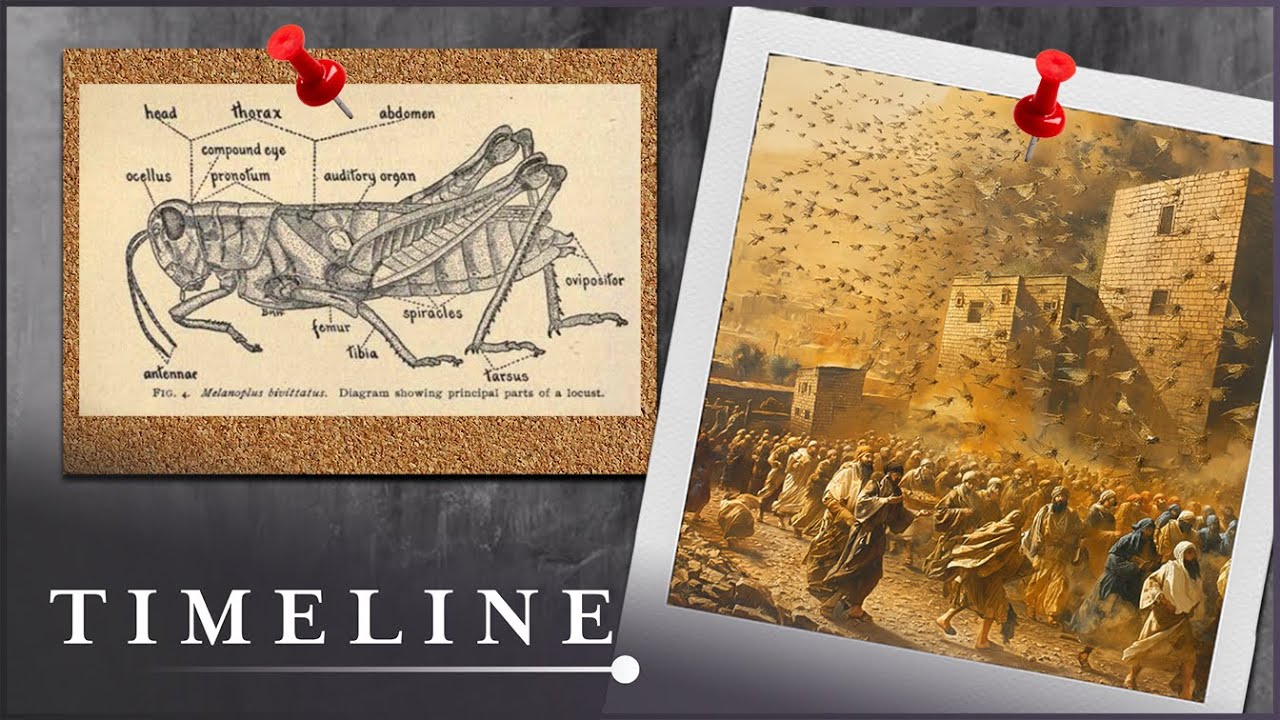
 The eighth plague, locusts, would have been driven into Egypt by weather disruptions from the eruption. The ninth plague, darkness, is explained by the ash cloud that reached Egypt, blocking the sun for days. Pumice from Santorini has been found in the Nile Delta, proving the ash arrived.
The tenth plague, the death of the firstborn, is attributed to a sudden release of carbon dioxide gas. Heavier than air, it would have suffocated those sleeping on low beds, typically the privileged firstborn males. Mass graves at Avaris from this period contain only male skeletons.
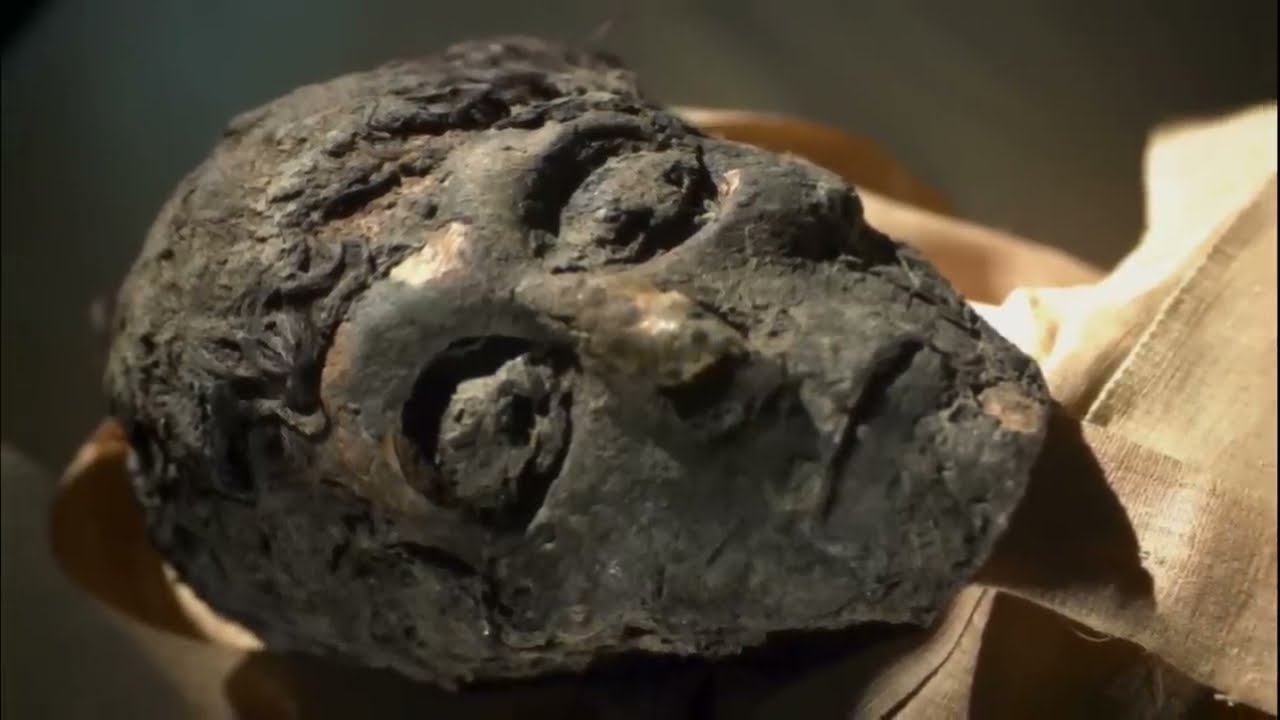
Jacobovici claims to have found the mummy of Ahmose’s son, who died young at age 12, possibly a victim of the final plague. The documentary shows the mummy in the Cairo Museum, previously unidentified as a son of the Exodus pharaoh.
The parting of the Red Sea, the greatest miracle, is explained by a seismic-induced landslide that caused the Nile Delta to subside, then rise, temporarily creating a land bridge. A subsequent tsunami would have engulfed the pursuing Egyptian army. Lake el-Balah, an ancient marsh, is identified as the actual crossing site.
An Egyptian hieroglyphic inscription on a granite monument at El Arish describes “water cut by knives” at a place called Pekeret. This matches the biblical crossing at Yam Suf, the Reed Sea. The monument explicitly records the defeat of the pharaoh’s army.
In Greece, at Mycenae, grave stelae dating to 1500 BCE appear to depict the parting of the sea. One shows a charioteer pursuing a figure with a staff, then waters overturning the horse and rider. Jacobovici says this is a three-frame visual account of the Exodus miracle.
The documentary also identifies the true Mount Sinai as Jebel Hashem el-Tarif in the northern Sinai, near the Israeli border. This peak matches all biblical coordinates: a 14-day journey from the springs of Moses, within grazing distance of Midianite territory, and an 11-day journey from Kadesh Barnea.
At the summit, Jacobovici found a large cleft, a natural podium, graves of holy men, and remains of an ancient spring. All these features correspond to the biblical description of Mount Sinai. The Egyptian military restricted access, but his team managed to film the evidence.
 Jacobovici concludes that the Exodus is not a myth but a historical event shaped by massive geological forces. He acknowledges that believers may see divine intervention, while skeptics can point to natural causes. Either way, he says, the evidence demands a re-evaluation of biblical history.
The documentary includes computer reconstructions of the Tabernacle and the Ark of the Covenant based on biblical descriptions. Jacobovici claims to have identified a Mycenaean gold relief that depicts the Ark, the altar, and the ramp of the Tabernacle as seen from the Holy of Holies.
This gold image, previously thought to be decorative, was found among the treasures of Mycenae. Jacobovici argues it was crafted by the tribe of Dan, the same group that built the Ark. If true, this would be the only known visual representation of the biblical Ark from the time of Moses.
Scholars remain deeply divided. Many Egyptologists reject the redating of the Exodus to 1500 BCE, insisting the traditional 1270 BCE date under Ramesses II is correct. They point out that the Hyksos expulsion was a military campaign, not a slave escape.
But Jacobovici responds that scholars have been looking in the wrong century. He says the Bible itself provides a timeline: 480 years before Solomon’s temple, which places the Exodus around 1440 BCE, close to his 1500 BCE date. The Santorini eruption provides a geological anchor.
The documentary also highlights the reluctance of Egyptian authorities to allow filming of biblical artifacts. Jacobovici says this is due to political sensitivities in the Middle East, where biblical claims could bolster modern Israel’s territorial assertions.
Professor Manfred Bietak, who excavated Avaris, remains cautious. He acknowledges the Hyksos expulsion and the Exodus may be related but stops short of equating them. He notes that the site’s findings are subject to oversight by the Egyptian Antiquities Authority.
Nevertheless, the convergence of evidence from multiple disciplines is striking. Geology, archaeology, textual analysis, and art history all point to a historical catastrophe in Egypt around 1500 BCE that matches the biblical narrative in remarkable detail.
 The documentary concludes with a powerful statement: whether one sees the hand of God or the forces of nature, the story of the Exodus is grounded in real events. The plagues, the sea crossing, and the mountain encounter are not mere legends but memories of a transformative moment in human history.
Jacobovici challenges the academic establishment to reconsider their dismissal of the Exodus. He says the evidence has been there all along, hidden in museum basements, buried under farmland, and carved into forgotten stones. It just needed someone to connect the dots.
For believers, this investigation offers scientific validation of their faith. For skeptics, it presents a rational explanation of how natural disasters could have inspired the biblical account. Either way, the Exodus Decoded is a landmark contribution to the debate.
The documentary airs on History Channel this week. It is likely to spark controversy and renewed interest in one of the most enduring stories of Western civilization. Scientists and theologians alike will be scrutinizing the claims for years to come.
In the meantime, the Cairo Museum remains silent on the Ahmose Stela. The Egyptian government has not responded to requests for access. But Jacobovitch says the stela’s inscription is clear: a great god manifested power, and Egypt was overwhelmed by darkness and storm.
The Mycenaean gold image now resides in a Greek museum, classified as ritual jewelry. Jacobovitch hopes that further study will confirm its connection to the Ark. He believes it is the most important biblical artifact ever discovered outside the Holy Land.
The implications of this research extend far beyond archaeology. If the Exodus is historical, it means the foundations of Judaism, Christianity, and Islam rest on a real event. It also suggests that the ancient Israelites were not a small tribe but a significant population involved in a major regional upheaval.
The documentary’s producers are careful to emphasize that science cannot prove or disprove divine action. They present the evidence as a convergence of natural and human events that created the conditions for a miracle. The choice of interpretation remains with the viewer.
For now, the world has a new lens through which to view an ancient story. The Exodus may never be proven beyond all doubt, but this investigation provides the most compelling case yet that something truly remarkable happened in Egypt 3500 years ago.