Johnny Johnson, the man convicted of the brutal 2002 murder of six-year-old Casey Williamson, was executed by lethal injection Tuesday evening at the Eastern Reception, Diagnostic, and Correctional Center in Bonne Terre, Missouri, ending a 21-year legal saga marked by fierce debate over mental illness and justice.
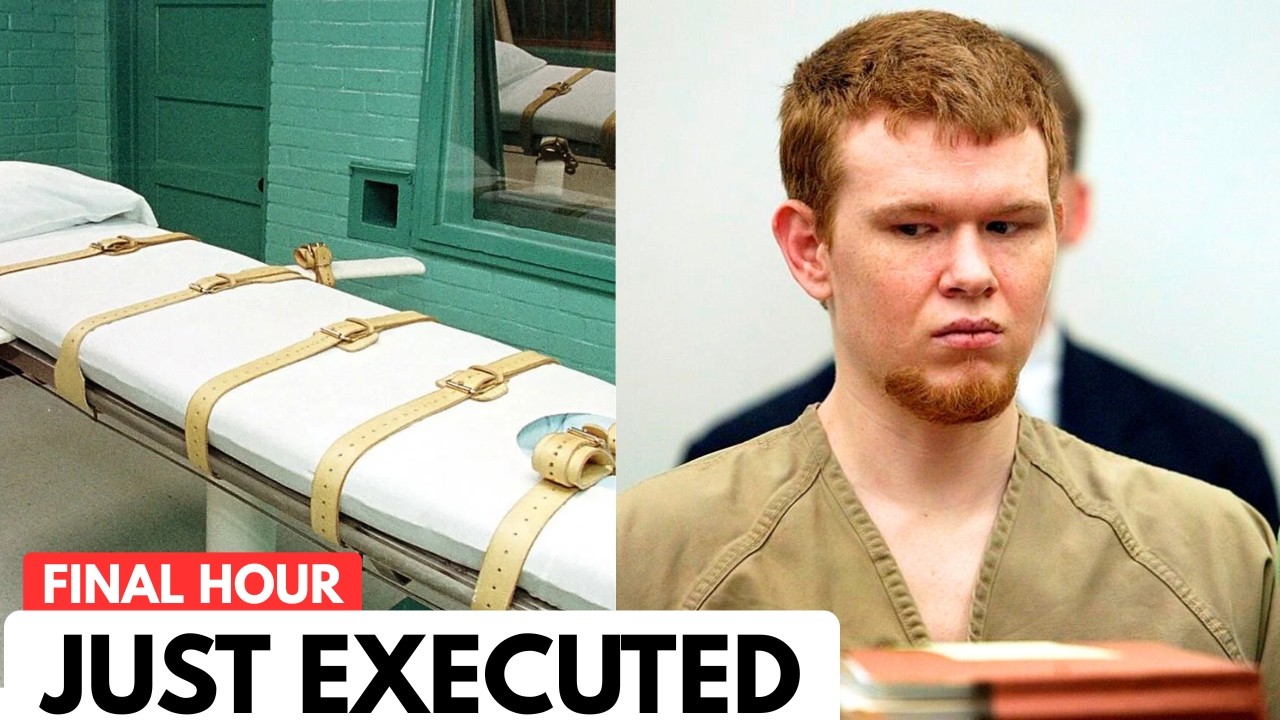
Johnson, 45, was pronounced dead at 6:33 p. m. Central Daylight Time after receiving a single dose of pentobarbital. He became the fourth person executed in Missouri in 2023 and the 16th in the United States that year. The execution proceeded just hours after the U.S. Supreme Court, in a 6-3 decision, declined to intervene, clearing the final legal obstacle. Missouri Governor Mike Parson had denied clemency on July 31, calling the murder one of the most horrific crimes to ever cross his desk.
Johnson’s last meal, released by the Missouri Department of Corrections, was a bacon cheeseburger, curly fries, and a strawberry shake. His final written statement, submitted the day before his death, read simply: “God bless. Sorry to the people and family I hurt.”
Witnesses included Casey Williamson’s great aunt, Della Steel, who had urged the governor to let the execution proceed, and former St. Louis County homicide investigator Paul Neske, who had interviewed Johnson on the day of the murder in 2002.
Steel spoke to the media afterward, saying, “It’s been a difficult day and a difficult 21 years.
We will continue to honor our sweet Casey’s memory by doing our best to make a difference in the lives of other children.” She did not celebrate but expressed quiet finality.
 The crime itself stunned the quiet suburb of Valley Park, Missouri, in July 2002.
Casey Williamson, six years old, was lured away from her home by Johnson, a man her family had known for years. Her mother had babysat Johnson as a child, and he had slept on their couch the night before.
According to authorities, Johnson carried Casey on his shoulders to an abandoned glass factory less than a mile from her home.
He attempted to sexually assault her, but the child fought back. Johnson then beat her to death with a brick and a large rock, later washing himself off in the Meramec River.
Police found Johnson walking, soaking wet, near the home the same day.
He confessed within hours. Casey’s body was discovered buried under rocks and debris at the factory site.
“It was more violent and brutal than any case I’ve ever seen,” said Neske, the investigator who interviewed Johnson and later witnessed his execution.
Johnson was convicted in January 2005 of first-degree murder, armed criminal action, kidnapping, and attempted forcible rape. He was sentenced to death in March 2005. His legal team never disputed that he killed Casey, but argued that his severe mental illness should spare him from execution.

Johnson suffered from schizoaffective disorder and schizophrenia. He had been released from a state psychiatric facility just six months before the murder and had stopped taking medication. His attorneys argued his mental state deteriorated further on death row, with delusions that the devil would use his execution to trigger the apocalypse.
The Eighth Amendment prohibits executing anyone who does not understand the reason for their punishment. Johnson’s legal team claimed he met that standard. The state argued his mental illness was manageable with medication.
After years of appeals, the Missouri Supreme Court ruled 6-1 against Johnson in June 2023. A temporary stay was granted by a three-judge panel of the U. S.
Court of Appeals for the 8th Circuit on July 25, but the full circuit overturned that stay four days later.
The case drew attention because even within Casey’s family, there was no unified voice on the death penalty. Casey’s mother, Angie Wideman, said she was “looking forward to putting this part of it to rest.”
Her father, Ernie Williamson, opposed the execution and had his name included in Johnson’s clemency petition.

Steel, the great aunt, wrote an emotional plea to Governor Parson, arguing that grief had destroyed the family for two decades. “He did something horrible.
He took a life away from a completely innocent child and there have to be consequences for that,” she said.
Casey Williamson would have been 27 years old in 2023. Her family organized community safety fairs and distributed child identification kits in her memory, turning tragedy into action.
The execution of Johnny Johnson closes a legal chapter but leaves open profound questions. Should a person with severe, documented mental illness who commits a horrific crime while unmedicated be executed, or does execution become something else when the mind is fundamentally broken?
Johnson’s final audible words, spoken to his spiritual advisor in the execution chamber, were not publicly released in detail, but his handwritten apology stands as his last message.
As the state of Missouri carried out its duty, the debate over justice and mental health continues. Della Steel left the witness room without celebration, carrying the memory of a little girl in a nightgown who fought back as hard as she could.
Rest in peace, Casey Williamson.