James Ernest Hitchcock was executed by lethal injection at Florida State Prison on April 30th, 2026, ending a half-century legal battle following his conviction for the brutal murder of his 13-year-old step-niece, Cynthia Driggers. At 70, Hitchcock’s final moments closed one of Florida’s longest death row cases.
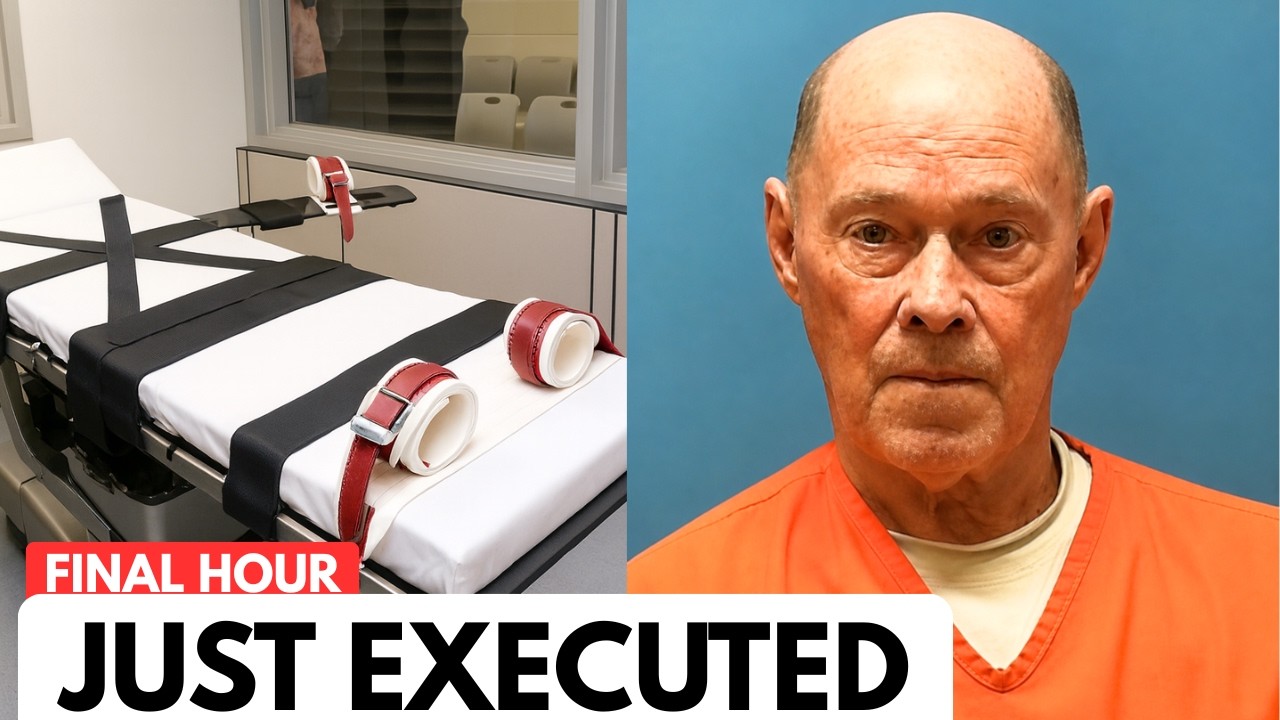 Born in Arkansas in 1956, Hitchcock’s troubled youth foreshadowed his grim future. His life unraveled in 1976 after murdering Cynthia Driggers, his step-niece, in Orlando, Florida. The girl’s death sparked a harrowing criminal saga defined by confessions, retractions, and relentless legal appeals spanning five decades.
On that fateful July night in 1976, Hitchcock, allegedly intoxicated and high, entered Cynthia’s room, assaulting her before violently ending her life. Found the next morning in bushes behind the home, Cynthia’s body became the silent witness to a family—and a state’s—decades-long quest for justice.
Hitchcock immediately confessed to the crime, detailing the horrific events to authorities. However, less than a year later, during his trial, he recanted, blaming his brother for the murder in a claim dismissed by the jury. This shift marked the beginning of a complex and controversial legal journey.
Convicted of first-degree murder in 1977, Hitchcock was initially sentenced to death by electric chair at merely 20 years old. His case quickly became emblematic of the flaws and intricacies of the American capital punishment system, undergoing unprecedented appeals and sentence reviews.
Remarkably, Hitchcock was sentenced to death four separate times, an extraordinary reflection of repeated legal challenges and shifting judicial interpretations. Multiple appeals reached the United States Supreme Court, making his case a cornerstone in the examination of death penalty jurisprudence in Florida.

A landmark Supreme Court decision in 1987 arose from Hitchcock’s appeal, ruling that juries must consider all mitigating evidence—even beyond statutory lists—in death penalty cases. This expanded protections for hundreds of death row inmates and reshaped sentencing procedures statewide.
Despite reprieves, resentencings, and the introduction of new juries, every trial reaffirmed Hitchcock’s guilt. From 1988 through 1996, the death sentences were upheld amid ongoing controversies involving jury instructions and prejudicial 𝒶𝓁𝓁𝑒𝑔𝒶𝓉𝒾𝓸𝓃𝓈 against Hitchcock, prolonging a saga of judicial scrutiny and procedural complexity.
By the early 2000s, Hitchcock’s defense pursued DNA testing and further appeals to overturn his conviction or sentence, all repeatedly denied. With no relief forthcoming, by 2019 he was Florida’s longest-serving death row inmate, having spent virtually his entire adult life awaiting execution.
In the end, legal avenues exhausted, the Florida Supreme Court rejected Hitchcock’s final appeal in April 2026. The US Supreme Court swiftly denied a stay. On April 30th, Hitchcock faced his execution at Florida State Prison, surrounded by witnesses and prison officials, concluding a chilling epoch.

His last meal was unremarkable: a salad, chicken, ice cream, pie, and soda. A final visitor, possibly a cousin, met him that day. Silent and somber, Hitchcock’s final words baffled onlookers—he only bid farewell to “Joshua, my friend,” offering neither confession nor apology before death.
The execution unfolded with chilling precision. The three-𝒹𝓇𝓊𝑔 cocktail swiftly induced unconsciousness, paralysis, and cardiac arrest within minutes. Officials confirmed his death at 6:12 p.m., closing the curtain on a case that haunted Florida’s legal system and spotlighted the human toll embedded within capital punishment.
For the Driggers family, this moment ended a torment lasting 50 years. Cynthia’s mother had endured decades of appeals and retrials, relentlessly seeking justice. Her daughter’s life was stolen at 13; the family’s pain prolonged by every court hearing and legal delay that prolonged Hitchcock’s fate.
Saint Lucie County Judge Robert Meadows, a close relative of Cynthia’s, acknowledged the difficulty in explaining the prolonged ordeal. The Hitchcock case embodies the complexity and often excruciating timeline of death penalty procedures—where justice, bureaucracy, and human suffering collide in protracted legal battles.

Governor Ron DeSantis presided over his sixth execution in 2026, adding to the record 19 carried out during 2025, reflecting Florida’s aggressive stance on capital punishment. Among U.S. states, Florida led the nation last year with the highest number of executions, intensifying debates about the death penalty’s role and application.
The Hitchcock saga will be studied for generations as a telling example of the death penalty’s multifaceted nature—the legal precedents it establishes, the delays inherent in appeals, and the emotional wreckage borne by victims’ families. It underscores the deep fissures in America’s justice system.
At 20, Hitchcock entered death row a young man; 50 years later, he died an elderly inmate. His persistent claims that his brother was the true killer were dismissed repeatedly by four separate juries. The courts ruled decisively—James Ernest Hitchcock was guilty and would pay the ultimate price.
Cynthia Driggers never had a chance to grow up. Her death and Hitchcock’s execution represent a painful nexus of loss, justice, and the unyielding machinery of capital punishment. The case forces a stark reflection on whether the justice system functioned or faltered over half a century of legal warfare.
This final chapter closes a dark, complex story embedded deeply in Florida’s criminal history. As debates ignite over the death penalty’s validity, the memory of Cynthia Driggers and the relentless journey of James Ernest Hitchcock remain a haunting testament to lives shattered and justice pursued.