The hot coastal wind clawed at the hundred-dollar bill like it wanted to steal the wager before the first trigger pull. Sergeant Mason Ryder leaned back against the shooting bench, all shoulders and swagger, the kind of man who measured his worth in how loudly other men laughed at his jokes. But Elena Vale wasn’t watching his face. She never did. She watched the hands.
His were steady, cocky, drumming a lazy rhythm on the scarred wood. Hers moved with the quiet precision of someone who had once loaded magazines while the world burned around her. The color drained from Ryder’s cheeks the moment he truly saw those hands—callused, scarred at the wrists, thumbs pressing rounds with muscle memory older than most of the kids standing behind him.
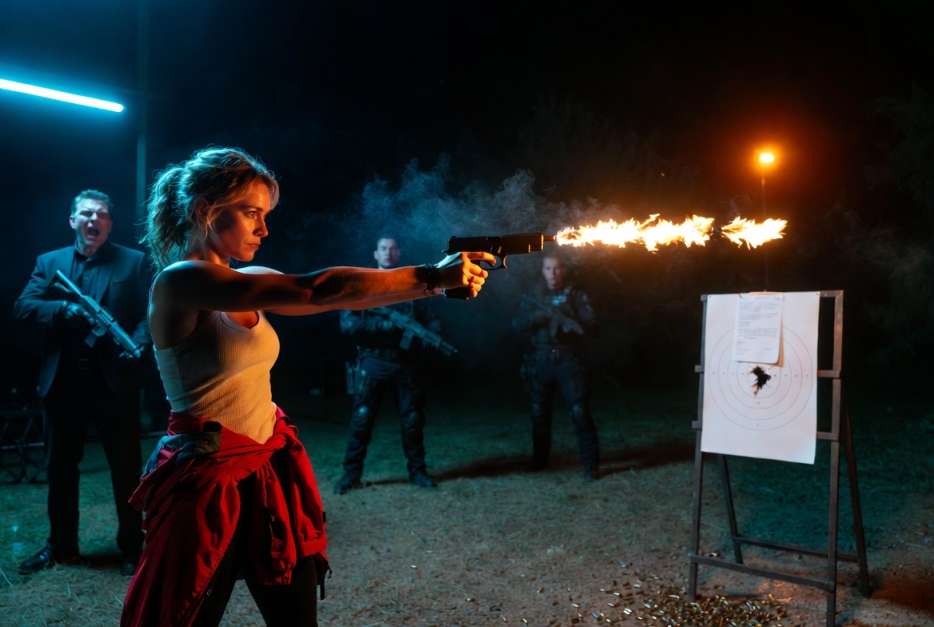
“Five shots,” he announced, sliding the cash forward. “Twenty-five yards. Four seconds. Try not to embarrass yourself, sweetheart.”
Laughter rippled from the cluster of Marines. The concrete lanes shimmered under the brutal California sun, gunpowder thick in the air like incense at a funeral no one wanted to attend. Brass casings glittered like spent promises. Elena said nothing. She simply seated the last round, the soft click louder than any taunt.
Ryder looked like every recruitment poster that had ever lied to young men about glory. Broad, clean-cut, forearms carved by gym mirrors and easy authority. But the youngest Marine—Phelps—watched her thumbs and his face tightened into something haunted.
She let the silence stretch until it hurt.
Ryder tapped the bench again. “Been watching you. You look pretty comfortable for a weekend warrior.”
The insult landed softly, the way a blade slips between ribs before you feel the blood. Elena met his eyes for the first time.
“Good for you,” she said.
The words were quiet. They cut anyway.
He introduced himself with the full weight of his rank, expecting deference. She gave him none. When the targets were set and the small crowd thickened, the range officer drifted closer, sensing the shift in pressure like barometric change before a storm.
Ryder went first. Posture perfect. Ego louder than the shots. His five rounds punched a tight but human group. He stepped back grinning, already tasting victory and free drinks.
Then the timer beeped for her.
For Elena Vale, that beep wasn’t just permission. It was a door to every alley in Fallujah that still smelled of cordite and fear in her dreams. Her body moved on its own—shoulders loose, elbows forgiving recoil like old lovers, the Glock rising and falling in a rhythm carved by nights when hesitation meant death.
Pop. Pop. Pop. Pop. Pop.
The sound wasn’t frantic. It was inevitable.
Smoke curled past her face like a ghost reluctant to leave. She held her stance one breath longer than necessary, finger straight, eyes locked downrange, remembering the weight of a man she’d carried across thirty-seven meters of hell.
The carrier hummed forward. One ragged wound where the heart should be. Five holes bleeding into one.
No one laughed.
Ryder’s grin hung on his face like a coat someone else had forgotten to take off. “Nice shooting,” he managed. “Somebody’s had lessons.”
Elena slid the hundred back toward him. “You dropped something.”
That was when Phelps stepped forward, voice cracking the air. “Her name is Elena Vale.”
The name dropped like a live round. Recognition rippled through the Marines. Ryder still didn’t understand—until the photograph came out. Seven young faces in desert dust. One of them Daniel Phelps, arm slung around Elena, both of them grinning like the war hadn’t already marked them for grief.
Phelps stared at his brother’s face and the world tilted.
Elena’s voice stayed low, but every syllable carried the weight of eight buried years. She spoke of stolen field notes, of wind corrections and breathing cycles paid for in blood. Of Captain Cole Harris, who chose glory over safety and then chose lies over truth. Of reports vanished. Of a mother who wrote Christmas letters to the woman who carried her son home.
Ryder’s world cracked. The instructor who had laughed at “soft” civilians now faced the source of the very doctrine he taught.
General Arthur Whitaker arrived like a judgment delayed too long. White hair, broad shoulders, eyes that had seen too many graves. He confirmed what Elena had carried alone: Harris’s ambition, the cover-up, Whitaker’s own order to bury the truth to protect the Corps’ image.
The confession unfolded under that merciless sun. Ryder shrank with every revelation. Phelps received his brother’s dog tag and the scratched silver ring Daniel had pressed into Elena’s palm the night before the ambush—sand in his hair, blood on his sleeve, hope in his voice when he asked her to come home and make it official.
She had said yes. Then asked him to ask again properly, wanting one normal memory.
That memory had been stolen too.
Elena didn’t collapse. She placed the ring in Phelps’s hand. “I had him,” she whispered. “That was enough.”
The embrace that followed between her and the young Marine wasn’t cinematic catharsis. It was raw, awkward, human—two people holding the last living thread of a man they both loved in different ways. Tears came, but they were quiet, the kind that arrive after years of being dammed.
Ryder stood stripped bare. No audience cheered his humiliation. Only silence and the slow realization that arrogance had made him a footnote in someone else’s redemption.
Elena’s final words to him weren’t forgiveness. They were a challenge: become the instructor who tells the truth, who teaches that skill without humility is just another weapon turned inward.
By nightfall the first files dropped. By morning the Corps burned with overdue light. Names came down from walls. Drills were restored to their rightful author. Whitaker resigned. Investigations opened like old wounds finally allowed to breathe.
Three weeks later, on a quiet porch in Ohio, Daniel’s mother opened her door. She looked at Elena—tired, scarred, no longer hiding—and reached with shaking hands.
“You brought him home again.”
Elena broke then, fully, the way a dam breaks when the pressure has lasted too long. Inside that house, surrounded by photographs of a boy who never came back, she understood something no official report could name: the dead don’t vanish when truth is buried. They wait in the hands of those brave enough to stop running.
Outside, the wind moved through the trees like distant rifle fire fading into memory. Elena closed her eyes and, for the first time in eight years, the sound didn’t make her flinch.
She was home. Not in a place, but in the telling. In the carrying. In the small silver ring now resting where it belonged—with family.
And somewhere far away, on a sun-baked range, a sergeant stood before new recruits and began the hardest five shots of his life: telling the truth.
The story didn’t end with vengeance. It ended with weight lifted, piece by painful piece, until the living could finally breathe the same air as the ghosts they carried.
Chapter Two: Letters from the Desert
The porch light in Ohio hummed like a dying insect. Elena Vale stood on the wooden steps with her hands in the pockets of the same red jacket, now washed but still carrying the faint scent of gunpowder and hot brass. Daniel’s mother—Margaret Phelps—didn’t speak at first. She simply stepped forward and pulled Elena into arms that had rocked a baby boy thirty years earlier and buried an empty uniform eight years ago.
The hug wasn’t gentle. It was desperate, the kind of embrace that tries to fold time backward. Elena’s spine stayed rigid for three full heartbeats before something inside her cracked open like thin ice on a winter lake. A sound escaped her throat—half sob, half laugh at how ridiculous it felt to still be standing after everything.
“You look just like the pictures he sent,” Margaret whispered against her hair. “Stronger. Older. Still his.”
Inside the modest house, the air smelled of lemon polish and old books. Photographs crowded every surface: Daniel at Little League, Daniel in dress blues, Daniel laughing with Elena in that desert alley where the wall still bore bullet scars in her memory. Elena sat on the edge of the couch like she might need to run at any second. Phelps—Tommy—sat across from her, the dog tag and silver ring on a chain around his neck now, catching the lamplight every time he breathed.
“I read the articles,” Margaret said, setting down three mugs of coffee that none of them would finish. “They’re calling you a hero again. Like that fixes anything.”
Elena stared into the dark liquid. “Heroes don’t need fixing. The rest of us do.”
Tommy’s hands trembled around his mug. “Sergeant Ryder showed up at the battalion yesterday. Made the new recruits watch the body-cam footage from the range. He didn’t flinch when they asked questions. Just said, ‘I taught you how to shoot. She taught me how to see.’ Then he played the five shots on loop. One hole. Said every time he hears that sound now, he remembers he almost laughed at the wrong person.”
Elena almost smiled. Almost. The memory of Ryder’s face—pale, stripped, human—still sat heavy in her chest. Not satisfaction. Just the dull ache of necessary surgery.
But the world outside the Ohio house wasn’t finished with any of them.
Her phone had not stopped vibrating since the story broke. Reporters. Old commanders. A podcast host promising “the real truth behind Marine corruption.” Elena had left it on silent, but the notifications piled up like sandbags against a flood she no longer wanted to hold back.
That night, after Margaret had gone to bed with Elena’s promise to stay a few days, Tommy found her on the back porch staring at the dark treeline.
“She kept every letter you wrote her,” he said quietly, sitting on the step below. He held a worn shoebox. “Six years of them. She wouldn’t let Dad read the ones where you described… the carrying part.”
Elena took the box with hands that suddenly felt too large. Inside, her own handwriting stared back—careful, controlled, the same script she once used for field notes that could mean life or death. Letters about Daniel’s laugh in the Humvee. How he hummed off-key when he was scared. How he talked about wanting a porch like this one, with Margaret’s coffee and kids who would never know what it felt like to drag a brother’s weight through enemy fire.
One letter was different. Dated three weeks after the ambush. The paper was stained with what might have been tears or desert rain.
Margaret,
I keep seeing his face when I close my eyes. Not the end. The moment before. When he handed me the ring and said, “Don’t let them make this ugly, Vale. Promise me we get the ugly parts over there and the rest back home.” I promised. I’m keeping it by staying quiet. For now. But if Tommy ever needs to know his brother was the bravest man I ever met, tell him I said so.
Elena’s vision blurred. She hadn’t remembered writing those exact words. Memory was a liar like that—editing out the parts that would have broken her at the time.
“I was supposed to marry him,” she told Tommy, voice rough. “Not in a church. Just… somewhere normal. With bad music and your mom crying happy tears. He said he’d dance like an idiot just to make me laugh.”
Tommy wiped his face. “He would have.”
The next morning brought the first real storm.
A black SUV pulled into the driveway while Elena helped Margaret with breakfast. General Whitaker stepped out alone, no aides, no uniform. Just a civilian jacket and the weight of every star he’d surrendered. He looked smaller in daylight, the kind of small that comes from carrying secrets too long.
Elena met him on the porch before he could knock.
“You shouldn’t be here, Arthur.”
“I know.” His voice was gravel. “But the investigations are moving faster than I expected. Some people want your head for embarrassing the Corps. Others want to pin medals on you again. I came to warn you—and to ask something I have no right to ask.”
Margaret appeared behind Elena, arms crossed. Tommy stood at her shoulder, the dog tag visible against his shirt.
Whitaker looked at all three of them and aged another ten years. “Harris wasn’t working alone. There was money involved. Contracts. Someone higher up wanted the cover-up because the truth would have killed a multi-million dollar training program built on stolen work. Your work, Elena.”
The words landed like distant artillery. Elena felt the old instincts rise—scan for exits, check hands, calculate wind. But this wasn’t the desert. This was Ohio, with coffee cooling on the table and a mother who had already buried her son once.
“Who?” she asked.
Whitaker handed her a thumb drive. “Names. Dates. Transfers. Enough to burn what’s left of the old guard. But releasing it means more headlines. More questions about why you stayed silent. About Daniel. About the ring. They’ll dig into everything. They’ll make your grief public property.”
Tommy stepped forward. “Let them. My brother deserves the whole story. Not the cleaned-up version.”
Margaret’s hand found Elena’s shoulder. “We all do.”
Elena looked down at the drive. It felt heavier than any rifle she’d ever carried. For eight years she had protected the living by burying the dead. Now the dead were asking to be remembered fully—ugly, complicated, human.
That afternoon she drove alone to the small cemetery where Daniel’s name was etched on a stone that had never held his body. The grass was too green, the sky too blue. She sat beside the marker and spoke the words she had practiced in a thousand nightmares.
“I kept my promise. It’s ugly. But it’s out there now. And Tommy… he looks like you when he smiles. Same stubborn jaw.”
The wind moved through the leaves like a sigh. Not forgiveness. Just acknowledgment.
Her phone rang. Unknown number. She almost didn’t answer.
“Ms. Vale?” A woman’s voice, professional but edged with something sharper. “This is Captain Laura Reyes. I served under Harris too. I saw the reports. I saw what they did to you. I have more files. And I think someone’s trying to make sure they disappear before the next hearing.”
Elena stood slowly, the cemetery suddenly too quiet.
“Where are you?”
“San Diego. Same range where you put five through one. Tonight at 2200. Come alone. If I’m right, Ryder won’t be the only one who needs to learn how to see.”
The line went dead.
Elena stared at Daniel’s headstone. The ring on her own finger now—small, scratched, impossibly heavy—caught the sunlight for a moment.
She had thought the range was the end.
It was only the beginning.
Chapter Three: Night Fire
The range at 2200 hours was a different animal. No laughing Marines, no hot coastal wind carrying sunscreen and bravado. Just the low sodium glow of security lights bleeding across empty concrete lanes, the distant hum of the Pacific, and the metallic taste of spent powder that never quite left the air. Elena parked her rental car in the shadow of the main building, Glock concealed but ready at the small of her back. Old habits.
Captain Laura Reyes waited at lane seven—the same one where five shots had torn through one heart eight days earlier. She was smaller than Elena expected. Compact, wiry, dark hair pulled into a tight bun that spoke of long nights and longer regrets. Her eyes scanned the darkness the way snipers do: slow, deliberate, missing nothing.
“You came,” Reyes said. No greeting. Just fact.
“You said files.” Elena stayed three paces back, hands visible. Trust was a luxury she had spent years learning not to afford.
Reyes set a thick envelope on the shooting bench. Inside: original field reports with Elena’s handwritten wind corrections. Harris’s edited versions. Bank transfers routed through shell companies. Signatures of men who still wore stars. And photographs—grainy, time-stamped—of Harris meeting civilian contractors the week before Fallujah.
“They built a training empire on your work,” Reyes said quietly. “Millions in contracts. Harris got the glory. They got the money. You got erased. When you tried to talk, they painted you unstable. Emotional. The woman who cracked under fire.”
Elena’s fingers traced her own signature on the bottom of a report dated two days before the ambush. The ink had faded, but the pressure of the pen remained—angry, urgent, certain.
“Why now?” she asked.
Reyes looked downrange where paper targets hung like ghosts. “Because I was on the extraction team. I saw what was left of Daniel. I saw you carrying him. And I stayed silent because they promised me a career. Last month they offered me major if I kept my mouth shut about the new discrepancies they’re trying to bury.”
A car door slammed in the parking lot. Both women tensed. Footsteps approached—measured, not aggressive. Mason Ryder stepped into the light, hands empty, uniform replaced by civilian clothes that still somehow looked pressed. His face was leaner, eyes shadowed.
“I’m not here to fight,” he said. His voice carried the raw edge of a man who hadn’t slept. “Reyes called me too. Said the program I’ve been teaching for three years is built on stolen blood. Including hers.” He nodded at Elena.
Elena studied him. No swagger left. Just a man standing in the same place where his world had cracked open. “And you believe her?”
“I watched the five shots again this morning. Then I read your original notes.” Ryder swallowed. “I owe you more than an apology. I owe every recruit I ever laughed at in your name.”
The three of them stood in silence under the humming lights. Then Reyes pulled out her phone and played a short audio file. Harris’s voice, recorded weeks before his death, slurred with pain and whatever medication had finally failed him.
“…Vale was right about the corridor. I knew it. But the contractors needed a clean success for the demo. Whitaker signed off. Said morale before truth. I should’ve listened. Daniel Phelps… that kid trusted me. They all did.”
The recording ended. The range felt colder.
Elena’s hands closed into fists. “Where are the contractors now?”
“Still operating,” Reyes said. “New contracts. Same program. They’re watching the hearings. If we push too hard, they’ll come at you—leaks, character smears, maybe worse. One of their security guys was asking questions about your travel yesterday.”
Tommy’s face flashed in Elena’s mind. Margaret’s trembling hands. The ring now on a chain against her own chest, warm from body heat. She had told herself she was done carrying people. But some weights you choose.
Her phone buzzed. Unknown number again. She answered on speaker.
“Elena Vale?” A calm male voice, polished. “This is Richard Langford, counsel for Sentinel Defense Solutions. We understand you’ve acquired certain documents. We’d like to discuss compensation. Quietly. No need for more disruption to the Corps or to your… personal life in Ohio.”
The threat was velvet-wrapped. Elena looked at the two Marines beside her—Reyes with her quiet fury, Ryder with his hard-won shame.
“Compensation,” she repeated. The word tasted like ash. “For eight years of carrying a dead man’s promise? For every Christmas letter from a mother who thanked me for surviving when her son didn’t?”
Langford’s pause was calculated. “We can make this go away. Name your price.”
Elena ended the call without another word. She placed her hand on the Glock at her back, not drawing, just remembering its weight.
Reyes met her eyes. “We have twenty-four hours before they move on the remaining files. I have a contact at the Inspector General’s office. But it means going public with everything. The ring. The letters. Daniel’s last words.”
Ryder shifted. “I’ll stand with you. At the hearing. Let them see what their training created. Let them see what it broke.”
Elena walked to the firing line. She didn’t load a magazine. She simply stood where she had stood before, feeling the ghost of recoil in her shoulders, the memory of Daniel’s weight across them. The night wind carried the scent of sage and salt.
“I didn’t want any of this,” she said softly. “I wanted a porch. Bad music. His laugh in my kitchen every morning. Instead I got sealed files and polite condolences.”
She turned back to them.
“But I’m not carrying it alone anymore.”
As they left the range together, headlights swept across the lot. A dark sedan idled at the exit, windows blacked out. No plates visible. It didn’t follow. Not yet.
Back at her motel, Elena opened her laptop. The first draft of her full statement waited on the screen. She added one line at the bottom:
Daniel Phelps didn’t die for a training contract. He died because good men chose silence. I’m breaking mine.
She hit send to Reyes and Ryder. Then she called Ohio.
Tommy answered on the first ring, voice thick with sleep and worry. “Everything okay?”
“No,” Elena said honestly. “But it will be. Tell your mom I’m bringing more letters home. The real ones.”
She hung up and lay on the narrow bed, staring at the ceiling. The silver ring pressed against her sternum with every heartbeat. For the first time in years, sleep came without dreams of sand and gunfire.
At 0400 her phone lit up with a new message from an unknown number.
We know about the ring. We know about Tommy. Stop digging or the next five shots won’t be on paper.
Elena sat up slowly. The fear came, sharp and honest. But beneath it burned something hotter.
She typed back one word:
Come.
Chapter Four: The Weight of Stars
The hearing room in San Diego smelled of polished oak, stale coffee, and fear sweat hidden under expensive cologne. Sunlight sliced through high windows, casting long shadows across the table where Elena Vale sat alone at first, spine straight, the red jacket tied around her waist like armor. Behind her, rows of Marines, reporters, and a handful of stone-faced civilians from Sentinel Defense Solutions filled the seats. Cameras clicked like distant rifle fire.
Richard Langford sat across from her—silver-haired, tailored suit, eyes like a man who had never missed a mortgage payment or a loophole. He smiled the way sharks do right before the water turns red.
“Ms. Vale,” he began smoothly, “we all admire your service. But dredging up old tragedies for personal attention—”
Elena didn’t let him finish. She slid a single photograph across the table. The one from the desert wall. Seven faces. Daniel’s grin frozen in time, arm slung around her shoulders.
“This isn’t personal,” she said, voice low but carrying to the back rows. “This is your contractors using my field notes to sell multi-million-dollar programs while the men who wrote them in blood got buried under edited reports.”
The room shifted. Ryder sat two rows back, uniform crisp, face pale but steady. He had already testified—five minutes of brutal honesty that left senior officers staring at their hands. Reyes stood near the door, arms crossed, a silent guard.
Margaret Phelps entered late, supported by Tommy. The older woman’s eyes found Elena immediately. A small nod passed between them—the kind of understanding that needs no words. Tommy wore the dog tag openly. The silver ring glinted on a chain beside it.
Langford’s smile faltered for half a second. “Tragic, yes. But unsubstantiated claims of financial impropriety—”
Reyes stepped forward and placed a thick binder on the table. Bank records. Timestamps. Harris’s dying confession. “These are substantiated. Your company funneled payments to Harris for ‘consulting’ that was actually stolen doctrine. Doctrine that got six Marines killed.”
The temperature in the room dropped. Elena felt every eye on her—the woman in the tank top who had once been dismissed as emotional, now holding the room by the throat with nothing but truth and scars.
She stood slowly. “You want to talk about attention? I spent eight years quiet so mothers like Margaret could sleep without knowing their sons died for a promotion and a contract. I carried Daniel Phelps thirty-seven meters because he asked me to come home to him. Not to this.” She gestured at the sterile room, the suits, the lies still trying to crawl back into the light. “You threatened my family last night. My family.”
Langford leaned back, but his knuckles were white. “Threats? That’s a serious accusation.”
Elena’s phone lay on the table. She played the recording of the 4 a.m. text-to-voice message. The calm threat. The mention of Tommy. The ring.
The silence that followed was absolute.
Tommy stood. His voice cracked but held. “My brother died trusting the Corps. If you come after Elena, you come after what’s left of us. And we’re done being quiet.”
Margaret reached out and took Elena’s hand right there in front of the cameras. No performance. Just a mother and the woman who had loved her son. The gesture hit harder than any testimony.
General Whitaker—now plain Mr. Whitaker—testified next. His resignation had already been accepted, but he offered something more valuable: the names of three still-active officers who had signed off on the cover-up. Stars would fall before sunset.
Outside the building, as the hearing recessed, the real storm broke.
Elena stepped into the bright afternoon light with Margaret on one arm and Tommy on the other. Reporters surged forward, but a wall of Marines—led by Ryder—formed a quiet barrier. One young private, no older than Daniel had been, met Elena’s eyes and nodded once. Respect, earned the hard way.
Then the black sedan appeared at the curb.
Two men stepped out. Not military. Private security—broad shoulders, earpieces, eyes that had done wet work. One of them held a phone, recording openly now that the threats had gone public.
Langford emerged behind Elena, voice oily. “This doesn’t end in a hearing room, Ms. Vale. Contracts have contingencies.”
Ryder moved first. Not with fists— with presence. He stepped between Elena and the men. “You’re on federal property. Walk away.”
The larger man smirked. “Or what, Sergeant? You gonna teach us marksmanship?”
Elena felt the old instincts surge. The range. The desert. The weight on her shoulders. She slipped the red jacket off and handed it to Margaret. “Hold this for me.”
She walked forward. Not aggressive. Controlled. The way she had moved on the firing line.
“You want contingencies?” she said softly. “Here’s one. Every file, every recording, every letter is with three separate attorneys and a journalist who doesn’t flinch. Touch any of us and it all drops at once. No spin. No quiet settlement. The whole rotten thing.”
The security men hesitated. Langford’s polished mask slipped, revealing the fear underneath.
Reyes appeared at Elena’s side. “We already sent the full packet to the DoJ. You’re done.”
The sedan lingered another moment, then pulled away. No screeching tires. Just the quiet retreat of men who realized the math had changed.
That night, back at Margaret’s temporary hotel suite overlooking the harbor, Elena sat on the balcony with a cup of coffee gone cold. Tommy joined her, the ring turning slowly between his fingers.
“She’s sleeping,” he said. “First real sleep in years, I think.”
Elena nodded. The harbor lights danced on the water like distant muzzle flashes, but softer now.
“I keep waiting for it to feel like victory,” she admitted. “But it just feels… heavy. Like I finally set him down, but I don’t know how to walk away.”
Tommy placed the ring in her palm. “He wouldn’t want you to walk away alone. Keep it. Mom said so. She said Daniel would’ve hated seeing it on a shelf.”
Elena closed her fingers around the small circle of silver. For the first time, it didn’t feel like a wound. It felt like a promise kept.
Her phone buzzed. A message from Ryder.
Hearing adjourned. Two officers resigned. More coming. The recruits asked for your original drills by name. Thank you.
She almost smiled.
Then another message, from an unknown number.
This isn’t over. Some contracts go deeper than the Corps. Watch your six, sniper.
Elena stared at the screen. The harbor lights suddenly looked sharper. Colder.
She stood, slipped the ring onto the chain with the dog tag, and let it rest against her heart.
“Watch yours,” she whispered to the night.
The Ohio porch smelled of fresh-cut grass and Margaret’s lemon cookies baking inside. Elena sat on the swing with one foot tucked beneath her, the silver ring turning slowly on its chain between her fingers. Three weeks had passed since the hearing—long enough for headlines to fade into background noise, short enough that every unfamiliar car on the quiet street still made her shoulders tighten.
Margaret pushed open the screen door with her hip, carrying two glasses of iced tea. The older woman moved slower these days, but her eyes were clearer, as if speaking Daniel’s full truth had lightened bones she hadn’t known were heavy.
“You’re still carrying him,” Margaret said, settling beside her. Not an accusation. Just fact.
Elena looked out at the fireflies blinking in the yard. “Some things you don’t put down. You just learn to walk with them lighter.”
Inside, Tommy laughed at something on the television—real laughter, the kind Daniel used to make when he was trying too hard to impress her. The sound twisted something deep in Elena’s chest. Hope and grief braided so tight they felt like the same emotion.
Her phone buzzed on the arm of the swing. Ryder.
Program’s being rewritten under your name. Recruits requested you as guest instructor. Said no one else gets to teach wind calls anymore. You okay out there?
She typed back one word: Breathing.
But breathing wasn’t the same as safe.
The black SUV appeared at the end of the street just after sunset. No headlights. It rolled forward slowly, stopping two houses down. Elena felt it before she saw it—the prickle along her spine that had saved her life more times than she could count.
“Margaret,” she said quietly, voice steady. “Take Tommy to the basement. Now.”
Margaret didn’t argue. She had buried one child. She wasn’t losing another piece of him. She squeezed Elena’s hand once, hard, and disappeared inside.
Elena stood, slipped the red jacket on, and walked down the porch steps into the yard. The Glock was in her hand, low against her thigh. Not raised. Not yet.
Two men stepped out of the SUV. Different from the ones at the hearing. These moved like men who had done this before—quiet, professional, no ego. The passenger carried a small case. The driver stayed by the vehicle, scanning the street.
“Ms. Vale,” the first man said. Calm. Almost polite. “Mr. Langford sends his regards. He’d prefer this conversation remain private. Hand over any remaining copies of the files, and we disappear. No one gets hurt. Not you. Not the Phelps family.”
Elena’s thumb brushed the safety. “You threatened the wrong mother.”
The man sighed, as if disappointed. “We’re not here for violence. But contingencies exist. Your friend Captain Reyes had an unfortunate accident on the drive back to Pendleton this afternoon. Slippery roads. Brake lines.”
The world narrowed to a single point of cold rage. Elena pictured Reyes—compact, fierce, finally choosing truth. The fireflies blurred.
“You’re lying.”
The man opened the case. Inside: Reyes’s military ID, smeared with what looked like fresh blood, and a single spent casing. “We don’t lie. We solve problems.”
Tommy’s voice cut through the night from the porch. “Elena!”
He had ignored the basement. Of course he had. Daniel’s little brother, stubborn as the man who once asked a woman to marry him in the sand.
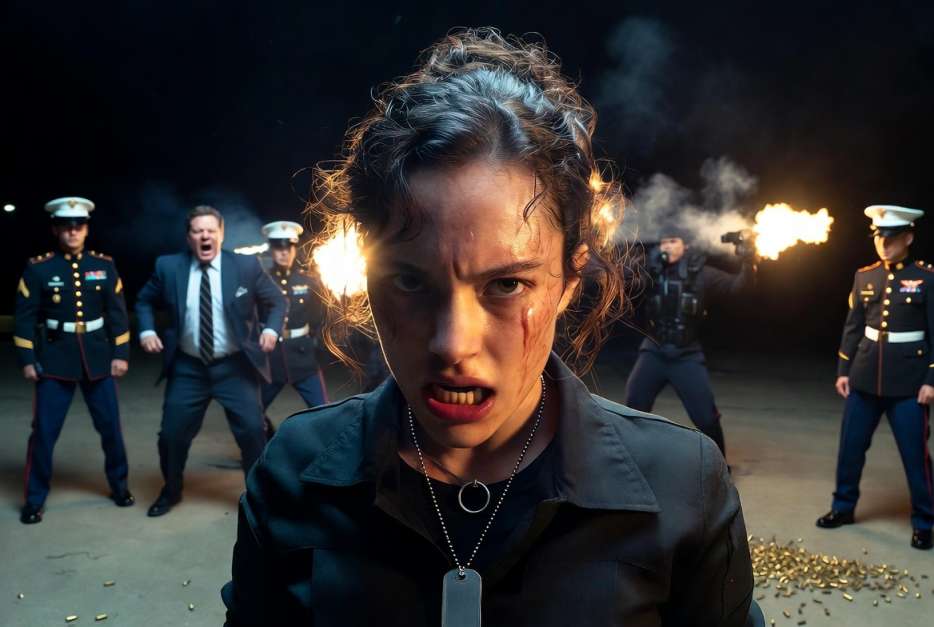
The driver raised a hand. A warning. The first man reached inside his jacket.
Elena moved.
Not with panic. With the same terrifying familiarity she had shown on the range. The Glock rose, two suppressed shots cracking the quiet suburban night. The first man dropped, clutching his leg. The driver lunged for his weapon.
Tommy shouted something Elena couldn’t hear over the blood rushing in her ears. She was already closing distance, shoulder driving into the driver, the way she had once driven Ryder against the concrete bench. The man went down hard. The case spilled open on the grass.
More blood. Reyes’s ID. And a new photograph—Elena and Tommy on the balcony in San Diego, taken through a scope.
They had been watching for weeks.
Sirens wailed in the distance. Someone had called the police. The driver tried to crawl back to the SUV. Elena planted a boot on his back.
“You tell Langford,” she said, voice low and terrible, “that some problems don’t get solved. They get inherited.”
Red and blue lights painted the house. Margaret stood on the porch with Tommy, both of them alive. Whole. For now.
Hours later, after statements and evidence bags and federal agents who finally looked interested, Elena sat alone in the hospital waiting room two towns over. Reyes had survived—bruised, concussed, but alive. Brake lines cut. A warning shot across the bow.
Ryder arrived just after midnight, still in uniform, eyes hollow. He didn’t offer empty comfort. He simply sat beside her and handed her a fresh cup of terrible coffee.
“The Corps is cleaning house faster now,” he said. “But Sentinel’s lawyering up. They’re calling you dangerous. Unstable. The same words they used eight years ago.”
Elena stared at the ring on its chain. “Let them.”
Margaret and Tommy arrived at dawn. The four of them—Elena, Margaret, Tommy, Ryder—sat in the small cafeteria while the sun came up, turning the windows gold. No grand speeches. Just quiet conversation about Daniel. The way he hated peanut butter. The way he sang off-key in the shower. The way he once told Elena the future was worth fighting dirty for.
Margaret placed her hand over Elena’s. “You don’t have to carry this alone anymore. We’re your porch now.”
The words broke something loose in Elena’s chest. Not tears this time. Something harder. A decision.
She stood. “I need to end this. Not in a hearing room. Not with lawyers. On ground I understand.”
Ryder looked up. “What are you planning?”
Elena met his eyes—the man who had gone from laughing at her to standing beside her. “The range. Midnight tomorrow. They want contingencies? I’ll give them one last five-shot group. But this time, the target won’t be paper.”
Tommy rose. “I’m coming.”
“No,” Elena said gently. “You stay with your mom. Daniel already gave his life. You get to live yours.”
She walked out into the morning light before anyone could argue. The ring rested warm against her skin. Somewhere, Daniel was grinning in that desert alley, sand in his hair, saying, Don’t let them make this ugly.
But ugly was coming.
And Elena Vale was done running from it.
Chapter Six: Five Shots in the Dark
Midnight on the range felt like stepping back into the desert.
The same concrete lanes, now cold under a starless sky. The same paper targets hanging limp in the still air. The smell of old powder and distant salt. Elena Vale stood at lane seven in the red jacket, Glock holstered but ready, the silver ring and dog tag resting against her heart like twin compasses. She had come alone, as they demanded. But alone no longer meant unprotected.
Headlights cut across the lot. Two vehicles this time. Langford stepped out first, flanked by four men in dark tactical gear. No more velvet threats. His polished mask had cracked, revealing the fear of a man watching his empire of contracts and lies burn at the edges.
“Ms. Vale,” he called, voice echoing off the empty benches. “This could have ended quietly. You’ve cost us millions. Careers. Now it ends here.”
Elena didn’t raise her voice. She didn’t need to. The range carried sound the way battlefields do—every breath, every footstep amplified.
“You killed no one tonight,” she said. “Reyes is awake. Your men are in custody. But you still came. Why?”
Langford’s smile was thin. “Because some problems only disappear when the witness does. Your reports, your notes—they were never yours. They belonged to the program. To progress. Daniel Phelps was collateral. Unfortunate, but necessary.”
The name hit like a round chambered. Elena’s jaw tightened, but her hands stayed loose. Behind Langford, one of the tactical men shifted, hand hovering near his weapon.
Ryder emerged from the shadows of the observation building, Reyes beside him—limping, bandaged, but eyes burning. They weren’t alone. A small group of Marines stood with them. Not ordered. Chosen. The young ones who had watched five shots tear through one heart and learned what real courage looked like.
“You brought friends,” Langford noted, almost amused. “How touching.”
Elena stepped onto the firing line. The timer on the bench glowed red in the dark. She set it herself. Four seconds. Cold start.
“This is how it ends,” she said. “Not with lawyers. Not with settlements. With the truth on paper. Five shots. One target. Your choice: walk away now, or I put every name, every transfer, every lie on the board for the world to see. Including the one who really owns Sentinel.”
Langford’s face changed. For the first time, real panic flickered. “You don’t know what you’re—”
“I do.” Elena’s voice dropped, carrying the weight of thirty-seven meters of fire and a man’s last promise. “General Whitaker wasn’t the top. You were protecting someone higher. Someone who needed Harris’s glory to cover their own pockets. I have the last file. The one Harris kept as insurance.”
She pulled a single envelope from her jacket—the real one, delivered by Whitaker before he disappeared into witness protection. Inside: names. The final signature. A United States Senator who had steered contracts worth hundreds of millions.
The tactical men drew weapons.
Ryder and Reyes moved in sync, covering angles. The young Marines spread out, not with aggression, but presence. This wasn’t a gunfight. It was a reckoning.
Langford raised a hand. “Stand down. She’s bluffing.”
Elena set the timer.
Beep.
Her hands moved like memory given form. The Glock rose. Five shots cracked through the night in that brutal, controlled rhythm. Not at Langford. At the distant target.
Pop. Pop. Pop. Pop. Pop.
One ragged wound where the heart would be.
Smoke curled past her face. She held the stance, finger straight, eyes locked downrange, exactly as she had eight years ago when the world tried to erase her.
When the carrier hummed forward, the target wasn’t just paper. Pinned to it was a printed copy of the Senator’s signature. The final proof.
Langford stared. His men lowered their weapons slowly as federal agents—alerted by Reyes hours earlier—flooded the range from the rear entrance. Cuffs clicked. Rights were read in the cold night air.
Langford looked at Elena as they took him away. “You think this changes anything? The system protects its own.”
Elena walked up to him, close enough to see the sweat on his temple. “No. People do. And tonight, enough of them chose to.”
As the vehicles pulled away, Ryder approached. His hands were steady now. “The Corps is issuing a formal apology. Full restoration of your record. They want you to teach.”
Elena shook her head. “They can use the drills. But I’m not coming back. I’ve carried enough.”
Reyes limped over, gripping Elena’s shoulder. “Then we’ll carry it with you.”
Later, on the same porch in Ohio, the sun rose gold over the treeline. Margaret made coffee. Tommy sat with his brother’s dog tag in his hands. Elena stood at the railing, the red jacket draped over the swing.
She no longer flinched at the sound of distant engines. The ring felt lighter now—not gone, but shared.
Daniel wasn’t a ghost anymore. He was in the laughter coming from the kitchen. In Margaret’s steadier steps. In Tommy’s decision to apply for college instead of following his brother into the Corps. In the way Elena could finally close her eyes without seeing sand and blood.
She pulled out her phone and typed one last message to Ryder:
Tell the recruits the truth isn’t loud. It’s steady. Five shots. One heart. Aim true.
The reply came quickly.
They already know. They’re asking for the woman who taught us how.
Elena smiled—small, real, no longer shattered.
The porch light flickered on behind her as Margaret called everyone inside for breakfast. For the first time in nearly a decade, Elena Vale walked toward the light instead of away from it.
The dead had come home.
And the living, finally, could begin.