The envelope wasn’t supposed to change everything. It was just another stack of papers on his father’s cluttered desk, the kind Jake had sorted a hundred times before—tax forms, insurance renewals, the endless bureaucratic debris of two people who had never learned to swim through adulthood without him. Rain tapped against the window of the old split-level house, the same one he’d helped pay for these last five years. The mortgage. The leaky roof. The grocery runs when his mother’s back acted up. All of it.
Jake’s fingers paused on the folder labeled Estate Plan and Last Will and Testament. Curiosity, that quiet traitor, won. He opened it.
Everything to Eric.
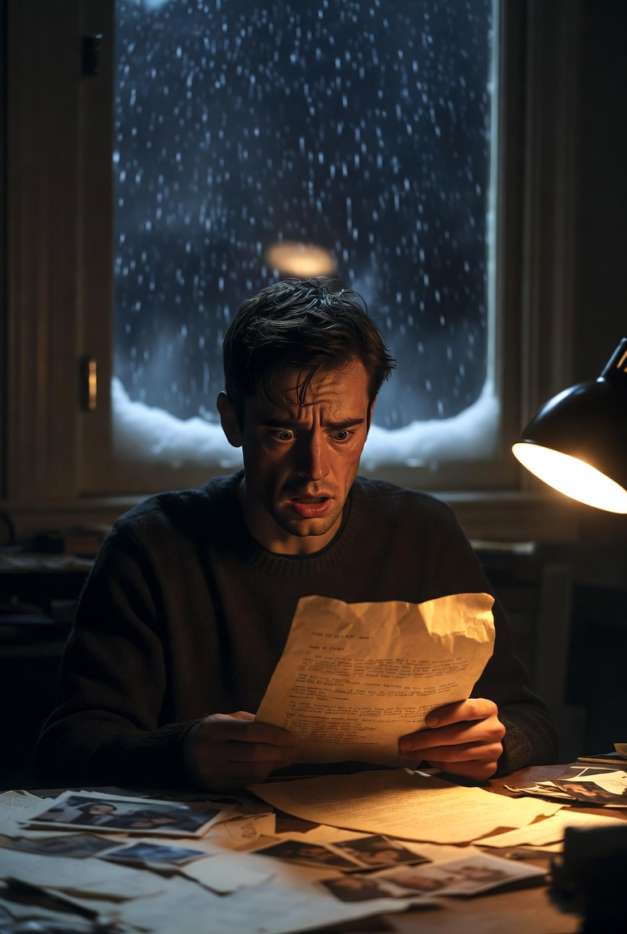
The words landed like a fist to the gut. The house. The savings. The small investment accounts. Not even a mention of him beyond the boilerplate We love both our sons equally. Jake stood there in the dim afternoon light, the paper trembling in his hand. Outside, a neighbor’s dog barked once, sharp and pointless. Inside, the clock on the mantel ticked on, indifferent.
His father shuffled back into the room. “What’s taking so long, Jake?”
Jake held up the folder. His voice came out low, almost gentle. “So this is how it is.”
The older man’s face drained of color, then settled into something weary and defensive. A sigh escaped him, the kind reserved for a child having a meltdown over bedtime. “It’s not what you think.”
But it was exactly what he thought. Jake had been the scaffolding holding this family upright while Eric drifted through his twenties like a man allergic to effort. Eric, the baby. Eric, the charmer. Eric, who could do no wrong even when he did nothing at all.
That night, Jake didn’t sleep. He sat on the edge of his bed in his apartment across town, the one with the second-hand couch and the fridge that hummed too loudly. The betrayal wasn’t loud. It was a slow erosion, years of quiet giving met with quiet taking. He remembered the vacations he’d helped fund, the hospital bills he’d covered when his dad had that scare with his heart. All while Eric “figured things out.”
The next morning, he stopped answering calls. Stopped the automatic transfers. The silence stretched.
Two weeks later, the texts began.
Dad: Property taxes are due.
No hello. No how are you. Just the tap on the vein they’d grown used to.
Jake stared at the screen, a bitter smile tugging at his mouth. He replied: I’m sure Eric will handle it. Since the house is his and all.
The calls came then. His mother’s voice, soft at first, the tone she used when she wanted something. “Jake, honey, we need to talk. You don’t need the inheritance. You have a good job. Eric… he struggles.”
Struggles. The word tasted like ash. Eric struggled to get off the couch. Eric struggled to hold a job longer than three months. But apparently, that made him the one who deserved everything.
Jake’s jaw tightened until it ached. “You made your choice. Live with it.”
They didn’t. Of course they didn’t.
The bank transfer request arrived like clockwork—$3,500, the exact amount to cover the overdue mortgage. No message. Just the cold assumption that he would fold.
He declined it.
Then the ambush. His apartment lobby. All three of them waiting like a poorly rehearsed intervention.
Jake stormed down, heart hammering with a rage that had been simmering for years. The fluorescent lights buzzed overhead. His mother’s arms were crossed, her face set in that familiar mask of wounded disappointment. His father stood stiff, hands deep in his pockets as if trying to anchor himself. Eric slouched against the wall, scrolling his phone, looking bored by the whole mess he’d created.
“Jake, finally,” his mother started, voice thick with performance. “We need to talk.”
“You need to leave.” The words felt clean. Liberating.
His father scoffed. “You’re really going to let us lose the house over a petty grudge?”
Jake laughed, but there was no humor in it—only the sharp crack of something breaking for good. “Petty? You decided I was good enough to bleed for you but not good enough to matter when you’re gone. That’s not a grudge. That’s the truth.”
Eric finally looked up. “Dude, I didn’t even ask for any of this.”
“Then get a damn job,” Jake shot back, stepping closer. The air between them felt charged, heavy with every unvoiced resentment. “You’re twenty-eight. Stop waiting for life to hand you the keys to a house someone else paid for.”
His mother’s hand fluttered to her chest. “He’s your brother. Family takes care of each other.”
Jake met her eyes—really looked at her, at the woman who had once bandaged his scraped knees but had spent the last decade bandaging Eric’s excuses. “Exactly. Why didn’t you ever take care of me?”
The silence that followed was deafening. No comeback. No apology. Just the hollow echo of years wasted.
He turned and walked back inside, closing the door with a soft click that felt louder than any slam.
The online campaign came next. Facebook posts dripping with selective memory. Some sons forget where they came from. We gave everything… His mother’s friends piling on with comments about disappointment. Eric’s vague, saintly post about sacrifice and love, the subtext sharp as a blade.
Jake read them all, each one carving deeper into the wound. Then he posted his own truth—not a rant, but a measured accounting. The years of support. The will. The one-sided ledger of love.
The responses flooded in. Support from people who’d seen the pattern. Private messages from relatives who’d stayed silent too long. But the backlash was vicious. Accusations of betrayal. Calls from his father yelling about ruined reputations.
Jake blocked them all.
Weeks passed. The weight on his chest lightened by degrees. He started running again in the early mornings, the crisp air filling his lungs as leaves turned gold and fell. One evening, standing at his kitchen window watching the sunset paint the buildings in bruised purples and oranges, he realized something profound.
He wasn’t angry anymore. Not really. He was grieving the family he’d thought he had, but beneath that grief was a fierce, quiet pride. He had chosen himself. Not out of spite, but out of necessity—the same necessity that had kept him going when no one else carried the load.
Eric would have to grow up. His parents would have to face the consequences of their favoritism. And Jake? Jake would finally live without the invisible chains.
He poured a glass of whiskey, the amber liquid catching the light. For the first time in years, the future felt like his own.
But as he raised the glass, his phone—on the table, finally silent—lit up with an unknown number. The message preview made his stomach twist:
We need to talk. It’s about the house. Something’s changed.
Jake stood frozen by the window, the whiskey glass still in his hand but no longer tempting. The phone screen glowed like a fresh wound in the darkness. Unknown number. No name. Just one short line that turned his blood to ice: We need to talk. It’s about the house. Something’s changed.
He didn’t reply right away. His fingers hovered over the screen, hesitating. One part of him screamed to delete it, block the number, and keep walking forward. But another part—the son who had sacrificed for years—whispered: What if it’s real?
He set the glass down. The sound of glass meeting wood echoed sharply in the quiet apartment. Outside, the night wind rustled the tree branches, carrying the scent of decaying leaves and impending rain. Jake took a deep breath, feeling as if he were standing on the edge of a cliff. Finally, he dialed.
His mother’s voice came through on the other end, not pleading or accusatory like before, but trembling in a strange way, as if she were holding back tears. “Jake… my son. Thank you for picking up.”
“What’s going on?” His voice was flat, emotionless.
A pause. He could hear her ragged breathing, the faint murmur of the TV in the background of the old house—probably the evening news his father always watched. “The will… it’s not exactly what we thought. There’s an addendum. The lawyer called today. We… we need you to come over.”
Jake gripped the phone until the plastic creaked. “What are you talking about? You made it very clear. Everything goes to Eric.”
“Not… entirely.” His mother’s voice broke, this time for real. “There’s a trust fund. For you. But it only activates if… if you sign some papers. The lawyer says the whole family has to be present. Tomorrow, two o’clock.”
The room seemed to shrink. Light slanted through the window, casting long shadows across the polished wooden table. “You think I’ll believe this? After everything?”
“Son… we were wrong.” The words were small, nearly shattered. “Your father… he’s been crying. Eric too. We don’t want to lose you.”
Jake let out a dry laugh, harsh and painful. He could picture the scene: his father at the dining table, shoulders shaking; his mother wiping tears with a crumpled tissue; Eric leaning against the wall, looking lost. But he knew too well—it could be an act. Or it could be the truth. And that uncertainty was tearing him apart.
“Fine,” he said, his tone icy. “I’ll come. But not for the will. I’m coming to end this once and for all.”
The lawyer’s office was in the town center, an old brick building with narrow hallways and the smell of aged paper mixed with lemon floor cleaner. Jake arrived at ten minutes to two, wearing the same suit from a job interview three years ago—it felt tight across the shoulders. His heart pounded, but he kept his posture straight, eyes forward.
They were already there. His father sat at the head of the long table, his face more gaunt than Jake remembered, deep wrinkles carved around his eyes. His mother clutched his hand tightly, her red nail polish chipped. Eric sat a little apart, eyes red-rimmed. For the first time, Jake saw his brother looking… small. No longer the lazy young man, but a frightened adult staring into an uncertain future.
The lawyer—Mr. Harlan, a middle-aged man with gold-rimmed glasses and a steady voice—opened the file. “Thank you all for coming. As I explained on the phone, the original will leaves the main assets to Eric. But there’s a codicil added two years ago, after you signed. It creates a trust for Jake, valued at roughly half the house, but it only activates if Jake agrees to help manage the shared assets and… commits to supporting his parents in their later years.”
Jake felt the room close in. “Support? You mean keep paying?”
Mr. Harlan nodded. “And Eric must get a job and contribute for at least two years. If not, everything goes to charity.”
The air grew suffocating. His mother began to cry openly, tears streaming down her cheeks. “We… we were afraid of losing you. After you left, the house was too quiet. Your father couldn’t sleep. Eric… he started looking for work, Jake.”
Eric looked up, meeting his brother’s eyes for the first time. “You… you were right. I was lazy. I thought everything would just come to me. But when you cut us off… I finally saw it. I’m sorry.”
Jake stood up, the chair scraping loudly behind him. He walked to the window and looked down at the street below—cars moving slowly, a mother walking her young son across the intersection. Memories flooded in: fixing the roof under a blazing sun, sweat soaking his shirt; his mother hugging him at graduation but always looking toward Eric; the nights he sent money with no thanks in return.
“You think I can forgive you just because of a clause in the will?” His voice trembled, but not from weakness. It was the last of his anger finding its way out. “You turned me into an ATM. Now you’re scared, so you’re changing the rules. Not because you love me. But because you’re afraid of being alone.”
His father rose, his voice hoarse. “Son… I was wrong. I thought Eric needed it more. I’m old. I couldn’t see clearly anymore.”
His mother stepped closer, her cold hand touching his arm. “Give us a chance to make it right. Family… family is forever.”
Jake looked at them. Really looked. His father—the man who once taught him to drive but always defended Eric. His mother—the woman who sacrificed sleep for her children but forgot her eldest son also needed to be seen. Eric—not an enemy, but a product of indulgence.
The anger cooled, replaced by a profound sadness. He pulled his arm away. “I’ll sign. But not to come back. I’ll sign because I deserve my share. As for our relationship? It has to be rebuilt from scratch. No money. No will. Just people.”
Eric nodded, tears rolling down his face. “I’ll try, brother.”
The months that followed were not easy. Jake participated in managing the trust, but he kept his distance. He watched Eric start his first real job at a hardware store—his hands shaking the first time he picked up a hammer. His father began calling not for money, but to share small stories about his vegetable garden. His mother sent photos of homemade cookies, accompanied by genuine apologies.
But Jake changed too. He started dating for the first time in years. He bought a new armchair for his apartment and planted a few pots by the window. Every evening, he sat there watching the sunset, feeling the heavy burden slowly dissolve.
There were still nights he woke up remembering the moment he opened that folder. But now that pain had become strength. He was no longer the shadow of his family. He was Jake—the man who chose to stand up.
And when the phone rang one rainy afternoon, the old house number appearing on the screen, he answered. Not out of obligation. But because he wanted to.
“Son,” his father’s voice came through, warmer than it had been in years. “Come for dinner? Your mother made your favorite.”
Jake smiled, a real smile for the first time in a long while. “I’ll come. But I’m bringing the wine.”
But when Jake stepped back into the old house once more, he noticed an old handwritten letter lying on the table—one that had been hidden in a drawer of the will. Its contents would change everything he had just come to believe. A secret from the past that his parents had never dared to reveal…
The old house smelled exactly as Jake remembered—faint coffee, lemon polish, and the faint mustiness of years lived under one roof. But tonight, something felt different. The air was thicker, heavier with things left unsaid for too long.
He stepped inside, the floorboards creaking under his shoes like old bones protesting. His mother hurried from the kitchen, wiping her hands on her apron, her eyes bright with a hope that almost hurt to see. His father sat at the head of the table, looking smaller somehow, the weight of age pressing down on his shoulders. Eric stood awkwardly by the window, hands in his pockets, trying to look casual but failing.
“Dinner’s almost ready,” his mother said, voice soft. “We’re so glad you came.”
Jake nodded, but his eyes had already found it: the yellowed envelope resting on the side table, partially hidden beneath a stack of mail. His name was written on the front in his father’s shaky handwriting.
“What’s this?” he asked, picking it up. The paper felt brittle, like it might crumble in his fingers.
His father cleared his throat. “We were going to wait until after dinner… but maybe now is better. Sit down, son.”
They gathered around the table. The roast chicken and mashed potatoes steamed gently, but no one touched their plates. Jake opened the envelope and pulled out the letter, dated almost fifteen years ago.
Dear Jake,
If you’re reading this, it means we’ve made mistakes we can’t take back. You’ve always been the strong one. The one who fixed things. We leaned on you too much, and I’m sorry.
Eric was born sick. The doctors said he might not make it past five. Your mother and I… we poured everything into him. Every prayer, every dollar, every sleepless night. We forgot that you were carrying us too. By the time we realized how unfair it was, the pattern was set. We told ourselves you were fine. You were tough. You didn’t need us the way he did.
But you did need us. And we failed you.
The trust fund was my idea. A way to try and make it right one day. If you’re reading this after we’re gone, know that we loved you both. Differently. But love nonetheless. I hope you can forgive an old man who was scared of losing his youngest and ended up losing his oldest in the process.
— Dad
Silence swallowed the room. Jake’s hands trembled as he lowered the letter. Tears he hadn’t allowed himself to feel for months burned behind his eyes. Not just anger anymore—but a deep, aching grief for the boy he once was, standing in the shadow of his brother’s illness, never complaining, always carrying.
“You never told me,” he whispered. “All these years… Eric was sick?”
Eric looked down at the table, shame coloring his face. “I don’t remember much. But yeah. Asthma, heart issues as a kid. I got better, but Mom and Dad… they never stopped treating me like I could break any second.”
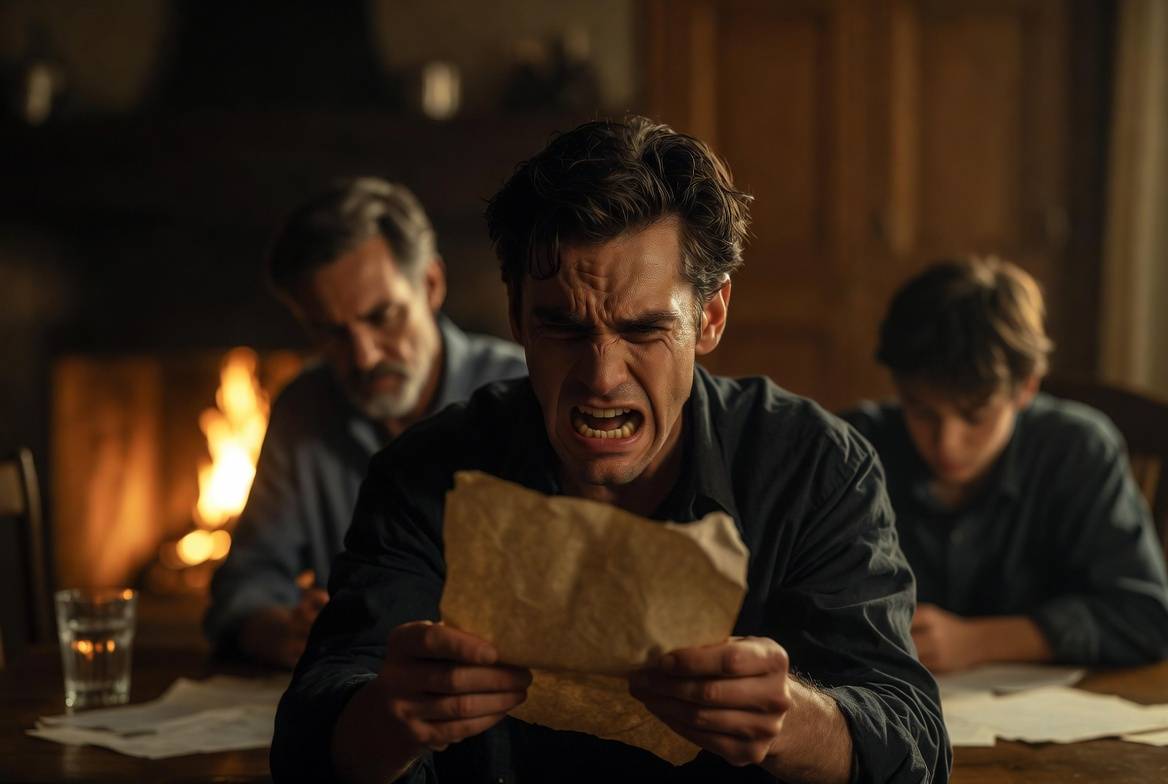
His mother reached across the table, her hand hovering before gently touching Jake’s. “We were terrified. Every time Eric coughed, we saw the worst. You were so independent… we convinced ourselves you were okay. But we were wrong. So wrong.”
Jake stared at the letter, the words blurring. He saw it now—the fear in their eyes all those years, the way they hovered over Eric while he quietly paid the bills, fixed the car, kept the lights on. It didn’t erase the hurt. But it cracked open something inside him.
“I spent years thinking I wasn’t enough,” he said, voice rough. “That I had to earn my place every single day. While Eric got love just for existing.”
Eric winced. “I know. I’m sorry, man. I used it as an excuse for too long. But I’m trying to change. I got a promotion at the store last week. Small, but it’s something.”
His father’s eyes were wet. “We can’t undo the past, Jake. But we can build something better. If you’ll let us.”
The days that followed were raw and real. No grand gestures. Just small, painful steps.
Jake started joining family dinners once a week. He watched Eric struggle through his first full month of work—coming home exhausted but proud. He sat with his father in the garden, talking about nothing and everything. His mother baked his favorite pie and listened—really listened—when he finally told them how alone he had felt.
One evening, as autumn leaves turned the yard gold and crimson, Jake stood on the porch with Eric. The air was crisp, carrying the scent of woodsmoke from a neighbor’s fire.
“I hated you for a long time,” Jake admitted quietly.
Eric nodded. “I deserved it. I was a shitty brother.”
“You still kind of are,” Jake said, a faint smile breaking through. “But you’re trying. That counts.”
Eric laughed, the sound shaky. “Thanks for not giving up on us completely.”
Jake looked out at the street where he had learned to ride a bike, where he had first felt the weight of responsibility far too young. “I’m not coming back to how things were. But… I’m open to how things could be.”
Yet the healing wasn’t linear.
Late one night, Jake’s phone buzzed with a message from an unknown number again. This time it was a photo: the old family album open to a picture of him as a child, standing alone by the Christmas tree while Eric sat on their parents’ laps.
The message read: You were never forgotten. We just didn’t know how to show it.
He saved the photo. For the first time, the weight on his chest felt lighter—not gone, but bearable. He had faced the truth, the ugly and the tender parts alike. He was no longer just the reliable son, the forgotten one, or the angry outsider.
He was Jake—finally free to write his own story.
But as winter approached and the first snow dusted the rooftops, another letter arrived. This one from a distant relative he barely remembered. Its contents threatened to unravel everything they had just begun to rebuild.
The past, it seemed, still had one more secret to tell.
The envelope arrived on a cold December morning, slipped under Jake’s apartment door like a ghost from the past. No stamp. No return address. Just his name in careful, unfamiliar handwriting.
He picked it up with a sense of dread that settled heavy in his stomach. The snow outside fell in thick, silent flakes, blanketing the world in white. Inside, his apartment felt too warm, too quiet. He tore it open.
It was from Aunt Clara—his father’s older sister, a woman he had met only twice as a child. She lived in a small town two states away and had always kept her distance from the family drama.
Jake,
Your father asked me not to send this, but I’m old and tired of secrets. You deserve the full truth.
Your mother had a difficult pregnancy with Eric. The doctors warned them that continuing might risk her life. She chose to have him anyway. But after he was born so fragile, something in her broke. She blamed herself. Your father blamed himself. They poured everything into keeping Eric alive, and in doing so, they convinced themselves you were their “strong one” who didn’t need protection.
What they never told you is that there was money set aside for you from your grandfather—money they used for Eric’s medical bills without ever saying a word. They told themselves it was for the family. But it was yours.
I’ve attached copies of the old bank records. I’m sorry, boy. They loved you. They just loved you wrong.
— Clara
Jake sank onto the couch, the papers trembling in his hands. The bank records were clear: thousands of dollars transferred over the years from an account in his name. Money that could have helped him through college, through the lean years when he was supporting them. Instead, it had gone to specialists, treatments, and the quiet fear that defined his parents’ lives.
He didn’t cry. Not at first. He sat there as the snow piled up against the window, the light turning gray and then soft gold as the day faded. The betrayal cut deeper than the will ever had—not because of the money, but because they had stolen his right to know. To understand why he had always felt like second place.
His phone rang. It was his mother.
“Jake? Honey, are you okay? Clara called us…”
He closed his eyes. “I got the letter.”
A long silence. When she spoke again, her voice was small and broken. “We were going to tell you one day. After Eric was stable. But then… time passed. And we were ashamed.”
“I needed to know,” he said, voice cracking. “I needed to know why I was carrying the world while you protected him. I thought I just wasn’t enough.”
“You were more than enough,” she whispered. “We were the ones who weren’t.”
That weekend, Jake drove back to the old house through snow-covered roads. The trees stood like silent witnesses, branches heavy with white. When he walked in, the family was waiting—not with excuses, but with open pain.
His father sat by the fireplace, staring into the flames. “I failed you, son. I was scared. Every time I looked at Eric struggling to breathe as a baby, I saw my own weakness. I thought if I made you strong, I wouldn’t lose either of you. But I almost lost you anyway.”
Eric stood in the corner, eyes red. “I found out about the money last year. I should’ve told you. But I was afraid you’d hate me even more.”
Jake looked at them—at the people who had shaped his life in ways both beautiful and brutal. He saw the fear that had driven every decision. The love that had been twisted by terror. And beneath it all, three imperfect humans trying, failing, and now trying again.
“I’m angry,” he said quietly. “I’ll probably be angry for a while. But I’m not walking away this time. Not completely. We do this slow. Honest. No more secrets.”
His mother hugged him then—tight, desperate, real. He let her. For the first time in years, he let himself be held without calculating what it would cost him later.
Winter turned to spring. The healing was messy and slow, filled with difficult conversations and awkward silences that eventually gave way to tentative laughter. Eric moved into his own small apartment and kept his job. He even started paying his parents a modest rent. Jake helped where it felt right—not out of obligation, but choice.
One warm evening in May, they sat on the back porch as fireflies danced in the yard. The air smelled of blooming lilacs and fresh-cut grass. Jake’s father handed him a cold beer.
“I’m proud of you, son,” the old man said. “Not for what you did for us. For what you did for yourself.”
Jake clinked his bottle against his father’s. “Took me long enough.”
His mother smiled from her chair, eyes shining. “We’re trying to be better. All of us.”
Eric grinned—the old cocky smile, but softer now. “Hey, I got a date next week. Wish me luck.”
Laughter filled the porch, genuine and light. Jake leaned back, feeling the wooden chair creak beneath him, the evening breeze cool on his skin. The scars were still there. They probably always would be. But they no longer defined him.
He had faced the darkest parts of his family’s love and chosen to stay—not as a savior, but as a man with boundaries, with a full heart, and with the freedom to walk away if he ever needed to again.
As the stars came out overhead, Jake realized the truth he had been searching for all along: family wasn’t about perfect loyalty or endless sacrifice. It was about showing up, telling the truth, and loving anyway—flaws, wounds, and all.
And for the first time, he felt like he belonged. Not because he had earned it. But because he had finally claimed it.
The End