In a chilling conclusion to a notorious chapter in American crime history, George Rivas, the last surviving member of the infamous Texas Seven, was executed on February 29, 2012. Rivas, who orchestrated a violent prison escape that led to the tragic murder of police officer Aubrey Hawkins, faced his fate in Huntsville, Texas, as the nation reflected on the events that forever changed countless lives.
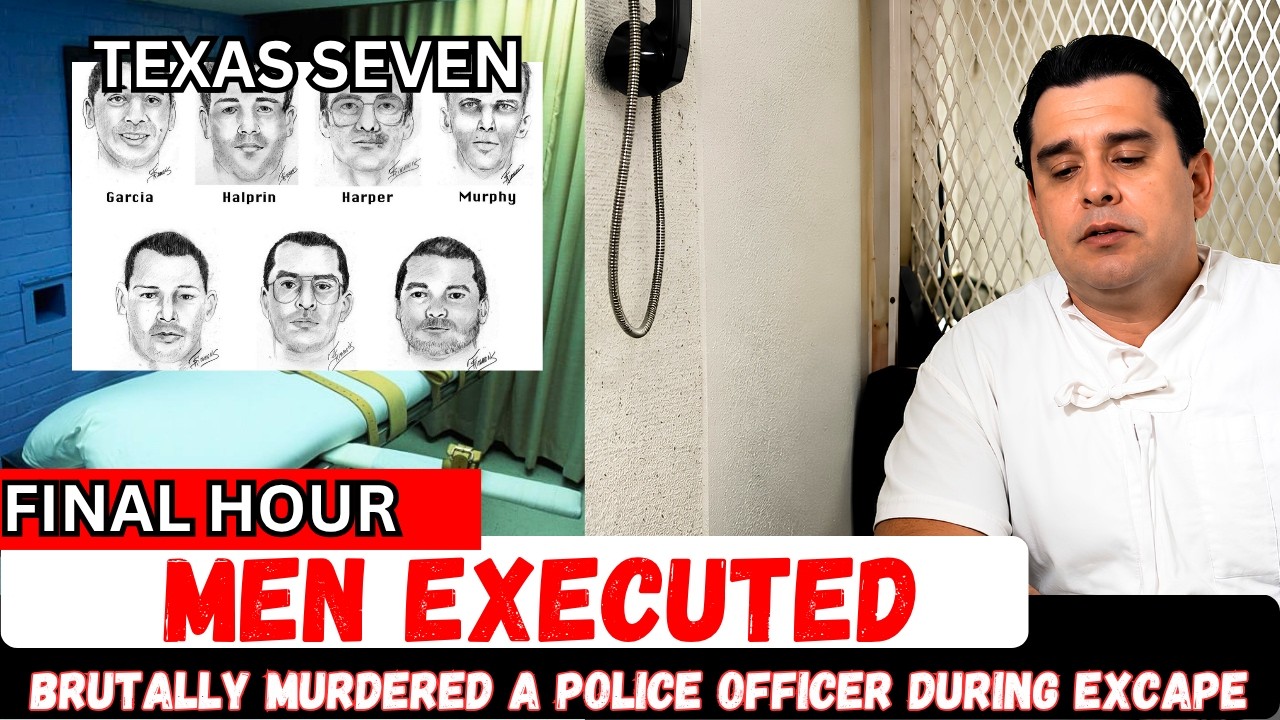 As rain pattered against the prison walls, Rivas sat in a holding cell just steps away from the execution chamber. At 41, he was a man whose name had become synonymous with one of the most notorious prison breaks in U.S. history. Over a decade earlier, Rivas and six other inmates pulled off a brazen escape from the Connally Unit, triggering a nationwide manhunt that captivated the media and public alike.
The saga took a dark turn on Christmas Eve 2000, when Officer Hawkins responded to a call about suspicious activity at a sporting goods store. Unbeknownst to him, he was walking into an ambush set by the Texas Seven. In a matter of moments, Hawkins was shot multiple times, leaving behind a devastated family who awaited his return for dinner. His death transformed the Texas Seven from mere escapees into public enemies, igniting outrage across the state.
Rivas, described by prosecutors as the mastermind behind the escape, had a troubled past that began in El Paso, Texas. As a teenager, he drifted into a life of crime, which only escalated during his time in prison. He quickly learned to navigate the brutal realities of incarceration, gaining respect among fellow inmates and plotting his escape with a group of similarly dangerous men.
 The Texas Seven’s escape was meticulously planned. They studied prison routines and weaknesses, executing their plan with chilling precision on December 13, 2000. Within minutes, they overpowered guards, stole weapons, and vanished into the South Texas night, leaving a handwritten message behind that ominously declared, “You haven’t heard the last of us yet.”
As the manhunt unfolded, the fugitives initially remained in Texas, moving between stolen vehicles and cheap motels. They watched news reports of their own exploits, feeling both exhilarated and paranoid. But the pressure of living on the run took its toll, leading to desperate measures, including a robbery that would ultimately seal their fate.
On Christmas Eve, the group’s actions culminated in tragedy. Officer Hawkins was ambushed and killed, and the manhunt intensified. Law enforcement agencies across the country mobilized to capture the Texas Seven, who were now seen as armed and extremely dangerous. The public rallied behind the hunt, and the story of the Texas Seven became a national obsession, with their faces plastered across news outlets.

The eventual capture of the Texas Seven came in January 2001, after a couple recognized them at an RV park in Colorado. The standoff ended tragically when one member, Larry Harper, took his own life rather than face recapture. The remaining fugitives surrendered, their once-mythical status reduced to that of defeated men in handcuffs.
As trials began, the focus shifted to the murder of Officer Hawkins. Rivas, along with his accomplices, faced capital murder charges, and the state sought to make an example of them. The trials were filled with emotional testimony, particularly from Hawkins’ family, who were forced to relive the horror of that fateful night.
 In the years that followed, the executions of the Texas Seven began, with Rivas remaining the most infamous figure among them. He spent years on death row, his story fading from public consciousness but never from the minds of those affected by his actions.
Finally, on that rainy February evening in 2012, Rivas faced his execution. He expressed remorse for the pain he caused, particularly to Hawkins’ family, before the lethal injection took effect. As the lights dimmed on his life, the haunting legacy of the Texas Seven lingered—a grim reminder of a violent escape that led to irreversible consequences.
As the dust settled on this tragic story, one question remains: how do we reconcile the thirst for freedom with the cost of lives lost?