CHAPTER I: THE POOR TEXAS BOY AND THE WILL TO FIGHT
1.1 A Destitute Childhood and Marksmanship Born of Hunger
Audie Leon Murphy was born on June 20, 1925, in Kingston, Texas, into a desperately poor sharecropper family with twelve children. His father abandoned the family, and his mother passed away when Audie was only 16 years old. This extreme poverty forced Audie to drop out of school in the fifth grade to work odd jobs and head into the woods with a rifle to hunt for food to feed his younger siblings.
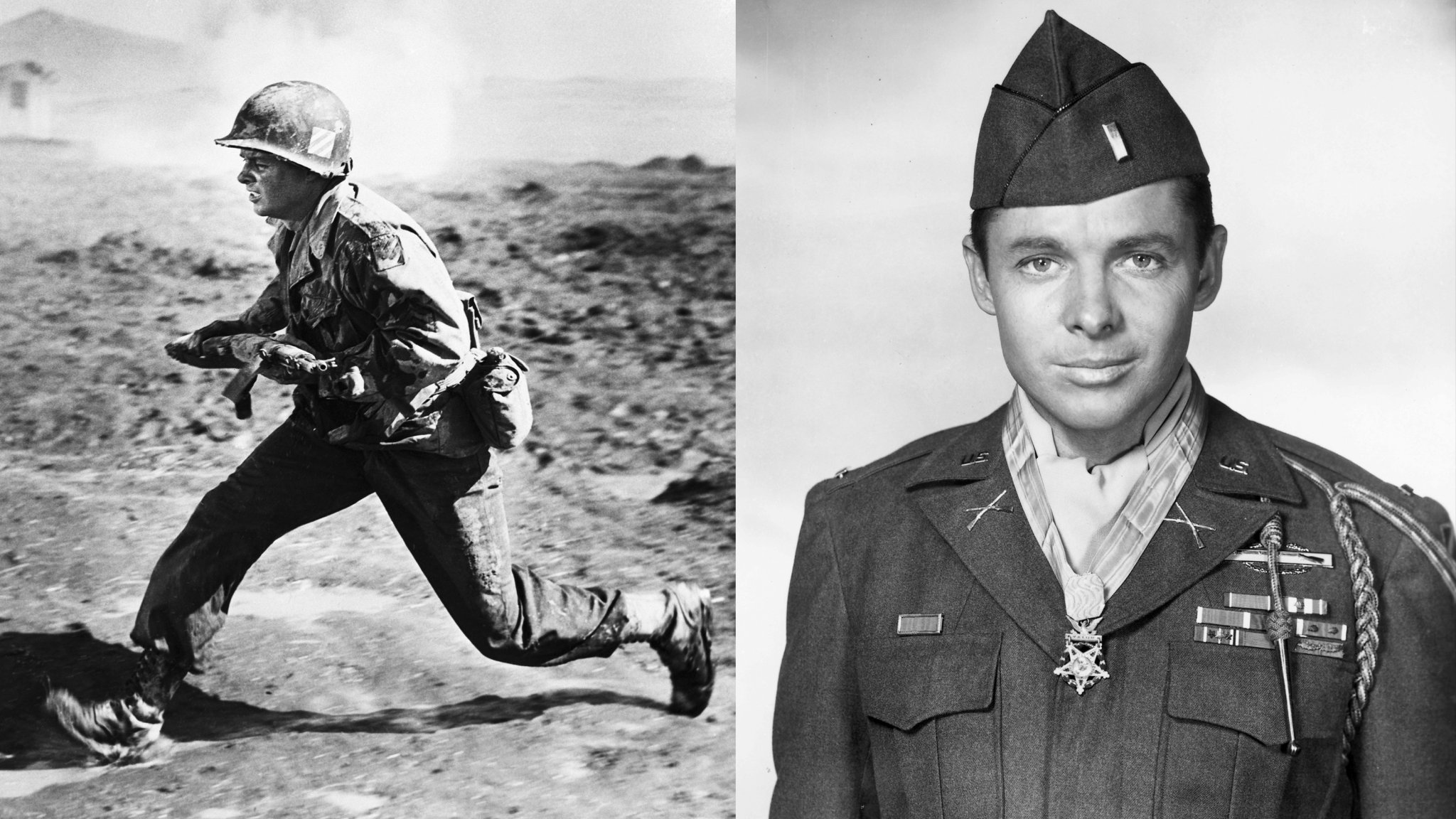
It was during these years of hunting to put food on the table that Audie unintentionally developed a keen tactical eye and flawless marksmanship. He knew that every single bullet fired had to bring home game, or his family would go hungry that night.
1.2 The “Reject” Who Entered the Service
Following the attack on Pearl Harbor and the outbreak of World War II, Audie Murphy burned with a desire to enlist to serve his country and find an escape from his bleak circumstances. However, the path was anything but easy. Standing at a mere $1.65\text{ m}$ (5 feet 5 inches) tall, weighing less than $50\text{ kg}$ (110 pounds), and possessing a baby face like a young child, he was flatly rejected by the Marines, the Navy, and the Army Paratroopers for failing to meet physical standards.
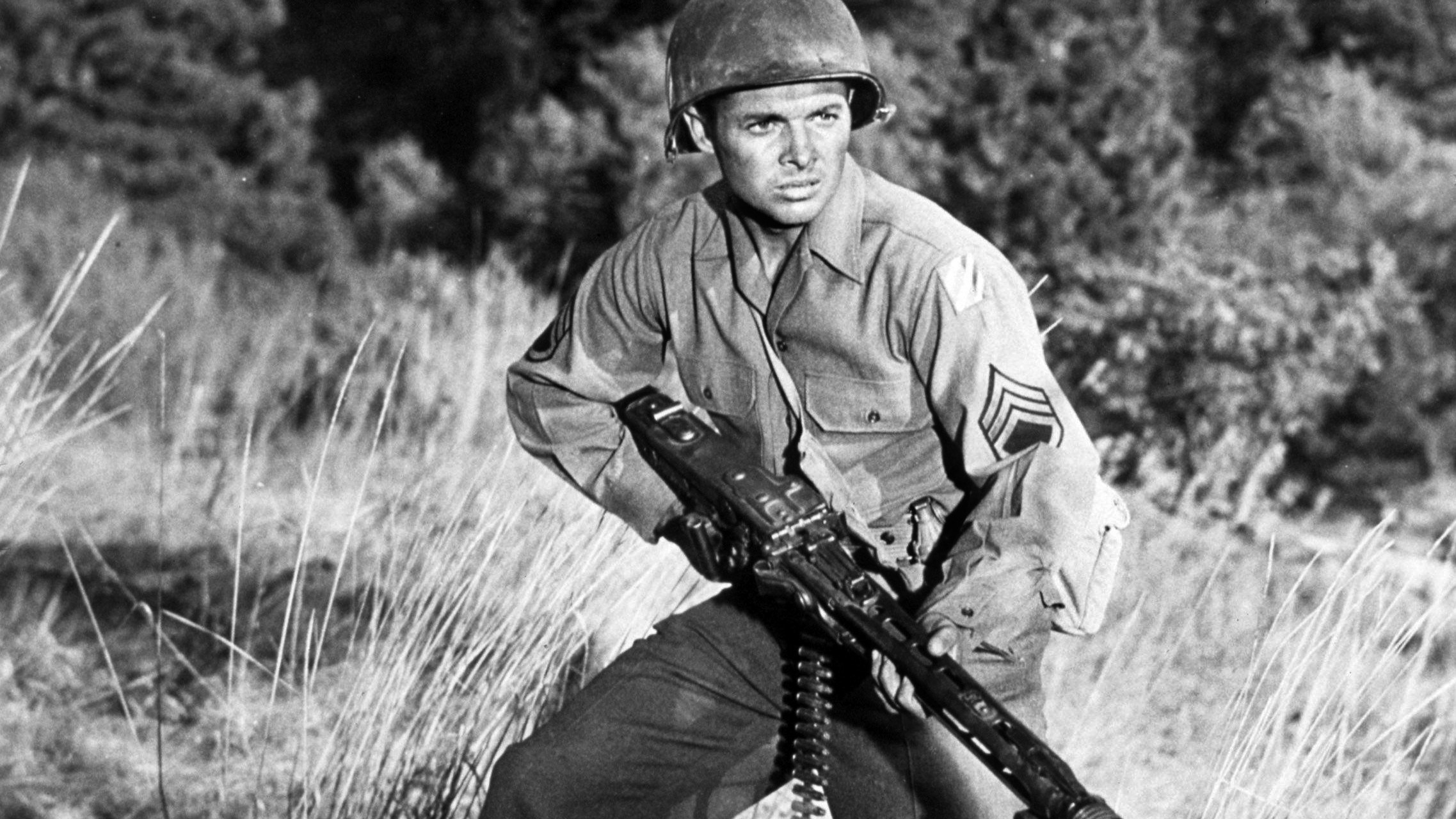
Refusing to back down, Audie had his older sister falsify his birth records to make him appear older, allowing him to enlist in the infantry branch of the United States Army in June 1942. Even at the training camp, officers looked at him with skepticism, even attempting to transfer him to the kitchen or logistics because he looked far too frail. They did not know that beneath that slight frame lay the indomitable will of a warrior.
CHAPTER II: THE NIGHTMARE OF THE AXIS IN THE EUROPEAN THEATER
Audie Murphy was deployed to the 3rd Infantry Division and participated in some of the most brutal campaigns in North Africa, Italy, and France. On the battlefield, his borderline reckless bravery stunned comrades and enemies alike.
2.1 The Colmar Pocket – One Man Against a German Company
The pinnacle of Audie Murphy’s combat feats occurred on January 26, 1945, in the woods near Holtzwihr, France. Murphy’s company had been whittled down to just 19 effective survivors, facing a massive German force consisting of a full infantry company and six powerful Panther tanks.

Realizing they could not hold the position through standard defense, Murphy ordered his remaining men to retreat to covered positions inside the woods, while he stayed alone at the front line with an M1 carbine to direct artillery fire over a field telephone.
When a nearby American M10 Wolverine tank destroyer was hit and began burning fiercely, threatening to explode at any second, Murphy braved the danger and climbed aboard the burning vehicle. He seized the exposed $.50\text{ caliber}$ machine gun and turned it upon the advancing German infantry.
Standing alone atop the blazing vehicle engulfed in smoke, Murphy fought furiously for over an hour. He killed and wounded approximately 50 German soldiers, completely halting the fascist infantry advance, and only retreated when his machine gun ran completely out of ammunition. Miraculously, he maintained this defense while suffering from a deep, bleeding bullet wound in his leg.
2.2 The Soldier Who Earned Every Honor
His staggering actions at the Colmar Pocket earned Audie Murphy the Medal of Honor—the United States’ highest military decoration—when he was just 19 years old.
By the time World War II came to a close, Audie Murphy was credited with destroying over 240 enemy soldiers. He personally received a total of 33 awards and decorations, including every medal for valor the U.S. Army could bestow, along with three prestigious medals from the governments of France and Belgium. He stood as the most decorated American soldier of World War II.
CHAPTER III: FROM THE BATTLEFIELD TO HOLLYWOOD AND THE FIGHT WITH AN INVISIBLE FOE
3.1 An Unintentional Silver Screen Star
Returning home as a national hero, Audie Murphy’s face graced the cover of the prestigious Life magazine. His handsome features, intense eyes, and miraculous story quickly caught the attention of Hollywood producers.

He entered the film industry and became a successful action star during the 1950s and 1960s, starring in over 40 movies, predominantly Westerns. Most notably, in 1955, he played himself in the biographical film “To Hell and Back”, based on his best-selling wartime memoir of the same name. The movie became a massive box-office hit and held the record as Universal Studios’ highest-grossing film for 20 years until it was surpassed by Jaws.
3.2 The Quiet Battle with the Ghosts of PTSD
Yet, behind the glamour of a Hollywood star and the glitter of military medals lay a soul deeply fractured by war. Audie Murphy was tormented by Post-Traumatic Stress Disorder (PTSD)—a condition that society at the time vaguely referred to as “battle fatigue” or “shell shock.”
He suffered from chronic insomnia and always slept with a loaded pistol tucked beneath his pillow. Nightmares of fallen brothers and the enemies he had killed haunted his sleep every night. To cope with the internal panic, Murphy fell into a dependency on sleeping pills and turned to high-stakes gambling.
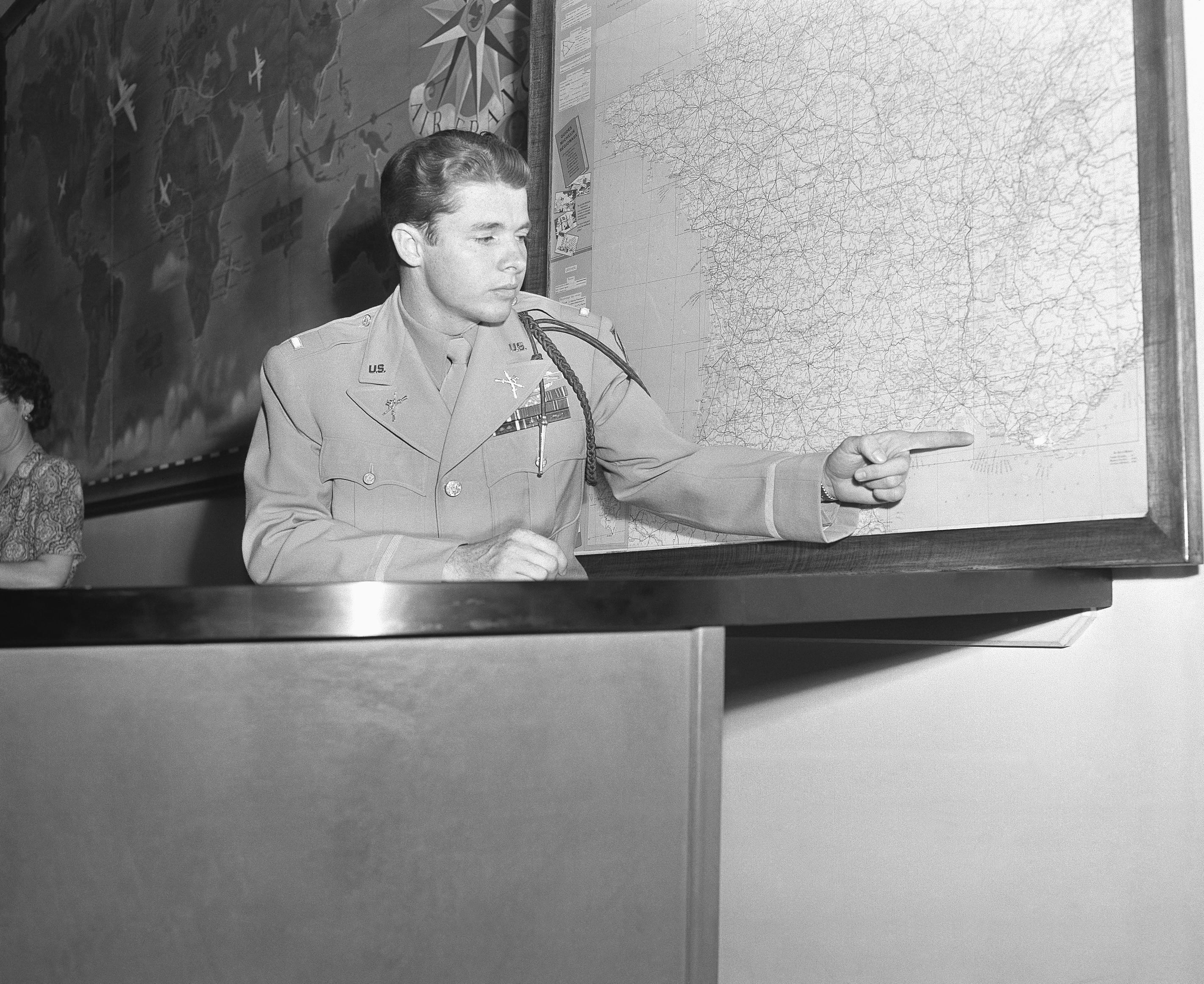
However, instead of hiding his struggles, Audie Murphy displayed a different kind of courage: he spoke out publicly about his condition. At a time when a war hero admitting to psychological issues was stigmatized as a sign of weakness, Murphy shattered the silence. He publicly called upon the U.S. government to properly investigate, understand, and provide mental health care for veterans returning from the Korean and Vietnam wars. He was a pioneer in bringing PTSD into the public consciousness.
CHAPTER IV: A SUDDEN DEPARTURE AND A LASTING LEGACY
On May 28, 1971, a cruel twist of fate cut Audie Murphy’s life short when a private plane he was traveling in encountered terrible weather and crashed into the slopes of Brush Mountain, Virginia. He died at the age of 45—a shockingly sudden departure for a man who had survived thousands of brushes with death amidst the fires of war.
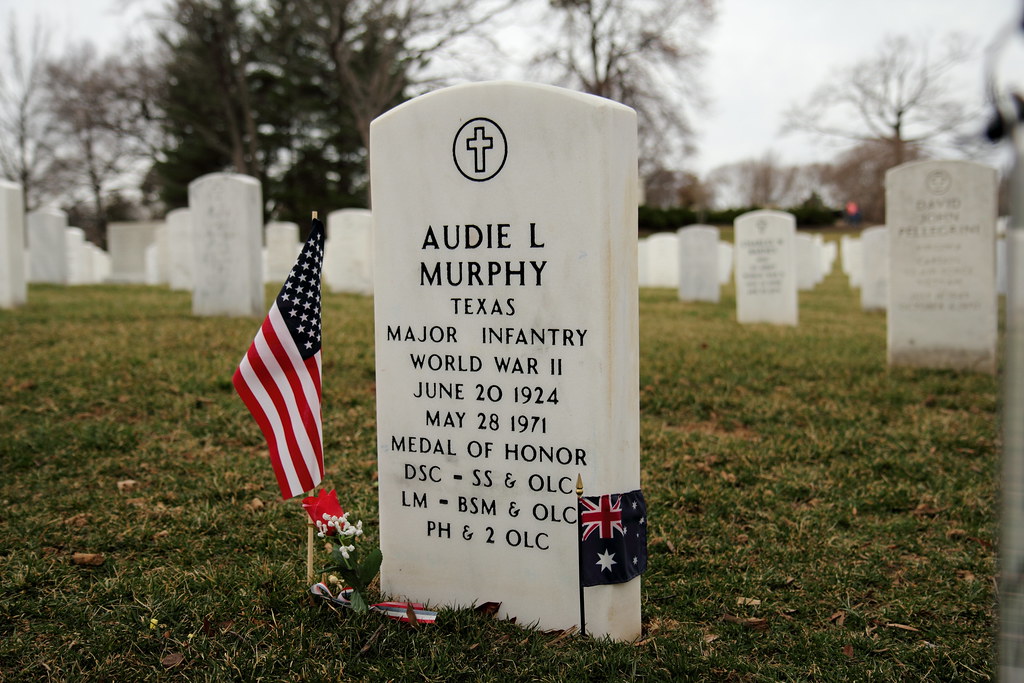
Audie Murphy was buried with full military honors at Arlington National Cemetery. By custom, the graves of Medal of Honor recipients are often elaborately decorated or given gold-leaf lettering, but in accordance with his humble wishes, Audie Murphy’s grave remains a simple, flat white stone marker, identical to those of the ordinary soldiers surrounding him. Today, his gravesite is one of the most visited locations in Arlington, second only to that of President John F. Kennedy.
CONCLUSION: THE EMBODIMENT OF BRAVERY AND SACRIFICE
Audie Murphy is a legend not merely because of the sheer weight of the medals pinned to his chest. He is great because he was a flesh-and-blood human being who walked through an earthly hell but never lost his core humanity.
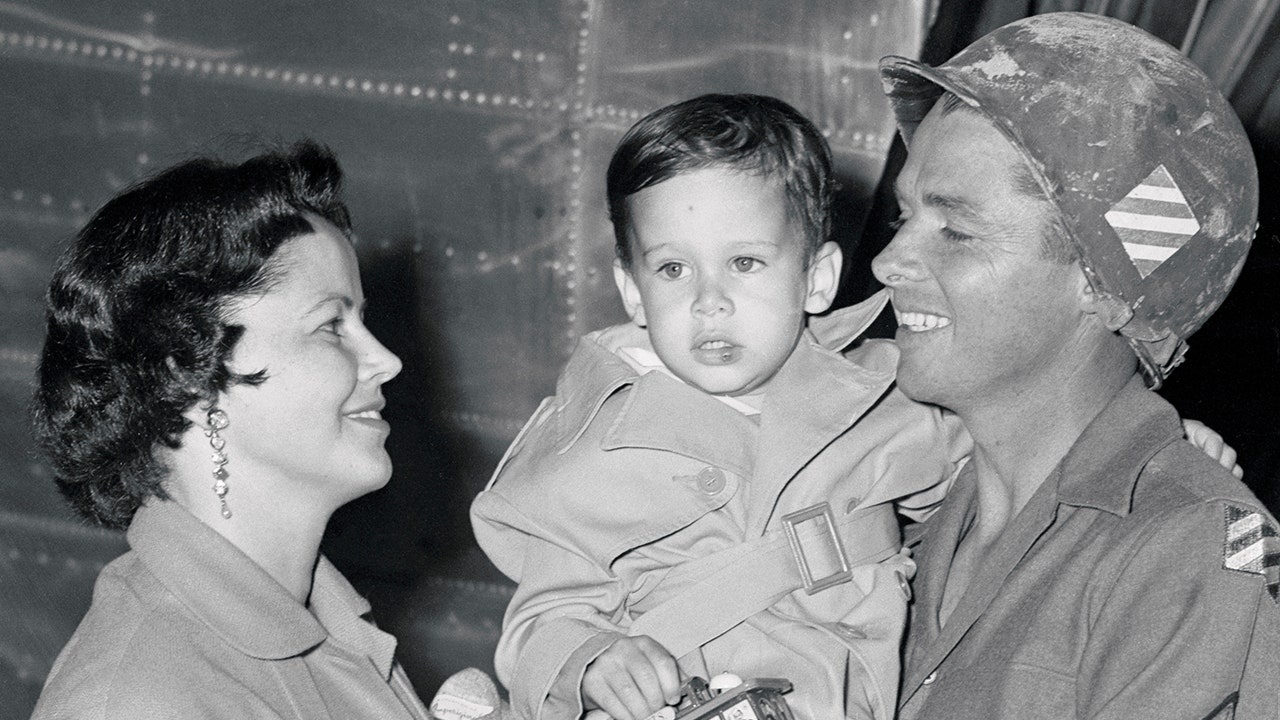
His life leaves a profound lesson for future generations: the true cost of war is not only measured by those who fall on the battlefield, but also by the bleeding wounds carried in the souls of those who are fortunate enough to return home. Throughout his entire life—whether holding a rifle, standing before a camera, or fighting for his fellow veterans—Audie Murphy lived completely, earning his place as an immortal icon of American courage.