CHAPTER I: A CHILD OF THE WILD SKIES AND EARLY TRAGEDY
1.1 Daughter of the Shoshone
Sacagawea was born around 1788 into the Lemhi Shoshone tribe, a Native American people who lived along the Salmon River valley (in what is now Idaho). Her early childhood was defined by the rugged cliffs, the treacherous slopes of the Rocky Mountains, and a nomadic lifestyle dependent on hunting and gathering.
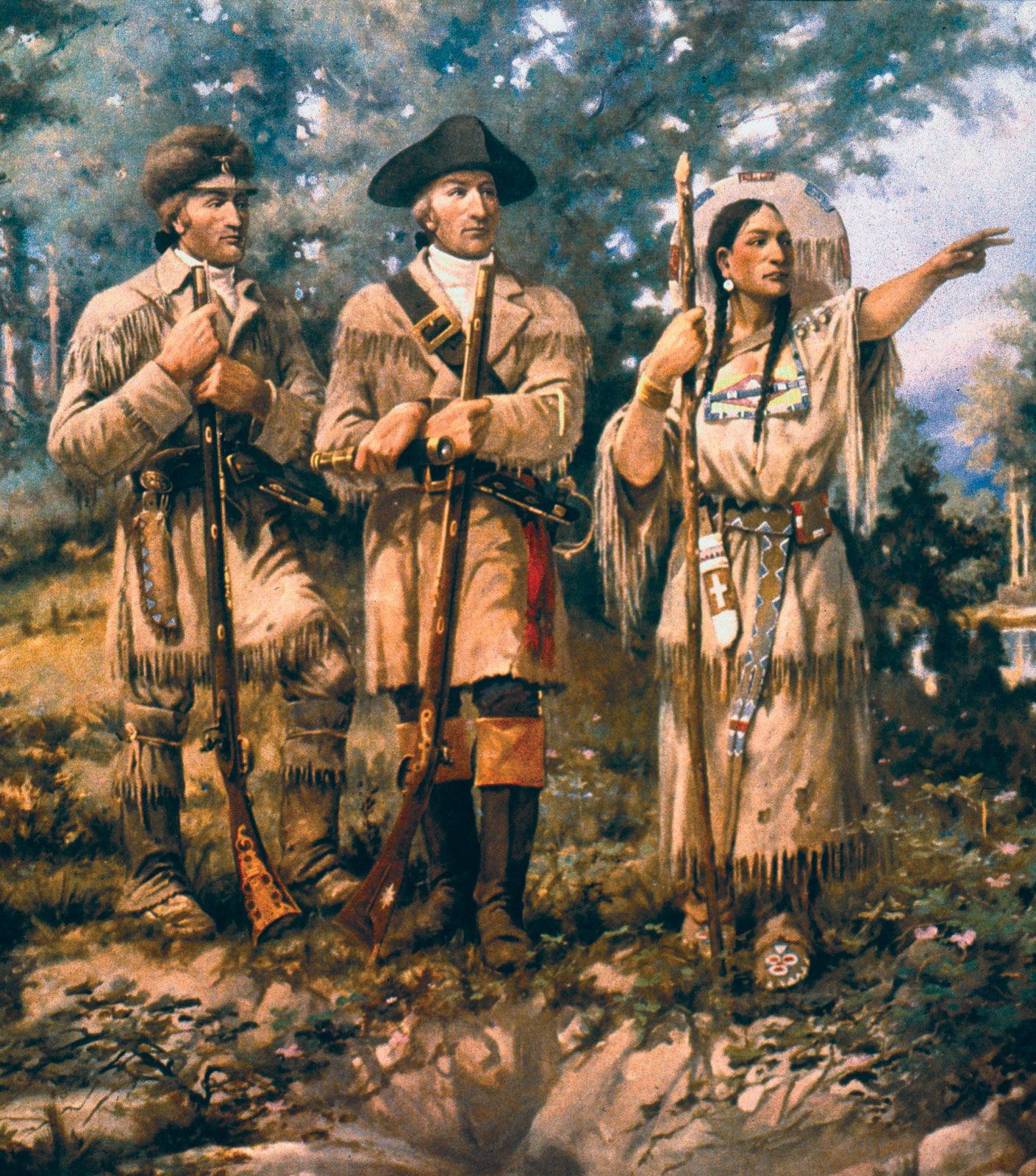
The name “Sacagawea” is derived from the ancient Hidatsa language, meaning “Bird Woman.” From her earliest years, she was taught how to survive in a harsh natural environment—learning to identify edible roots, gathering medicinal herbs, and developing a genius capacity for navigation. These were the exact survival skills that would later save the lives of an entire expedition of white explorers.
1.2 The Tragedy of Abduction and Captivity
In 1800, when Sacagawea was only about 12 years old, a massive tragedy struck her life. The Shoshone tribe was attacked by the Hidatsa people, a tribe equipped with firearms acquired through trade with white settlers. Sacagawea was abducted alongside several other children and taken back to a Hidatsa village near present-day North Dakota.
There, she was stripped of her freedom and eventually sold as a wife (or to settle a gambling debt) to Toussaint Charbonneau, a French-Canadian fur trapper living in the village. Overnight, the free-spirited girl of the high mountains became the young wife of a much older man of a foreign background, facing an uncertain and bleak future.
CHAPTER II: THE DEFINING TURNING POINT – THE LEWIS AND CLARK EXPEDITION
2.1 A Proposal Midst the Bitter Winter
In 1803, U.S. President Thomas Jefferson finalized the Louisiana Purchase from France, effectively doubling the territory of the United States. To explore this vast, uncharted western territory and search for a continuous water route to the Pacific Ocean, he commissioned two military officers, Meriwether Lewis and William Clark, to lead the Corps of Discovery.
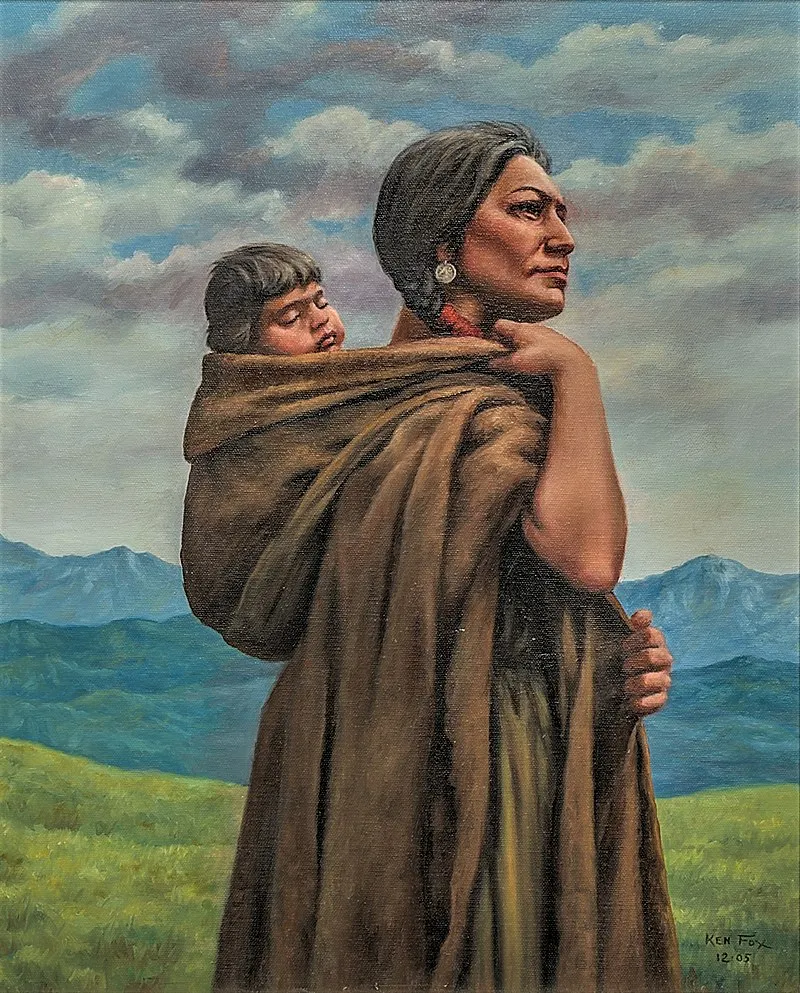
In the winter of 1804, the expedition halted to construct Fort Mandan near the village where Sacagawea lived. Recognizing that their upcoming journey would require traversing Shoshone territory—where they would desperately need to trade for horses to cross the Rocky Mountains—Lewis and Clark hired Charbonneau as an interpreter. A strict condition of his employment was that he bring along his teenage wife, Sacagawea, who was then pregnant with her first child. The co-commanders understood that the presence of a Shoshone woman would be a golden key to communicating with the native tribes.
2.2 A Young Mother on a Journey of Ten Thousand Miles
In February 1805, Sacagawea gave birth to a baby boy named Jean Baptiste Charbonneau (affectionately nicknamed “Little Pomp” by Captain Clark).
Just two months later, on April 7, 1805, the expedition officially set forth. Sacagawea embarked on a perilous transcontinental trek with her newborn infant cradled in a cradleboard on her back. The image of this young indigenous mother calmly confronting blizzards, wild predators, and raging rivers remains one of the most iconic symbols in American history.
CHAPTER III: THE SAVIOR AND HER INVALUABLE CONTRIBUTIONS
Though initially brought along merely as the “interpreter’s wife,” Sacagawea quickly proved that she was the most irreplaceable member of the entire expedition.
3.1 Rescuing Classified Documents from Raging Currents
On May 14, 1805, a terrifying crisis occurred. Due to the sheer clumsy panic of her husband, Charbonneau, the pirogue carrying the expedition’s most critical supplies capsized on the Missouri River. While Charbonneau froze in panic, Sacagawea—with her baby still strapped to her back—remained utterly calm. She lunged over the side of the boat and deftly fished out the floating instruments, journals, maps, and invaluable scientific specimens.
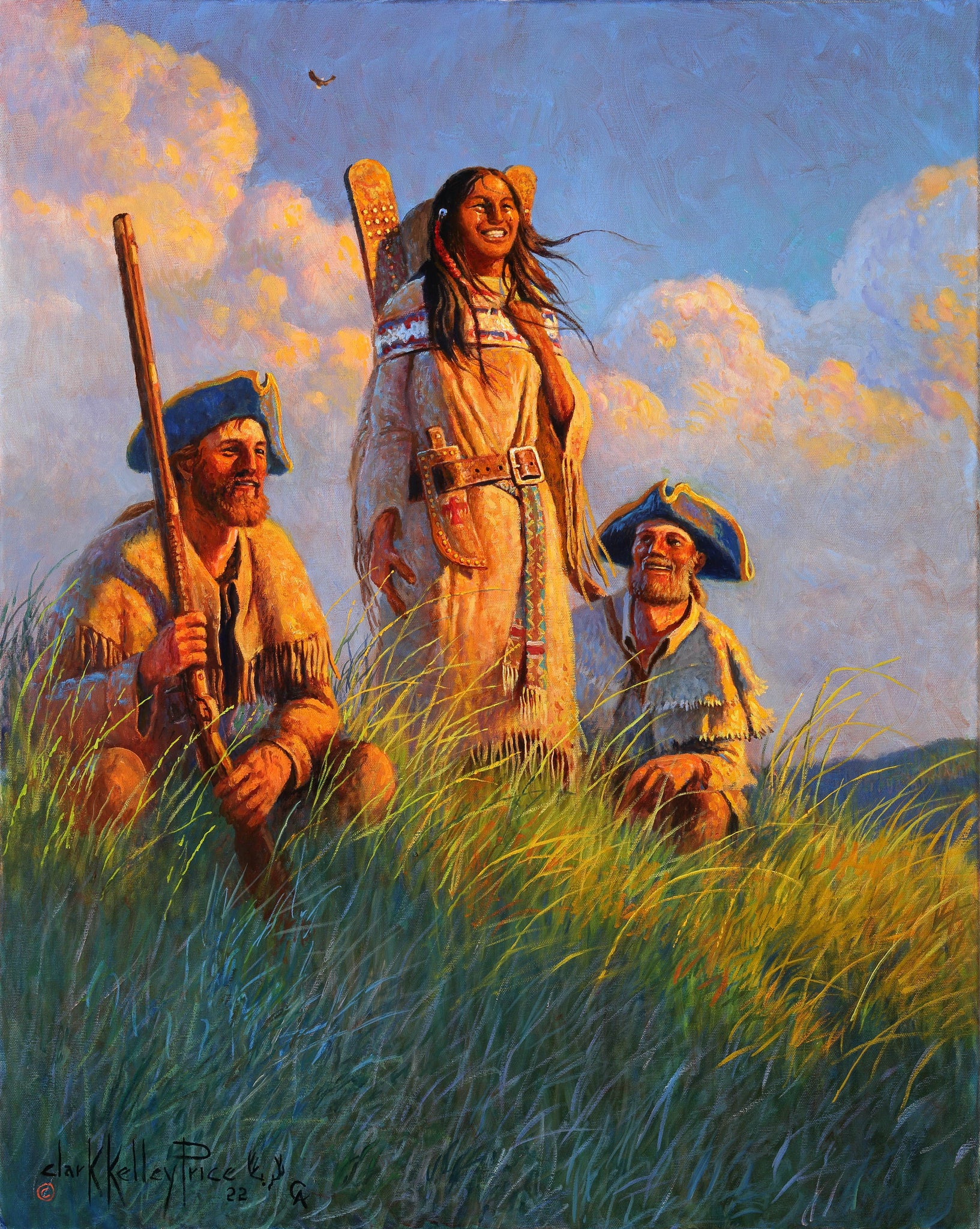
Had it not been for her quick thinking and bravery, the entire fruit of the expedition’s research over the past year would have been lost to the river. In deep gratitude, the commanders named a branch of the river “Sacagawea River” in her honor.
3.2 A Born Ambassador of Peace
In the world of the Native American frontier, a group of heavily armed white men entering tribal lands was almost universally perceived as an invading army. However, the presence of Sacagawea transformed that dynamic entirely.
Captain Clark noted in his journal: “A woman with a party of men is a token of peace… a white man’s war party never travels with a woman, especially one with a child.” She served as a living shield of peace, helping the expedition avoid numerous bloody misunderstandings.
3.3 A Tearful Reunion That Bought Survival
In August 1805, the expedition reached the headwaters of the Missouri River and encountered a band of the Shoshone tribe. As Sacagawea sat down to interpret, she looked across at the tribal chief and froze in astonishment: Chief Cameahwait was her biological brother, from whom she had been separated since her abduction years prior.
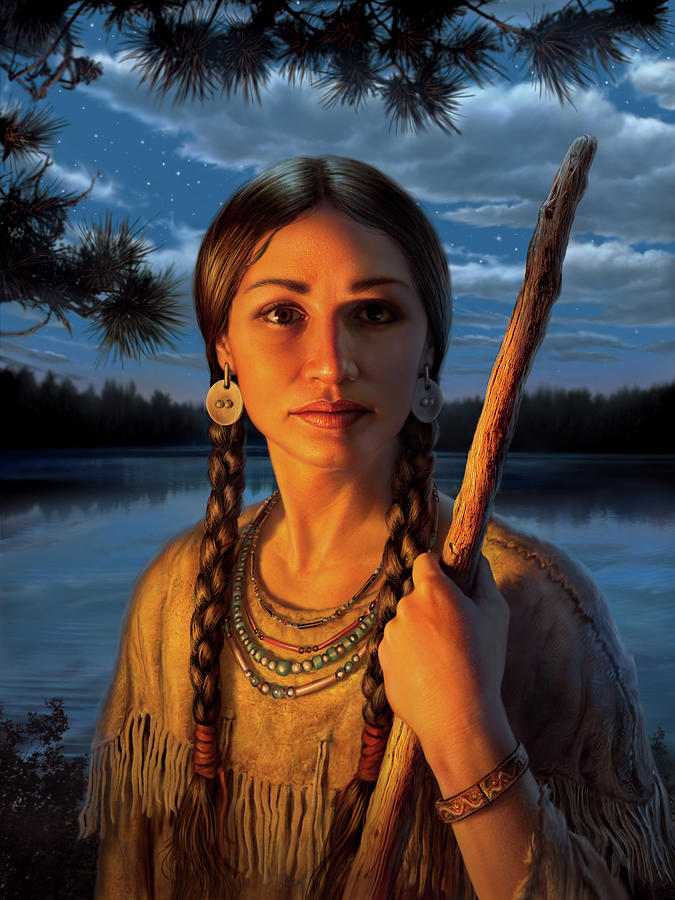
She burst into tears, ran to throw her blanket over him, and embraced her brother. This miraculous reunion saved the expedition. Deeply moved by his sister’s survival, Chief Cameahwait agreed to trade the explorers the healthy horses they desperately needed and provided guides to help them navigate the treacherous peaks of the Rocky Mountains before the brutal winter closed in.
CHAPTER IV: MISSION ACCOMPLISHED AND A QUIET FAREWELL
After overcoming insurmountable dangers, in November 1805, Sacagawea stood alongside the expedition as they finally laid eyes on the Pacific Ocean. She stood on the shore, gazing out at the vast sea, having successfully completed one of the greatest overland voyages in human history.
When the expedition safely returned east in 1806, Toussaint Charbonneau received $500.33 and a plot of land for his services. Sacagawea, however, did not receive a single penny from the United States government for her monumental contributions. To the society of that era, she was merely an indigenous wife accompanying her husband.
Nevertheless, Captain Clark—deeply grateful for her loyalty—offered to adopt and educate her son, Jean Baptiste, in St. Louis. Sacagawea agreed, wanting her son to have a brighter future. Regarding her final years, historical records diverge. Most historians agree she passed away on December 12, 1812, around the age of 24, due to a severe putrid fever. However, indigenous oral traditions maintain that she lived to be over 80 years old, eventually returning to spend her final days among her beloved Shoshone people.
CONCLUSION: A LEGACY ENGRAVED IN GOLD AND THE AMERICAN HEART
Sacagawea left behind no written journals, nor any authentic painted portraits from her lifetime. Yet, her life stands as a towering testament to human intelligence, physical endurance, and the extraordinary survival instinct of women.

In the year 2000, the United States government officially honored her legacy by minting her likeness—carrying her young son on her back—onto the golden one-dollar coin (the Sacagawea dollar). Her face on the coin looks forward, her eyes gazing resolutely into the future.
She was not just a guide in the physical sense; she was a bridge between two worlds, a woman who used maternal love, innate courage, and her profound understanding of nature to help write a defining chapter in the history of a nation.