
CHAPTER I: A FRAIL BOY AND A GRUELING BEGINNING
In the second half of the 19th century, the United States stood on the precipice of monumental economic and social shifts. Against this backdrop, on October 27, 1858, in Manhattan, New York City, a boy named Theodore Roosevelt was born. As the second child of a wealthy, well-established mercantile family, he inherited an exceptional educational foundation and a profound sense of philanthropy from his parents—individuals who dedicated themselves to charitable works and aiding the impoverished. At home, he was affectionately called “Teedie” to distinguish him from his esteemed father, Theodore Roosevelt Senior.
However, fate seemed intent on testing the young boy from his very first steps. Contrary to the high expectations held for the heir of a distinguished lineage, Teedie was born with an exceptionally frail, sickly physique and was plagued by severe asthma. At the time, medical science possessed only a rudimentary understanding of the condition. Acute asthmatic attacks tortured him at night, leaving him gasping for air and facing the brink of death. The remedies prescribed by doctors of that era were bizarre and harsh: ranging from forcing him to smoke cigars to dilate his bronchial tubes, to sending him to the coast to breathe the sea air, or forcing him to ride horses continuously in the hope of “forcing air into his lungs.” To make matters worse, severe myopia caused him endless difficulties in his daily life. Due to his highly sensitive condition, Roosevelt could not attend school like other children his age and received his education entirely at home from private tutors.
Roosevelt’s father, a powerful and ambitious man, longed for strong sons to contribute to society. Witnessing his son’s frailty, he was deeply disappointed but refused to give up. One fateful day, he called Roosevelt to his side and said sternly:
“Theodore, you have the mind but you have not the body, and without the help of the body the mind cannot go as far as it should. You must make your body. It is hard drudgery to make it, but I know you will do it.”
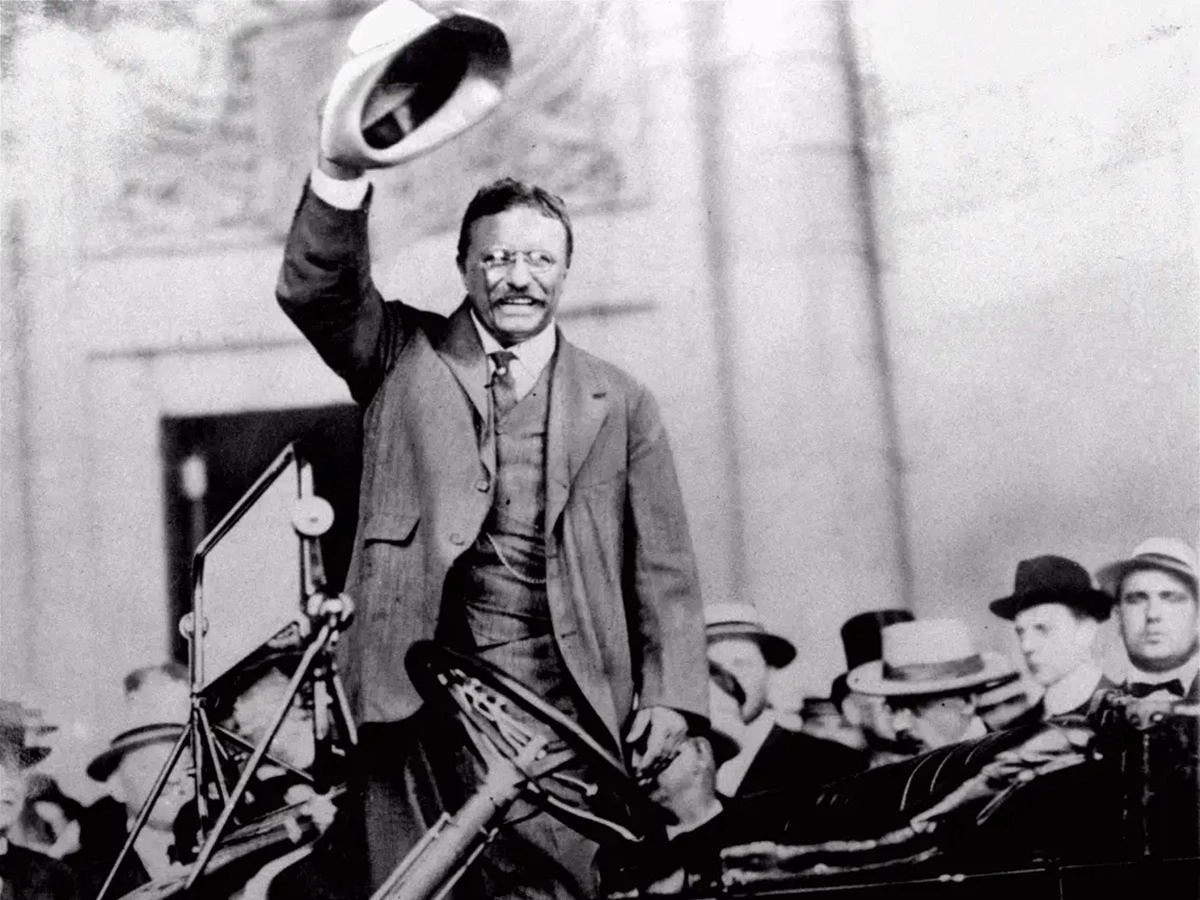
His father’s admonition acted like a powerful electric current, awakening a fierce self-reliance and extraordinary willpower within the 12-year-old boy. From that historic moment, Roosevelt vowed to overcome his destiny. He refused to become a burden or an object of pity. Together with his father, he set about building a gymnasium right inside their home. Day after day, the frail teenager tirelessly boxed, lifted weights, and endured grueling physical training. Roosevelt also developed a particular passion for mountaineering. He challenged himself by conquering steep peaks under any harsh weather conditions, from blistering heat to freezing blizzards.
This relentless effort bore fruit. In 1876, Theodore Roosevelt successfully gained admission to the prestigious Harvard University. There, his peers were astonished to see that the asthmatic boy of the past had transformed into a muscular young man, overflowing with energy and enthusiasm. Throughout his years at Harvard, he was a prominent figure in rowing clubs and competed as a semi-professional boxer for the university. Nevertheless, his personal doctors continuously warned him that his heart was under too much strain from his high-intensity activities, advising him to find a sedentary desk job to preserve his life. Roosevelt virtually ignored the advice. To him, a life without challenge and action was not worth living. To prove his mettle, he even registered to conquer the famous Matterhorn in Europe—one of the most dangerous mountains in the world at the time.
In 1880, Theodore Roosevelt graduated from Harvard University, marking his complete maturation in both intellect and physique. This was also the moment he decided to step into the political arena, joining the Republican Party with a yearning to serve and reform society. From 1882 to 1884, he was elected to the New York State Assembly. Yet, just as his political career was blossoming, tragedy struck his life in the most brutal manner. On the exact same fateful day in 1884, both his beloved mother and his young wife, Alice Hathaway Lee—who had given birth just two days prior—passed away. The immense grief threatened to completely break the man of steel. Heartbroken, Roosevelt chose to abandon politics, left his infant daughter in the care of his sister, and fled New York to seek solace at his family ranch in the wild Dakota Territory. In this desolate Western frontier, he lived the life of a true cowboy, riding horses, herding cattle, and confronting the harsh elements of nature to find balance in his soul and further temper his iron will for the greater battles that lay ahead.
CHAPTER II: FROM NEW YORK POLICE COMMISSIONER TO HERO OF THE CUBA CAMPAIGN
After his years of tempering on the Western frontier, Theodore Roosevelt returned to New York with a resurrected spirit and a determination more ironclad than ever. In 1895, he was appointed President of the New York City Police Commission (Police Commissioner). During this period, New York was a bustling metropolis but was besieged by rampant corruption, bribery, and severe moral decay within the ranks of law enforcement. Police precincts colluded with criminals, accepted protection money, and neglected their duties.
As the head of the commission, Roosevelt immediately launched a radical purge. Instead of sitting in a luxurious office reading reports, he implemented an unprecedented operational method: personally patrolling the streets at midnight and dawn. Wrapped in a dark overcoat to conceal his identity, he walked through the alleys, slums, and sentry posts to check if police officers were sleeping on the job or abandoning their posts. Slothful and corrupt officers were summarily dismissed without mercy, while dedicated ones were duly promoted.
His harshest and most controversial measure at the time was the strict enforcement of the Sunday Closing Law, which banned the sale of alcohol in saloons on Sundays. This move struck directly at the interests of powerful business moguls and protective syndicates, while also provoking a wave of protest from a segment of the populace fond of gathering. However, through his steadfastness and transparency, Roosevelt proved that the law must be respected absolutely by everyone. His actions gradually won the unwavering trust and support of the vast majority of the public. Theodore Roosevelt’s name became a symbol of integrity, justice, and courage in New York.
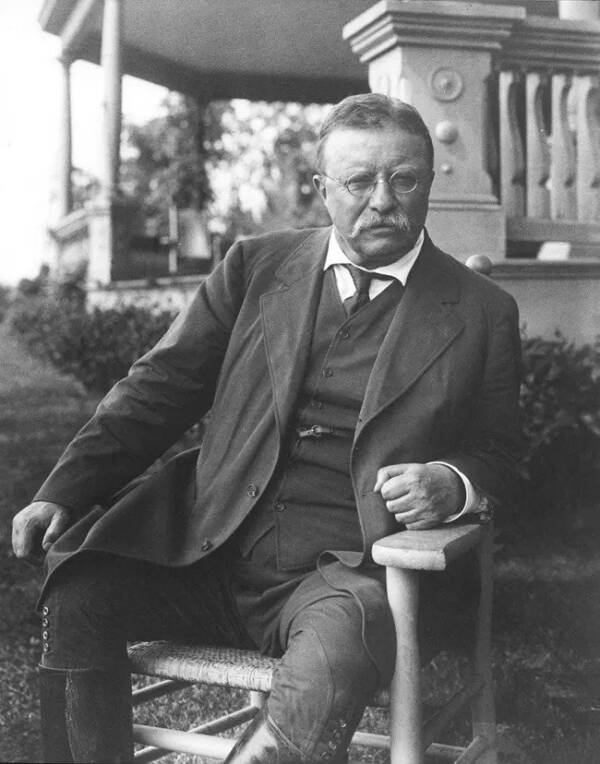
Thanks to his outstanding achievements and rising prestige, Roosevelt was appointed Assistant Secretary of the Navy in 1897 under the administration of President William McKinley. As a forward-thinking military strategist, he recognized that the United States could no longer remain confined within an isolationist policy; instead, it needed to build a powerful navy to protect its interests on the international stage. He continuously pushed for the modernization of the war fleet and prepared for global conflicts.
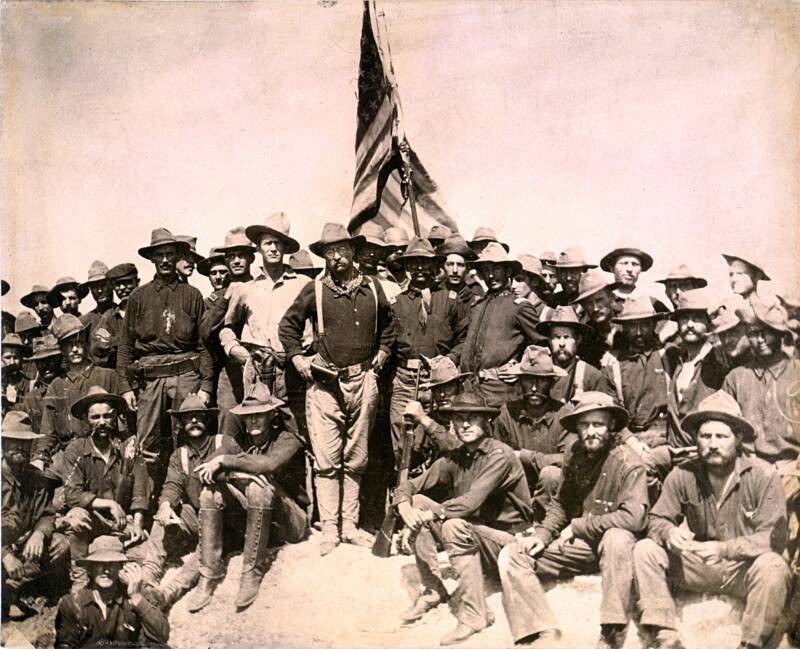
In 1898, the Spanish-American War erupted. Refusing to sit idly behind a desk while his country went to war, Roosevelt made a bold decision: he resigned as Assistant Secretary of the Navy to head straight to the front lines. Together with his friend Leonard Wood, he founded the 1st United States Volunteer Cavalry, known to legendary history as “The Rough Riders.” The composition of this regiment was extraordinary, bringing together weathered Western cowboys, courageous miners, and enthusiastic Ivy League students alike.
Roosevelt personally led this regiment into fierce battles in Cuba. The pinnacle of his military career was the historic assault on San Juan Hill. Amidst a hail of bullets and artillery fire from the Spanish army, Roosevelt displayed unparalleled bravery. Riding on horseback at the front, he exhorted and led his soldiers to charge directly up the enemy’s defensive lines. His valiance shattered the enemy’s morale and secured a resounding victory for the American forces. For his exceptional service and extraordinary gallantry on the battlefield, he was recommended for the Medal of Honor—the highest decoration in the United States military. Although it took until the year 2001, nearly a century after his death, for this honor to be officially posthumously awarded, Theodore Roosevelt secured his place in history as the only U.S. President to receive the nation’s highest military medal.
CHAPTER III: THE YOUNGEST PRESIDENT IN HISTORY AND THE WAR ON TRUSTS
Returning from the war with the aura of a national hero, Theodore Roosevelt easily won the election for Governor of New York in 1898. In this office, he continued to implement progressive reforms, fight corruption, and regulate large corporations. His forceful actions deeply alarmed conservative political bosses within the New York Republican Party. They viewed Roosevelt as an “uncontrollable” force who threatened to dismantle their established system of privilege.
To remove Roosevelt from New York politics, these party bosses devised a clever stratagem. Following the death of Vice President Garret Hobart in 1899, they convinced President William McKinley to choose Roosevelt as his running mate in the 1900 presidential election. They reasoned that the vice presidency was essentially a symbolic position with no real power, making it the perfect graveyard to bury Roosevelt’s energetic political career and neutralize his reform movement.
Roosevelt campaigned with immense vigor. Capitalizing on his outstanding oratorical skills and his image as a war hero, he traveled across the country to rally voters. The McKinley-Roosevelt ticket won a convincing victory with an agenda centered on peace, prosperity, and the conservation of natural resources. On March 4, 1901, McKinley was sworn in for his second term, and Roosevelt officially became Vice President. Conservative politicians breathed a sigh of relief, believing they had successfully tamed the “wild bull” of New York.
However, history is always filled with twists that no one can foresee. On September 6, 1901, while attending the Pan-American Exposition in Buffalo, New York, President William McKinley was assassinated by an anarchist. Despite the best efforts of doctors, McKinley succumbed to his wounds and drew his last breath on September 14, 1901. On that fateful day, Vice President Theodore Roosevelt was officially sworn in, becoming the 26th President of the United States. At age 42, he entered the White House as the youngest president in American history, ushering in a new era that would fundamentally transform the nation.
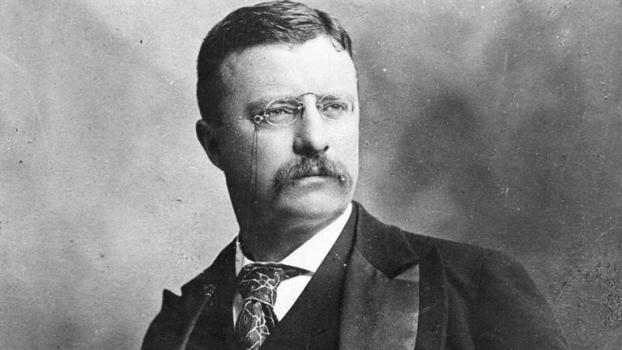
Upon entering the White House, Roosevelt immediately asserted that he was no puppet of the capitalist elite. At the dawn of the 20th century, America was being suffocated by “Trusts”—mammoth corporate monopolies that controlled every vital industry, from railroads and steel to oil, food, and meat. These corporations colluded to fix prices, eliminate competition, exploit workers, and corrupt the entire political system from state governors to congressmen in Washington.
To combat this crisis, Roosevelt initiated and led the Progressive movement, executing a domestic policy known as the “Square Deal.” The core objective of this policy was not to destroy capitalism, but to bring fairness and transparency to the average middle-class citizen while dismantling predatory commercial monopolies.
His primary legal weapon was the Sherman Antitrust Act of 1890—a law that had previously been largely ignored or used primarily against labor union strikes. In February 1902, Roosevelt delivered his first shockwave to the financial oligarchy by directing the Department of Justice to file a lawsuit against the Northern Securities Company. This was a massive holding company established by the most powerful financiers of the era, J.P. Morgan and John D. Rockefeller, to monopolize the entire railroad network connecting the Great Lakes and the Pacific Northwest.
This blow was an incredibly risky political gamble for Roosevelt, as these financial titans were the largest financial donors to his own Republican Party. J.P. Morgan even went to meet Roosevelt and proposed: “If we have done anything wrong, send your man to my man and they can fix it up.” But Roosevelt flatly refused. The legal battle dragged on until 1904, when the Supreme Court of the United States ruled in a 5-4 decision that the government was correct and ordered the dissolution of the Northern Securities Company. This resounding victory earned Roosevelt his legendary moniker: “The Trustbuster.” Throughout his two terms, he invoked the Sherman Act 44 times to sue and discipline corporate monopolies, solidifying a supreme principle: the federal government was the sovereign power governing the nation, not the financial barons.
CHAPTER IV: THE CLASH BETWEEN IDA TARBELL AND ROCKEFELLER’S STANDARD OIL EMPIRE
Among all the antitrust battles of the Progressive Era, the confrontation with John D. Rockefeller’s Standard Oil Company is regarded as the most epic and dramatic. This battle did not take place merely in courtrooms or congressional halls; it was ignited and driven by the pen of an extraordinary woman: Ida Tarbell.
To understand the roots of this conflict, one must travel back in time to the region of Titusville, Pennsylvania, in 1872. Here, small, independent oil producers and refiners organized massive protests, overturning cargo cars and smashing oil barrels bearing the Standard Oil logo. The leader of that resistance movement was Franklin Tarbell. The cause stemmed from a secret agreement that Rockefeller’s Standard Oil had made with railroad tycoons to double the shipping rates for all competitors, in exchange for lucrative rebates for Standard Oil. This ruthless maneuver drove independent producers to the brink of bankruptcy, forcing them to sell their businesses to Rockefeller for a pittance. Although individual states sought to intervene, Rockefeller’s machine was unstoppable. Through ruthless anti-competitive tactics and relentless expansion, Standard Oil quickly gained control of 90% of the U.S. oil market and 85% of the global market, making Rockefeller the wealthiest individual on the planet. Franklin Tarbell failed to stop Rockefeller. No one could stop him, except for Franklin’s 14-year-old daughter at the time—Ida Tarbell.
By 1901, Ida Tarbell was 44 years old. She was one of the few American women of her era to hold a degree in science and was serving as an editor at the prestigious McClure’s magazine in New York City. Armed with her scientific background, she specialized in writing about complex technical subjects and long-running biographical series on figures like Napoleon and Abraham Lincoln. When the editorial board of McClure’s decided to produce a series on the Trusts, they chose Standard Oil because the corporation possessed a highly centralized structure under the command of a single individual, making the narrative more accessible to readers.

Ida Tarbell embarked on her research utilizing an entirely new journalistic methodology: instead of relying on interviews or rumors, she delved deep into the analysis of public records, economic contracts, legislative filings, and court judgments. This approach was so novel that it did not yet have a name, but today the world knows it as Investigative Journalism. Sensing the danger of the topic, Ida’s father begged her to stop, and a bank owned by Rockefeller even threatened to cut off funding for the magazine. But Tarbell remained steadfast.
In the course of her investigation into Rockefeller, Tarbell was initially impressed and even admiring of his genius. Rockefeller was a great innovator. At that time, the refining process of crude oil yielded only 60% usable kerosene; the remainder consisted of highly flammable byproducts that were often dumped directly into rivers and lakes, causing catastrophic fires. Rockefeller found ways to transform these byproducts into lubricants, paint, paraffin wax, and even realized that gasoline—then a discarded waste product—could be used as fuel for factory machinery.
However, Tarbell’s admiration completely vanished as she delved into his business methods. Rockefeller expanded his empire by coercing competitors into selling their companies. If they refused, Standard Oil would slash product prices below cost in that specific region, absorbing short-term losses to drive the competitor into a corner, forcing them into bankruptcy, and then buying them out at rock-bottom prices. He did this not only to rivals but even to friends who had helped him in the early days of his venture. Standard Oil executed a vertical integration strategy: purchasing barrel manufacturers, logging companies, chemical plants, and distribution units to control the entire supply chain. Finally, he invested heavily in a network of oil pipelines to sever reliance on the railroads and transport his products in the most efficient manner possible.
Rockefeller possessed a strange, quasi-spiritual belief regarding money and capitalism. He viewed the expansion of Standard Oil as a “divine calling” from God to make the market more efficient and reduce costs for consumers. He treated compliant employees well but would ruthlessly crush anyone who dared to resist. The “Cleveland Massacre” of 1872, during which Standard Oil swallowed 22 out of 26 competitors in Ohio in just three months, stood as clear proof.
Ida Tarbell began exposing all of this in a landmark series running from 1902 to 1905 in McClure’s. She discovered a book recording the State of Pennsylvania’s investigation into the secret deal between Standard Oil and the railroads at the New York Public Library—the only surviving copy after Standard Oil had sought to purchase and destroy all other copies. She traveled across the country, meeting small grocery store owners who had been squeezed by Standard Oil: employees of the conglomerate would threaten that if the store did not cease selling competitors’ oil, Standard Oil would open a competing store right next door and predatory-price until the original grocery store collapsed entirely. She also exposed how Standard Oil established a trust company in New York in 1885 to manage subsidiaries in other states to circumvent laws banning a company from operating across state lines.
During this investigation, Tarbell found an unexpected ally in Henry Rogers, the Vice President of Standard Oil. Mistakenly believing that her series would be a celebration of the corporation’s achievements, Rogers opened his office doors and answered her questions. However, the biggest turning point arrived in 1904 in New York City, when Tarbell met a terrified man carrying a briefcase. This individual revealed that a young schoolboy in his Sunday school class was an office clerk at the Standard Oil headquarters whose job was to incinerate classified documents. When the boy saw his teacher’s name on some papers, he secretly kept them instead of tossing them into the furnace.
Opening the briefcase, Tarbell was astonished to find a trove of documents containing price lists, train schedules, and distribution routes for all of Standard Oil’s competitors, complete with precise dates and quantities. This was the smoking gun proving that Standard Oil had bribed railroad employees to gather economic intelligence on competitors’ shipments, allowing them to systematically corner and cut off their lifelines. Rockefeller was no prophetic market genius; he was operating a nationwide economic espionage network. This shocking revelation immediately caught the attention and secured the robust backing of President Theodore Roosevelt.
Ida Tarbell’s articles sent an unprecedented shockwave through American public opinion. The public, who had previously been confused by the complex structure of the Trusts, now clearly saw the reality of the monopoly. Rockefeller was transformed from a God-fearing philanthropist into a “monster” in the public eye. The pressure of public outrage weighed so heavily that his family fell into a state of nervous exhaustion; his wife suffered a stroke, and Rockefeller himself developed severe alopecia, causing all of his hair, eyebrows, and eyelashes to fall out. He had to build fences around his estate, hire armed Pinkerton guards for 24/7 protection, and always slept with a revolver by his bedside.
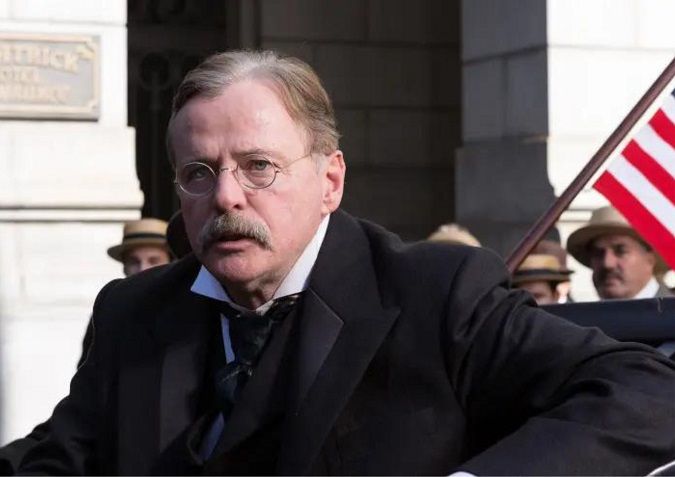
Leveraging this wave of public fury, Roosevelt’s administration launched a comprehensive legal assault on Standard Oil. In 1907, the government officially sued the Standard Oil Company of Indiana on 1,903 counts of violating the Elkins Act (the law banning railroad rebates). To determine the fine, the judge ordered Rockefeller himself to appear in court in Chicago. After days of evading process servers by constantly moving between states, on July 6, 1907, Rockefeller appeared in court amidst a screaming, angry crowd. On the witness stand, the oil tycoon played the part of a senile old man, pretending to forget core events and claiming he had long since retired from active management. Though he avoided prison, the judge delivered a historic ruling: fining Standard Oil the maximum amount for each violation, totaling a staggering $29,240,000. This was the largest fine ever levied against a corporation in America up to that point.
Although the fine was later overturned on appeal due to a technical error, it paved the way for the final battle in 1909 when the United States government sued the Standard Oil Company of New Jersey (the holding company of the entire empire). The case spanned over 20,000 pages of evidence proving that the conglomerate operated an illegal combination to stifle trade. In 1911, the Supreme Court of the United States delivered a historic, near-unanimous 8-1 ruling, ordering the dissolution of Standard Oil into 34 independent companies.
Rockefeller received the news of the dissolution while playing golf with a priest. Unmoved, he turned to the priest and said: “Father, if you have any money, buy Standard Oil stock.” And he was right. When the empire was broken into 34 separate entities (the precursors to modern giants like ExxonMobil, Chevron, and Amoco), the stock prices of these companies soared on the free market. Because Rockefeller personally owned 25% of the shares, his net worth quadrupled, making him the first billionaire in human history and the richest man in the world. Although the dissolution did not fully foster the fierce competition the government expected—as the successor companies maintained tacit understandings to divide the market—it remained a monumental symbolic victory, proving that no economic power could stand above American law.
CHAPTER V: THE PARLIAMENTARY BATTLE AND THE BIRTH OF THE HEPBURN ACT
Following his bitter experiences where court rulings were overturned or delayed by top-tier lawyers representing the financial elite, President Theodore Roosevelt realized that relying solely on the judicial branch to punish wrongdoings after they occurred was insufficient. To break the power of the Trusts at its root, the government required powerful legislative tools to proactively prevent illicit behavior and regulate the market from the outset. The core target he needed to strike was the lifeblood of the entire American economy at the time: the railroad industry.
During this period, giant railroad syndicates, backed by J.P. Morgan and Rockefeller, were colluding to manipulate freight rates, crush small businesses, and prioritize mega-corporations through a system of clandestine rebates. To address this crisis, Roosevelt championed the drafting and passage of a revolutionary piece of legislation: The Hepburn Bill. The core objective of this act was to grant the Interstate Commerce Commission (ICC) the actual power to set maximum railroad freight rates, compel railroad companies to open their accounting ledgers for government inspection, and completely ban the issuance of free passes to corporate cronies. Crucially, the act also extended regulatory scope to include Rockefeller’s oil pipeline systems.
On February 28, 1906, the Hepburn Act easily passed the House of Representatives—where the Progressive movement held sway. However, the real and most vicious battle lay in the Senate, dubbed the “Millionaires’ Club” and a fortified bastion of the conservative faction. Leading the opposition to the bill was Senator Nelson Aldrich, the Republican Majority Leader in the Senate. Aldrich was a veteran politician, notorious for capturing and killing economic reform bills to protect corporate interests. He himself held massive shares in Rhode Island’s streetcar system and had just sold it to a railroad Trust for a windfall profit.
Aldrich and the conservatives launched a powerful media campaign attacking Roosevelt, accusing him of being a “secret socialist” seeking to nationalize private property and sabotage the free-market economy. To suffocate the bill, Aldrich employed a highly sophisticated political maneuver: he handed leadership and management of the Hepburn Bill in the Senate to Senator Benjamin Tillman, better known by his notorious moniker “Pitchfork Ben.”
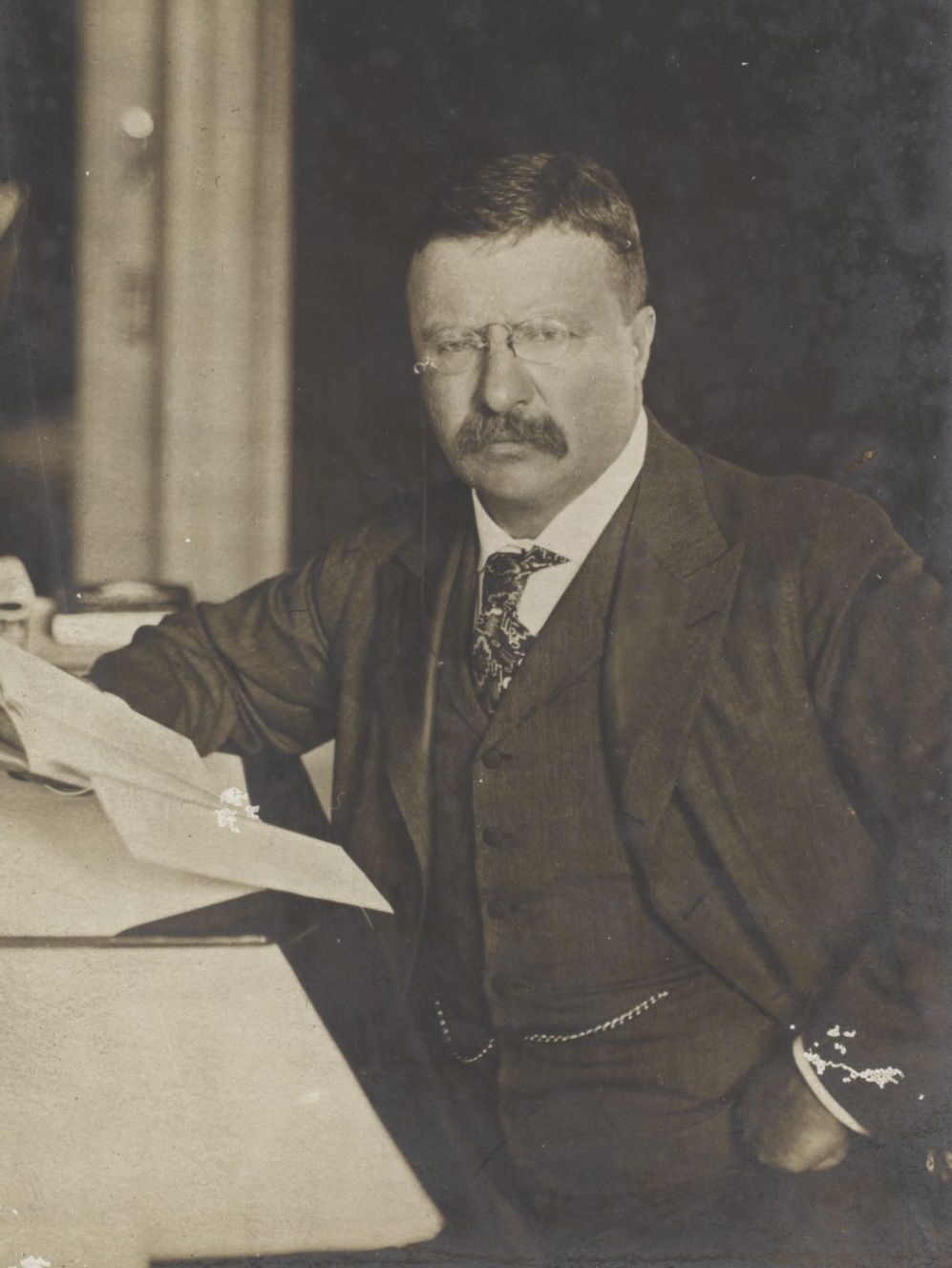
Benjamin Tillman was one of the most controversial and feared figures in American political history at the time. A virulent white supremacist and former leader of the notorious “Red Shirts” paramilitary group in South Carolina, Tillman had led campaigns of violence, voter fraud, and terror against African American communities during the post-Reconstruction era. Between Roosevelt and Tillman lay a deep personal animosity. In 1901, Roosevelt had made history by inviting the prominent Black educator Booker T. Washington to dine officially with the first family at the White House—an unprecedented action. Tillman had responded with venomous racial slurs. Their relationship fractured completely in 1902 when Roosevelt withdrew an invitation to Tillman for a White House dinner after Tillman aggressively punched a colleague right on the Senate floor.
Nelson Aldrich calculated that by assigning the bill to Tillman, the personal hatred between Tillman and Roosevelt would ensure they could never find common ground, causing the bill to be torn apart by bickering and die in committee. However, Aldrich underestimated the pragmatism and patriotism of both men. Although Tillman despised Roosevelt, he was a fierce opponent of the railroad Trusts’ power. Recognizing a prime opportunity to attack the financial barons, Roosevelt set aside his personal ego and actively established a secret channel of communication with Tillman through an intermediary, avoiding the need for face-to-face meetings.
Throughout this process, Roosevelt also continuously consulted and conferred with the famous investigative journalist Ray Stannard Baker, who had just published a shocking exposé unmasking the sophisticated tactics used by the railroad industry to evade anti-rebate laws. Baker argued that focusing solely on setting maximum rates was inadequate, because the core issue driving inequality was that railroads intentionally lowered minimum rates for mega-corporations while exploiting small companies with auxiliary costs like storage fees, refrigeration fees, or under-weighing cargo. Baker pressed Roosevelt to implement a more radical measure: granting the government the authority to dictate the entire rate structure.
Baker’s pressure and the radical amendments introduced by Tillman’s faction made the bill too heavy, causing it to lose the support of moderate senators. Recognizing that the alliance with Tillman risked collapsing and that the bill might be rejected entirely, Roosevelt showcased his natural genius as a master political tactician. He opted for the “Middle Way.” He stripped out the radical auxiliary clauses, restoring the bill to its original framework: a powerful yet measured regulatory act that the conservative wing could accept.
Simultaneously, Roosevelt utilized his bully pulpit to full effect to pressure the Senate. He publicly leaked information revealing that Rockefeller’s Standard Oil had sent a barrage of telegrams to conservative senators to call in past financial campaign contributions, urging them to vote against the bill. Public outrage reached a boiling point. Newspapers continuously published lists of senators suspected of being “bought out” by the Trusts. Faced with immense pressure from the citizenry and the steadfastness of the President, Aldrich’s conservative block splintered and collapsed.
Ultimately, the Senate capitulated and passed the Hepburn Act in 1906. Even Benjamin Tillman cast aside his personal vendetta to vote in favor. This was a monumental legislative victory for Roosevelt, proving for the first time in history that the federal government possessed the authority and legal tools to directly intervene in and regulate private economic activities to safeguard the public interest.
CHAPTER VI: REFORMING THE MEATPACKING INDUSTRY AND THE BIRTH OF THE “MUCKRAKERS”
It was during this high tide of antitrust battles and social reform that a new term was coined to name this generation of courageous investigative journalists: “Muckrakers.” The term was introduced by President Theodore Roosevelt himself in a famous 1906 speech. He borrowed the imagery from John Bunyan’s classic tri-allegorical novel Pilgrim’s Progress, referring to a man who could look no way but downward with a muck-rake in his hand to clean up the filth at his feet, never looking up to the radiant sky above. Roosevelt declared:
“The men with the muck-rakes are often indispensable to the well-being of society, but only if they know when to stop raking the muck.”
This speech reflected Roosevelt’s complex and highly pragmatic relationship with the Progressive media. On one hand, he deeply appreciated and readily utilized their writings as an effective tool to generate public support for his reforms. On the other hand, as a national administrator, he worried that sensationalism, radicalism, and an overemphasis on the dark underbelly of society could erode citizens’ trust in institutional systems and push the country into chaos or the socialism he steadfastly opposed. Although journalist Ida Tarbell despised the “Muckraker” label, believing it demeaned the scientific nature of her work, the term officially entered history as a symbol for the golden age of American investigative journalism.
One of the greatest impacts of the Muckraker movement during this era led to the wholesale reform of the American meatpacking industry, ignited by a shocking realist novel titled “The Jungle” by young author Upton Sinclair, published in 1906.
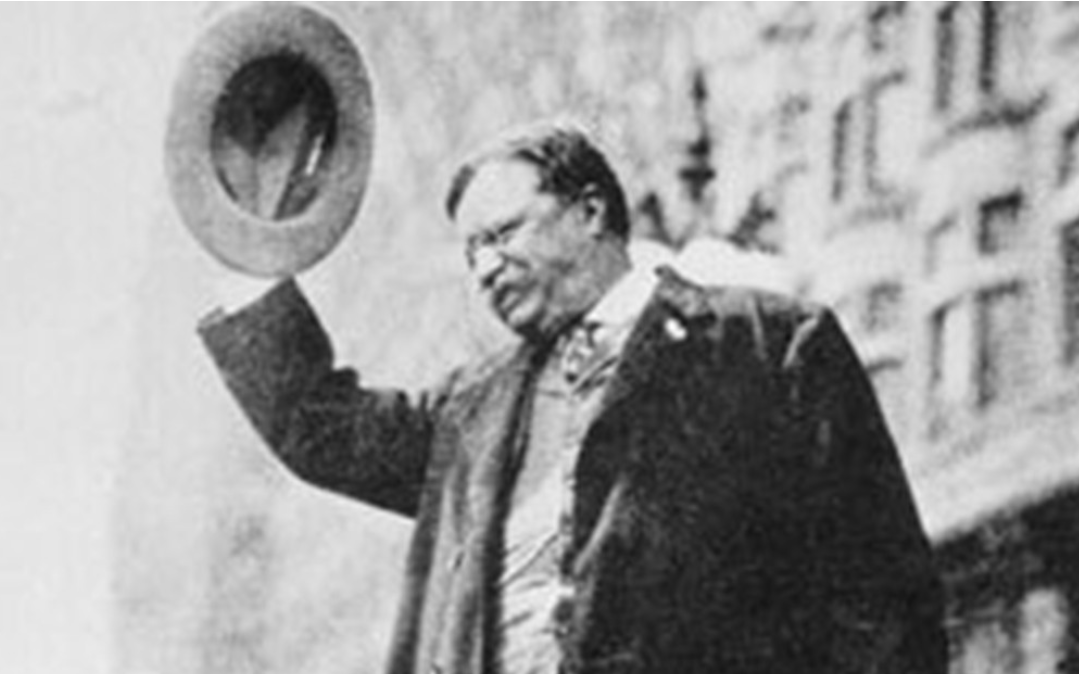
In 1904, to gather material for his book, Sinclair disguised himself as a laborer, carrying a lunchbox to infiltrate the labyrinth of colossal livestock slaughterhouses and meatpacking plants in Chicago. For weeks on end, he witnessed firsthand the horrifying truths regarding the lives of the impoverished, predominantly Lithuanian immigrant workers and the food production processes of the Beef Trust.
Sinclair saw workers have their fingers severed by bone saws only to be immediately fired without a dime of compensation. He heard spine-chilling accounts of laborers slipping into massive rendering vats, being cooked along with the cattle fat and meat without anyone noticing. Worse still, he witnessed piles of rat dung, poisoned rats, and meat infested with tuberculosis or rot being swept directly off filthy floors into meat grinders to make sausages. Spoiled pork was treated with toxic chemicals like formaldehyde and borax to eliminate the odor, then mislabeled as premium beef and sold to the public.
When The Jungle was published, it triggered a global wave of nausea and outrage. American citizens and international trading partners realized with horror how the food they consumed daily was manufactured in living hellholes. U.S. meat export sales instantly plummeted by half.
Although Roosevelt was highly skeptical of Upton Sinclair’s socialist ideology and viewed him as somewhat of a “crackpot,” as a responsible leader, he recognized that he could not ignore the allegations. He immediately established a special commission and dispatched trusted government officials to Chicago to conduct unannounced inspections. Although the Beef Trust had caught wind of the inspection and launched a frantic, three-week cleanup campaign beforehand, what the government inspectors discovered still defied imagination. The report sent back to the White House confirmed that every sickening detail in Sinclair’s book was true.
Faced with immense pressure from the public, Roosevelt forced Congress to act immediately. In that same year, 1906, he signed into law two bedrock statutes for the modern social safety net: The Pure Food and Drug Act and The Federal Meat Inspection Act.
The Pure Food and Drug Act strictly prohibited the manufacture, sale, or transportation of misbranded, adulterated, or poisonous foods and medicines. It forced manufacturers to clearly state all major ingredients on product packaging, specifically requiring the disclosure of 10 dangerous, addictive substances common at the time, including alcohol, opium, cocaine, cannabis, and morphine—substances that had previously been mixed indiscriminately into patent medicines, causing thousands of children to be poisoned or addicted. This provided the core legal foundation for the establishment of the U.S. Food and Drug Administration (FDA). Meanwhile, the Meat Inspection Act mandated that Department of Agriculture inspectors examine every animal both before and after slaughter, while imposing strict sanitary standards across all packing plants.
Although these two laws were monumental steps forward in protecting the health of millions of American consumers, author Upton Sinclair himself felt deeply bitter and disappointed. He observed that the public and the government cared only about the safety of the meat entering their stomachs, while completely ignoring the tragic plight and wretched working conditions of the impoverished laborers he sought to champion. He left behind a famous quote reflecting this reality:
“I aimed at the public’s heart, and by accident I hit it in the stomach.”
CHAPTER VII: THE PRESIDENT OF FIRSTS AND A LEGACY OF GLOBAL PROWESS
Following his landslide victory in the 1904 presidential election, securing the absolute backing of the populace for his first full term, Theodore Roosevelt transformed the White House into a hub of historic, constructive decision-making, lifting America out of isolationism to ascend as a preeminent global superpower. His tenure was marked by a series of unprecedented and impressive “firsts”:
1. Constructing the Panama Canal and a Modern Navy
In November 1906, Roosevelt made history by becoming the first sitting U.S. President to leave the country while in office. He boarded the battleship USS Louisiana to personally inspect the construction site of the Panama Canal—one of humanity’s most monumental and ambitious engineering feats. Recognizing that connecting the two oceans was a matter of vital survival for both America’s economy and national defense, Roosevelt used iron-fisted diplomatic and military measures to secure control over the zone.
To project America’s newly minted strength on the world stage, in 1907, he directed the United States Navy to assemble The Great White Fleet, consisting of 16 modern, hull-steeled battleships painted a gleaming white. This fleet executed a historic, two-year circumnavigation of the globe, sailing through major oceans as a stern declaration to European and Asian empires that the United States had become a modern naval power that could not be disregarded.
2. The First American to Receive the Nobel Peace Prize
Demonstrating statecraft alongside military muscle, Roosevelt was an exceptional diplomat. From 1904 to 1905, the Russo-Japanese War raged brutally in the Far East. Sensing a dangerous threat to the global balance of power, Roosevelt proactively intervened as a mediator. He invited delegations from both nations to Portsmouth, New Hampshire, to participate in an extended peace conference. Through patience and shrewd diplomatic skill, he steered both sides to sign the Treaty of Portsmouth, ending the war. This monumental success earned Theodore Roosevelt the Nobel Peace Prize in 1906, making him the first American in history to receive the honor.
3. The Father of the Wildlife Conservation Movement
For the American public today, Roosevelt’s greatest and most cherished legacy is his decisive stand to protect natural resources and the wild environment. Having lived amidst the pristine nature of the Dakota Territory, he understood that unregulated industrial expansion could utterly destroy the nation’s beauty and ecosystems.
He established the United States Forest Service and signed decrees establishing 5 new National Parks. Throughout his time in power, Roosevelt set aside a colossal area totaling 150 million acres of forest land across the country for conservation, turning them into national forests and safe havens for wildlife against poaching and illegal logging.
4. Changing the White House and Promoting Social Equality
Roosevelt was also the president who invited the most famous architects of the era to conduct a comprehensive overhaul and expansion of the Executive Mansion. Prior to his tenure, the building was called various names, such as “The President’s Mansion” or “The Executive Mansion.” But starting in 1901, the name “The White House” was officially established by Roosevelt on all official national documents and administrative papers, based on the building’s distinctive white exterior paint.
On the social front, he broke through entrenched barriers of prejudice by inviting prominent African American educator Booker T. Washington to discuss state affairs over an official dinner at the White House, and he was the first president to appoint a citizen of Jewish heritage to a cabinet-level position.
CHAPTER VIII: THE BIRTH OF THE BUREAU OF INVESTIGATION (FBI)
One of the most profound and far-reaching legislative and security legacies of Theodore Roosevelt, enduring to this day, was the birth of America’s national law enforcement apparatus. Surprisingly, despite the nation having been founded for well over a century, until Roosevelt took power, the country completely lacked a federal police force or a unified department with investigative authority over crimes on a nationwide scale.
America’s security apparatus at the time was highly fragmented and loose. Each state possessed its own local police force, which lacked jurisdiction to pursue criminals once they crossed state lines. The United States Marshals Service, operating under the federal courts, had a broad geographical scope but its duties were primarily restricted to capturing fugitives; it lacked the mandate and training to conduct specific investigations into complex interstate crimes. Meanwhile, the United States Secret Service at the time was positioned under the Department of the Treasury, with its sole mandate being the investigation of currency counterfeiting. It was only after the assassination of President William McKinley in 1901 that the Secret Service was assigned the additional secondary duty of protecting the nation’s chief executives.
Because of this severe deficiency, U.S. Presidents prior to Roosevelt, when seeking to investigate major federal cases, counter riots, handle terrorism, or gather economic intelligence, had to spend public funds to hire private detective forces belonging to the Pinkerton National Detective Agency. Relying on a private, armed force operating for profit and largely unbound by federal laws and constitutional constraints like the Pinkertons caused severe complications, leading to bloody crackdowns on workers and tarnishing the government’s reputation.
Recognizing the immense danger of this system, Roosevelt instructed the talented Attorney General in his cabinet, Charles Joseph Bonaparte (a grandnephew of Emperor Napoleon Bonaparte of France), to immediately sketch a blueprint for an elite investigative task force under the Department of Justice.

This plan instantly faced a wall of fierce opposition and prohibition from the United States Congress. Many conservative congressmen and political factions feared that granting the President a nationwide police force would transform him into a “tyrant” and turn America into a dictatorial police state. Congress went so far as to pass a law strictly forbidding the Department of Justice from utilizing Secret Service personnel to conduct federal investigations.
However, Theodore Roosevelt, possessed of an iron will, refused to back down. On July 26, 1908, taking advantage of a congressional recess, Attorney General Bonaparte, acting on the President’s orders, issued a historic administrative directive: utilizing existing operational public funds within the Department of Justice budget to officially establish a special investigative force consisting of 34 initial agents, named the Bureau of Investigation (BOI). Navigating through multiple stages of development and restructuring, this force was later renamed the Federal Bureau of Investigation (FBI) in 1935. From a tiny office born in defiance of congressional bans, the FBI grew into one of the largest, most powerful, and most universally recognized security, intelligence, and law enforcement agencies in the world.
CHAPTER IX: THE PANIC OF 1907 AND THE METTLE OF A LEADER
Despite harvesting historic successes, the final years of Roosevelt’s presidency faced an economic trial of the harshest order, forcing him into agonizing, high-stakes decisions.
On election night in 1904, amidst the joy of a landslide victory, Roosevelt made a historic promise that he would come to regret: declaring that because he had served out the remainder of McKinley’s term and one full term of his own, he considered it two terms and vowed never to run for president again in 1908. This declaration inadvertently turned him into a “Lame Duck” on the political stage. The conservative wing of the Republican Party and the financial barons of Wall Street realized they no longer needed to compromise with Roosevelt; they merely needed to use stalling tactics to wait out his term. Consequently, his subsequent progressive bills aimed at strengthening the Sherman Antitrust Act or establishing a National Insurance Bureau were summarily shot down by Congress.
The climax of his difficulties arrived in October 1907, when a comprehensive financial crisis erupted, recorded in history as The Panic of 1907. The crisis originated from a failed attempt by major Wall Street investors to corner the stock of a copper mining company, triggering a domino-like collapse of a series of large trust banks.
The American financial system ground to a complete halt. Panicked citizens converged on banks in endless lines to withdraw their entire savings, draining liquidity and driving banks to the brink of mass bankruptcy. The stock market plummeted in a free fall. America stood on the precipice of a wholesale economic depression that threatened to collapse the national economy.
Amidst this precarious scenario, the individual who stepped forward to rescue the economy was not the federal government—which at the time lacked a Central Bank—but rather the great financier J.P. Morgan, the very man Roosevelt had sued a few years prior. Morgan summoned all the major bank presidents of New York to his mansion, locked the doors, and forced them to pool their capital to establish an emergency relief fund to inject liquidity into dying banks.

However, a new crisis emerged when a massive Wall Street brokerage firm faced imminent default because it had used its entire block of stock in the Tennessee Coal, Iron and Railroad Company (TCI) as collateral, while TCI’s stock price was crashing. To halt this impending collapse, J.P. Morgan proposed a plan: the United States Steel Corporation (US Steel), which he owned, would step in to purchase TCI to stabilize the market.
But there was a massive legal hurdle: US Steel already controlled 60% of the American steel market. If they swallowed TCI, they would become an absolute monopoly and would almost certainly face a lawsuit from Roosevelt’s administration under the Sherman Act. Representatives from US Steel boarded an emergency train through the night to Washington, entering the White House at dawn on November 10, 1907.
With less than an hour remaining before the Wall Street stock market opened for Monday trading, a failure to find a solution would trigger a wave of panic selling that would devastate the economy. The financial barons laid an ultimatum on Roosevelt’s desk: They were ready to deploy capital to save the economy by buying TCI, but only on the condition that the President personally guarantee in writing that the government would not prosecute or sue US Steel for the acquisition.
This was a profoundly bitter pill to swallow for “The Trustbuster” Theodore Roosevelt. If he agreed, it meant he had to personally betray the antitrust principles he had championed his entire life and capitulate to the financial oligarchy. But if he refused, the national economy would implode, and millions of ordinary citizens would lose everything and plunge into starvation. Facing this brutal reality, Roosevelt demonstrated the ultimate mettle of a pragmatic leader. He placed the survival and interests of his people and nation above all else. He signed the commitment, allowing the acquisition to proceed. The market opened and instantly stabilized. The panic ceased, and America was rescued from catastrophe in the nick of time.
CHAPTER X: THE LATER YEARS AND THE BRAVE CAMPAIGN OF 1912
In 1908, remaining true to his word of honor, Theodore Roosevelt declined to run for a third term, even though his prestige was at its absolute zenith. Instead, he channeled his entire political weight into backing his close friend and Secretary of War, William Howard Taft. Armed with Roosevelt’s endorsement, Taft secured a sweeping victory over Democratic candidate William Jennings Bryan to become the next President of the United States.
Immediately after vacating the White House, to avoid interfering with the new administration, Roosevelt embarked on an extended safari and expedition across Africa and Europe lasting over a year. However, upon his return in 1910, he was deeply dismayed by Taft’s performance. Bowing to pressure from the conservative wing of the Republican Party, Taft had steadily rolled back Roosevelt’s Progressive policies, signed bills increasing protective tariffs that favored corporate interests, and fired several of Roosevelt’s close conservation officials.
Unable to watch his Progressive legacy be dismantled, Roosevelt chose to re-enter the political arena. He announced his candidacy for the Republican presidential nomination of 1912 to challenge Taft. Despite winning landslide victories in almost every state that held a primary election due to the overwhelming support of ordinary party members, Roosevelt was sidelined by the entrenched conservative leadership of the Republican Party, who used delegate-manipulation tactics at the convention to award the nomination to Taft.
Infuriated by the injustice of the old-guard political machine, Roosevelt and his associates made a audacious move: they declared their secession from the Republican Party to found a new party called the Progressive Party, popularly known by its legendary moniker The Bull Moose Party—inspired by Roosevelt’s declaration to reporters that he felt “as strong as a bull moose.” The Progressive Party’s 1912 platform was the most progressive agenda in American history up to that point, calling for social insurance, limits on working hours, women’s suffrage, and stricter regulation of corporations.

The 1912 campaign gave rise to one of the most classic events proving the matchless iron will and physical prowess of Theodore Roosevelt. On October 14, 1912, as he was preparing to leave the Gilpatrick Hotel in Milwaukee to head to an auditorium for a speech, a psychotic man named John Schrank rushed out from the crowd and fired a colt revolver straight into his chest at close range.
The bullet struck Roosevelt’s chest. Secretaries and bodyguards immediately tackled and subdued the assassin. The panicked crowd roared, demanding he be lynched on the spot. Amidst the chaos, Roosevelt maintained an astonishing composure. He shouted: “Don’t hurt him! Bring him here. I want to look at him,” and ordered the police to take custody of the man. When frantic onlookers insisted on rushing him to the hospital immediately, Roosevelt refused. He put his hand to his mouth, coughed, and noted that no blood came up. Armed with the knowledge of an amateur anatomist, he knew the bullet had not penetrated his lung.
Looking down at his chest, his shirt was soaked with blood. The bullet had traveled through a metal eyeglass case and a 50-page, double-folded manuscript of his speech placed in his breast pocket before embedding itself deep against his rib. These two items had effectively saved his life by significantly reducing the bullet’s velocity. Roosevelt declared: “I will deliver this speech or die right here!”.
He stepped onto the stage of the Milwaukee auditorium to the amazement of thousands of spectators. Opening his address, he unbuttoned his vest to expose his blood-soaked shirt and declared clearly:
“Friends, I shall ask you to be as quiet as possible. I don’t know whether you fully understand that I have just been shot; but it takes more than that to kill a Bull Moose!”
Roosevelt stood at the podium and delivered his powerful speech continuously for over an hour before finally permitting doctors to transport him to the hospital. Subsequent X-rays revealed that the bullet was lodged deep in his chest muscle, resting against his rib. Concluding that surgery to extract the bullet would be more hazardous than leaving it, doctors opted to let the bullet remain in his chest for the rest of his life.
Due to the fracturing of the Republican Party into two factions (those backing Roosevelt and those backing Taft), Democratic candidate Woodrow Wilson won the 1912 election. Roosevelt stepped away from active politics but never ceased monitoring the nation’s destiny. When World War I erupted, he fiercely criticized President Wilson’s policy of neutrality and even offered to personally raise a volunteer division to fight in France, much like his Rough Rider days in Cuba, though his proposal was flatly rejected by Wilson due to concerns over his political influence.
Roosevelt’s health steadily deteriorated from the long-term ailments contracted during his grueling expeditions through the Amazon rainforest and old wounds. On January 6, 1919, the great President of the United States peacefully drew his last breath in his sleep at his family estate, Sagamore Hill, in Long Island at the age of 60. Upon hearing of his passing, sitting Vice President Thomas R. Marshall delivered an immortal tribute: “Death had to take Roosevelt sleeping, for if he had been awake, there would have been a fight.”
CHAPTER XI: FAMILY LIFE AND THE ORIGIN OF THE LEGENDARY TEDDY BEAR
Alongside his image as an iron-fisted politician, a valiant war hero, or a strict legislator, Theodore Roosevelt in his private life was a deeply warm family man, a devoted husband, and an exceptionally dedicated father.
Following the grief of losing his first wife in 1884, Roosevelt remarried his childhood sweetheart, Edith Carow, in 1886. Together, they built a happy home at their Oyster Bay estate on Long Island, raising 5 children (4 sons and 1 daughter) alongside his eldest daughter, Alice.
As a father, Roosevelt applied progressive yet firm educational methods. Drawing from the bitter lessons of his own childhood, he encouraged all his children, both boys and girls, to grow up strong, resilient, and active. Every single morning, he carved out time to play directly with his children. He taught them how to shoot, box, row, ride horses, and engage in vigorous physical games that demanded high imagination and grit.
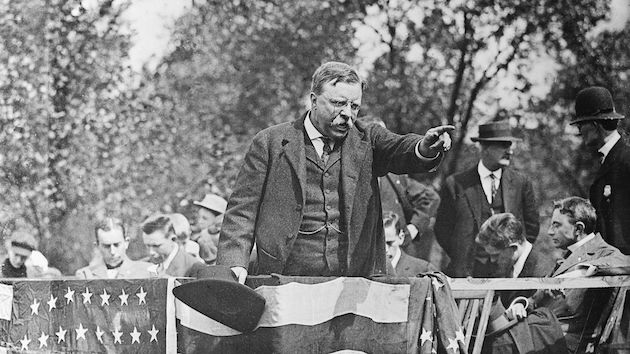
At the same time, he was exceptionally strict regarding their moral and character development. When his young son Quentin lied to his teachers to skip school, Roosevelt did not hesitate to personally punish him by locking him in the woodshed for an entire day to teach him the virtue of honesty. He continuously reminded his children that regardless of their father being a Governor or a President, they under no circumstances had the right to view themselves as superior or entitled to special privileges. In 1904, just after his sweeping presidential victory, he penned a moving letter to his 15-year-old son:
“I want you to know that no matter how things go outside, the most important thing to me will always be my life at home with you all and Mother. All the power and fame in the world cannot make me as happy as this small family.”
The intersection of family warmth and Roosevelt’s love for the wild wilderness birthed one of the most famous and enduring global pop-culture icons in history: The Teddy Bear.
It began in November 1902, when President Roosevelt accepted an invitation to participate in a multi-day bear hunting trip in Mississippi hosted by the state’s Governor. The excursion featured several expert marksmen, and everyone was determined to harvest a large bear to present to the President as a trophy. After days of fruitless searching, a few of Roosevelt’s attendants and guides located and cornered an injured black bear cub. They tied the small cub to a willow tree near a riverbank, then called for the President, suggesting he shoot it to secure a trophy for the trip.
Beholding the pathetic cub shivering with fear, Roosevelt immediately lowered his rifle and steadfastly refused. He declared that firing upon a tied, defenseless bear cub was unsportsmanlike, cruel, and a violation of the ethical code of a true hunter. He ordered his attendants to release the cub back into the wild.
This humanitarian anecdote was instantly captured by journalists accompanying the tour and spread with lightning speed across front pages nationwide. A famous political cartoonist for The Washington Post drew an illustration depicting the powerful President refusing to shoot the small, helpless cub.
The drawing and story touched the hearts of millions of Americans. In Brooklyn, New York, a small candy store owner named Morris Michtom and his wife struck upon a brilliant idea. His wife used plush fabric and stuffing to handcraft a small toy bear mimicking the cub in the story. Michtom placed the bear in his shop window alongside a cutout of the newspaper cartoon, labeling it “Teddy’s Bear”—utilizing the President’s childhood nickname.
The plush bear instantly attracted immense public interest and sold out that very day. Morris Michtom subsequently penned a letter straight to the White House, gifting the President the first plush bear and requesting permission to manufacture and mass-sell the toy under his name. Roosevelt gladly assented, finding the concept amusing. This historic permission laid the foundation for the establishment of the renowned Ideal Toy Company and ignited a global cultural revolution, turning the “Teddy Bear” into a childhood companion for hundreds of millions of children worldwide for over a century.
SUMMARY AND CHRONOLOGICAL TABLE OF ECONOMIC AND SOCIAL ACHIEVEMENTS OF THE PROGRESSIVE ERA
Reflecting on the entire life and career of Theodore Roosevelt, he stands not merely as a great politician, but as a grand architect who laid the foundation stones for a modern, fair, and globally powerful United States.

From a frail, asthmatic boy confronting a bleak medical prognosis, he deployed extraordinary will and grit to forge his own destiny, transforming himself into an emblem of action and strength. Stepping onto the political stage, he possessed the bravery to clash with the most gargantuan corporate monopolies on earth, deploying the law to defend the rights of average working citizens and establishing the absolute supremacy of the federal government. His reforms across industry, public health, food safety, environmental conservation, and national security remain steadfast pillars governing American society to this very day.
To provide the most systemic and scannable overview of the monumental achievements and socio-economic shifts of America under Theodore Roosevelt’s Progressive Era, we can review the following comprehensive synthesis:
| Field of Reform | Core Legislation / Event | Key Allies / Opponents | Substance and Historical Significance | Legacy for Modern America |
| Antitrust (Trustbusting) | Northern Securities Co. Lawsuit (1902 – 1904) | J.P. Morgan (Opponent) | Sued and dissolved a massive railroad monopoly in the Northwest using the Sherman Act. Established that the government stands above financiers. | Set the judicial precedent for regulating the power of modern corporate conglomerates. |
| Investigative Journalism & Antitrust | Dissolution of the Standard Oil Company (1902 – 1911) |
Ida Tarbell (Investigative Journalist) John D. Rockefeller (Opponent) |
An investigative series unmasked the economic espionage and secret rebates of Standard Oil, leading to a Supreme Court ruling dissolving the monopoly into 34 independent entities. | Birthed modern investigative journalism; Precursor to modern energy giants (ExxonMobil, Chevron). |
| Transportation & Commercial Regulation | The Hepburn Act (1906) |
Nelson Aldrich (Conservative Leader) Benjamin “Pitchfork” Tillman (Unlikely Ally) |
Granted real power to the Interstate Commerce Commission (ICC) to set maximum railroad freight rates and audit corporate accounting ledgers. | The foundational concept of the government proactively regulating and managing markets before violations occur. |
| Food Safety & Public Health | The Pure Food and Drug Act (1906) | Upton Sinclair (Author of “The Jungle”) | Banned the interstate sale of adulterated, misbranded, or toxic foods and drugs; mandated full disclosure of addictive substances on packaging. | Laid the structural foundation for the birth of the U.S. Food and Drug Administration (FDA) in 1930. |
| Food Safety | The Federal Meat Inspection Act (1906) | Government Inspection Commission & Beef Trust | Mandated that federal health inspectors examine livestock before and after slaughter; imposed strict sanitary standards in packing plants. | Established a standardized national food inspection apparatus to protect consumers. |
| National Security & Criminal Investigation | Founding of the Bureau of Investigation – BOI (July 26, 1908) | Charles Joseph Bonaparte (Attorney General) | Utilized Department of Justice funds to bypass a congressional ban, establishing an elite task force with interstate criminal investigative jurisdiction. | The direct precursor to the Federal Bureau of Investigation (FBI)—the premier law enforcement agency today. |
| Environmental Conservation | National Forest and Park System Expansion | Gifford Pinchot (U.S. Forest Service) | Established the U.S. Forest Service, designated 5 new National Parks, and placed 150 million acres of forest land under federal wildlife protection. | Created the sprawling American National Park and National Forest system, preserving biodiversity and wilderness. |
| International Diplomacy | The Treaty of Portsmouth (1905) | Delegations of Russia and Japan | Successfully mediated diplomatic peace negotiations to end the bloody Russo-Japanese War in the Far East. | Earned Roosevelt the Nobel Peace Prize (1906), elevating the U.S. to a global diplomatic superpower. |
| Popular Culture | The Birth of the Teddy Bear (1902) | Morris Michtom (Toy Maker & Shop Owner) | Roosevelt’s refusal to shoot a tied bear cub during a hunt inspired the creation of the legendary plush toy. | Birthed the global “Teddy Bear” cultural icon, woven into the childhood of millions. |
Though a century has rolled past since Theodore Roosevelt departed from this world, the image of the President with the hearty laugh, the spectacles, the iron will, and his immortal operational maxim: “Speak softly and carry a big stick; you will go far” remains an eternal fountain of inspiration. He stands as the ultimate incarnation of the American spirit: never surrendering to adversity, forever fighting for equity, and relentlessly pushing forward to construct grand values for the future.