You know that ache when you check your phone and there’s nothing from your son or daughter? Not a call, not a text, not even a quick reply to the message you sent three days ago. You wonder if you said something wrong, if you’re bothering them, if they’re pulling away. So you send another message, just to check in, just to remind them you’re still there.
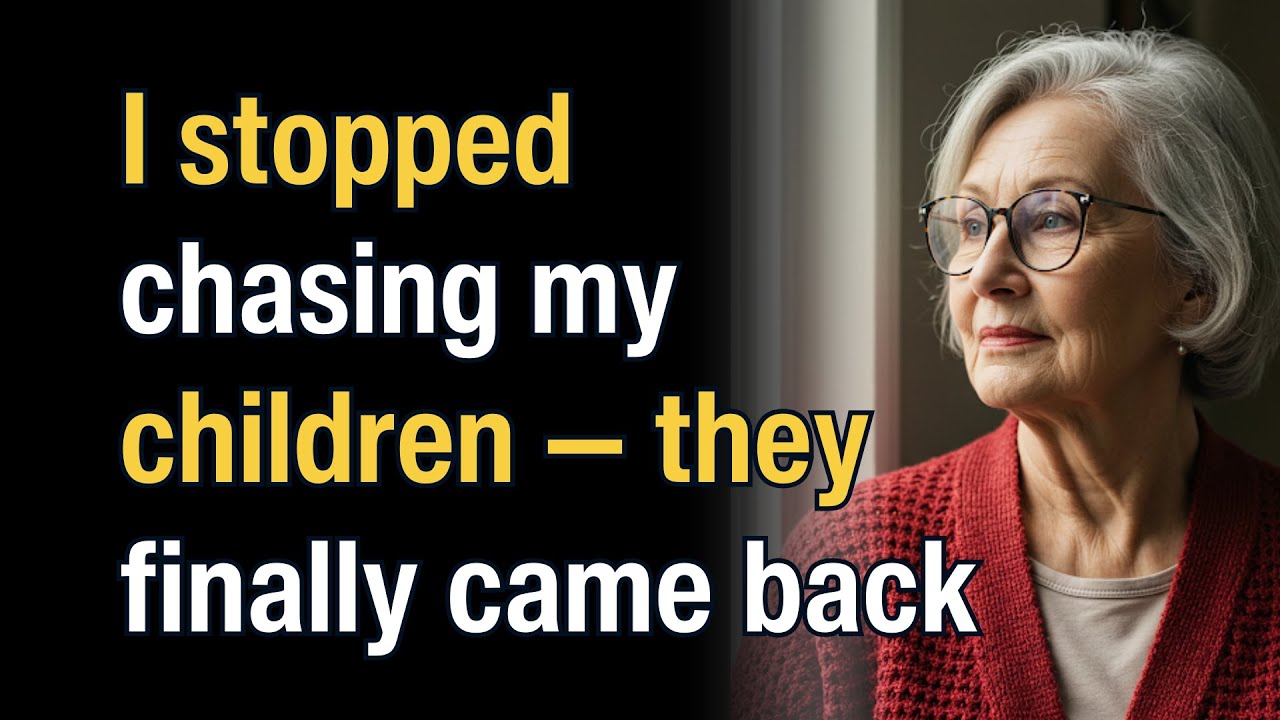
But deep down, you feel it—that fear that maybe you’re becoming invisible to the people you love most. I’ve been there. And I’ve learned something that changed everything: sometimes, the more you chase, the more invisible you become. It’s not because your children don’t love you.
It’s not because you’re not important. It’s because the dynamic has shifted. The harder you pull, the more they push. This isn’t a lecture.
It’s a heart-to-heart. I’ve watched strong, caring, devoted parents end up feeling forgotten, dismissed, even disrespected—not because they didn’t love enough, but because they didn’t understand how to love in a way that gets through. Today, I want to talk about how to regain their respect without losing the love. Because yes, it’s possible.
And no, it’s not too late. Here’s the thing: children, even adult children, are always testing boundaries. Not in the way a rebellious teenager does, but in subtle, emotional ways. They might go silent after you offer too much advice.
They might get distant if you seem too invested in their choices. They might roll their eyes, change the subject, or seem cold—especially if they sense that you need their attention more than they need yours. That’s the quiet trap so many parents fall into: neediness disguised as love. You start with good intentions—wanting to help, to guide, to stay connected.
But when that desire turns into chasing, fixing, or constantly initiating contact, it sends the wrong signal. Not “I love you,” but “I need you to validate me. ” And just like that, the dynamic flips. You’re no longer the strong, steady figure in their life.
You’ve become the one who’s grasping. This might be hard to hear. You might be thinking, “But I’ve always been there. I’ve sacrificed so much.
I gave them everything. ” And that’s true. But respect and gratitude don’t grow from reminders. They grow from presence, calm, and self-assurance.
Have you ever seen a parent who rarely calls, rarely pushes, but when they speak, everyone listens? There’s something in them that commands respect. They’re not cold. They’re just calm.
They’re rooted. They don’t chase. And because of that, they’re not overlooked. They’re admired.
That’s the power of emotional control. And no matter your age, you can learn to reclaim that power. It’s not about holding back your love. It’s about offering it from a place of strength, not desperation.
When your child withdraws emotionally or physically, your instinct is to fix it. Call more, text more, ask questions, apologize for things you’re not even sure you did wrong. But every time you do that, you’re unknowingly showing them that your peace depends on their response. That you are only okay if they’re okay with you.
That’s a heavy burden to place on any child, no matter how old they are. When they feel that kind of pressure, their instinct is to run—not because they don’t care, but because they feel suffocated. What if, instead, when they pulled back, you didn’t react? What if you didn’t send that extra message, didn’t make that extra call, didn’t ask, “Did I do something wrong?
” What if you simply stepped back and lived your life with quiet confidence? That’s not emotional distance. That’s emotional wisdom. It’s saying, “I love you enough to give you space, and I love myself enough to not let your silence define my worth.
”
And believe me, they feel that. They notice when you’re not chasing. They wonder why. And suddenly your presence becomes powerful again—not needy, not desperate, but grounded.
You don’t have to cut anyone off. You don’t have to stop loving your children. You just have to stop proving it in ways that cost you your dignity. It’s about shifting from “please let me in” to “I’m here when you’re ready.
”
When you do that, everything changes. They stop seeing you as someone they need to manage or avoid. They begin to see you again as someone they respect—someone who isn’t begging for space in their lives, but who holds their own space so firmly it invites them back in naturally. It’s a small shift, but it’s powerful.
You don’t have to make an announcement. You don’t have to explain anything. Just stop chasing. Stop overexplaining.
Stop checking in so often that it becomes a pattern of neediness. And in that stillness, you’ll start to notice something beautiful: your peace returns. And from that peace, respect begins to grow again. I know this isn’t easy.
I know letting go of the chase can feel like letting go of love. But it’s not. It’s actually the most loving thing you can do for them and for yourself. You raised them.
You shaped them. You deserve to be seen—not as someone waiting on the sidelines, but as someone who walks with quiet strength, even when the spotlight has moved. Take a deep breath. Think about what you’ve been doing: how often you’ve reached out, how much energy you’ve given to trying to stay connected.
Ask yourself, is this really helping? Or is it just making you feel smaller, more anxious, less seen? If the answer is the latter, it’s time to change the rhythm—not with anger, not with distance, but with calm and purpose. Because you’re not here to beg for love.
You’re here to be loved for who you are without having to fight for it. And when you live from that place, you become the parent they can’t ignore. Let’s imagine you’ve taken that first step. You’ve stopped chasing.
You’ve paused the extra texts, the overexplaining, the constant checking in. Maybe it feels strange at first, even a little uncomfortable. You might wonder, “If I don’t reach out, won’t the distance just grow? Won’t I lose them completely?
” But here’s the truth: when you let go of control, you create space. Not space to grow apart, but space to grow differently. Space where respect can breathe again. Space where love isn’t tangled up with pressure or guilt.
The most overlooked strength a parent can have, especially later in life, is emotional discipline—not coldness, not shutting down, but choosing not to let emotions run the show. Because when you lead from emotion—panic, guilt, fear of being forgotten—you stop being the anchor in your child’s life, and they feel it. Now, let’s talk about what often happens next. Your child pulls away.
You feel it—maybe in fewer calls, less eye contact, that sense that something’s changed. Your natural instinct is to fix it. That’s what parents do, right? We fix.
We check in. We try to make sure everything’s okay. But what if the most powerful thing you could do isn’t to fix, but to observe, reflect, and stand still? What if, instead of assuming you’ve done something wrong, you allowed your child the dignity of their own process?
Adults go through things. They get overwhelmed. They shut down. They struggle in ways they don’t always know how to explain, even to the people who love them most.
And if they sense that you’re going to react emotionally—that every bit of distance is going to cause a wave of texts, phone calls, or emotional pleas—they’ll create even more distance. Not because they want to hurt you, but because they feel like they need space to breathe. That’s where your frame comes in. And I don’t mean physical posture.
I mean your emotional frame—your grounding. The quiet, calm energy you carry when you don’t try to chase, fix, or prove anything. When you can sit in uncertainty without panic. When you can allow your child to be distant without taking it personally.
When you can hold your love steady without tying it to their response—that’s when everything begins to shift. Because guess what? Children don’t stop needing their parents. Not ever.
They just need different things from you now than they did before. They don’t need to be managed or protected. They need to see you—really see you—as someone strong, centered, and whole. And if they’ve been pulling away, part of that might be because you’ve been trying too hard to prove something: that you still matter, that you still know best, that you still love them like you always have.
But the truth is, you don’t need to prove it. You just need to live it. You don’t earn respect by chasing. You earn respect by living with integrity, even when no one’s watching.
Especially then. Let’s talk about another hard truth. The more you rearrange your life to win someone’s attention, the more they sense that your value depends on them. And nothing—nothing—kills respect faster than that.
Whether it’s a spouse, a friend, or a child, when they feel like you’ve made them the center of your emotional world, they begin to drift. Not always on purpose. Sometimes it’s subtle, but it happens. Think back to the people you respect the most.
Chances are they’re not the ones who called you ten times a day or tried to micromanage your feelings. They’re the ones who gave you room to grow, who offered quiet wisdom instead of constant interference, who let you come to them—not because they didn’t care, but because they trusted you enough to figure things out on your own. That’s who you can be now. It’s not about being less loving.
It’s about being more strategically loving—more grounded, less reactive, more intentional. And I promise you, your children will feel the difference, even if they don’t say it out loud. Now, you might ask, “But what if they never come back around? What if I pull back and the relationship fades away completely?
” It’s a fair question, and the answer isn’t always simple. But here’s what I do know: relationships built on obligation don’t last. Relationships built on emotional guilt don’t thrive. If you have to constantly remind someone to love you, it’s not really love.
It’s maintenance. What you want—and what you deserve—is a connection built on mutual respect. And the first step to earning that is by showing your child that you don’t need their attention to feel whole. You already are whole.
You already have a life worth living with or without their constant contact. You are not a side character in their story. You are still the author of your own. And when they sense that—when they truly feel that shift—that’s when they’ll start coming closer again.
They’ll start to wonder what changed. They’ll notice the calm in your voice, the ease in your tone. They’ll sense that you’re not waiting for their text to feel good about your day. And that will intrigue them.
It might even inspire them, because we are drawn to those who are solid, to people who are at peace with themselves. If you’ve been feeling overlooked or pushed away, it’s not because you’ve become irrelevant. It’s because somewhere along the line you forgot your own gravity. You started chasing when you were meant to stand.
You don’t need to withdraw all your love. You don’t need to become distant or cold. But you do need to become centered, peaceful, rooted in your own life—not in their attention. Take that walk because it clears your head, not because you’re hoping they’ll call while you’re out.
Read that book because it nourishes your soul, not because you’re trying to kill time until someone checks in. Join that community group. Start that hobby. Pursue that interest.
Not as a distraction, but as a declaration that your life still matters, that you still have purpose, that you’re still becoming. That’s what makes you magnetic again—not your efforts to pull them back, but your quiet decision to live well no matter what. And here’s the beautiful part. When your child sees you not chasing, not pleading, not emotionally clinging, they start to remember who you are.
They start to miss the parent who was always strong, always steady, always full of love, but never full of pressure. They come back not because you asked, but because your strength called them home. Now, if you’ve made it this far, something inside you is shifting. Maybe it’s a sense of peace you haven’t felt in a while.
Or maybe it’s just the realization that you’ve been trying so hard to hold on that you forgot your real power comes from letting go with love. Let’s talk now about one of the most common moments parents experience later in life: that quiet ache when your child withdraws. Maybe they used to call every Sunday, and now it’s once every few weeks. Maybe they came around for birthdays, holidays, the little moments, but now you only hear from them when something’s wrong or when they need something.
It hurts, doesn’t it? That kind of distance doesn’t show up all at once. It creeps in slowly. First, a shorter conversation, then a missed holiday, then silence.
And suddenly you’re left wondering, “When did I become someone they could ignore? ”
Here’s the truth most people are too afraid to say out loud: children—yes, even adult children—will treat you based on what you tolerate. That’s not about blame. It’s not about shaming anyone.
It’s about understanding how relationships really work. When you continue to pour in effort, time, attention, and it isn’t met with respect, you start training them to expect your love without having to give anything in return. And over time, that dynamic chips away at your dignity. But here’s the good news: it’s not too late to shift things.
You can still become the kind of parent who commands love and respect—not by demanding it, but by living it. Let me show you how. When your child withdraws emotionally, the first rule is simple but powerful: do not panic. That knee-jerk reaction to fix things, to make it better, to reach out over and over—that’s the instinct that keeps you stuck in a place of weakness.
You see, love becomes most powerful when it’s offered without fear. When you love from a place of fear—fear of losing them, fear of being forgotten—you’re not really loving. You’re grasping. And people, especially grown children, can feel that energy, and they retreat from it.
But when you stay calm, when you stay kind, and when you show that you’re emotionally steady even in their silence, you become someone they respect again. Because you’re no longer chasing their attention. You’re inviting their return without pressure. The next step is this: stop making yourself too available.
This can be one of the hardest things for a loving parent to do. You’re used to saying yes to everything. You’re used to being the fixer, the one they come to. But when they start taking that for granted—when they assume you’ll always be there no matter how they treat you—that’s the moment to pull back.
Not with anger, not with drama, just with space. If they ask for help, consider it, but don’t jump every time the phone rings. If they cancel plans or take you for granted, you don’t need to scold them. You just stop rearranging your life for people who don’t show up for yours.
Because your time still matters. Your presence still holds weight. You’re not a footnote in their story. You are a whole story in yourself.
And the more you act like it, the more they’ll start to see it. Now, here’s where it gets powerful. The moment you stop chasing, the moment you stop overexplaining yourself, stop waiting by the phone, stop begging to be part of their lives, you send a clear, unspoken message: “I love you deeply, but I no longer need your attention to feel valuable. ” And that message is magnetic.
It draws people in—not by force, but by quiet gravity. You stop being someone who’s always available, always reactive, always emotionally on edge. And you become the kind of parent your child thinks about at night. The kind they begin to miss.
The kind they want to call—not because they have to, but because they want to. And that, my friend, is the foundation of real respect. It’s built when you show that your world doesn’t collapse just because theirs has gone quiet. It’s built when you stop asking, “Did I do something wrong?
” and start thinking, “What brings me peace today? ” It’s built when you fill your own life with meaning, connection, joy, and yes, even independence. Because here’s something no one tells you: the more independent you become, the more your children will admire you. They’ll watch you from a distance and think, “Wow, Mom is doing great.
Dad seems happy. He’s strong. He’s at peace. ” And that curiosity, that admiration, will start pulling them back toward you in ways no text message ever could.
You don’t win love by trying harder. You don’t rebuild closeness by sacrificing your self-respect. You win when you become someone worth reaching for again. That’s not about looks.
It’s not about wealth. It’s not even about having the right words. It’s about energy, presence, boundaries. It’s about being the kind of person your children look up to—not the kind they feel guilty about.
And listen, if they do come back around—and many will—you welcome them with open arms. No “I told you so. ” No guilt. No scorekeeping.
Just love. Peaceful, strong, healthy love. Because that’s the kind of love that heals—not just you, but them, too. We live in a time when everyone’s overwhelmed.
Screens everywhere, fast-paced lives, and relationships—especially family ones—can get buried under distractions and emotional noise. But when you become the steady hand in the storm, when you model emotional balance, kindness without pressure, love without need, you create the kind of home, the kind of energy, that your children will return to when they’re ready. Not because you chase them there, but because you waited with grace. You are still the parent.
You still have wisdom, strength, and guidance to offer—but only when it’s rooted in respect. And respect doesn’t come from giving more. It comes from needing less. It comes from living fully, no matter how often the phone rings, no matter how quickly the texts come.
It comes from remembering who you are and standing firm in it. You don’t have to become cold. You don’t have to play games. You just have to stop chasing the people who have forgotten what your presence means.
Because when you stop chasing, they start noticing. And when they notice, they remember. And when they remember, they come home. If you’ve stayed with me through this conversation, I want to take a moment to thank you—not just for listening, but for caring.
For caring enough about your family, your role, and your heart to ask the hard questions. It takes strength to look at your relationships with honesty. It takes courage to say, “Something isn’t working, and I want to change it. ”
And now we come to something I believe with all my heart: you can become the parent your child cannot ignore—not by trying harder, but by becoming stronger in all the right ways.
We’ve talked about not chasing, about emotional control, about letting go of the need to fix everything. But now I want to talk about what to do instead. Not just what to stop doing, but how to start living in a way that naturally earns back their respect and keeps your self-worth intact. It starts with you.
You have to put yourself back in the center of your own life. You have to become a person who wakes up each morning and asks, “What will make today meaningful for me? ” Not for them, not for anyone else—for you. Because here’s a truth no one talks about enough: when you create a life that fulfills you, your energy changes, and people feel it.
That energy is magnetic. When you stop sitting around waiting for a call that doesn’t come and instead go for a walk, volunteer at the library, paint, garden, learn something new, spend time with people who lift your spirit—that energy doesn’t go unnoticed. Your children see it. They might not say anything at first, but they feel it.
And slowly, that gravitational pull begins to work. Because when you are alive with your own purpose, your own direction, you’re not just a parent. You become a person worth knowing. One of the most painful realizations we can face as we get older is that sometimes we’ve made our lives so small, so centered around our children, that we’ve forgotten how to be anything else.
And when they drift or disappear, we’re left with a hollow space we don’t know how to fill. But that space isn’t empty. It’s full of possibility. You can fill it with peace, with joy, with creativity, with friendships that nourish you, with memories that have nothing to do with who shows up and who doesn’t.
You can build a life where you are the main character again—not a supporting role in someone else’s story. And here’s what’s beautiful. When your child sees that, when they feel your sense of purpose, your calm, your joy, they remember. They remember who you were before all the chasing, before the neediness, before the tension.
They see you—not the version begging to be included, but the version standing strong, living well, and choosing love without losing self-respect. That’s the version they admire. That’s the parent they want to be close to. That’s the energy they’re drawn to—not because they have to, but because it makes them feel safe, grounded, inspired.
And even if they don’t come running back all at once, even if it takes time or distance remains, you still win, because you’ve reclaimed yourself. You’re no longer waiting to be chosen. You’ve already chosen yourself. You’re no longer bending and breaking to be seen.
You’re shining exactly as you are, with or without an audience. And you know what happens when you live that way? You start feeling lighter. You start laughing more.
You sleep better. You stop obsessing over every silence, every short reply, every missed birthday or forgotten holiday. You start realizing that your worth was never tied to their attention. That you are lovable, valuable, and powerful even when no one’s watching.
And in that freedom, something shifts. You stop trying to be the perfect parent. And you just become a whole person again. And that’s who your children need most.
Not a fixer, not a worrier, not someone who sacrifices their happiness just to stay close. They need a parent who leads with presence, not pressure. They need someone who is still becoming, still learning, still radiating that quiet kind of strength that makes people feel safe even when life is hard. That’s what love looks like now.
Not endless effort, not emotional chasing. Love now is peace. It’s boundaries. It’s giving space when needed and showing up with grace when the door opens again.
So, if today feels lonely, if you’ve been waiting on a call, a visit, or even just a little respect, let this be your turning point. Not the day you give up on your children, but the day you finally stop giving up on yourself. You are still here. You are still needed.
You are still worthy. And the most powerful thing you can do right now is to live like it. Not for them, not to prove anything, but because you are the foundation of your own life. And when you begin living from that place again, everything changes.
Your children feel it. Your heart feels it. And your life opens up in ways you haven’t felt in years. So, here’s what I want you to do now.
If any part of this message touched your heart, share it in the comments below. Tell me, what are you ready to reclaim? Your peace, your time, your joy. And if you know another parent who’s been struggling with this—maybe a friend, a sibling, a neighbor—share this with them.
Let’s remind each other that we are not powerless. We are not forgotten, and we are not finished growing. Make sure you like this and subscribe to Strong Elderly Life for more honest, helpful, and empowering content just like this. Because no matter your age, your past, or your pain, you still have the power to change everything.
You still have the right to be respected. You still have so much life ahead of you. And you don’t have to chase love to find it. You just have to live in a way that love can’t help but find you.
Here’s to living your truth, your way, and becoming the parent they’ll never forget. You’re stronger than you think, and the best is yet to come.