The investigation into the death of three-year-old Paisley Brown has spiraled into a broader crisis of systemic failure, authorities now revealing that the child’s surviving siblings were pulled from one alleged den of 𝓪𝓫𝓾𝓼𝓮 only to be placed into the care of a foster parent now facing felony charges for violently beating them. This new development compounds an already heartbreaking narrative, leaving the biological father, Robert Brown, not only grappling with the savage loss of his daughter but also waging a desperate, legal battle to rescue his other children from a child welfare system he insists has failed them at every turn.
Paisley’s young life was brutally cut short in February, and prosecutors allege the monster responsible was her mother’s own boyfriend, Jerome Kums. The state attorney’s office has leveled the ultimate charge against Kums, a first-degree murder indictment, and they are actively seeking the death penalty, signaling the severity with which they view this cold-blooded killing. Simultaneously, Paisley’s mother, Jennifer Kendrick, sits in a jail cell, charged with aggravated manslaughter of a child, her legal defense already hinting at a not-yet-established insanity plea.
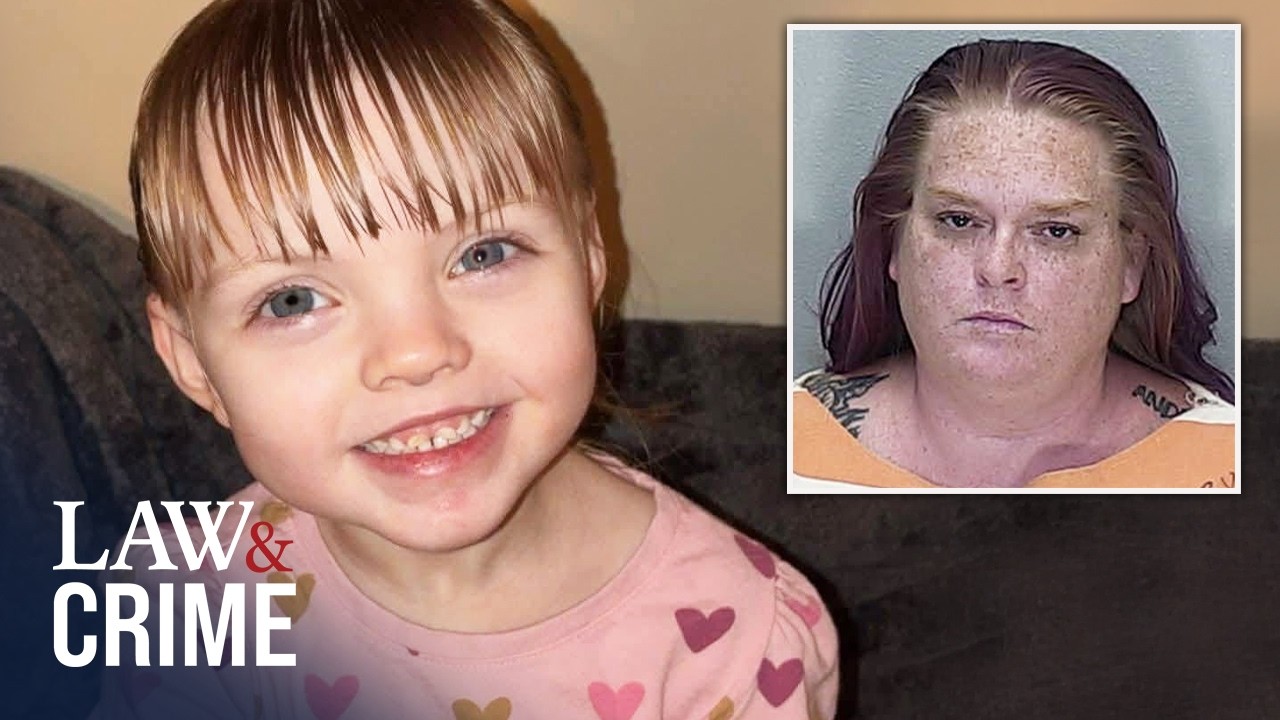 In the aftermath of that tragedy, Florida’s Department of Children and Families stepped in, evacuating Paisley’s siblings from the residence. They were supposed to be walking into safety. Instead, law enforcement alleges, they walked into a nightmare of a chaotic home overseen by a woman accused of cruelty that mirrors the very heartbreak they were fleeing.
That woman, Vanessa Pollock, is now housed in the Marion County Jail under a $30,000 bond, charged with two felony counts of child 𝓪𝓫𝓾𝓼𝓮 without causing bodily harm. But the disturbing evidence, as outlined in a FBI interview acquired by Crime Fix, describes a scene of chaotic violence which investigators believe was intentionally obscured by the perpetrator. The criminal complaint details an appalling scene on August 30th, kicked off by a witness who says their babysitting responsibilities became a front row seat to barbaric cruelty.
The report states that after a minor behavioral issue at church, Pollock reportedly unleashed a torrent of physical violence on the child inside her car once they reached home. The witness observed Pollock kicking the child repeatedly, accusations Pollick now disputes, before an act so graphic it is hard to reconcile with humanity: reports of inside the car and later acknowledged by investigators, but fiercely denied the finality.
“The defendant started coaching the child victim on what to say,” the report states, detailing a systematic breakdown of any attempt at justice. “She then told the child he would go to jail if anyone found out what really happened.” The manipulation was grotesquely transparent.
The child was instructed to fabricate a story, claiming he sustained his injuries during a game of Harry Potter-themed hide-and-seek, claiming he inadvertently smashed his head against a bed post. Meanwhile, the timeline of discovery involved surveillance, fierce witness accounts, and profound systemic flaws.
The criminal allegations against Peepe are further supported by a forensic interview with the child victim, who at first was silent, then spouted expressions straight out of the abuser’s playbook. “The defendant is a good person and has done nothing wrong,” the child reportedly said, a statement investigators believe was born of sheer terror, not truth. Detectives were led to a neighbor who stated that arguing and yelling at the children was the “norm” for Pollack.
They then confrontation Pollock regarding the witness, and stated that initially she denied any use of first response, but the fabrications collapsed under the weight of the eyewitnesses’ own deep-seated fear, the same witness who barricades herself and her children in a bathroom with calm detachment of a person who thinks they are watching a murder unfold. “She was proud of the fact that she had helped, but the story was breaking.”
Even with supporting evidence, the outcome is a legacy of pain echoing through the halls of institutional justice, re-traumatizing a family defined by violence. Robert Brown, the biological father of the victim and the siblings involved, brought a new story to light in an interview: this was never an isolated incident. He revealed he reported bruises on his daughter to DCF, pointing directly to caseworkers some four weeks ago and showing them the physical evidence, but the case remained dormant until this weekend.
“I found a bruise, and they took a picture,” he said, his voice laced with fury and pain, “and that’s just now within the sphere announcement.” Questions are now swirling about whether we are seeing the collapse of any semblance of protection for these vulnerable children.
Robert Brown offered a broader framework for the systemic negligence that has defined his children’s survival. Describing his daughter as a “beautiful soul” who was always trying to help him in his work and loved her siblings unconditionally, he is now forced to paint a painful timeline of deliberate evasions. He says he did not even know the name of the caregiver, who now stands accused of breaking these future lives.
“I have had my headphones clogged for months trying to get them here,” Brown said, explaining the state had approved his own home study, his fingerprints, and requested multiple 𝒹𝓇𝓊𝑔 screens at the drop of a hat to prove his readiness. Yet, the folder keeps rescheduling critical visits, and last-minute paperwork requirements stall reunification.
“In February, I’m trying to get my kids and they want to point the finger at me,” he said. “They held it against me that Jennifer did this.” The abandonment he feels is a system that punishes him for the sins of the mother.
Now, he actively speaking to the courts, hoping his immediate move will finally place his children into his arms. But the scar tissue is deep.
 Attorney Kathie Ule, who reviewed the case, offers a harsh indictment of the Florida setup. She explains that foster care providers aren’t always properly vetted, and this becomes shockingly transparent in this case. Furthermore, Polliki’s alleged conduct is a harsh reminder for parents to maintain stringent daily contact with children inside a fractured system.
Walker’s stance is clear: visitation is not enough; they need to hear their children’s truth, even if a single line is hidden between the sound bytes. But her advice to Robert Brown is chillingly simple now: get his kids into therapy immediately, protect them, and be ready to assert their rights against a system that has only put them in further harm’s way.
While Vanessa Polliki sits in jail, her bond set and her life in tatters, the true locus of accountability remains the chain of failures preceding her arrest. The courts are expected to hear new evidence as Marion County officials are quarterbacking, not just a single murder, but a prevailing lurch of 𝓪𝓫𝓾𝓼𝓮 and codependency. The father will be forced to carry the weight of his child’s death, and the haunting echo of a system that failed small, innocent, scared voices every step of the way.
The institution that was meant to protect them may now be implicated in their further agony, as the family, legal experts, and a whole community throw up their hands, demanding to know how so many red flags are overlooked, and why a system designed to save them continued to stagger blindly through a war it is seemingly losing—torturing at the scene of the crime anew. The public’s trouble now waits, minds focused on how during this dawning revelation, the three-year-old’s murder will turn into the judicial system’s war on those set up to place kids in safe arms.