The family group chat notification lit up my phone on December 20th. Dad’s message was simple: “Christmas Eve will be family only this year. Keeping it intimate. See you all at 6:00 p.
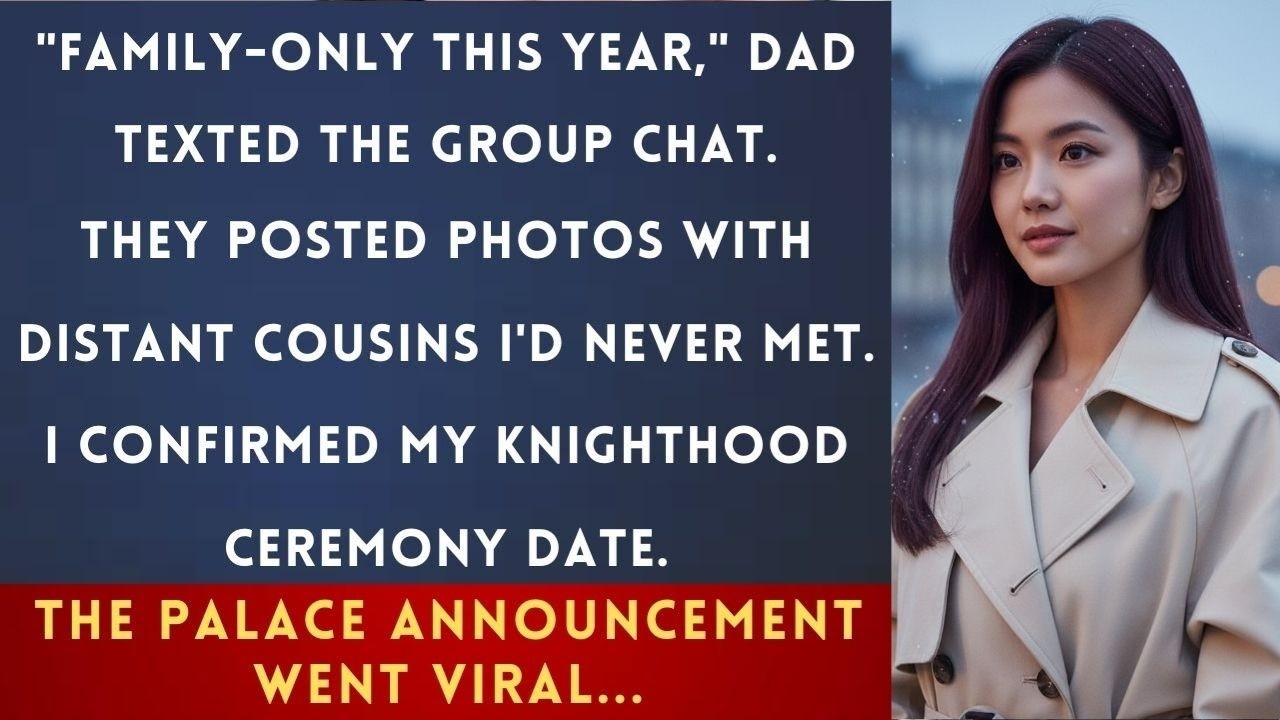
m. ”
I stared at it from my London office. My assistant Emma knocked. “The palace called again about your New Year’s honor ceremony.
They need final confirmation by tomorrow. ”
“Tell them I’ll attend. ”
I’m Dr. Alexander Harrison, 41.
To my family, I’d wasted my life on charity work abroad instead of joining the family car dealership. For 18 years, I’d run the International Medical Relief Coalition, providing emergency surgical care in conflict zones across four continents. They thought I was a perpetual volunteer living off donations. They had no idea I’d been nominated for a knighthood—Knight Commander of the Order of the British Empire.
I scrolled back through the chat. My brother James replied, “Perfect, Dad. ” My sister Charlotte added heart emojis. My cousin Richard, whom I’d met maybe twice, said, “Wouldn’t miss it.
”
I typed: “I’m still in London. Not sure I can make it back. ”
The response was immediate. “We understand.
Your work is important. ” Charlotte added, “We’ll miss you, but family understands. ”
No one tried to convince me. No one offered to change the date.
I set my phone down and went back to surgical reports from our Syria operation. Christmas Eve arrived. I spent the morning on a video call with our Yemen team. Around noon, the family chat exploded with photos.
The house decorated, James’s kids opening presents, Charlotte toasting champagne, along with cousin Richard, Aunt Margaret, Uncle Tom, and second cousins I’d never met—all gathered in the living room where I grew up. Family only apparently meant everyone except me. James posted a photo of the dinner table. Twenty-three place settings.
I zoomed in. My name wasn’t there. At eight that night, my mother called. “Alexander, darling, how are you?
”
“I’m well, Mom. Enjoying your party? ”
“Oh, it’s lovely. Everyone’s here.
Well, almost everyone. We do miss you. ”
“I counted 23 people in the photos. ”
A pause.
“Yes, well, extended family. We haven’t all been together in years. ”
“I haven’t been home in two years. ”
Another pause.
“Your work keeps you so busy. Your father was saying how dedicated you are. Living on volunteer salaries, spending time in those dangerous places. It’s very noble.
”
“Mom, I don’t live on a volunteer salary. ”
“Anyway, we should let you go. Merry Christmas, darling. ”
She hung up before I could say anything else.
I sat in my flat and opened my laptop. The email from Buckingham Palace was in my inbox. Dr. Harrison, we are pleased to confirm your investiture ceremony for Knight Commander of the Order of the British Empire will take place on January 2nd at 10:00 a.
m. You may invite two guests. The official announcement will be published December 30th. Knight Commander.
I’d spent 18 years saving lives in war zones, and now the Crown was honoring me. The ceremony would be conducted by His Majesty the King himself. My family thought I was barely scraping by. I confirmed attendance and listed my two guests: Emma, my assistant of 12 years, and Dr.
Sarah Chen, my head of surgical operations. Not family. They’d had their family-only Christmas. On December 30th, my phone started ringing at six in the morning.
I ignored the first three calls from my father, then my mother, James, Charlotte. I finally answered Emma. “Dr. Harrison—or should I say Sir Alexander—have you seen the news?
”
“What news? ”
“The New Year’s Honours List was published this morning. You’re trending. The BBC is calling you Britain’s medical hero.
”
I opened my laptop. The London Gazette’s official list was public: Dr. Alexander James Harrison, Knight Commander of the Order of the British Empire, for services to international humanitarian medicine. The coverage was everywhere.
A BBC feature: “Surgeon who saved thousands in war zones receives knighthood. ” The Guardian headline read, “From Manchester to knighthood: The doctor Britain forgot. ” They detailed everything—my Oxford degree, 18 years of service, over 15,000 successful surgeries, training programs across the developing world. A Syrian refugee was quoted: “Dr.
Harrison operated on my daughter when she was dying from shrapnel wounds. He saved her life. ”
My phone wouldn’t stop ringing. I finally answered my father.
“Alexander. Why didn’t you tell us you were being knighted? ”
“You never asked about my work, Dad. ”
“We knew you were doing medical charity, but a knighthood…
”
“I’ve been doing this for 18 years. ”
“But we didn’t know the scope. The hospitals, the thousands of surgeries. Why didn’t you say something?
”
“I tried. At Christmas three years ago, I mentioned establishing a training program in Jordan. You asked if I’d ever consider a real job. At Charlotte’s wedding, I talked about our Syria operation.
Uncle Tom asked when I’d stop playing doctor. ”
Silence. Then: “The investiture ceremony is January 2nd. I’m allowed two guests.
I’ve already invited my assistant and my head of surgical operations. ”
“January 2nd? That’s in three days. We’re your family.
We should be there. ”
“It’s very exclusive, Dad. Only two guests permitted. ”
“But we’re your parents.
”
“And Christmas Eve was family only. I counted 23 people. Cousin Richard was there, and I’ve met him twice. But apparently there wasn’t space for me.
”
“We thought you were busy. ”
“I was busy saving lives. But you made space for distant cousins while excluding me from family-only Christmas. ”
My mother’s shrill voice came through after some fumbling.
“Alexander, there must be some way we can attend. ”
“The palace has strict protocols. Two guests, no exceptions. I’ve made my selections.
”
“But the king will be there. This is historic for our family. ”
“My family will be there. Emma and Sarah.
The people who actually supported my work. ”
“Alexander, please. ”
“I have to go. Lots of media interviews scheduled.
” I hung up. The next two days were chaos. Interview requests from every major outlet. James sent a long text: “Alex, I’m sorry about Christmas.
We didn’t understand what you’d accomplished. Can we talk? ” I didn’t respond. Charlotte posted on Instagram: “So proud of my brother Dr.
Alexander Harrison, soon to be Sir Alexander. Always knew he was destined for greatness. ” She posted that after a dozen photos of the celebration I’d been excluded from. The comments were brutal.
“Wasn’t he not invited to your Christmas? ” Someone had leaked the family group chat messages—the family-only text, the dismissive responses, the photos of 23 people. It went viral. The Daily Mail ran: “Knighted Doctor Excluded from Family Christmas Days Before Palace Honor.
”
My father called again. “Alexander, these stories… the family looks terrible. ”
“You did exclude me.
”
“Can you make a statement? Tell the press it was a misunderstanding? ”
“Why would I lie? ”
“Because we’re family.
”
“Family invites each other to Christmas, Dad. ”
January 2nd arrived, clear and cold. I dressed in my morning suit. Emma and Sarah met me at the palace gates.
The ceremony was extraordinary. When my name was called, I knelt before the King. He placed the sword on my shoulders. “Arise, Sir Alexander.
” He personally attached the Knight Commander insignia to my lapel. “Your work in the most dangerous places on Earth exemplifies the very best of British service. This nation is proud of you. ”
Afterwards, the Lord Chamberlain approached.
“Sir Alexander, His Majesty wanted to convey his personal appreciation. He’s asked if you’d discuss your mobile hospital model with the Royal Foundation’s humanitarian initiatives. ”
“I’d be honored. ”
He paused.
“I understand your family was unable to attend today. ”
“They weren’t invited. ”
His expression suggested he’d read the news. “The King said it spoke well of your character that you chose to honor those who worked alongside you rather than simply those who share your blood.
”
That evening, the palace released official photos—me kneeling before the King, me with Emma and Sarah, all smiling. They went viral. My family’s social media exploded. Charlotte: “Couldn’t be more proud.
” James: “My brilliant brother. ” My mother posted about always supporting my dreams. The comments were savage. “Where were you on Christmas Eve?
” “The screenshots don’t lie. ” “He invited his assistant instead of his parents. ”
The next morning, my entire family showed up at my London flat. My parents, James, Charlotte, their spouses, the kids.
They’d driven from Manchester overnight. I answered the door in my dressing gown, coffee in hand. “Alexander. We need to talk.
”
“About what? ”
“The ceremony, the press coverage… this terrible misunderstanding. ”
“There’s no misunderstanding.
You excluded me from Christmas. I excluded you from the investiture. Seems fair. ”
My father stepped forward.
“Son, we made a mistake. We didn’t realize the importance of your work. ”
“Dad, I’ve spent 18 years saving lives. I’ve operated in war zones.
I’ve trained surgeons across three continents. When exactly did that become important? When the king knighted me? ”
“We see it now,” James said quietly.
“We were wrong. About everything. ”
“You were embarrassed by me. I didn’t fit the respectable careers.
I was the family disappointment. ”
Charlotte was crying. “We should have asked, should have visited, should have cared. Now the whole country knows what terrible family we are.
”
“You’re not terrible. You’re just not my family anymore. ” I started to close the door. “Wait.
The palace called us. They want to do a follow-up story—the family behind the knight. They asked if we’d participate. ”
“And you want my permission?
”
“The news coverage is destroying us. The dealership has had protesters. Charlotte’s lost clients. People are calling us the worst family in Britain.
”
“That’s not my problem. ”
“You could fix it. One statement saying we’ve always supported you. ”
“No.
”
“Please. We’re being crucified. ”
“You crucified me for 18 years. Dismissed my work, excluded me from family events.
Now you want me to lie to protect your reputation? ”
“We’re your family. You owe us. ”
“I owe you nothing.
” I closed the door. The follow-up stories ran anyway. “Sir Alexander’s family excluded from ceremony after years of dismissing his work. ” The Telegraph interviewed former neighbors.
The Guardian found an old quote from me: “My family doesn’t really understand what I do. ” That quote was everywhere. Six months later, I spoke at the UN General Assembly about humanitarian medical response. My mobile hospital model became the international standard.
My family sent flowers with a card, “We’ll always be proud of you. ” I donated them to a hospital ward. A year after the knighthood, I received the Lasker Award, essentially the American Nobel Prize. The ceremony was in New York.
I invited Emma and Sarah. My parents tried to attend. Security turned them away. They weren’t on my guest list.
The press covered that too. Five years after the knighthood, I received a call from Downing Street. The Prime Minister wanted to expand the mobile hospital program nationally. I arrived with Emma and Sarah—my team, my real family.
The meeting went well. Funding approved. As we left, a photographer snapped our picture on the steps of Number 10. It made the evening news.
My mother called within the hour. “Alexander, we saw you at Downing Street. We had no idea you were working with the government now. ”
“I’ve been working with the government for years, Mom.
You never asked. ”
“Can we see you? Just for coffee? It’s been five years.
”
“I’m very busy. ”
“Please. Your father isn’t well. He wants to make things right before…
”
“Before what? ”
“Before he dies. ”
“He had 18 years to make things right while he was healthy. He chose not to.
” I could hear her crying. “We made terrible mistakes. We know that now. Can’t you forgive us?
”
“I can forgive you, Mom. I did years ago. But forgiveness doesn’t mean reunion. You showed me who you were.
I believed you. ”
“What can we do? How can we fix this? ”
“You can’t.
Some things stay broken. ” I hung up and turned off my phone. That Christmas, Emma and Sarah came to my flat. We cooked dinner together, watched films, exchanged modest gifts.
Sarah gave me a framed photo from our first mobile hospital in Syria. “Our entire team covered in dust and blood, smiling like we’d won the lottery. ”
“We saved 43 people that first week. ”
“I remember thinking we were insane for trying.
”
Emma raised her glass. “To Sir Alexander, who built a family out of scraps and surgical gauze. ”
We toasted. This was family—people who’d chosen me and whom I’d chosen back.
Not blood, but something stronger. Loyalty earned through shared purpose and mutual respect. My phone buzzed with messages. James: “Merry Christmas, brother.
We miss you. ” Charlotte: “The kids ask about Uncle Alex. ” My mother: “Your father’s in hospital. Heart trouble.
If you want to see him. ”
I read them all, felt nothing, and put the phone away. “Everything okay? ” Emma asked.
“Everything’s perfect. ” And it was. Because I’d learned the most important lesson. You don’t owe your presence to people who didn’t value it when they had it.
You don’t owe redemption to people who never apologized until there were consequences. You don’t owe your future to people who dismissed your past. The King had been right. That’s the mark of true family.
Not blood, but loyalty. My family had their chance. They’d had thousands of chances over 18 years. They chose to take them only after the palace forced their hand, only after public shame made it necessary, only after my success became impossible to ignore.
Too late. Some doors close permanently. Some families lose their chance and never get it back. I’d built a new family.
In surgical tents and disaster zones. In late-night strategy sessions and impossible situations where only trust kept us alive. Emma, Sarah, and the hundreds of doctors and nurses who’d worked alongside me. They were my people.
The ones who saw my worth before anyone handed me a medal. The ones who stayed. My phone buzzed again. My father: “Son, please.
I’m sorry. I’m so sorry. ”
I turned off my phone completely. Outside, London glittered with Christmas lights.
Inside, my chosen family laughed and ate and celebrated the only thing that mattered—being together because we wanted to be, not because genetics demanded it. That was the real honor. Not the knighthood, not the ceremonies, not the medals.
But the people at my table who’d earned their seats.