The state of Florida carried out the execution of Edward James Thursday evening, more than three decades after he confessed to the brutal murders of an 8-year-old girl and her grandmother in a crime that shocked the nation and sparked a multistate manhunt featured on America’s Most Wanted. James, 63, was pronounced dead at 8:15 p. m.
at Florida State Prison following a lethal injection that was delayed by two hours without public explanation. He offered no final words, choosing silence in his last moments as family members of his victims watched from a nearby viewing room.
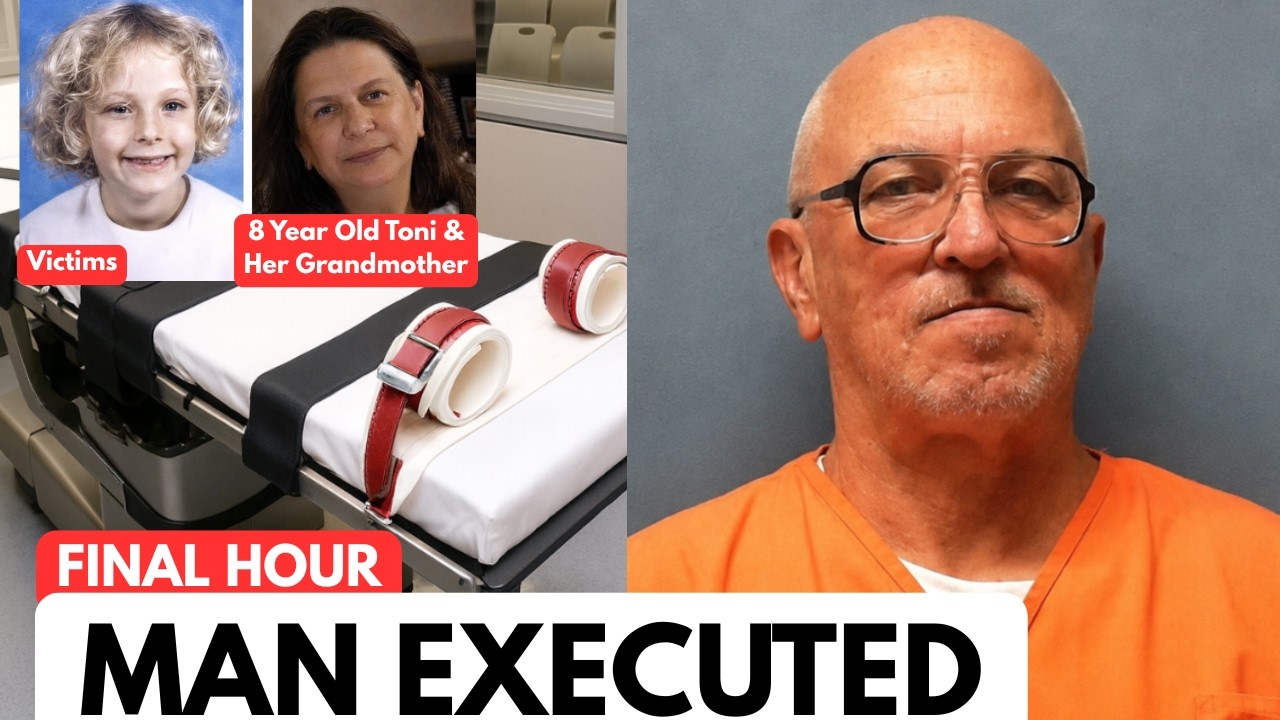 The execution capped a long and contentious legal journey that began on the night of September 20, 1993, when James returned to a home in Casselberry, Florida, after a night of heavy drinking and 𝒹𝓇𝓊𝑔 use. Inside were four children staying with their grandmother, Betty Dick, 58, including 8-year-old Tony Marie Neuner. James first strangled and sexually assaulted Tony, then went to Betty’s bedroom, striking her with a candlestick before stabbing her to death.
A 9-year-old granddaughter, Wendy, awoke to the commotion and witnessed the violence but was left physically unharmed. Two younger children in the home were spared entirely.
After the attacks, James showered, stole jewelry and Betty’s car, and fled the state, triggering a massive search that ended only after America’s Most Wanted aired his case to a national audience. A viewer in Bakersfield, California, spotted him in an unemployment line and alerted authorities, leading to his arrest on October 6, 1993. James gave two recorded confessions, describing the killings in chilling detail, including his admission that he raped Tony’s body after she was dead.
“I killed Tonya first,” he said in one statement, later adding that when Betty asked him why, he told her “don’t worry about it, just give up the ghost.”
James pleaded guilty in 1995 to two counts of first-degree murder, along with charges of aggravated child 𝓪𝓫𝓾𝓼𝓮, attempted sexual battery, kidnapping, and grand theft. A jury recommended death by an 11-1 vote, a split that would later fuel years of legal appeals and debates over Florida’s non-unanimous jury rules. The judge imposed the death sentence, and James was sent to death row at Florida State Prison in Raiford, where he spent the next three decades while his attorneys fought to spare his life.
During those 30 years, James’ legal team argued that he was no longer the same man who committed the crimes, pointing to significant cognitive decline, a lifelong history of substance 𝓪𝓫𝓾𝓼𝓮, and signs of early-onset dementia and mental illness. They contended that executing someone in such a condition amounted to cruel and unusual punishment, but courts at every level rejected those claims. In the final days before his execution, three separate petitions were filed with the U.
S. Supreme Court, all of which were denied without recorded dissent on Thursday morning.
The execution originally was scheduled for 6 p. m. but was delayed to 8 p.
m. by the Department of Corrections, which offered no reason for the change. James woke at 7 a.
m. on Thursday and requested a last meal of fried catfish, potato salad, hushpuppies, cookies, soda, and coffee. He had no visitors during his final hours.
Witnesses described seeing his chest tremble visibly about two minutes into the three-𝒹𝓇𝓊𝑔 lethal injection process before he was pronounced dead.
In the viewing room, members of Betty Dick and Tony Neuner’s family watched the execution unfold. Betty’s daughter, Brenda Teed, told reporters afterward that the family had been carrying the weight of the loss for more than 31 years, describing the impact as hitting them “in places you can’t imagine.” Jerry Pierson Jr.
, Tony’s uncle, remembered Betty as a rock for the family and said the murders had cost them generations, leaving wounds that would never fully heal.
The case had drawn national attention not only for the brutality of the crimes but also for the role of America’s Most Wanted in capturing a fugitive who had fled 3,000 miles. The show aired James’ case on September 28, 1993, generating hundreds of tips from viewers. A follow-up segment on October 5 included new information, and the very next day, a man in Bakersfield recognized James from the broadcast while standing in line at a state unemployment office.
Within hours, police had him in custody.
James’ background offered some context for his troubled life but no excuse for his actions. He was born on August 4, 1961, in Bristol, Pennsylvania, and grew up unaware until age 10 that the man raising him was not his biological father. When he finally met his real father, it was a man who worked as a 𝒹𝓇𝓊𝑔 counselor, yet by age 11, James was using drugs himself, introduced to that world by the same person.
He spent his teens in Casselberry, Florida, struggling with addiction and violence, dropping out of high school in his junior year. He joined the Army at 17, seeking structure, but was discharged for what records described as “failure to conform.”
After returning to Florida with nothing resolved, James found shelter with Betty Dick, the mother of a friend, who offered him a room in her home in 1993. It was a gesture of kindness that would end in tragedy. On that September night, James came home from a party intoxicated, and what happened next destroyed a family and set a legal process in motion that would last three decades.
Death penalty opponents have seized on James’ case as an example of systemic flaws in capital punishment. They point to the 11-1 jury recommendation, which under Florida law prior to 2023 required only a majority vote to impose death. Critics argue this makes Florida an outlier even among states that still execute prisoners, and James’ case became a rallying point for those pushing for unanimous jury requirements.
His attorneys also argued that the lethal injection protocol itself was flawed, though courts declined to intervene.
The timeliness of the execution Thursday placed James among four inmates scheduled to die across three days in different states, including one in Louisiana, one in Arizona, and one in Oklahoma where Wendell Grissom was also executed the same day. It was one of the busiest weeks for capital punishment in recent American history, drawing renewed scrutiny to the death penalty in a country where public support has declined in recent years.
For the family of Betty Dick and Tony Neuner, the execution brought a measure of closure but no real peace. Brenda Teed said the family had been dealing with the loss for more than 31 years, a burden that does not lift even when the person responsible is gone. The two youngest children who were in the home that night and left unharmed have grown into adults, but the trauma of that night has echoed through generations.
James himself offered a glimpse of his state of mind in his confessions, expressing a kind of detached remorse. “For what I did, you know, there’s nothing I can do to even begin to make it right,” he said in one recording, adding that he wished to be put to death sooner rather than later. He described Tony as being like a niece to him, recalling how he used to look out for her if other kids picked on her.
 Yet he also admitted to raping her after she was dead, saying, “I figured what the hell. You know, and why not?”
The contradictions in James’ personality troubled mental health experts who evaluated him over the years. Reports noted his claims of blackouts and memory loss, stretches of time he said he could not account for, which his attorneys argued were genuine signs of neurological damage. But prosecutors maintained that James knew exactly what he was doing on the night of the murders, pointing to his actions of cleaning up, stealing, and fleeing as evidence of rational decision-making.
Florida’s system of capital punishment has faced increasing legal challenges, with concerns about the fairness of non-unanimous jury recommendations and the safety of lethal injection drugs. Governor Ron DeSantis signed a law in 2023 reducing the number of jurors needed to recommend death from a unanimous vote to just eight out of 12, a change that critics said would accelerate executions. James was sentenced under the previous law, but his case illustrated the ongoing debate.
The execution itself proceeded without major incident, though the two-hour delay raised questions. Department of Corrections officials did not explain the reason for pushing back the time, which was announced the night before. Witnesses included reporters and family members, who described the procedure as methodical and clinical, with James appearing calm and silent throughout.
Outside the prison, small groups of protesters gathered, some holding signs opposing capital punishment and others supporting the sentence. Their voices were muted by the isolated location of the prison in rural northern Florida, but their presence underscored the deep divisions in American society over the death penalty. For every person who saw the execution as justice finally served, another saw it as a system that had failed the victims and the condemned alike.
The case also highlighted the enduring power of television in law enforcement, long before the age of social media and digital surveillance. America’s Most Wanted, which aired from 1988 to 2012, was responsible for capturing more than 1,000 fugitives, and James was among its most notable successes. The show’s ability to mobilize millions of viewers across the country turned an anonymous face into a known threat within days.
James’ path from an unassuming man in an unemployment line to a convicted murderer on death row was a story of addiction, violence, and a justice system that took three decades to deliver its final verdict. His execution Thursday ended not just a life but a chapter in Florida’s history with capital punishment, one that legal scholars will continue to analyze for years to come.
For Tony’s sister Wendy, now an adult, the night she witnessed her grandmother’s murder has never left her. She did not speak publicly after the execution, but those close to her said the event reopened wounds that time had never fully healed. The two youngest children in the home that night, spared physical harm, have lived with the knowledge of what they survived and what they lost.
In the hours before his execution, James had no visitors, and his last meal request reflected a taste for simple comfort food. He did not offer any final statement, even when given the opportunity. That silence, coming from a man who had once spoken at length about his crimes, struck some observers as a final act of defiance or perhaps exhaustion after decades of legal battles.
The legal process that consumed James’ final years was marked by a flurry of activity in the weeks before his death. His attorneys filed emergency motions seeking a stay of execution based on his cognitive decline, but the courts moved quickly to deny each one. The U.
S. Supreme Court’s rejection of three separate petitions on Thursday morning effectively sealed his fate.
Prosecutors and victim advocates have long argued that James’ sentence was appropriate given the brutality of his crimes. They note that he targeted an 8-year-old girl and her grandmother in their own home, a place where they should have been safe. The fact that he spent 30 years on death row, they say, is a reflection of the system’s thoroughness, not its flaws.
The debate over whether James was competent to be executed was central to his final appeals. His lawyers presented evidence that years of 𝒹𝓇𝓊𝑔 𝓪𝓫𝓾𝓼𝓮 and aging had left him with cognitive impairments that made it impossible for him to understand the penalty or its meaning. But the state of Florida argued that he was fully aware of his fate and that his decision to remain silent was a choice, not a symptom of incapacity.
In the end, the courts agreed with the state, and the execution went forward as scheduled. The process took about 15 minutes, with witnesses observing James’ body react to the drugs before he was declared dead. It was a clinical end to a life that had been defined by violence and controversy.
The family of Betty Dick and Tony Neuner expressed a sense of closure after the execution, but they also acknowledged that no punishment could truly compensate for their loss. Brenda Teed said the family had been crying for months leading up to the date, and that the execution itself felt like an anticlimax after so many years of waiting.
Outside groups that oppose the death penalty used James’ case to push for reforms, including banning executions of people with dementia or cognitive decline. They argue that executing someone who cannot fully understand the penalty is a violation of the Eighth Amendment’s prohibition on cruel and unusual punishment, and that James’ case set a dangerous precedent.
The execution also brought attention to Florida’s use of non-unanimous jury recommendations for capital sentences. Until a 2023 U. S.
Supreme Court ruling in the state that allowed for eight-juror minimums, Florida had been one of only a few states that permitted death sentences without a unanimous vote. James’ 11-1 recommendation was nearly unanimous, but opponents of the death penalty say even a single dissenting vote should preclude a death sentence.
James’ background story was well documented over the years. He was raised in a family that had its own struggles with addiction and violence, and he himself fell into 𝒹𝓇𝓊𝑔 use early in life. His time in the Army was brief, and he returned to Florida without a clear direction, eventually finding his way into the orbit of the Dick family, which showed him kindness he would ultimately betray.
The murders themselves were particularly horrific, as James admitted to killing Tony first before moving on to her grandmother. He then left the two youngest children alone in the house while he cleaned up and escaped. The callousness of his actions has haunted the community of Casselberry for decades.
Florida State Prison, where James was executed, is the same facility that has hosted numerous other high-profile executions in the state’s history. The death chamber there has witnessed the final moments of more than 100 inmates since the state reintroduced capital punishment in the 1970s.
James’ execution was the 102nd in Florida since 1976, according to the Death Penalty Information Center. The state has one of the largest death row populations in the country, and its execution rate has increased under Governor DeSantis, who has signed death warrants more frequently than his predecessors.
 The legal wrangling in James’ case continued right up until the final hours, with his attorneys filing an emergency motion with the U. S. Supreme Court on Wednesday night that was denied early Thursday.
The court offered no explanation for its denial, leaving James with no further options.
For the family, the execution was the culmination of a long journey that began with a phone call on a September morning in 1993. Betty’s daughter Brenda has spoken publicly over the years about the impact of the murders, describing how her mother’s death left a void that never healed. She said the family has learned to live with the loss, but it has never been easy.
The media coverage surrounding James’ case was intense in the 1990s, with America’s Most Wanted playing a pivotal role. The show’s host, John Walsh, often highlighted cases like James’ to demonstrate the importance of citizen involvement in law enforcement.
In his confessions, James described the murders in a matter-of-fact tone that chilled investigators. He said he did not know why he chose Tony first, speculating that she was the first one he reached on the couch. He said he strangled her and then sexually assaulted her body before proceeding to Betty’s room.
Betty’s death came after she woke up when James struck her with a candlestick. He said she asked him why he was doing it, and he told her not to worry about it and to give up the ghost. He then stabbed her, ending her life.
The 9-year-old witness, Wendy, came out of her room after hearing the commotion and saw her grandmother being attacked. James said he did not harm her because she was not in his path, though the psychological trauma she experienced has lasted a lifetime.
James’ own childhood was marked by instability and early exposure to drugs. His biological father, who worked as a 𝒹𝓇𝓊𝑔 counselor, ironically introduced him to substance 𝓪𝓫𝓾𝓼𝓮 at age 11. He later described blackouts and violent outbursts that he could not explain.
His time in the Army was brief, and after his discharge, he drifted back to Florida, where he reconnected with the Dick family through his friend Tim. Betty’s willingness to house him was an act of compassion that ended in tragedy.
The manhunt for James was one of the most intense in the region at the time, with law enforcement agencies across multiple states searching for him. His capture in California was a direct result of the America’s Most Wanted broadcast, which reached millions of households.
After his arrest, James gave detailed statements that provided insight into his state of mind. He expressed remorse for his actions but also described a sense of anger that he could not understand. He said he wished he could understand where the rage came from.
The trial in 1995 was relatively brief because James pleaded guilty, leaving only the sentencing hearing. The jury heard testimony from witnesses and psychological experts before recommending death by an 11-1 margin.
The judge followed the jury’s recommendation, and James was sentenced to death for both murders plus additional time for the other charges. He was sent to death row, where he remained for 30 years while his legal team pursued appeals.
The appeals process in Florida is notoriously long, with many inmates spending decades on death row before their executions are carried out. James’ case was no exception, with multiple rounds of state and federal appeals.
In recent years, James’ legal team focused on his cognitive decline, arguing that he was no longer competent to be executed. They presented evidence of early-onset dementia and memory loss, but the courts were not convinced.
The U.S. Supreme Court’s willingness to allow James’ execution to proceed despite his cognitive issues has been criticized by some legal scholars who argue that executing individuals with dementia violates constitutional protections against cruel and unusual punishment.
The execution schedule for the week of March 18-20, 2025, was among the busiest of the decade, with four executions across three days. This clustering of capital punishment has been noted by death penalty opposition groups as a troubling trend.
James’ last meal of fried catfish, potato salad, hushpuppies, and other comfort foods was a final request that he made on Thursday morning. He had no visitors, and his time leading up to the execution was spent alone in his cell.
The execution chamber at Florida State Prison is a stark room with a gurney where inmates are strapped down while lethal drugs are administered. Witnesses described seeing James’ chest shake as the drugs took effect.
After being pronounced dead, James’ body was taken to the medical examiner’s office for an autopsy, as is standard procedure following executions. His remains were then released to his family for burial.
The response from the community of Casselberry, where the murders took place, was mixed. Some residents expressed satisfaction that justice had been served, while others voiced concerns about the morality of capital punishment.
The debate over the death penalty in Florida continues to be divisive, with lawmakers and advocates on both sides of the issue. James’ case has become a symbol for those who argue that the system is flawed and in need of reform.
 For the family of Betty Dick and Tony Neuner, the execution brought an end to a long legal process but did not erase the pain they have carried for more than three decades. Brenda Teed said she hoped the case would serve as a reminder of the fragility of life and the importance of cherishing loved ones.
The execution also raised questions about the effectiveness of lethal injection, given the visible shaking reported by witnesses. Critics argue that the drugs used can cause suffering, while the state maintains that the process is humane.
James’ decision to remain silent in his final moments was a surprise to some who had expected him to offer an apology or explanation. Instead, he chose to go quietly, leaving behind only the memory of his crimes.
The legacy of the case will likely extend beyond the execution itself, as legal scholars and death penalty opponents continue to study it. The role of America’s Most Wanted and the non-unanimous jury vote are elements that will be debated for years.
The two grandchildren who were unharmed that night have grown into adults, but they have never spoken publicly about their experiences. Their silence is a testament to the depth of the trauma they endured.
James’ own past with addiction and violence has been cited by some as a mitigating factor, but prosecutors have always maintained that his actions were the result of conscious choice. The debate over his mental state will never be fully resolved.
The execution on Thursday was a moment of closure for the legal system, but for the family, the loss remains. The murders of Tony and Betty have left a hole that can never be filled, and the visible act of the state carrying out its sentence brought little comfort.
Outside the prison, death penalty protesters and supporters converged, reflecting the deep divisions in American society over the issue. Some argued that James’ execution was a necessary step for justice, while others saw it as a continuation of a flawed system.
The process leading up to the execution was marked by a flurry of legal activity, with James’ attorneys filing multiple motions in the final week. The courts’ rejection of these motions left James with no path to avoid his fate.
Florida’s death penalty system has been upheld by the U. S. Supreme Court in previous cases, but challenges continue.
The non-unanimous jury recommendation issue is likely to be raised again in future cases.
In his confessions, James expressed a desire to die, saying he wished to be put out of his misery. Whether that desire changed in the following decades is unknown, as he never spoke publicly about his time on death row.
The family’s public statements after the execution reflected a mixture of closure and ongoing grief. They said they hoped that James’ death would allow them to finally move forward, but they acknowledged that the pain would never fully disappear.
The case remains one of the most infamous in central Florida history, not only for the brutality of the crimes but also for the high-profile manhunt that captured the nation’s attention. The television show that helped catch James was a precursor to modern social media and surveillance technologies.
The death penalty continues to be a contentious issue in the United States, with a majority of states having abolished it in practice or in law. Florida remains one of the most active execution states, along with Texas, Oklahoma, and Alabama.
James’ execution was the second in Florida in 2025 and the 102nd since the death penalty was reinstated. The state has more than 300 inmates currently on death row, and executions are expected to continue under the current administration.
The legal and ethical questions raised by James’ case will persist long after his body has been buried. The 30 years he spent on death row, the non-unanimous jury vote, and his cognitive decline all highlight areas where the system could be improved.
For the family of Betty and Tony, the focus now is on remembering the lives that were lost rather than the death of the man who killed them. They have said they want their story to serve as a reminder of the importance of community and the danger of drugs and alcohol.
The State of Florida’s decision to proceed with the execution despite the appeals from James’ attorneys and death penalty opponents has been praised by some as a sign that the system works. Others see it as a failure to address the deeper societal issues that lead to violence.
The shelf life of this story will depend on ongoing developments in death penalty law and politics. As other states move toward abolition, Florida’s continued use of capital punishment keeps cases like James’ in the public eye.
The final chapter of Edward James’ life closed with a silent execution, but the conversation about justice, punishment, and the role of the state in taking a life will continue for generations to come.
His last words were none, and the meaning of that silence will be interpreted by observers in their own ways. Some will see it as a sign of remorse, others as defiance, and still others as the final exhaustion of a man who had run out of things to say.