Nobody told me this when I turned sixty-five. Back then, you picture old age as a cane, a prescription, and a sore knee. But it’s cleverer than that. It rearranges small things without making a sound.
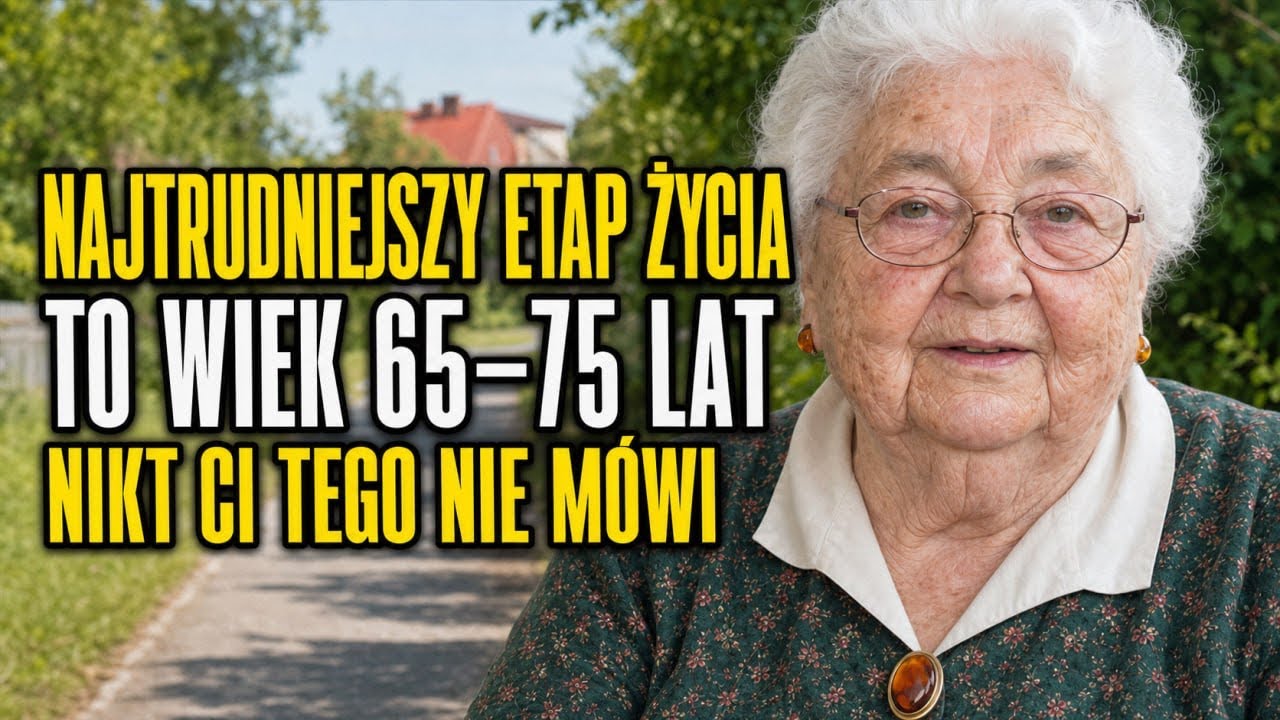
Thursday starts to feel like Tuesday. The phone rings less often. A heavy bag becomes an excuse, and then the excuse becomes a way of life. You don’t notice the exact moment when the world gets smaller.
I didn’t, for a long time. My name is Czesława. For forty-three years, I worked in a library in a small town. I knew people by the sound of their footsteps in the hallway.
I knew who came for a crime novel, who came for a romance, and who just wanted to sit somewhere warm and exchange a few words. I thought that because I had spent my whole life surrounded by people and books, loneliness, boredom, and helplessness could never touch me. After so many years, a person develops a high opinion of herself. Life has a very effective remedy for that.
Time. Today, I want to tell you about six things that slowly started taking my life away, piece by piece, though none of them looked dangerous at first. I was ashamed of one of them for a long time. One almost took away my independence.
The last one was the worst, because it made me wake up in the morning with no idea why I should get out of bed at all. I’m not saying this to frighten anyone. I’m saying it because if I had recognized these things earlier, I would have saved myself several empty years. The first trap was sameness.
Not loneliness, not illness. Just ordinary days that looked as if they had been copied through carbon paper. Morning tea in the same cup, then the shop by the same street, lunch at the same hour, and in the evening, the same chair by the window. Order is necessary for a person, but order and life are not always the same thing.
Everything in the sideboard also stands neatly in a row, and yet nobody would say the sideboard is having an interesting day. I only realized it when my granddaughter asked me what I had done the previous week. I opened my mouth and couldn’t point to a single day. Not because I had lost my memory.
Simply because there was nothing worth remembering. Everything had the same color. All my life, I had shelved books in their proper places. After retirement, I shelved myself on one particular shelf and sat there quietly, careful not to disturb anyone.
One morning, instead of taking the shortest route to the bakery, I turned past the old mill. I hadn’t been there in a long time. I saw the allotment gardens, a man fixing a fence, and a woman shaking out a tablecloth over her balcony. Nothing special.
But when I got home, I remembered that walk perfectly. I remembered the smell of wet earth and a yellow bicycle leaning against a tree. That was when I understood that my head doesn’t always need exercise. Sometimes it needs to be woken up.
From then on, once a week, I did one thing differently. I sat on a different bench. I picked up a book by an author whose name I didn’t know. I rode the bus one stop further.
You don’t need to jump out of a plane. At my age, you’re happy when you get down from a high curb safely. It’s about breaking the routine, just a little. If every day is the same, the mind stops recording it.
Then it seems like time is racing. It isn’t racing. We simply leave it too few markers. The second thing was the shrinking of my world of people.
It didn’t happen suddenly. First, I declined one meeting because it was raining, then another because my back hurt. Later, I decided there was no point calling Zosia, because she probably had her own things to do. A person can be very polite about someone else’s absence.
You make excuses for everyone, but you don’t notice that for three days you haven’t said anything aloud beyond “good morning” at the shop. In the library, the door never stopped opening. After I retired, the silence was pleasant for the first few months. Nobody asked where Sienkiewicz was.
Nobody returned a book stained with compote and swore it had come that way. I enjoyed the peace. But peace has two faces. One gives rest, and the other sits down across from you and slowly takes away your desire to go out and see anyone.
The worst sentence in old age is: Maybe tomorrow. Tomorrow I’ll call, tomorrow I’ll go, tomorrow I’ll tell the neighbor I’ll come for tea. Tomorrow is very convenient, because it asks nothing of us today. I lost almost a year to that tomorrow.
Zosia was ill, and I didn’t know it. We were both waiting for the other one to call. When I finally got in touch, she only said: “Czesiu, I thought you had forgotten about me. ” I still don’t like remembering that sentence.
We don’t need twenty friends in old age, or a full table of guests every Sunday. We need repeated, real contact. The woman at the greengrocer’s who notices we didn’t come. A neighbor you can tell that the radiator is knocking again.
One person you don’t have to pretend to be fine with. Loneliness doesn’t begin when you live alone. It begins when you stop telling someone what pleased or hurt you today. I also learned to tell the difference between loneliness and being alone.
I love mornings by the window, when nobody wants anything from me. That is not misery, that is silence that leaves room for thought. But when the silence starts to weigh on you, when you turn on the radio just to hear a human voice, then you have to act before the desire even appears. In youth, desire leads the legs.
In old age, sometimes you have to put on your shoes first, and the desire only catches up with you by the gate. The third thing struck at my pride. I had to learn to accept help. We were raised differently.
A person was supposed to carry their own shopping, fix their own tap, walk to the doctor on their own, and still tell the children that they needed nothing. We knew how to carry burdens without complaint. We didn’t know how to say: “Come over, because I can’t manage today. ” It seemed to us that asking for help meant handing over a piece of our dignity.
I understood this after a fall in the kitchen. I stood on a stool to reach a jar on the top shelf. The stool wobbled, and I landed on the floor faster than I could think. Nothing was broken, just a bruised hip.
I lay there for a moment, and my first thought was not: Call for help. I thought, get up before anyone sees. To this day, I don’t know who I was trying to hide it from. There was no one in the apartment except me and a jar of pickles.
In the evening, my daughter noticed I was limping. I lied and said I had slept badly. Old people can lie out of love. I’m fine.
I’ll manage. Don’t come. We say these things so that our children won’t worry, but after such a lie, they worry even more, because they sense they don’t know the truth. My daughter told me then: “Mama, when you don’t let me help you, you’re not protecting me.
You’re pushing me away. ”
It hurt, because she was right. From then on, I adopted a simple rule. I ask for small help before big help becomes necessary.
A grandson can carry the heavy groceries. A neighbor can change the bulb above the ceiling. I can go to the doctor with my daughter instead of proving to everyone that the bus still obeys me. That is not surrender.
That is managing your strength. When a person spends all their energy defending their pride, there is nothing left for living. The fourth change came to my body. I won’t call it weakness.
It was more like hesitation. That little pause before getting up from a chair, the look at the stairs, the quick calculation of whether you really need to go upstairs. A bag I once carried without thinking suddenly developed a character of its own. My body didn’t say: “You can’t.
” It asked: Are you sure? That question is treacherous, because if you always answer no, the world gets smaller again. For several months I avoided movement before I understood what I was doing. I didn’t reach for the higher shelf.
I didn’t bend down for something that had fallen, if it could lie there. I skipped walks when the sky looked suspicious. A person doesn’t lose mobility in one day. First you stop doing one thing, then another, and the body is obedient.
Since we don’t ask it to move, it decides movement is no longer needed. I didn’t start training like an athlete. It was enough to walk to the end of the street and back every day. Sometimes slowly, sometimes with a stop by the fence.
At home, I got up from my chair a few times without holding on, when I felt safe. I wasn’t fighting my body. I was reminding it that we were still taking part in life. In old age, regularity is wiser than enthusiasm.
Enthusiasm comes on Monday and is gone by Wednesday. Habit stays. Of course, everyone has different health, and there is no single prescription. Some people need rehabilitation, some need a cane, some need rest and a doctor.
Wisdom is not about ignoring pain. It is about telling the difference between caution and resignation. A cane doesn’t take away your independence if it lets you leave the house. What takes it away is the pride that keeps you sitting by the window, watching others walk.
The fifth thing was the hardest for the heart. Grief that doesn’t end with the funeral. At my age, a person remembers more of the absent than the present. Parents, a brother, a husband, friends from work.
Even places disappear. The shop where I bought notebooks is now an empty storefront. The old library moved to a new building, and someone hung an advertisement in our old reading-room window. You walk down your own street and sometimes feel like a guest.
After my husband died, the worst part wasn’t the big anniversaries. It was the small things. For weeks, I set out two cups on the table. My hand did it faster than my memory.
In the shop, I saw his favorite mustard and put it in the basket. Only at the checkout did I remember that no one would ever open it again. Grief doesn’t always cry. Sometimes a person stands holding mustard and doesn’t know whether to put it back.
For a long time, I was angry at myself for remembering. I told myself: “Czesława, so many years have passed, stop it. ” As if love had an expiration date printed on the bottom. Only later did I understand that missing someone is not a sign of weakness.
It is a trace left by someone important. I don’t have to throw away my memories in order to keep living. I just have to be careful not to set up a home inside my own sorrow. I started talking about the dead normally, not only about their final days.
About how my husband used to sing one verse of a song and always mix up the words. How my brother hid candies from the children and then forgot where he had put them himself. Laughter does not insult the dead. On the contrary, it gives them their whole life back, not just their leaving.
But you have to watch for the moment when grief turns into withdrawal. A person stops going among people, because someone will ask about the husband. You don’t go to birthdays, because there will be an empty chair at the table. You close the curtains so the world won’t remind you that it keeps going.
I understand that reflex. I did it myself. But the ones we loved wouldn’t want us to sit in the waiting room of death while we are still alive. Memory can walk with us.
It doesn’t have to tie us to a chair. And finally, the sixth thing, the most insidious of all: losing your role. For most of my life, someone needed me. In the library, readers were waiting.
At home, children, a husband, bills, dinner. Every morning had its commands. Then the children had their own families, my husband passed away, and I handed back the keys to the library. Suddenly, nobody was waiting for me to open, find, hand over, or explain something.
I had a lot of time, and I had no idea what to do with it. The first year of retirement looked like a long holiday. I slept longer, organized the cupboards, was glad I didn’t have to go out in the rain. Then the holiday ended, only nobody told me when.
One morning I sat at the table and thought: “Today, nobody needs me. ”
That sentence is more dangerous than it sounds. Repeated every day, it can convince you that if you have no duties, you have no value either. I tried to find myself some great occupation, because I thought only great things had worth.
I no longer had the strength to run a library or look after grandchildren from morning to night. So I felt useless. Then a boy from the neighborhood came over with a school reading assignment he didn’t understand. We sat for an hour.
I did nothing extraordinary. I explained a few sentences to him. As he was leaving, he said: “With you, it’s simple. ”
That day, I felt present again.
A meaningful old age doesn’t have to resemble work. It doesn’t need a schedule, a stamp, or payment. It can be watering two flower beds, calling a lonely cousin, feeding the neighbor’s cat, or teaching your granddaughter a recipe we never wrote down anywhere. What matters is that in the morning there is something that gently pulls you toward the day.
Not a duty like a stone, more like a thin thread. Sometimes that thread is enough to keep you from staying in bed. With age, my understanding of value changed too. Once, speed mattered.
How much I had done, how much I had settled, whom I had helped. Today I know that presence is also the heart’s work. You can sit with someone who is afraid and have no ready advice. You can listen to a story you have already heard three times.
You can look a child in the eye while everyone else is looking at their watch. A person doesn’t stop being needed just because they do less. Sometimes they are simply needed differently. These six things share one quality.
None of them enters the house with noise. Sameness, withdrawal, refusing help, fear of movement, grief, and losing a purpose all come quietly. That is why it is easy to mistake them for ordinary old age and do nothing about them. But old age doesn’t mean you have to accept everything passively.
We can’t turn back the years, but we can make sure our life doesn’t shrink more than it truly has to. If I could talk to myself on my sixty-fifth birthday, I would tell her this: “Don’t wait until you feel like going out. Go out sometimes without the desire. Don’t refuse every offer of help, because love also needs a door through which it can enter.
Move as much as your health allows, but do it regularly. Remember the dead, but don’t stop talking to the living. And find one small thing that makes it worth pushing back the blanket in the morning. ”
Not every day will be good.
At ninety-four, I know that without any book. There are days of pain, fatigue, and anger. Sometimes the body refuses to cooperate, and a person feels like being angry at the whole world. You are allowed to have a bad day.
You just aren’t allowed to set up permanent residence in it. The next morning, you crack open the window, wash your face, and check whether the world has left you something small. Usually, it has. If you are sixty-five, seventy, or eighty today and you feel that life has gotten heavier, don’t immediately call yourself weak.
Maybe you have simply reached a stage that requires more conscious decisions. Once, life pushed us forward on its own. Now, more often, you have to make the first step yourself. A small step is still a step.
A phone call. A short walk. Accepted help. A different place at the table.
From such small things, the world starts to grow again. And if you are younger, listening to this thinking of your mother, father, or neighbor, don’t just ask whether they need anything. An older person will answer no out of habit. Ask something specific.
“I’ll come on Wednesday. Would you prefer that I do the shopping, or walk with you? ” It is easier to accept help when you don’t first have to admit to helplessness. Sometimes the greatest gift isn’t taking care of something.
It is giving someone the feeling that they still belong to someone’s world. I still have days that look alike. I still sometimes refuse to go out, even though I know I shouldn’t. I still catch myself telling my daughter: “I’ll manage,” before I bite my tongue.
Ninety-four years don’t turn a person into a sage. They just give you a lot of material for improvement. But today I recognize faster when my life is starting to shrink, and then I do something small, before the silence has a chance to settle in comfortably. Tomorrow, I’ll take a different street to the shop.
Then I’ll call Zosia, even though we will probably both talk at the same time. I’ll let my grandson carry the heavy bag without telling him that I once carried two by myself. And in the evening, I’ll read a few pages of a book I don’t know yet. That doesn’t sound like a great struggle for life, and that’s fine.
The most important things in old age rarely make much noise. If one of these six things has touched you too, you don’t have to tell your whole story. Just write which one. The same days.
Fewer and fewer people. Difficulty accepting help. The fear in your body. Grief.
A loss of purpose. Maybe someone will read your comment and, for the first time, understand that they are not going through it alone. Old books taught me one thing. Even another person’s sentence can sometimes open a door in your own life.
Thank you for sitting with me today. At my age, a person no longer asks time to run faster. You only ask that it not pass unnoticed. So look around more carefully tomorrow.
Call one person. Accept one piece of help. Take one step further than usual. Not to pretend you are young.
But so that old age is still life, and not just waiting.