The phone stopped ringing first. Then the meetings disappeared. Then, one morning, I woke up with nowhere to be, and I realized something no one had warned me about: retirement does not just remove a job. Sometimes it removes the role you spent decades building.
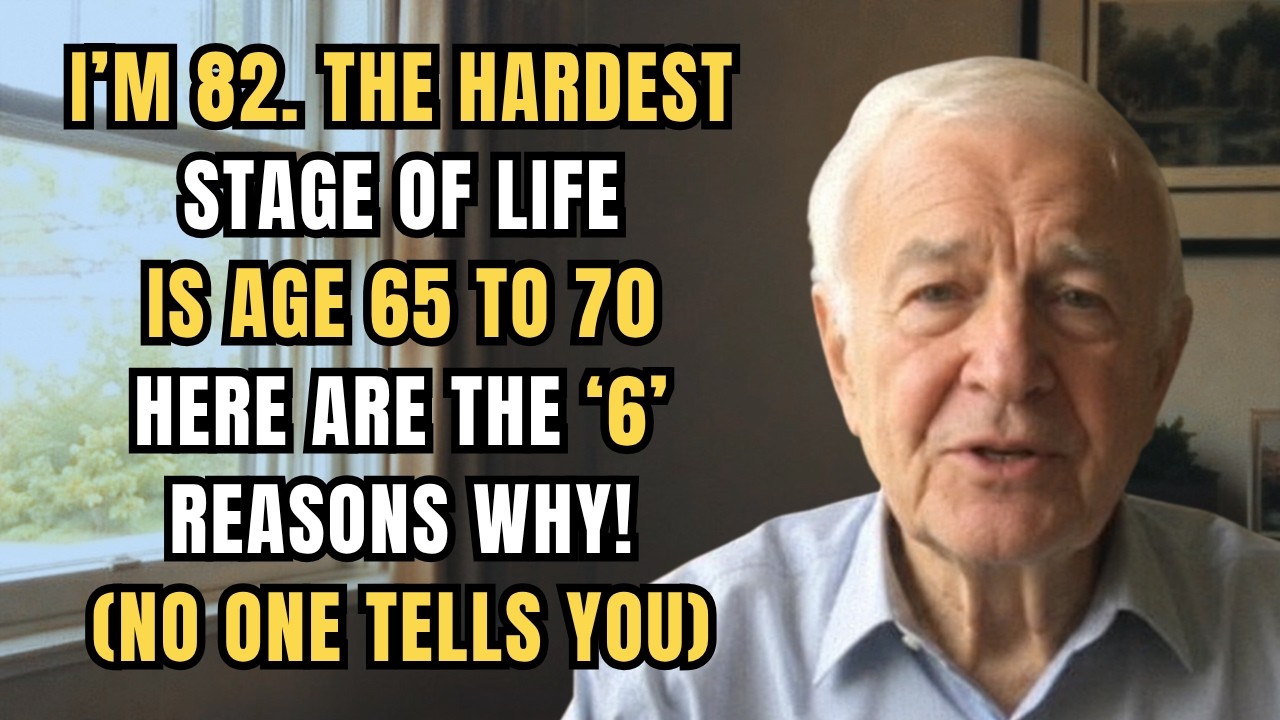
I’m 82 now, but the hardest decade of my life was between 65 and 75. I thought the battles were behind me. I thought the hard part was over. Instead, I discovered that those years brought the biggest changes I had ever faced.
Not because life became worse—it brought more freedom, more wisdom, and more appreciation for small things. But it also brought challenges nobody prepared me for. My body responded differently. My routines shifted.
My sense of purpose began to waver. And I watched too many people around me struggle because they didn’t understand what was happening. Take my neighbor Frank. After almost 40 years as a business owner, he retired.
Everyone congratulated him. They told him how lucky he was. But a few months later, he changed. He stopped going out.
He stopped sharing his opinions. He said, “I don’t really have a reason to wake up early anymore. ”
That sentence stayed with me. Because the first challenge of those years is losing your identity.
When you wake up because you have somewhere to be, when people depend on you, when your knowledge has a place—you know who you are. Then suddenly, the structure disappears. The phone stops ringing. The responsibilities lighten.
Your children have their own families. You finally have free time, but too much empty time can feel uncomfortable. The mistake many people make is thinking retirement means stopping. But retirement should not mean becoming invisible.
It should mean choosing a new mission. At that stage, you need something that challenges your mind and gives your days meaning. It could be learning a language, teaching a skill, helping your community, or creating something. Your brain and your spirit need a reason to stay engaged.
I learned this myself in my 70s. I started writing down memories from my life. At first, I thought nobody would care. But the process changed me.
It made me think deeply. It reminded me that my life still had value. The second challenge is protecting your physical strength. When we are young, strength feels automatic.
You carry groceries, climb stairs, get up from a chair without thinking. But after 65, strength becomes something you have to protect. The biggest mistake I see older people make is assuming that losing strength is simply a normal part of aging. Some changes are normal.
But becoming weak and losing independence is not something we should accept without a fight. I learned this after watching an old friend struggle after a fall. He was 72 and had always been active. But during retirement, he became less active.
He spent more time sitting, watching television, and resting because he thought he had earned it. He had earned rest. But he also needed movement. After his fall, he told me something I will never forget: “I didn’t lose my independence because I got old.
I lost it because I stopped preparing my body for life. ”
That was powerful. Your muscles are not only about looking strong. They are about protecting your future.
Strong legs help you stand up. Strong muscles help you recover after illness. Strength helps you remain in control of your own life. The solution is not complicated.
You do not need to become an athlete. You need consistency. Walk regularly. Lift something safely.
Practice balance. Eat enough nourishing food. Give your muscles a reason to stay. The third challenge is what I call the silent energy drain.
So many people between 65 and 75 say the same thing: “I’m sleeping, but I don’t feel refreshed. ” They blame age. But sometimes the real issue is that the body’s ability to produce and manage energy has changed. I remember a period in my early 70s when I felt like my battery was always half empty.
I would wake up, drink my coffee, and still feel tired. I thought this was simply what getting older felt like. But I realized something important. My body was not asking me to give up.
It was asking me to change my habits. I started moving more consistently. I spent time outdoors. I improved my sleep routine.
I paid more attention to the foods I was eating. Slowly, my energy improved. Getting older does not mean your body stops responding. It means your body responds differently.
The fourth challenge is the growing impact of chronic stress and inflammation inside the body. When we hear the word stress, we think of obvious things: financial worries, family problems, difficult situations. But as we age, there is another type of stress that happens quietly inside us. It is the stress created by years of poor sleep, unhealthy habits, lack of movement, loneliness, and the body’s slower ability to repair itself.
For many years, our bodies are very good at fixing damage. We can have a bad week, lose sleep, eat poorly for a while, and eventually bounce back. But as we move through our late 60s and early 70s, that recovery process becomes slower. The body starts asking us for more care and attention.
I learned this after my 71st birthday. I had a few weeks where I was not sleeping well. I was not exercising regularly. I was carrying worries I had ignored for too long.
Nothing dramatic happened, but I noticed small changes. I felt more tired. My mood was different. My motivation was lower.
At first I thought, “Well, this is just what happens when you get older. ” But I was wrong. Getting older means you have to become more intentional. You cannot treat your body like you did when you were 40 and expect the same results.
One of the best decisions I made was simplifying my lifestyle. I started eating more natural foods. I spent more time walking outside. I protected my sleep.
I stopped allowing small problems to take up all my emotional energy. And something surprising happened. I began feeling younger, not because my age changed, but because I removed some of the things that were quietly draining me. We cannot control every part of aging, but we can influence the environment we create inside our own bodies.
The fifth challenge is one I believe many older adults underestimate: the shrinking recovery window. When we were young, our bodies were incredibly forgiving. You could stay up late, recover from illness quickly, skip exercise for weeks, and somehow return to normal. Your body had a large reserve.
But after 65, the distance between a small problem and a major setback becomes much shorter. A simple infection can take longer to recover from. A few weeks of inactivity can lead to noticeable weakness. A fall that seems minor can change your confidence and your independence.
I saw this happen to a friend named George. He was 74 and always considered himself strong. One winter, he caught a bad cold and stayed in bed for nearly two weeks. He thought he was doing the right thing by resting completely.
But after those two weeks, he noticed something frightening. Walking up the stairs became harder. His legs felt weaker. He had lost confidence in his own body.
The illness was not the biggest problem. The biggest problem was what happened afterward. He had spent too much time inactive, and his body lost momentum. That taught me an important lesson.
Recovery is not just about resting. Recovery is about gently rebuilding. When you experience illness or injury, listen to your doctors and respect your limits, but do not give up movement completely if you are safely able to move. Even small walks, simple exercises, and daily routines can remind your body that it is still needed.
Your body is always listening to the messages you send it. If you tell it, “There is no reason to be strong anymore,” it will slowly adapt to that message. But if you tell it, “I still have a life to live,” it will continue working with you. And now we arrive at the sixth and final challenge.
This one may be the most important because it connects everything. It is maintaining resilience—the ability to adapt, recover, and continue moving forward when life changes. I have learned something after eight decades on this Earth. Life does not become easier as we age.
We still face loss. We still face uncertainty. We still experience changes we did not choose. But the people who age well are not the people who avoid every difficulty.
They are the people who build the strength to handle difficulty. Resilience is not just physical strength. It is having a mind that stays curious. It is having relationships that give you support.
It is having habits that protect your health. It is knowing that your value does not disappear because your circumstances change. I have met people in their 80s who are more alive than people half their age. They are not young because they have perfect health—nobody does.
They are young because they continue participating in life. They learn. They connect. They move.
They contribute. I knew a woman named Margaret. She was in her 70s when she lost her husband of 50 years. Many people expected her to disappear into loneliness.
Instead, she decided she would honor her husband by continuing to live fully. She joined a walking group. She started helping children at a local school. She learned how to use technology to stay connected with her grandchildren.
She told me, “I cannot choose everything that happens to me, but I can choose how I respond. ”
That sentence describes resilience better than any scientific definition. So, my friends, if you are between 65 and 75, I want you to understand something important. These years are not the end of your story.
They are a transition into a different kind of life. Yes, your body changes. Yes, some things become harder. Yes, you need more wisdom and discipline than before.
But you also have something you did not have when you were younger. You have experience. You know what matters. You know which problems are worth your energy and which ones are not.
You know that time is precious. Do not simply grow older. Grow wiser. Protect your strength.
Give your days purpose. Take care of your body. Stay connected with people who bring light into your life. Keep learning.
Keep moving. Keep showing up. The years between 65 and 75 can be challenging, but they can also become some of the most meaningful years you will ever experience.
Because this is the time when you stop living only for responsibilities and start living with deeper awareness.