DUXBURY, MA – The courtroom atmosphere shifted from clinical analysis to palpable tension on Tuesday as the final prosecution witness in the Lindsay Clancy murder trial delivered a devastating conclusion, directly challenging the defense’s narrative of postpartum psychosis and auditory command hallucinations. Dr. Gregory Satoff, a forensic psychiatrist who has worked with the FBI’s Behavioral Analysis Unit since 1996, told the jury that despite acknowledging Clancy suffered from a mental disease or defect, she was criminally responsible for the strangulation deaths of her three children.
The testimony, which spanned two days and included a heated cross-examination that drew audible reactions from the jury, marks the culmination of a weeks-long battle between two competing narratives. The Commonwealth maintains that Clancy, 33, meticulously planned the murders of her daughter Cora, 2, and sons Dawson, 5, and Callan, 7 months, in their Duxbury home on January 24, 2023, while her husband Patrick was running errands. The defense, led by attorney Kevin Reddington, argues that a combination of severe postpartum depression, medication-induced psychosis, and a commanding male voice drove her to commit the unthinkable acts.
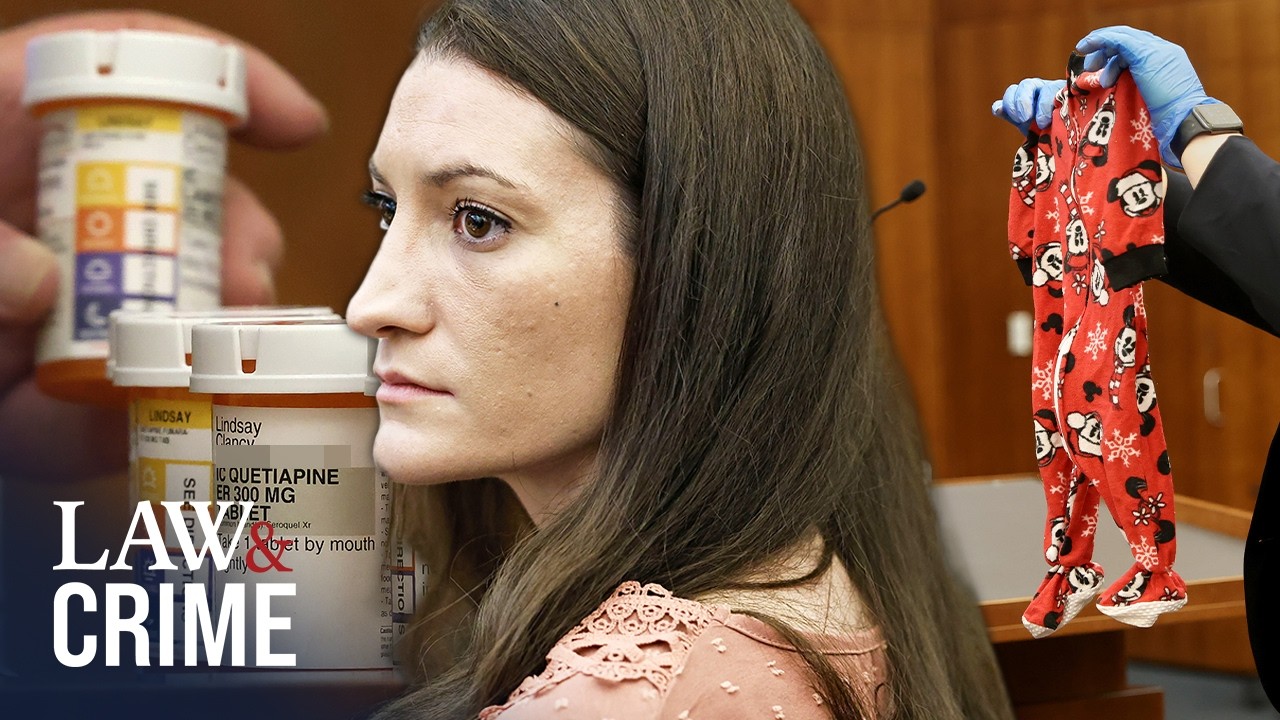 Dr. Satoff, the prosecution’s final rebuttal witness, systematically dismantled the defense’s core claim regarding the alleged auditory hallucinations. Under direct examination, he testified that Clancy described hearing a clear, external male voice that repeatedly commanded, “This is your last chance.
You have to 𝓀𝒾𝓁𝓁 your kids and then 𝓀𝒾𝓁𝓁 yourself.” However, Dr. Satoff emphasized that this voice appeared only once in Clancy’s life, never before the murders and never after, a pattern he described as inconsistent with genuine psychosis.
“Committing the act is not curative of the voice,” he stated firmly. “I have not ever seen that.”
The psychiatrist, who has evaluated thousands of patients with psychosis and women in prison who have killed their children, further testified that the voice’s constant, repetitive nature—described by Clancy as playing “over and over again as if on a tape”—was atypical. He explained that command hallucinations are typically intermittent and do not cease abruptly upon completion of the commanded act. This testimony directly contradicts the defense’s assertion that Clancy was in a dissociative state, acting on autopilot without the capacity to appreciate the wrongfulness of her actions.
Perhaps most damaging to the defense was Dr. Satoff’s testimony regarding the sequence of the killings. Clancy reportedly told him that she strangled Dawson first, then Cora, and finally Callan, each in different areas of the basement.
While she could recall the order of the murders, she claimed she could not remember how she convinced each child to descend the stairs or how they reacted. The prosecution argues this selective memory is evidence of deliberation and intentionality, not psychosis. “Three separate acts, three separate trips down the stairs,” the prosecution’s line of questioning suggested, pointing to a calculated plan rather than a single psychotic break.
Dr. Satoff also highlighted Clancy’s behavior in the hours leading up to the murders as evidence of her mental capacity. He testified that she researched the distance to the 3V Restaurant in Marshfield, where Patrick planned to pick up takeout, and looked up the location of a CVS pharmacy to purchase MiraLAX for Cora’s constipation.
She did not inform Patrick of the additional errand until he was about to leave, effectively lengthening his absence. “It lengthened the trip,” Dr. Satoff noted.
“It added one extra obligation for Patrick, and that would make for a longer time that he was away.” He also pointed out that Clancy called Patrick back when he phoned from CVS at 5:34 p. m.
 , concealing what was happening, and locked the bedroom door to delay his entry upon his return.
“She was conscious of time and told me that she had mapped out the distance because she didn’t want her husband to be gone too long,” Dr. Satoff testified. “But in this case, I think the issue of time and her husband returning rather than being a solution for her was a problem.”
He concluded with a firm, unwavering opinion: “It is my opinion within a reasonable degree of medical certainty that Miss Clancy was criminally responsible.”
The defense, however, launched a vigorous counterattack during cross-examination, seeking to undermine Dr. Satoff’s credibility and the prosecution’s entire case. Reddington immediately went after the psychiatrist’s credentials, noting that he is not board-certified in forensic psychiatry because he never completed a one-year fellowship.
While Dr. Satoff defended his decades of on-the-job training and coursework, the attack set a combative tone for the proceedings.
Reddington also elicited significant concessions from the prosecution’s own expert. Dr. Satoff acknowledged that he believes Clancy was suffering from bipolar II disorder and that the medication she was prescribed, including Zoloft, may have triggered or exacerbated her symptoms.
He conceded that postpartum depression can rapidly turn into postpartum psychosis, and that Clancy was having adverse reactions to her medications from October through January. Most strikingly, he admitted that the doctors treating Clancy never performed a thyroid test or a blood test to check the levels of the multiple psychotropic drugs she was taking.
“Would you agree with me, sir, that one of the unfortunate components of a woman who has had a baby and is suffering from postpartum depression and living with it, that can on a dime turn into postpartum psychosis very quick?” Reddington asked. Dr.
 Satoff responded, “It can be rapid.” The defense also highlighted that Clancy had repeatedly told her husband and mother about dark, intrusive thoughts of harming herself and the children in December 2022, yet her pleas for help were met with reassurance rather than urgent intervention.
The tension in the courtroom reached a peak during a particularly sharp exchange regarding how Dr. Satoff gained access to Clancy’s family. Reddington pressed the psychiatrist on whether he had contacted the district attorney’s office to arrange interviews with Clancy’s husband and mother.
When Dr. Satoff referred to the prosecutor as “Jen Sprag,” Reddington corrected him, saying, “Attorney Sprag, please.” The back-and-forth, which included Reddington repeatedly saying “Jen Sprag” despite the judge’s admonition to be respectful, drew audible laughter from the jury.
“The jurors actually had a laugh out of that,” noted one courtroom observer. “Sometimes in a case that is so intense, an audible laugh can ease it a little bit.”
The laughter was a brief moment of levity in an otherwise grim and emotionally charged trial. Sierra Gillespie, a reporter from Law & Crime who has been in the courtroom daily, described the scene as packed with supporters of Clancy, some of whom brought flowers and even a dog. “It’s not like Karen Read,” Gillespie noted, referring to another high-profile Massachusetts case.
“But inside the courtroom, it is completely packed. Some people even have to be turned away.” She observed that Clancy herself appeared somber and mentally exhausted, often closing her eyes and taking deep breaths during the intense cross-examination.
The prosecution’s case now rests on the testimony of two expert witnesses—Dr. Kirk Halburn and Dr. Gregory Satoff—who both acknowledged Clancy’s severe mental health struggles but ultimately concluded she was criminally responsible.
Under Massachusetts law, a defendant can be found not guilty by reason of insanity if they prove that, due to a mental disease or defect, they either could not appreciate the wrongfulness of their actions or could not conform their behavior to the law. The defense must establish at least one of these two prongs to succeed.
 Dr. Halburn, who testified earlier, conceded that Clancy was having adverse reactions to her medications and that she described feeling disconnected from her body, in a dissociative state. However, he also testified that the voice she described was “convenient” and that her actions, including the planning and the order of the killings, suggested she knew what she was doing.
Dr. Satoff echoed this sentiment, emphasizing that Clancy’s ability to recall the precise order of the murders, while claiming amnesia for the details, was inconsistent with a true psychotic break.
The defense, however, has painted a picture of a woman failed by the mental health system. They have presented evidence that Clancy was overmedicated, that her doctors ignored her escalating pleas for help, and that she was suffering from a rare and severe form of postpartum psychosis that can lead to filicide. Reddington has argued that Clancy was not in control of her actions, that she was a puppet of a commanding voice, and that she should be found not guilty by reason of insanity.
The jury, which has been visibly attentive throughout the proceedings, will soon be tasked with deciding which narrative to believe. They have heard heart-wrenching testimony about the three young victims, seen the small outfits they were wearing when they were killed, and listened to the 911 call made by Patrick Clancy. They have also heard Clancy’s own journal entries, in which she described her descent into darkness and her fears of harming her children.
As the trial hurtles toward its conclusion, the stakes could not be higher. If convicted of first-degree murder, Clancy faces life in prison without the possibility of parole. If found not guilty by reason of insanity, she would be committed to a state psychiatric facility, where she could potentially be released if deemed no longer a danger to herself or others.
The prosecution’s final witness, Dr. Satoff, delivered his opinion with unwavering certainty, but the defense’s cross-examination raised questions that may linger in the jurors’ minds. The concession that Clancy was suffering from a mental disease or defect, and that her medication may have made things worse, could be enough to create reasonable doubt about her criminal responsibility.
Reddington, who is expected to deliver his closing argument without notes, has signaled that he will focus on the systemic failures that led to this tragedy. “Look at the way the system and doctor after doctor failed her,” he has said. The Commonwealth, on the other hand, is expected to pull on the heartstrings of the jury, reminding them of the three innocent lives lost and the evidence of premeditation and planning.
The jury is expected to begin deliberations as early as Wednesday after closing arguments. The case, which has captivated the nation and sparked debates about maternal mental health, the failures of the psychiatric system, and the nature of criminal responsibility, is now in their hands. The outcome will hinge on whether they believe Lindsay Clancy was a cold-blooded killer or a deeply troubled mother who was failed by everyone who was supposed to protect her.
As the courtroom emptied on Tuesday, the gravity of the moment was palpable. The prosecution rested its case, and the defense signaled it would not call any additional witnesses. The battle of the experts is over.
Now, the jury must decide the fate of a woman whose story has become a tragic symbol of the intersection between mental illness and the criminal justice system. The world watches, waiting for an answer that may never fully satisfy the profound questions this case has raised.