I remember the exact moment I stopped being everyone’s ground. It wasn’t a collapse. No grand failure. Just a tiredness that sleep couldn’t touch.
A weight behind my eyes and in my chest that told me, for the first time in decades, that I had nothing left to give. And so I stepped back. I waited. I thought, *surely now someone will notice.
Surely someone will ask if I’m okay. * Days passed. Then more days. And all I found was silence.
Not anger. Not betrayal. Just a quiet, empty silence that said more than words ever could. The calls stopped.
The visits slowed. The emergencies that once pulled me out of my own life? They simply found someone else. And in that stillness, I finally asked myself a question I should have asked years before: *When I have nothing to give, who stays?
*
That question doesn’t lie to you. It strips everything down to what is real. I was the man people called when things fell apart. If a friend was in trouble, I was there.
If someone needed money, I found a way. If a neighbor was struggling, I stepped in without being asked. I did it with quiet pride. It made me feel needed.
It made me feel important. It gave me a purpose during years when I didn’t know who I was without being useful to others. People noticed. They called me kind.
They said I had a big heart. And I believed them, not because I was arrogant, but because those words filled something inside me I didn’t even realize was empty. But here’s the part no one tells you when they praise your kindness: people get used to it. Slowly, quietly.
One favor becomes two, and two becomes expectation. Before you know it, what you gave freely becomes what others assume will always be there. There was a woman in my life back then. Not my wife.
No. But someone I cared deeply about. She had a way of appearing whenever life knocked her down. Every time she showed up at my door, I welcomed her in.
I listened to her problems. I helped her sort through the chaos. I reassured her that things would be all right. And when she left, she always seemed lighter.
But I noticed something I ignored for a long time. She never came when things were good. She never called just to ask how I was doing. She never stayed when I was the one who needed someone to sit beside me in silence.
And still, I told myself this was love. Or at least something close enough to it. Then there was the young man I tried to help. He reminded me of myself, only more lost.
He didn’t have much guidance, and I saw in him a restless energy that could either build a life or destroy it. So I gave him work. I taught him what I could. I lent him money when he needed it.
I told myself I didn’t expect anything in return. That’s what I said out loud. But deep down, I hoped. I hoped he would grow into someone who would look back and say, “You mattered in my life.
” Not because I needed praise, but because I wanted to believe that what I gave meant something beyond the moment. And for a while, it seemed like it did. He respected me. He looked up to me.
He said things that warmed an old man’s heart. But respect built on dependence is fragile. It holds as long as the need is there. Remove the need, and you see what remains.
Even at home, I carried more than my share. Emotionally. Mentally. Sometimes financially.
And when things were hard, I told myself that’s what strength looks like. You endure. You don’t complain. You don’t make it about yourself.
That’s what men of my generation were taught. You hold things together. You don’t ask for much. You become the steady ground others can stand on.
And I was exactly that for years. But there’s a cost to being everyone’s ground. You don’t notice it at first. You tell yourself you’re strong enough.
But slowly, something begins to wear down inside you. Not your body. No. Something deeper.
Your sense of being seen. Valued not for what you do, but for who you are. And if you ignore that long enough, you start to disappear in your own life. I didn’t realize how far I had gone until I had nothing left to give.
And when I stepped back, I expected someone to step forward. Instead, I watched them fade. One by one. The woman who needed me when her life fell apart.
The young man who was like family to me. The friends and neighbors who called me with their burdens. Many of them simply vanished from my life when I stopped carrying their weight. But there were a few.
Fewer than I would have guessed, but real. People who reached out without wanting anything. Who sat with me without trying to take. Who saw me not as a solution, but as a person.
And that’s when I understood something that changed the rest of my life. I had not been loved the way I thought. I had been useful. That was the truth of it.
Not a cruel truth, but a clear one. And when you finally see clearly, you have a choice. You can harden. Close yourself off.
Decide no one is worth your time anymore. Or you can learn. You can adjust. You can begin again, but this time with your eyes open.
I chose the second path, though I won’t pretend it was easy. When you’ve spent most of your life being the one who gives, stepping back feels unnatural. It almost feels wrong. There’s a voice inside you that whispers, “This isn’t who you are.
” For a while, I listened to that voice. I felt guilty for not answering every call. I felt uneasy saying no, even in small ways. I worried that if I stopped being useful, I might stop mattering altogether.
But that fear is exactly what keeps people trapped. It convinces you that your value is tied to your usefulness. That if you’re not giving, you’re not worthy of being kept around. And that’s a dangerous belief to carry into the later years of your life, when what you need most is peace, not constant proving.
So I started small. I didn’t shut my door on the world. That was never my nature, and it still isn’t. But I began to open it differently.
Not automatically. Not out of habit. But with intention, with awareness. The next time someone came to me with a problem, I didn’t immediately step in to solve it.
I listened. I still care, don’t misunderstand me. But I didn’t rush to carry what wasn’t mine. I let there be space.
And in that space, something interesting happened. Some people stepped up for themselves. Others drifted away when they realized I wasn’t going to do the work for them. That told me everything I needed to know.
I remember one conversation in particular. That same woman who used to come to me whenever her life fell apart. She showed up again, as she always did, with that familiar storm in her eyes. And for a moment, I felt the old instinct rise up in me.
The urge to sit her down, listen for hours, fix what I could. But instead, I did something I had never done before. I spoke first. I told her, calmly and honestly, that I had been thinking about the way we interacted.
That I realized I knew a great deal about her struggles, but she knew very little about mine. That I had always been there for her, but I couldn’t remember the last time she had simply asked, “How are you? ”
There was no anger in my voice. No accusation.
Just truth. And she didn’t know what to do with it at first. Most people don’t when you step out of a role they’ve grown comfortable with. There was a pause.
An uncomfortable one. But then, slowly, something shifted. She listened. Really listened.
And for the first time, we had a conversation that went both ways. Not every relationship transforms like that. Some can’t. But the ones that can become real in a way they never were before.
At home, I made changes, too. Subtle ones, but meaningful. I stopped filling every silence. I stopped anticipating needs before they were even spoken.
I allowed space for others to notice, to respond, to participate. At first, it created discomfort. Habits, especially long-standing ones, don’t disappear overnight. But over time, something unexpected happened.
The people around me began to engage differently. They asked questions. They offered help without being prompted. Not perfectly.
Not consistently. But more than before. Because when you stop doing everything, you give others the chance to do something. The young man I once helped came back into my life after some time.
He looked different. A little older. A little quieter. There was something in his eyes I hadn’t seen before, something like reflection.
He told me he had thought about me during a time when I had stepped away. That he had realized how much I had done for him and how little he had given in return. And I listened. But this time, I didn’t brush it off.
I didn’t say, “It’s nothing. Don’t worry about it. ”
Instead, I told him the truth. I told him that caring for someone means showing up.
Not just when you need something, but when they do. That relationships aren’t built on one person giving and the other receiving. They’re built on mutual presence. And I told him he was old enough now to understand that.
He nodded. And I could see that it reached him in a way my silent giving never had. Sometimes, the greatest help you can offer someone is not what you give them, but what you expect from them. As the months passed, my life became quieter.
Not emptier. Quieter. And there’s a difference. The noise of constant demands faded.
The urgency of being needed at every moment disappeared. And in that space, I began to notice things I had overlooked for years. There were people, quiet ones, who had always been there in small, steady ways. People who didn’t demand much, didn’t take much, but offered presence, consistency, respect.
I had missed them before because I was too busy responding to the loudest needs in the room. But now I had time. Now I had energy. And I began to invest in those relationships.
Something inside me began to return. A sense of self that wasn’t tied to usefulness. A calm that didn’t depend on being needed. A kind of contentment that comes when you know you are living in alignment with yourself, not just reacting to others.
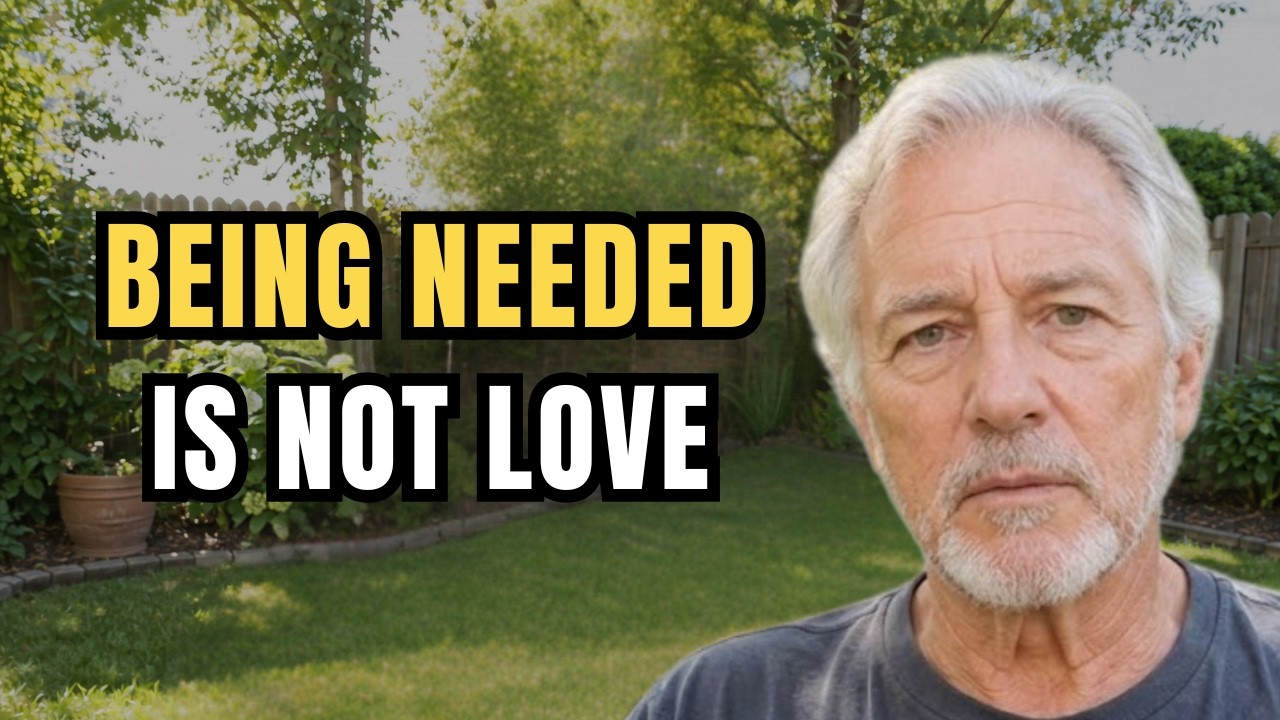
So let me tell you something, especially to those of you who have spent a lifetime being the strong one, the reliable one, the one everyone leans on. Being needed is not the same as being loved. Need is urgent. It’s demanding.
It comes knocking when something is missing, when something is broken. And when that need is fulfilled, it often moves on, looking for the next place to land. Love is different. Love is steady.
It notices you even when you’re not doing anything at all. It asks how you are, not because it needs an answer, but because it cares to know. It stays, not out of dependency, but out of choice. And if you’ve never experienced that clearly, it’s very easy to mistake one for the other.
I did. For many years, I did. But here’s the part I want you to hold on to. No matter how old you are, no matter how long you’ve lived a certain way, it is not too late to change how you show up in your own life.
Choosing yourself doesn’t mean you stop caring about others. It doesn’t mean you become cold or distant. It means you include yourself in the equation. It means your needs, your energy, your well-being, they matter, too.
It means you give from a place that is full, not from a place that is afraid. Afraid of being alone. Afraid of being forgotten. Afraid of no longer being needed.
Because when you act from fear, what you build will always depend on that fear to survive. But when you act from choice, from self-respect, from a clear understanding of your own worth, what you build becomes something entirely different. Something stable. Something real.
These days, I still help people. I still open my door. I still listen. That part of me hasn’t disappeared, and I’m glad it hasn’t.
But now, I pause. I check in with myself. I ask, “Am I doing this because I want to, or because I feel I have to? ”
And that question has changed everything.
So if you find yourself in a life where you are always giving, always showing up, always carrying more than your share, I want you to ask yourself something honestly, without judgment. When you have nothing to give, who stays? And once you have that answer, don’t turn away from it. Don’t soften it to make it easier to accept.
Let it be what it is. Because clarity, no matter how uncomfortable, is the beginning of a better way of living. You are not a service. You are not here only to fill the gaps in other people’s lives.
You are a person with limits, with needs, with a life that deserves to be lived fully, not just spent. And the moment you start treating yourself that way, everything becomes clearer. Not necessarily easier, but clearer. I’ve lived long enough to know that the people who truly care about you don’t disappear when you stop giving.
They adjust. They come closer. They meet you where you are. And the rest?
Well, they were never really yours to begin with. Take care of yourself. Not instead of others, but alongside them.
That’s where real love begins.