I’m 103 years old. This morning, before breakfast, I played Chopin’s Mazurka from memory—a piece I learned when I was thirteen. I still remember the phone number from our first apartment. I remember who I lent twenty zlotys to in 1978.
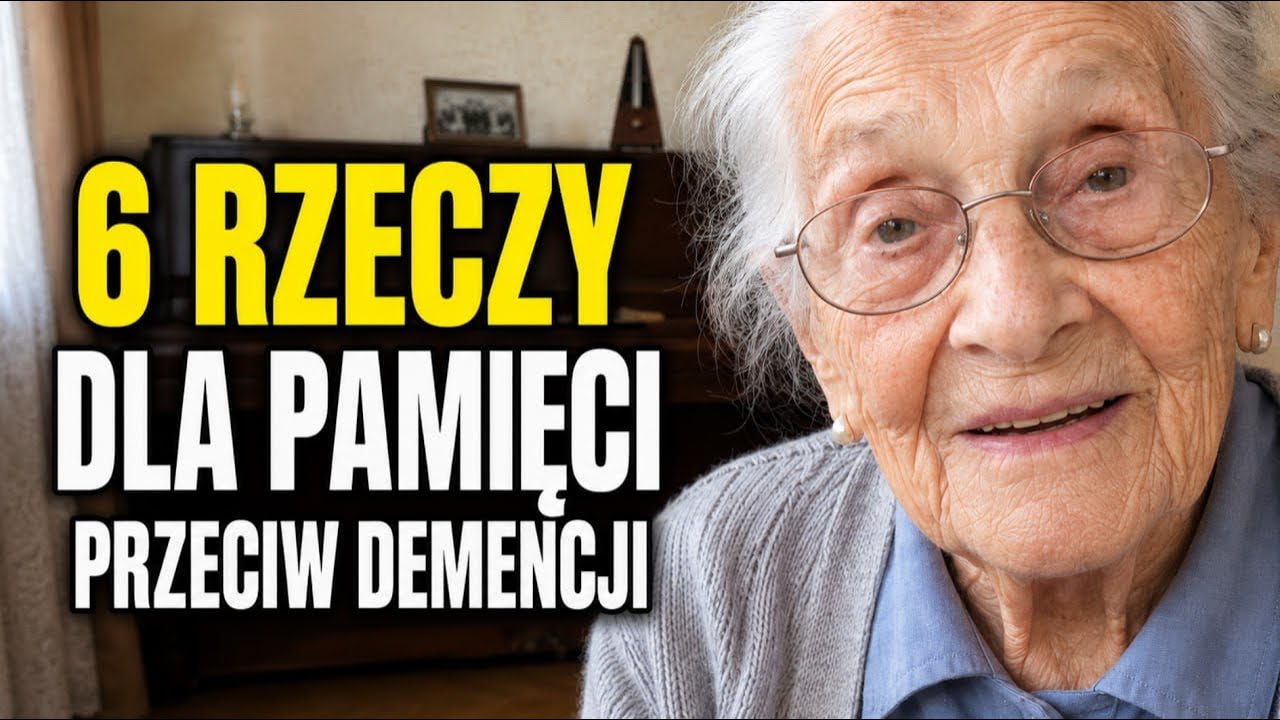
I remember what I ate for lunch yesterday: barley soup, a piece of fish, and beets. I spent ten minutes looking for my glasses. They were on my nose. Old age likes to remind you who’s in charge.
People ask me what I take for my memory. They expect the name of a pill, a powder, or some drops. Something they can order online before the movie ends. I won’t give you that.
I don’t know a method that guarantees you won’t get dementia. Anyone who promises that either doesn’t know much, or wants to sell you something. But I do know what I’ve done for years to keep my head off the shelf. And I know what my sister’s illness taught me.
It all started with her. My name is Irena Kaczmarek. For thirty-eight years I taught children to play the piano, and on Sundays I helped with the organ at our church. My older sister Zosia was more gifted than me.
She could hear a melody once and play it by evening without sheet music. She counted faster in her head than a cashier on her machine. She remembered everyone’s birthdays, recipes, teachers’ names, and who said something at a wedding they shouldn’t have. After she turned sixty, she started losing small things.
First keys, then appointments. She asked three times what day it was. She put milk in the cupboard and sugar in the fridge. Our family said, “Zosia was always absent-minded.
”
She wasn’t. When you’ve known someone your whole life, you see the difference. Later, Zosia forgot my name. She looked at her own son and asked when he was coming home from school—even though his hair was already gray.
In the end, she couldn’t eat a meal by herself. I watched her and felt afraid like never before. I thought, *This can’t happen to me. *
Now I know that was an unfair thought.
Zosia didn’t get sick because she was weak or lazy or did something wrong. Dementia is a disease, not a punishment for an unfinished crossword puzzle. It can come to anyone who lived sensibly too. So I had no certainty.
I only had fear and a question: what else can I do while I still can? The first thing was the simplest to say and the hardest to do. Every day, I did something that really required me to think. I didn’t play piano pieces my fingers could do on their own.
I chose a piece where I’d made a mistake the day before. I played slowly, sometimes just two bars, until my head and hands started talking to each other again. I did crossword puzzles, but not the easy ones. When I didn’t know an answer, I didn’t flip to the last page.
I left the blank and came back to it after tea. I also learned things with no practical reason at all. One month I memorized a new psalm. Another time, my granddaughter showed me how to send a photo through the phone.
She pressed the buttons for me about forty times, but the forty-first time was mine. It’s not about becoming smarter every day. It’s about not always choosing what’s easy and familiar. The television can entertain you, but it can’t live your life for you all day.
The second thing is people. I’ll be honest: after 103 years, not everyone delights me. Some talk endlessly, others only listen so they can talk about themselves. And my friend Krysia cheats at cards so clumsily that I’m more offended by her technique than by the cheating itself.
Still, we meet every Thursday. You have to remember whose turn it is, count points, listen to three conversations at once, and notice when Krysia hides an ace under the tablecloth. That’s more work for the brain than many exercise books. After my husband died, I didn’t want to see anyone.
I drew the curtains. I didn’t answer the phone. I ate alone and was glad when evening came, because then I could go to bed without pretending the day had meaning. One Sunday, my neighbor knocked and said, “Irena, you may not like me, but you will open the door.
”
I opened it. She sat for ten minutes. A week later, I went with her to church. Then cards came back, and I started answering the phone again.
I won’t say conversation cures dementia. I’ll only say that loneliness can silence a person so completely that they stop using words, names, and curiosity. If someone talks to you and you just nod because you can’t hear well, get your hearing checked. A hearing aid doesn’t make you old.
Pretending you understand everything takes conversation away from you. The third thing is movement. I don’t run. I don’t do squats with some woman in tight clothes from the internet.
My knees have worked hard enough in life. But every day, I get up from my chair. I walk to the gate. I walk a bit down the street.
When it rains, I walk around the apartment from the kitchen to the window and back. Sometimes I lean on the table and do a few simple exercises my physiotherapist showed me. As much as I safely can. As you age, it’s easy to say, “I’ve walked enough in my life.
” But the body doesn’t understand retirement. When you stop using it, it gets harder to stand, to go out, to meet someone, to cook your own meal. Movement doesn’t give immortality. But it helps me watch my blood pressure, balance, sleep, and independence.
And all of that matters for the head too. If someone has heart problems, dizziness, or hasn’t moved in a long time, don’t start with heroics. Ask a doctor or therapist, and start with what’s safe. The fourth thing is sleep.
My day ends at half past nine in the evening. I don’t care who won the show, who fought on the news, or who is urgently calling just to tell me other people’s business. I turn off the TV, put away the phone, air out the room. I go to bed around the same time each night.
Not every night is good. Sometimes my hip hurts. Sometimes I wake up at three in the morning and remember a conversation from fifty years ago where I should have answered differently. But I don’t turn the night into a second day.
When I sleep badly for a long time, I notice it immediately. I find words more slowly. It’s harder to focus. I’m more irritable—and then even Krysia seems worse than usual.
If someone is always sleepy, snores heavily, wakes up gasping, or can’t sleep for weeks, they should tell a doctor. Not everything is fixed by chamomile tea. The fifth thing is on the plate. But there’s no single miracle food for memory.
I eat ordinary food: vegetable soup, groats, an egg, beans, fish when I can get it, a piece of chicken, an apple, sauerkraut—but not half a jar at once, because salt has its own opinion. I don’t count every grain and I don’t live on salad. Sometimes I have a piece of cheesecake, but cheesecake doesn’t pretend to be my breakfast, lunch, and dinner. Over time, I cut back on ready-made meals, very salty cold cuts, and food that fills you up but gives your body nothing.
I watch my blood pressure and my sugar. I take my medications as my doctor prescribed, not as my neighbor or an advertisement suggests. For memory, the whole way of life matters more than one juice, nut, or capsule. If someone sells you certainty in a small box, keep your wallet closed.
And then there’s the last thing: a reason to get up in the morning. After my husband, my sister, and many friends died, I had a time when I felt everything important had already happened without me. Then my great-granddaughter Ola asked me to teach her to play. She sat at the piano, put her fingers in the wrong place, and said, “Grandma, will we make it in time?
”
I answered, “If you practice, I’ll try to make it in time. ”
From then on, she came on Saturdays. I had to prepare the sheet music, remember the exercises, correct her rhythm, and make sure she didn’t cheat at playing the way Krysia cheats at cards. I was needed again.
The reason doesn’t have to be grand. It can be a grandchild, a dog waiting for a walk, a tomato patch, a choir, a neighbor who needs groceries, a book you haven’t finished. It’s not about a big mission. It’s about something that reminds you that tomorrow has its own task.
Now listen to me carefully. If someone starts asking the same questions over and over, gets lost in a familiar place, struggles with bills, medications, or a simple recipe—don’t wait until it gets worse. A crossword puzzle won’t replace a doctor. Memory problems don’t always mean dementia.
Sometimes they’re caused by medication, thyroid issues, deficiencies, depression, hearing loss, or poor sleep. You need to look for the cause, not say, “It’s just old age. ”
I still remember a lot, but I also write down appointments in a calendar. I put my keys in one place.
I ask my granddaughter to check important papers. Wisdom isn’t about doing everything alone. It’s about knowing when to accept help. I don’t know why my memory has held up so well.
There’s certainly some luck in it, some health, and things I had no control over. I won’t say I deserved a sharp mind more than my sister did. I’ll only say that every day, I give my head work, people, movement, sleep, ordinary food, and a reason to wait for tomorrow. Not as a guarantee.
As care. In a moment, I’ll sit down at the piano. At four o’clock, Krysia will come with the cards. She’ll cheat, I’ll count, and we’ll both pretend we haven’t noticed anything.
And you, after watching this, don’t go buy memory pills right away. Call someone who has been sitting alone for a long time. Maybe the conversation with you will be the hardest and most needed exercise for their head today.