“I gave David everything,” Margaret told me, her voice cracking. “I thought James didn’t need me. I was wrong about both of them. ”
Margaret was 72 when she first sat in my office.
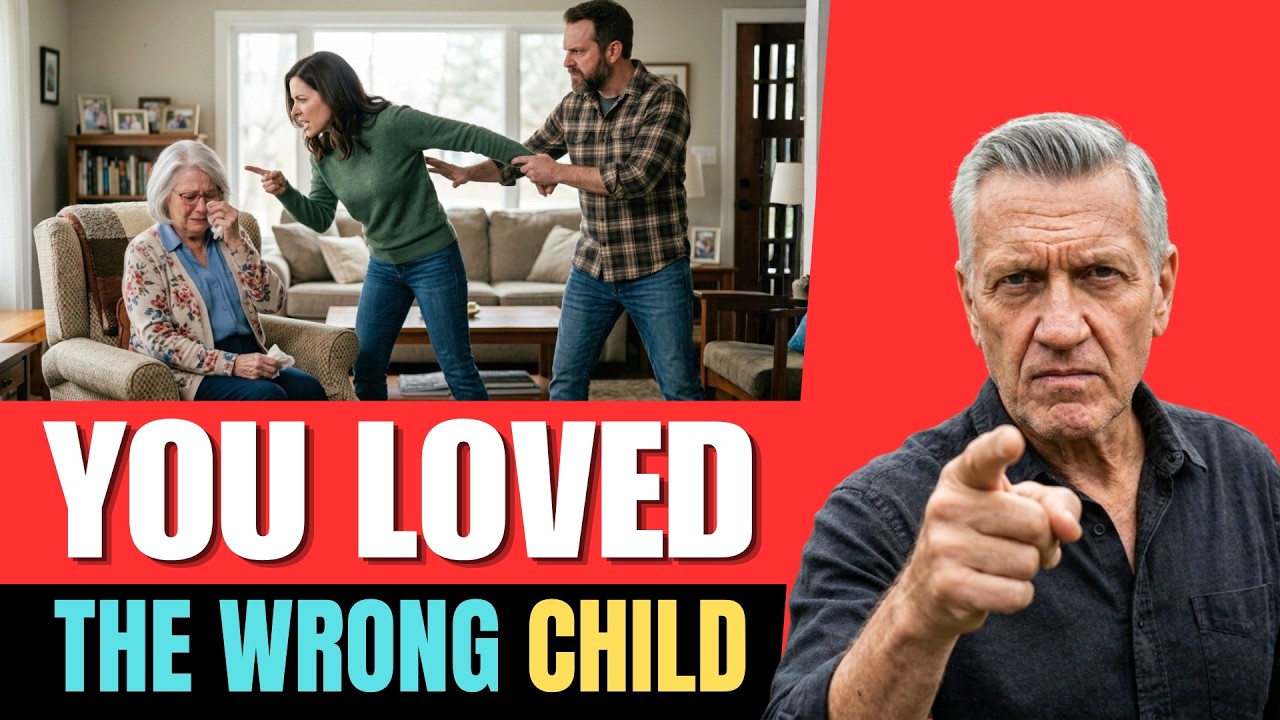
She had two sons. David, the older one, had been the center of her world since birth. She drove four hours every weekend to watch his college games. She co-signed his business loan twice.
When his marriage fell apart, she flew across the country and spent three months helping him rebuild. James, her younger son, was the easy one. He didn’t demand much. He figured things out on his own, moved to another state at 22, and called on birthdays and holidays.
He built a quiet, steady life. Then Margaret had a stroke. David called her twice from the hospital. He was too swamped with work to visit, but he mentioned, gently, that he had some financial pressure and wondered whether she had updated her will.
James drove eight hours the night he found out. He stayed six weeks. He handled her insurance, sat with her through therapy, and eventually helped her move into a safer place near him. I’ve heard some version of Margaret’s story more times than I can count over the last four decades.
In fact, research on aging families consistently shows that parents over 65 who report feeling abandoned or unsupported by their adult children most commonly name their highest-need child as the source of that distance—not the independent one. The child who required the most resources growing up often has the least left to offer in return. But this is not cruelty. There is a real psychological reason behind it.
Once you understand it, it changes everything. I was trained extensively in attachment theory in the 1980s, the work of John Bowlby and Mary Ainsworth. The core idea is simple: the way a child is loved shapes the way they love others for the rest of their lives. And here is what decades of my own clinical work have confirmed.
When a parent consistently over-provides for a child, shields them from consequences, solves every problem, and gives without requiring anything back, the child doesn’t learn that love involves giving. They learn that love means receiving. That becomes their only model. It’s not a character flaw.
It’s a learned pattern, and it’s invisible to the child while it’s forming. Psychologists call this entitlement psychology. But it’s not arrogance in the Hollywood sense. It’s quieter and more damaging.
It’s a deep, unconscious belief that the world and the people in it exist to provide for them. Their needs naturally come first. When their aging parent suddenly has real, inconvenient, time-consuming needs, it creates a conflict their emotional wiring isn’t prepared for. Many of them don’t even realize they’re pulling away.
They just gradually become less available. The overprotected child grows up with poor emotional resilience and a limited capacity to sit with someone else’s discomfort. These things are connected. And they are, in large part, the unintended result of being loved too much in the wrong ways.
Now let’s talk about the other child. The one who had to figure things out earlier. The one who didn’t get as much of your time, energy, or money, often simply because they didn’t ask for it as loudly. That child developed resilience.
They learned to tolerate frustration. They learned that effort leads to results. They built an internal sense of competence that doesn’t depend on someone else rescuing them. And here’s the part that surprises most parents: they also developed more empathy.
Psychology consistently shows that children who navigate difficulty, even minor difficulty, develop a stronger ability to recognize and respond to the suffering of others. They know what it feels like not to have everything handed to them. When someone they love is in need, something in them moves. There’s often a secondary dynamic at play, too.
The overlooked child carries a quiet longing—not for material things, but for emotional closeness. When a parent reaches out later in life, genuinely and vulnerably, that child often meets them there. Sometimes they’ve been waiting for that closeness their whole lives. I want to name something I see in nearly every family with this dynamic.
There are two kinds of parent-child relationships. I call them guilty love and earned love. Guilty love is when a parent continues giving long past the point of genuine need, out of guilt, fear of conflict, or the belief that more giving will eventually generate more closeness. It feels like love.
It’s motivated by love. But it teaches the child nothing about reciprocity. Earned love develops when a child experiences both support and challenge. When they learn that relationships require something from them, too.
When love isn’t a birthright but a living, two-way exchange. Many parents of that overgiving generation were trying to give their children a better life than they had. That impulse is beautiful. But somewhere along the way, for some families, giving became indiscriminate.
And children who receive without ever being asked to give back don’t develop the emotional muscles for the kind of relationship you need from them now. Here’s the hard truth: you cannot buy love. You can produce dependency. You can produce expectation.
But you cannot, through giving alone, produce a child who will hold your hand when things get hard. That is not a verdict on your worth as a parent. It is simply an explanation of what happened. I want you to picture a specific moment.
You’re in the hospital, or you’ve just received a difficult diagnosis, or something in your daily life has become too much to manage alone, and you know it. You pick up the phone. Who do you call first? And when you call, who answers?
In my decades of practice, this moment—I call it the phone call that changes everything—is when the pattern becomes impossible to ignore. For many people over 60, this is the moment they realize, sometimes with shock, that the emotional geography of their family is nothing like what they assumed. If something is stirring in you, here are three signs you may be in or heading toward the over-giving trap. Sign one: you are always the one who initiates contact.
Think about the last ten times you spoke to your most demanding child. Who reached out first? If you were to stop calling for three weeks, genuinely stop, would you hear from them? Many parents already know the answer.
A relationship where all the reaching comes from one side is not a relationship. It’s a maintenance arrangement. Sign two: nearly every conversation ends with a request. Not always for money—sometimes for time, energy, emotional labor, or decisions you didn’t ask to be part of.
When you hang up after talking to this child, do you feel connected or drained? Pay attention to that feeling. It’s data. Sign three: this child primarily appears during holidays or financial moments.
If the rhythm of your relationship is structured around occasions with material or social significance—holidays, birthdays, major life events—and the connection disappears between those markers, that’s worth examining honestly. Now, be very clear about this: if you recognize yourself in what I’m describing, you are not a bad parent. You are a loving parent who was never taught that love requires limits. You were never taught that giving without expectation teaches helplessness, not gratitude.
You did what you believed was right. Recognizing the pattern is not an indictment of your past. It is an invitation to your future. People come to me in their sixties, seventies, and eighties and ask some version of the same question: Is it too late?
Can anything still change? My answer every time is yes. Not always in the way you hope, but yes. Here is what I recommend, based on both clinical experience and the research on family systems in later life.
Step one: reconnect with the child you overlooked, without pretense. If you have a child who became quietly self-sufficient, reach out. Not with guilt. Not with a rehearsed speech.
Just reach out. A simple acknowledgement goes further than most people expect. Something like: “I’ve been thinking about you a lot lately. I realize we haven’t been as close as I would have wanted.
I’d like to change that if you’re open to it. ”
That’s it. You don’t need a strategy. You need honesty.
Most children who felt overlooked are not waiting to punish you. They are waiting to be seen. Give them that, and you may be surprised by what comes back. Step two: redefine your relationship with the child who received everything.
This is the harder conversation. And I want to be careful, because what I’m about to say is often misunderstood. I am not telling you to cut off your child. I am not telling you to stop loving them or make them pay for past behavior.
I am telling you to stop enabling behavior that is harming both of you. There’s a difference between loving your child and continuing to fund a pattern that keeps them from growing and keeps you depleted. Here are three things you can say, starting today, to shift this dynamic. One: “I love you, and I also need to take care of myself now.
That means I can’t always be available in the way I used to be. ”
Two: “I’m not able to help with that right now. ” Said without explanation. Without apology.
The period at the end of that sentence is complete. Three: “I’d love to hear how things are going with you, not just when something needs solving. ”
These conversations will feel uncomfortable. They may produce pushback, distance, or even anger.
Hold your ground with gentleness. You are not punishing your child. You are, for the first time, loving them with appropriate limits. That is not a withdrawal of love.
It is the most mature form of it. Step three: practice what I call emotional triage. I developed this concept after years of watching people in their later decades exhaust themselves trying to maintain relationships that took far more than they gave. Emotional triage means asking yourself honestly: who in my life is actually present?
Not who do I want to be present. Not who should be present. Who is? Make a mental list of the people—not just your children, but friends, neighbors, community members, perhaps a therapist—who have shown up for you in the last year.
Actually shown up. Invest there. Not exclusively, but invest there. Your emotional energy in these years is precious.
It is not infinite. You are allowed—I would say required, as an act of self-respect—to direct it toward people and relationships that sustain you. This is not selfish. This is survival.
I want to close with something I believe deeply after a lifetime of listening to people’s stories about their families. This pattern—the child who received everything disappearing, the overlooked child appearing—is not an accident of cruelty or bad luck. It is a mirror. It reflects something true about how we love and what we teach when we love.
Giving without limits, protecting without allowing growth, sacrificing without requiring anything in return—these things create a particular kind of relationship. One that can look like closeness and feel like love, but which, at its core, is one-directional. And one-directional things eventually run dry. The child you poured everything into was not shaped by your love any less.
They were shaped by it enormously. They just weren’t shaped toward reciprocity. That is the tragedy, and it is not irreversible, but it requires honesty to address. Meanwhile, the child who learned to stand on their own two feet, who didn’t always have you behind them, grew up understanding something essential: that life requires you to show up for it.
That people need things from you. That love is a verb. Here is the reframe I want to leave you with. The child you thought you ignored may be your greatest gift.
Not in spite of the space you gave them, but because of it. If you’re sitting somewhere between pride and regret right now, if you’re thinking about a face, hearing a voice in your memory, hear this: the love you gave was real. The mistakes, if there were mistakes, were made in good faith. And the story is not over.
The most important question is not which child loves you more. It is what kind of love did I teach them? And is it too late to teach them something different? In most cases, in my experience, the answer to the second part of that question is no.
It is not too late.