You watch your daughter on the phone with a co-worker. Her voice is warm, patient. “Oh, absolutely. Take your time.
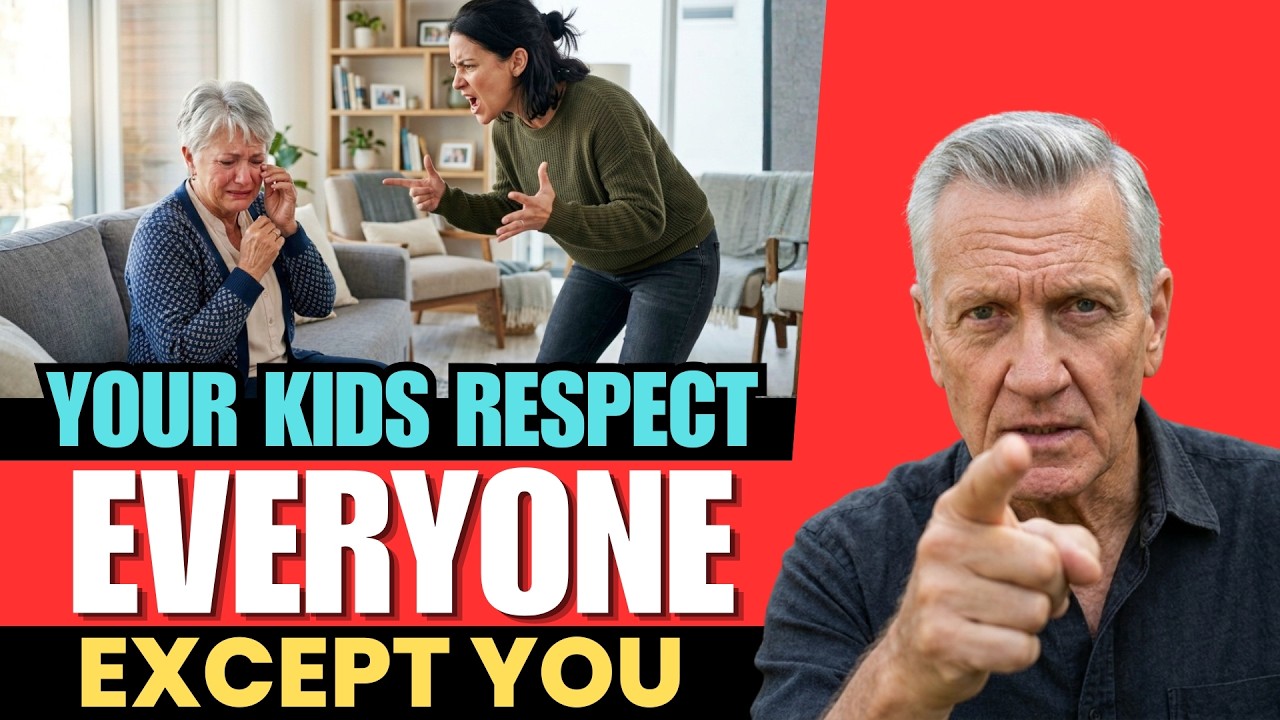
No rush at all. ” She hangs up. You ask her a simple question, maybe about dinner, and the warmth vanishes. The eyes roll.
The tone drops. “Mom, I already told you. Why do you keep asking? ”
Maybe it’s your son.
You’ve seen him hold the door for a stranger, heard him say “Yes, sir” to his boss without resistance. But when you call on a Sunday afternoon, he sounds like you’re bothering him. Like your voice is an inconvenience. You sit there wondering, “What did I do wrong?
Why does everyone else get the best of my child, and I get the leftovers? ”
If that moment sounds familiar, hear this: you’re not crazy, and you’re not alone. I’ve spent over 40 years as a clinical psychologist, sitting across from thousands of parents who ask the same question: “Why do my kids respect everyone else but me? ”
Here are eight real answers, and what you can do about each one.
Before we begin, let’s set something straight. This isn’t about raising bad kids. This is a psychological dynamic that happens between aging parents and adult children everywhere. Respect is not the same as obedience.
Your child can love you deeply and still treat you in ways that feel disrespectful. Both can be true at the same time. **Reason one: You are their emotional safe zone. **
The reason your child treats you worse than others is because you are the person they trust most.
It doesn’t feel like a compliment, but stay with me. Your child performs all day. They manage their tone with their boss because their paycheck depends on it. They’re polite to friends because friendships are fragile.
They smile at strangers because society expects it. But with you, there’s no performance. There’s no risk, because deep down, they know you’re not going anywhere. You won’t fire them.
You won’t walk away. So where does the stress go? Where does the exhaustion land? On the safest person in the room.
You. It’s a cruel irony. You get treated the worst because you love the best. Your home is their emotional exhale, and sometimes that exhale comes out rough.
That doesn’t make it okay. But when your child snaps at you, it’s not always contempt. Sometimes it’s a twisted sign of trust. Next time it happens, say this calmly: “I know you’re comfortable with me, and I’m glad.
But comfortable doesn’t mean careless. I still need kindness. ”
That one sentence can shift the whole dynamic. **Reason two: The power dynamic has shifted, and nobody talked about it.
**
When your children were young, you were the center of their universe. You had the answers, the money, the car keys. Now the tables have turned. Maybe they manage your doctor’s appointments now.
Maybe they help with your phone. Maybe they worry about your finances or your driving. Slowly, quietly, the roles reversed. You went from being the protector to the one who needs protecting.
Here’s the problem: your child doesn’t know how to respect you in this new role. Nobody taught them. There’s no manual that says, “Here’s how to honor your parent when you’re the one writing the checks. ” So they default to the only model they have for a caretaker-dependent relationship: the one you gave them when they were five.
They start treating you like a child. Have an honest conversation during a calm moment. Say something like, “I know things are different now. I might need more help than I used to, but I’m still your parent, and I still need to be spoken to like an adult.
”
Set the new terms. Don’t let them be assumed. **Reason three: They perform for the world but drop the mask at home. **
Your child has a work personality, a friend personality, a social media personality.
At the office, they’re composed. With friends, they’re fun. On the phone with customer service, they might even say “Thank you so much, I really appreciate your help. ”
But when they walk through your door, the mask comes off.
What you see underneath isn’t always pretty. It’s raw, unfiltered, the version too tired to perform anymore. In a strange way, your home still means something. It’s the one place they don’t have to pretend.
The problem is, “raw and unfiltered” can easily slide into “rude and dismissive. ” Many adult children don’t realize there’s a line between being real and being hurtful. You have every right to say, “I want you to be yourself around me, but being yourself doesn’t mean being unkind. You can be honest and still be gentle.
”
You’re not asking them to perform. You’re asking them to be decent. Those are two very different things. **Reason four: Unresolved childhood wounds they haven’t processed.
**
Sometimes the disrespect you’re experiencing isn’t really about today. It’s about 1987, or 1995, or some Tuesday afternoon you’ve completely forgotten but your child never did. Maybe it was a comment about their weight. Maybe it was a time you didn’t show up for a game.
Maybe it was the way you argued with their other parent. Maybe it was something you can’t imagine being significant, but to a seven-year-old, it was everything. I’m not saying this to make you feel guilty. Every parent makes mistakes.
Every single one. But your adult child might be reacting to a version of you that no longer exists. They’re arguing with the parent from thirty years ago, not the one sitting in front of them today. Unprocessed wounds don’t disappear with age.
They go underground and resurface at every holiday dinner, every phone call, disguised as impatience, sarcasm, or cold distance. If you sense something old lingering between you, consider saying, “I know I wasn’t perfect when you were growing up. If there’s something I did that still hurts you, I’m willing to hear it. ” You don’t have to agree with everything they say.
But opening that door can release years of built-up pressure. **Reason five: Your advice feels like criticism to them. **
You say, “Maybe you should put on a warmer coat. ” You mean, “I love you and I don’t want you to get sick.
” They hear, “You can’t even dress yourself properly. ”
You say, “Have you thought about saving more money? ” You mean, “I want you to be secure. ” They hear, “You’re bad with money.
You’re failing at life. ”
This is one of the most painful disconnects. Your intentions are pure, but the delivery lands like a judgment. And it hits so hard coming from you because your opinion still matters more than they’ll ever admit.
When a boss criticizes them, it stings but stays at work. When you say something even remotely corrective, it goes straight to the core of who they are. Because you’re the first person who ever told them whether they were good or not. Practice this one sentence: “Do you want my opinion, or do you just need me to listen?
” Those twelve words can prevent more arguments than a decade of therapy. Let them invite your advice. Don’t deliver it uninvited. **Reason six: Guilt disguised as irritation.
**
An adult child who feels guilty about not doing enough for their aging parent often expresses that guilt not as sadness or apology, but as irritation. Your son knows he should call more. He knows he should visit more. That knowledge sits in his chest like a low hum of shame.
But shame is unbearable, so the brain converts it into annoyance. Instead of thinking, “I feel bad that I haven’t called Mom,” he thinks, “Why does Mom always make me feel guilty? ”
He redirects the discomfort outward onto you. Not because you did anything wrong, but because your very existence reminds him of what he’s not doing.
When you call and he’s short with you, when you suggest a visit and he sighs, he’s not annoyed at you. He’s annoyed at himself. You’re just the nearest target. Reduce the guilt triggers without abandoning your needs.
Instead of “You never call me anymore,” try, “I love hearing from you whenever you have a minute. ” No pressure. Removing the accusation removes the guilt, and removing the guilt removes the irritation. **Reason seven: They don’t see you as a separate person.
**
When your child interacts with their boss, they see a full human being—someone with feelings, boundaries, bad days. They give their boss grace. When they interact with friends, they tread carefully because they understand their friend has an inner world. But when they look at you, many adult children don’t see a person.
They see a role. Mom, Dad. A fixed character in the story of their life. Not someone who gets lonely.
Not someone who cries after hanging up the phone. Not someone who lies awake at night wondering where things went wrong. We reduce our parents to their function. And when we see someone as a function rather than a person, we stop being careful with them.
We forget they can be hurt. Let them see you. Not just as mom or dad, but as a person. Share something vulnerable.
Tell them about a fear. Talk about a dream you never pursued. When they start to see you as a full human being, respect almost always follows. **Reason eight: Nobody taught them how to respect an aging parent.
**
And finally, the simplest, most forgiving reason of all: nobody taught your children how to do this. And nobody taught you either. Society teaches children to respect teachers, with rules and consequences. The workplace teaches respect for bosses, with hierarchy and reviews.
Even strangers get the benefit of social etiquette. But where is the course on how to treat your aging parent? It doesn’t exist. Your parents, your child’s grandparents, may have never modeled this because life expectancy was different, family structure was different, culture was different.
There was no blueprint. Both of you are standing in uncharted territory, making it up as you go, bumping into each other in the dark. That’s not failure. That’s the reality of being human in a world that changes faster than our emotional vocabulary can keep up with.
Set the standard. Today. Not with anger or guilt, but with clarity and love. Say these words: “I love you.
I will always love you. And I need you to speak to me with kindness. That’s not a request. That’s a boundary.
”
It’s never too late to teach the people you love how to treat you. Now that you understand the eight reasons, here are three things you can put into practice starting today. **First, name the behavior, not the person. ** When your child is dismissive, don’t say, “You’re so disrespectful.
” That attacks their character, and they’ll get defensive. Instead, say, “That tone felt dismissive, and it hurt. ” You’re describing what happened, not who they are. **Second, stop over-functioning to earn love.
** Parents who cook, clean, babysit, lend money, run errands, not because they want to, but because they think if they stop, the love will stop too. Listen carefully: respect doesn’t come from sacrifice. It comes from boundaries. The more you do without being asked, the more invisible you become.
Start doing less. Not out of spite, out of self-respect. **Third, reintroduce yourself. ** Your child thinks they know you, but they know the version of you from twenty years ago.
The parent who drove carpool and packed lunches. They don’t know the person you are right now—your thoughts, your fears, your humor. Invite them into a real conversation. Not about schedules or grandkids or weather.
About you. Let them meet the person behind the parent. That’s where real respect begins. You have not failed.
You are not a bad parent. You did not raise ungrateful children. You’re simply in a chapter of life nobody gave you the script for. You spent decades teaching your children how to walk, how to talk, how to face the world.
Now it’s time to teach them one more thing: how to treat you. Not with anger or guilt. With the quiet, steady dignity that has carried you through every season of your life so far. You deserve kindness.
Not because of what you’ve done, but because of who you are.