The friend called and said he needed to come over, that he had problems he had to discuss. Of course, I said yes. I always said yes. He arrived, talked for hours about his life, his family, his troubles, his frustrations.
He drank my coffee, ate my dinner, and finally left close to midnight. Before walking out, he smiled and said, “You’re always there for everybody. ”
After the door closed, I stood alone in my living room and asked myself a question I had never dared to ask before. Who is there for me?
I didn’t have an answer. And that silence terrified me more than any empty room ever had. You see, if you had knocked on my door thirty years ago without calling, I would have opened it with a smile. I would have invited you inside, put coffee on the stove, pulled food from the refrigerator, and somehow convinced you to stay for dinner.
My house used to be the kind of place where people came and went without warning. Neighbors stopped by. Family arrived with suitcases. Friends brought their troubles, their stories, and sometimes even their children.
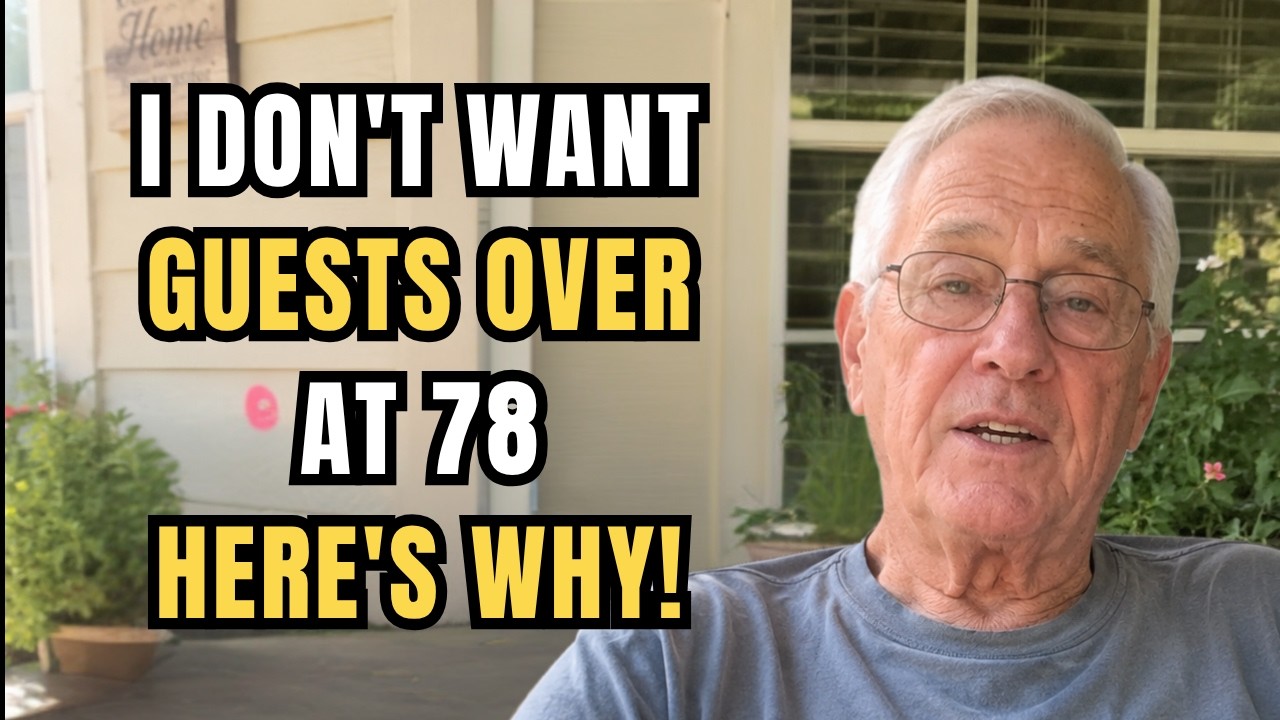
I believed a full house was proof of a full life. I truly believed that. But now, at seventy-nine, if someone shows up unexpectedly, I often sit quietly in my chair and hope they decide to come back another day. People hear that and assume I’ve become bitter.
Some think age made me cold. Others believe loneliness changed me. None of those things are true. The truth is much simpler, and perhaps much harder for people to understand.
The older I get, the more I value peace. The more carefully I protect my energy. And the more I realize my home was never supposed to belong to everybody else. I grew up in a small house where there was always another chair pulled up to the table.
My mother believed nobody should eat alone. My father believed a man’s worth could be measured by how many people felt welcome under his roof. Those lessons stayed with me my entire life. When I married my wife in my twenties, we built our home around those same ideas.
We hosted holidays, celebrated birthdays, welcomed relatives from out of town. Our living room became a gathering place. And I became known as the man who never said no. For many years, I wore that reputation proudly.
There is something deeply satisfying about being needed. Something comforting about hearing people say, “Let’s go to his house. ” Because you begin to believe your value comes from what you provide. I cooked meals, fixed problems, listened to complaints, offered advice, and made sure everyone felt comfortable.
If somebody needed help moving, I was there. If somebody needed money, I found a way. If somebody wanted to spend the weekend, the guest room was ready. What I didn’t understand at the time was that every yes I gave to someone else slowly became a no to myself.
There were nights when the guests had gone home and I stood alone in the kitchen washing dishes long after midnight. The house would finally become quiet. And I would feel an exhaustion so deep I could hardly think. Yet if someone had asked me whether I was happy, I would have said yes.
Because many of us from older generations were taught that sacrifice was the same thing as love. We believed being tired meant we were good people. We believed being needed meant we mattered. But life has a way of asking difficult questions.
In my late fifties, I began noticing something strange. People expected things from me that they once appreciated. The meals that used to receive gratitude became obligations. The invitations became assumptions.
The help became expected. If I couldn’t host a holiday, people were disappointed. If I needed rest, people felt inconvenienced. I had spent decades teaching everyone that my door was always open.
Eventually, they stopped seeing it as generosity. They simply saw it as my job. That night with the friend who said, “You’re always there for everybody,” changed something inside me. For the first time, I realized I had built my entire identity around other people’s needs.
And when I finally asked who was there for me, I couldn’t name a single person. Many people fear retirement because they think they’ll become useless. But I learned that the greater danger is believing you were only valuable because you were useful. After my wife passed away several years ago, the house became very quiet.
At first, the silence frightened me. I turned on televisions I wasn’t watching. I kept radios playing in empty rooms. I invited people over simply to avoid hearing my own thoughts.
But slowly, something remarkable happened. The silence stopped feeling empty. I began reading again. I sat on my porch for hours.
I watched birds in the yard. I took afternoon naps without feeling guilty. I made simple meals. I listened to old music.
I discovered that solitude and loneliness are not the same thing. You can be surrounded by people and feel completely alone. You can also sit quietly in your own home and feel perfectly at peace. That is something many people don’t understand about old age.
They think older people are always waiting for visitors. They assume we sit by the window hoping someone will stop by. Perhaps some do. But many of us are finally experiencing something we never had when we were younger: ownership of our own time.
Time changes when you get older. At twenty, you spend it carelessly because you believe you have endless amounts of it. At forty, you spend it on responsibilities. At sixty, you begin noticing how quickly it passes.
At seventy-nine, you understand that time is the most valuable thing you possess. Every afternoon matters. Every morning matters. Every peaceful hour matters.
And because of that, I have become very selective about how I spend my days. The people who still visit me now are different. They don’t expect a perfect meal. They don’t expect entertainment.
They don’t expect me to play the role I played for decades. They come to see me, not what I can provide. Sometimes we sit outside with coffee. Sometimes we talk for an hour.
Sometimes we say very little at all. There is no performance anymore. I think many older people carry a secret exhaustion they rarely admit. They spent decades being the strong one, the dependable one, the provider, the organizer, the peacemaker, the host.
And somewhere along the way, they forgot they were human beings, too. It took me nearly eighty years to understand this: you do not have to earn your right to rest. You do not have to apologize for protecting your energy. You do not have to open your door simply because someone knocks.
Your home is not a public building. Your time is not public property. Your peace is not available for unlimited use. Some people won’t understand this change.
Some may call you selfish. Some may say you’ve changed. The truth is, perhaps you finally have. And as I grew older, I noticed something else that surprised me even more.
The people who truly loved me stayed. The people who only loved what I provided slowly disappeared. At first that hurt. I won’t pretend it didn’t.
But over time I began to see it as one of the greatest gifts aging can offer a man. Because when enough years pass, life quietly removes the relationships that were never built on genuine affection in the first place. And what remains is something far more honest. When you’re a young man, you spend a lot of your life trying to become someone.
Successful enough, generous enough, respected enough, dependable enough. You believe that if you do enough for people, sacrifice enough, remain available enough, then you will earn love. You will earn belonging. You will earn your place in the world.
But somewhere in my seventies, I began to understand that real love never needed to be earned in the first place. I remember sitting alone one autumn afternoon. Sunlight came through the living room window, and dust floated through the air like tiny pieces of gold. The house was quiet.
No television, no company, no schedule, no expectations. Years earlier, that kind of silence would have frightened me. I would have immediately called somebody, invited someone over, or found some task to keep myself busy. But that day I simply sat there, and I realized I wasn’t waiting for anyone.
That may sound sad to some people. But to me, it felt like freedom. For most of my life I was waiting. Waiting for guests, waiting for weekends, waiting for holidays, waiting for phone calls, waiting for people to arrive, waiting for people to leave, waiting to finally have time for myself someday.
Well, someday finally arrived. And I discovered I liked my own company. I started doing things younger versions of me never had time to do. I read books I had postponed for forty years—history, philosophy, old biographies.
I took long drives with no destination. I visited small towns simply because they looked interesting on a map. I learned to make simple meals for one person and enjoy them. I bought a comfortable chair instead of a beautiful one.
I stopped saving the good towels for visitors. I drank coffee from my favorite cup every morning. These may sound like small things. But when you’ve spent your entire life arranging your world around everyone else’s comfort, small things become enormous victories.
One of my daughters visited me several years ago. We sat together on the porch while the sun was setting. After a long silence, she looked at me and said, “Dad, you seem happier now than you ever did before. ”
I thought about that for a long moment, because she was right.
And what surprised me most was that my happiness came from having less, not more. Fewer obligations, fewer expectations, fewer visitors, fewer performances, fewer roles to play. Many people think aging is a story of losing things—losing strength, losing health, losing opportunities, losing people. And certainly there is truth in that.
I have buried friends. I have attended funerals. I have watched people I love leave this world. My knees ache.
My hands hurt some mornings. I move slower than I once did. But aging also allows you to lose things that never belonged to you. You lose the need to impress.
You lose the need to explain yourself. You lose the need to be liked by everybody. You lose the fear of disappointing people. And if you’re fortunate, you lose the belief that your worth depends upon your usefulness.
One thing I’ve learned is that energy becomes precious when you get older. Young people have no idea how valuable energy really is. They think only about time. But older people understand that energy is often even more important.
There are days when my body simply tells me to rest. There are mornings when my arthritis reminds me I am not the man I once was. So why would I spend those precious hours cleaning for visitors who expect entertainment? Why would I exhaust myself pretending to have energy I don’t possess?
Why would I spend two days recovering from an afternoon I never wanted in the first place? That is not generosity. That is self-neglect. There is a difference.
Now, when someone asks to visit, I ask myself a very simple question: Will this leave my spirit fuller or emptier? That question changed my life. Some visitors bring peace, others bring noise. Some bring warmth, others bring obligation.
Some come to share life, others come only to take. At seventy-nine, I no longer feel guilty for knowing the difference. I have three close friends left. Three men who understand silence.
We can sit together for an hour and say very little. Nobody performs. Nobody competes. Nobody pretends.
We talk about our children, our mistakes, our memories, our fears. Sometimes we laugh. Sometimes we become quiet. And when they leave, I feel grateful.
That, I believe, is what friendship becomes in old age. Smaller, but deeper. I’ve also learned that many people struggle when you begin setting boundaries because they benefited from you having none. The moment you say no, some people become uncomfortable.
The moment you protect your time, some people call you selfish. The moment you stop giving endlessly, some people feel abandoned. But their disappointment does not mean your decision is wrong. For many years, I thought peace would come after everything was finished.
After retirement, after the children grew up, after the mortgage was paid, after responsibilities disappeared. But peace does not simply arrive one day like a package at your front door. You have to choose it. You have to protect it.
You have to disappoint some people in order to keep it. That was difficult for me. I spent years feeling guilty. I worried people would think I had become cold.
I worried my family would misunderstand me. Sometimes they did. Some relationships changed. Some became distant.
But I also discovered something beautiful. The people who genuinely loved me adjusted. They called first. They asked.
They respected my answer. They wanted my company, not my labor. And those relationships became stronger than ever. If there is one thing I would say to anyone growing older, especially those in their sixties, seventies, and eighties, it is this: your remaining years are not a waiting room.
They are not simply time to be available for everyone else. They belong to you. Read the books. Take the nap.
Sit quietly. Walk slowly. Listen to music. Watch the rain.
Travel if you can. Rest without apology. And if someone knocks unexpectedly and you do not wish to answer the door, you do not have to answer it. The world will continue turning.
People will survive. Your peace matters, too. As for me, I still welcome people into my life. I still love my family.
I still enjoy good conversations and shared meals. But now those moments happen because I choose them, not because I feel obligated to provide them. My house is quieter these days. The evenings are slower.
The coffee is simpler. The guest list is very small. And somehow, after all these years, my life feels fuller than it ever did when every room was crowded. Perhaps growing old is not about becoming less social.
Perhaps it is about becoming more honest. Honest about our limits. Honest about our needs. Honest about our energy.
Honest about what truly matters. At seventy-nine years old, I have learned that peace is not loneliness. Boundaries are not cruelty. Solitude is not failure.
And protecting your time is not selfishness. It is wisdom that took an entire lifetime to earn. So if you’re sitting there tonight in your own quiet house, wondering whether something is wrong with you because you no longer want constant company, let me tell you this. There is nothing wrong with you.
Perhaps you are finally listening to yourself. Perhaps you are finally coming home to your own life. And perhaps, after all these years of taking care of everyone else, it is finally your turn.